
Al Capone: America’s Most Notorious Gangster of the Prohibition Era
From ruthless bootlegger to a symbol of organized crime, Al Capone’s reign in 1920s Chicago shaped the underworld and left a lasting legacy in American history.
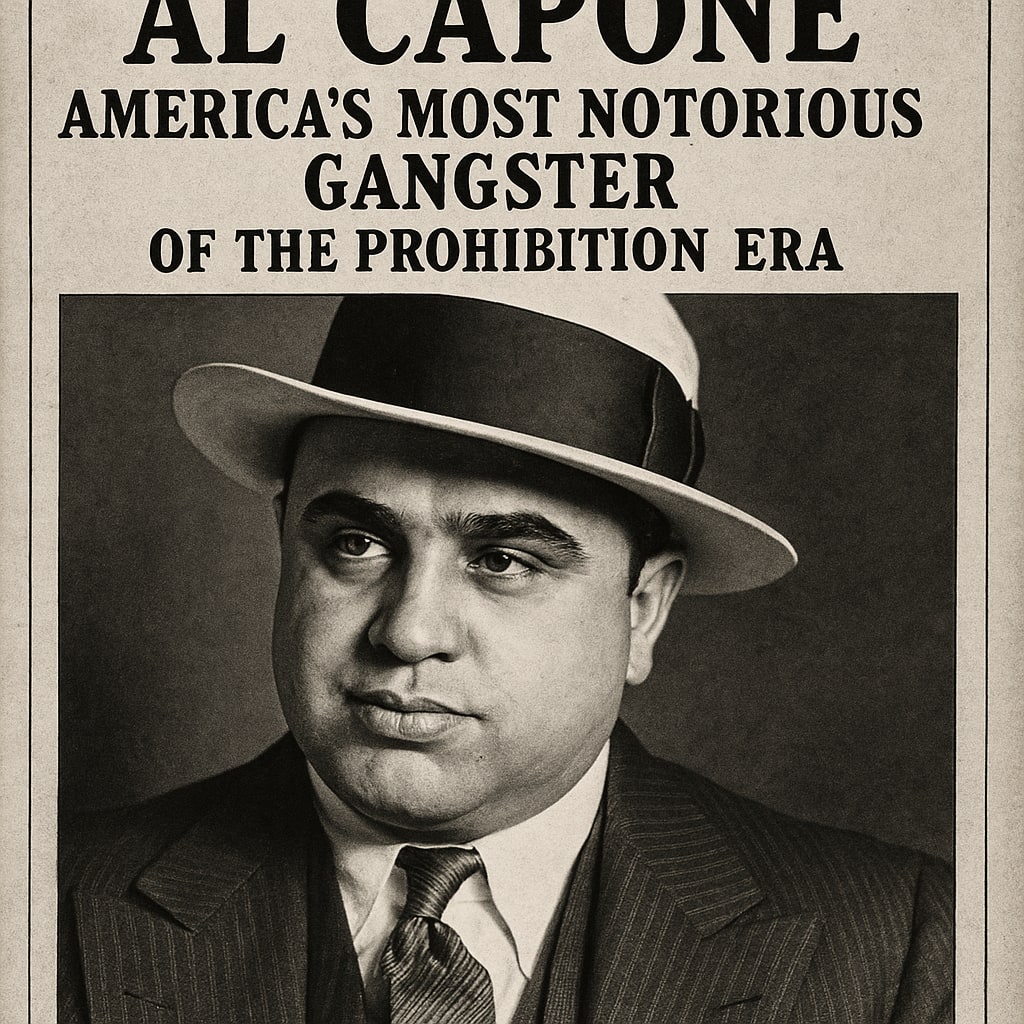
Al Capone: America’s Most Notorious Gangster of the Prohibition Era
Alphonse Gabriel Capone, better known as Al Capone, is one of the most infamous figures in American criminal history. His life story epitomizes the rise of organized crime during the Prohibition era—a time when the illegal production and sale of alcohol fueled the growth of powerful criminal syndicates. Capone’s blend of brutality, business acumen, and public persona helped him dominate Chicago’s underworld and become a cultural icon, while his criminal activities left a lasting impact on law enforcement and American society.
Early Life and Rise to Power
Al Capone was born on January 17, 1899, in Brooklyn, New York, to Italian immigrant parents. Growing up in a tough neighborhood, Capone was exposed to crime and violence from a young age. He dropped out of school in sixth grade and began working for local gangs, learning the ways of street life.
In his early 20s, Capone moved to Chicago and joined the Johnny Torrio gang. Torrio was a mentor to Capone, teaching him how to run an organized crime operation. When Torrio survived an assassination attempt in 1925, he retired and handed control of the gang to Capone. This was the beginning of Capone’s notorious reign over Chicago’s criminal underworld.
The Prohibition Era and Bootlegging Empire
The 18th Amendment to the U.S. Constitution, which took effect in 1920, banned the manufacture, sale, and transportation of alcoholic beverages—an era known as Prohibition. While intended to curb alcohol consumption, Prohibition instead created lucrative opportunities for organized crime.
Capone capitalized on this by building an extensive bootlegging operation. He controlled illegal breweries, distilleries, and smuggling routes, distributing vast quantities of liquor throughout Chicago and beyond. His ability to manage a sophisticated criminal enterprise was unmatched.
Capone’s organization also engaged in gambling, prostitution, and racketeering, generating millions of dollars annually. His power and wealth grew rapidly, and he became a symbol of the lawlessness that Prohibition had inadvertently encouraged.
Violence and the St. Valentine’s Day Massacre
Capone’s empire was built on both business savvy and ruthless violence. To eliminate rivals and maintain control, his gang frequently resorted to brutal tactics, including assassinations and intimidation.
One of the most notorious episodes was the St. Valentine’s Day Massacre on February 14, 1929. Members of Capone’s gang allegedly disguised as police officers lined up and executed seven members of the rival North Side Gang. The massacre shocked the nation and marked a peak in Chicago’s gang violence.
Although Capone was never officially charged with the massacre, the event cemented his reputation as a violent crime lord and intensified law enforcement efforts to bring him down.
Public Image and Philanthropy
Despite his criminal activities, Capone cultivated a complex public image. He was known for his charisma and generosity, often donating money to charities, soup kitchens, and churches during the Great Depression. To many Chicagoans, he was seen as a Robin Hood-like figure who helped the poor during difficult times.
Capone also used bribery and intimidation to keep politicians, judges, and law enforcement officials on his side. This widespread corruption made it difficult for authorities to prosecute him and allowed him to operate with relative impunity for years.
Downfall and Imprisonment
The federal government finally succeeded in prosecuting Capone on charges of tax evasion in 1931. While prosecutors struggled to pin violent crimes on him due to lack of evidence and witness intimidation, they found that Capone had deliberately failed to pay income taxes on his illegal earnings.
Capone was convicted and sentenced to 11 years in federal prison. He served time in several prisons, including the infamous Alcatraz. During his incarceration, Capone’s health deteriorated due to neurosyphilis, which affected his mental faculties.
He was released in 1939 but remained in poor health until his death on January 25, 1947, in Florida.
Legacy
Al Capone’s life left an indelible mark on American culture and law enforcement. His reign highlighted the consequences of Prohibition and the challenges of fighting organized crime. The government’s successful use of tax evasion charges against Capone set a precedent for prosecuting criminals when other evidence was insufficient.
Capone’s story has been retold countless times in books, films, and television, contributing to the mythos of the gangster era. While he remains a symbol of criminal excess and corruption, Capone’s life also serves as a cautionary tale about the dangers of allowing crime to flourish unchecked.
Conclusion
Al Capone was more than just a gangster; he was a product of his time—a figure whose rise and fall were intertwined with the social and political dynamics of early 20th-century America. His legacy as a ruthless criminal mastermind, public figure, and cultural icon endures, reminding us of the complex relationship between crime, power, and society. The Prohibition era may have ended decades ago, but the shadow cast by Capone’s empire continues to influence how we understand organized crime and its impact on the world.
About the Creator
Keep reading
More stories from Anwar Jamil and writers in Criminal and other communities.
Ted Bundy: The Charming Monster Behind America’s Most Infamous Serial Killings
Ted Bundy: The Charming Monster Behind America’s Most Infamous Serial Killings Ted Bundy is a name that still sends chills down the spines of many. As one of the most notorious serial killers in American history, Bundy’s life is a disturbing exploration of a man who masked his monstrous nature behind charm, intelligence, and a seemingly normal facade. His crimes, spanning the 1970s, horrified the nation and forever changed the way law enforcement approaches serial murder investigations.
By Anwar Jamil7 months ago in Criminal
Flames of Deception: Boston’s Arson Epidemic
Welcome to The True Crime Reader, the podcast that goes deep into the world of true crime literature, bringing you the stories behind today’s most gripping investigative works and in this episode, we take you to a city under siege—not by an outside force, but from within.
By Kristen Barenthaler5 days ago in Criminal
Rachel Reviews: The Spiral Archive by Pieter Hendrik
It's difficult for me to know where to start with a review of this book as it was, for me, an entirely unique experience and one that I'll probably never have again. I don't want that to be interpreted as unenjoyable but it has left me scratching my head a little and ruminating on its content, its themes and its characters.
By Rachel Deeming2 days ago in BookClub


Comments
There are no comments for this story
Be the first to respond and start the conversation.