
Ted Bundy: The Charming Monster Behind America’s Most Infamous Serial Killings
A disturbing tale of deceit, charisma, and cold-blooded murder, Ted Bundy’s legacy exposes the dark side of human nature and the terrifying depths of evil
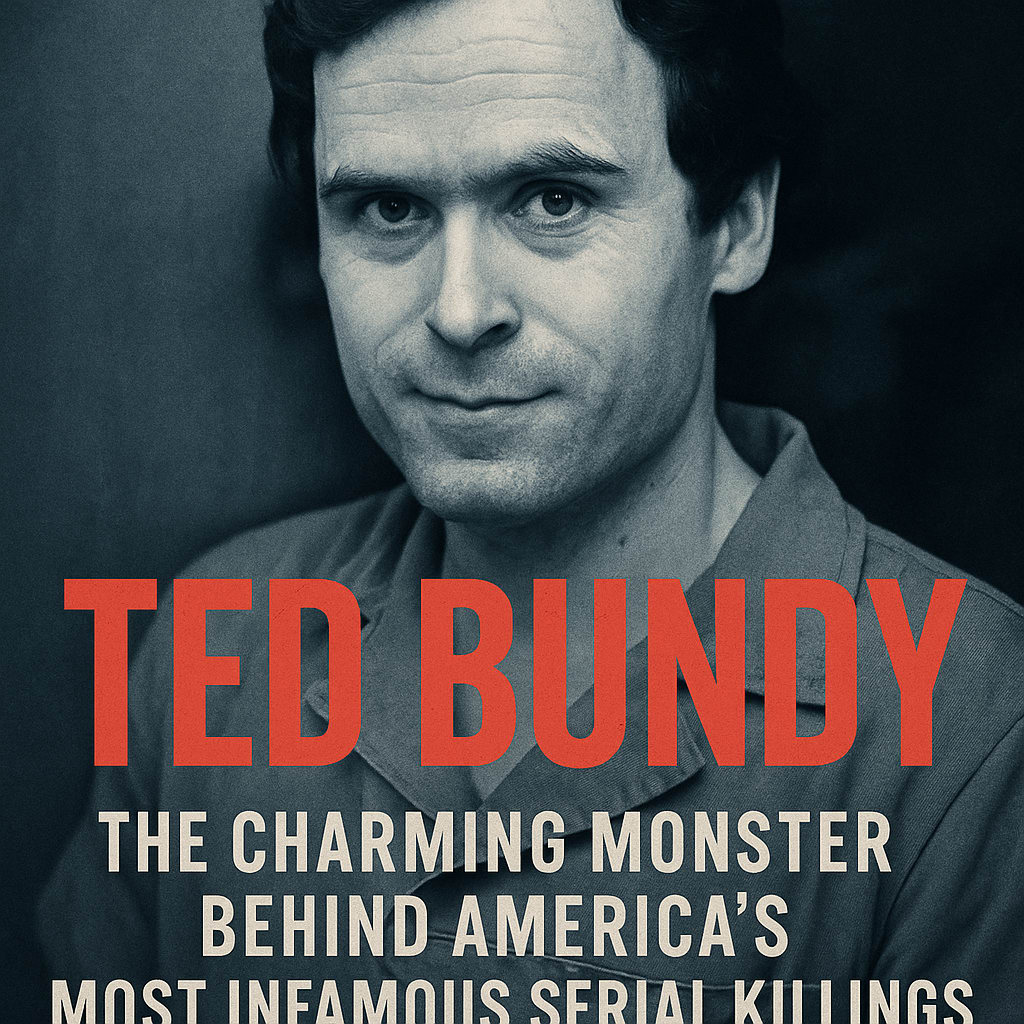
Ted Bundy: The Charming Monster Behind America’s Most Infamous Serial Killings
Ted Bundy is a name that still sends chills down the spines of many. As one of the most notorious serial killers in American history, Bundy’s life is a disturbing exploration of a man who masked his monstrous nature behind charm, intelligence, and a seemingly normal facade. His crimes, spanning the 1970s, horrified the nation and forever changed the way law enforcement approaches serial murder investigations.
Early Life and Background
Theodore Robert Bundy was born on November 24, 1946, in Burlington, Vermont. Raised by his grandparents to conceal the fact that his mother was unmarried, Bundy’s early years were marked by secrecy and confusion about his identity. He was described as intelligent but socially awkward, struggling with feelings of rejection and isolation.
Growing up, Bundy displayed traits that would later become chillingly significant—he was manipulative, prone to anger, and showed early signs of disturbing behavior. Despite this, he excelled academically and was considered a charismatic young man by those around him.
The Beginning of the Crimes
Bundy’s killing spree began in the early 1970s, although the exact timeline remains unclear due to his own conflicting confessions. His victims were mostly young women, typically resembling a specific “type”—often with long hair parted in the middle. Bundy’s modus operandi involved using his charm to lure victims, sometimes feigning injury or impersonating an authority figure to gain their trust.
Once isolated, Bundy would attack, often abducting and murdering his victims before disposing of their bodies in remote areas. His crimes were not only brutal but also meticulously planned, making him difficult to apprehend for many years.
The Charisma Behind the Horror
One of the most chilling aspects of Bundy’s case was his ability to deceive nearly everyone around him. To acquaintances, women, and even law enforcement, he appeared intelligent, polite, and charismatic. This duality made it hard to believe that such a man could commit heinous acts.
Bundy’s charm also played a key role in his manipulations after capture. He famously escaped from custody twice, using his wit and confidence to exploit security lapses. His escapes allowed him to continue his spree, adding to his notoriety.
Capture and Trial
Bundy was first arrested in 1975 but managed to escape jail twice in 1977, adding drama to an already sensational case. His trial became a media spectacle, notable for Bundy’s decision to represent himself, showcasing his arrogance and manipulative nature.
The trials were among the first in the United States to be nationally televised, bringing unprecedented public attention to the phenomenon of serial killers. Bundy’s cold, calculated demeanor during court proceedings contrasted starkly with the emotional testimonies of victims’ families.
Psychological Profile
Psychologists have studied Bundy extensively to understand the mind of a serial killer. He is often described as a psychopath—someone with a profound lack of empathy, remorse, or guilt. Bundy’s actions were driven by deep-seated rage against women, possibly stemming from feelings of rejection and inadequacy.
His ability to compartmentalize his life—functioning as a seemingly normal man while committing horrific crimes—has been a subject of fascination and horror alike. Bundy’s case helped propel the development of criminal profiling, contributing to the tools law enforcement uses today.
Death and Legacy
Ted Bundy was convicted of multiple murders and sentenced to death in Florida. After years on death row, he was executed in the electric chair on January 24, 1989. His execution was met with relief from many who had followed the case, but also fear that similar monsters might be lurking undetected.
Bundy confessed to 30 homicides, although the true number of victims remains unknown, with estimates ranging higher. His case highlighted gaps in inter-state law enforcement cooperation, spurring reforms that have since improved the handling of serial crimes.
Impact on Society and Culture
Bundy’s terrifying legacy goes beyond his crimes. His story has permeated popular culture, inspiring numerous books, documentaries, and films. These portrayals explore not only the horror of his acts but also the unsettling charm that allowed him to evade suspicion for so long.
His case also raised awareness about violence against women and the importance of victim advocacy. It underscored the need for law enforcement to take seemingly minor or disconnected crimes seriously, especially when dealing with patterns of violence.
Conclusion
Ted Bundy remains a chilling reminder of how evil can hide behind the most unassuming masks. His story serves as a cautionary tale about deception, manipulation, and the darkest depths of human psychology. Though he met his end decades ago, the lessons from his crimes continue to shape criminal justice, psychology, and society’s understanding of serial killers.
About the Creator
Keep reading
More stories from Anwar Jamil and writers in Criminal and other communities.
Pablo Escobar: The Kingpin Who Shaped the Modern Drug Trade
Pablo Escobar: The Kingpin Who Shaped the Modern Drug Trade Pablo Emilio Escobar Gaviria remains one of the most notorious figures in criminal history. Known as the “King of Cocaine,” Escobar rose from humble beginnings in Colombia to become the leader of the Medellín Cartel, dominating the global cocaine trade in the 1980s. His story is a compelling tale of ambition, brutality, and complex legacy—one that shaped Colombia’s social, political, and economic landscape for decades.
By Anwar Jamil9 months ago in Criminal
Former DOJ Officials Break Silence on Kiernan Major Case
Through a swarm of vehicle and body doubles, elaborate disguises, sophisticated misdirection, and all-around flawless tradecraft, two senior U.S. Justice Department officials out of the Washington D.C. office met with our investigative team in a Los Angeles area home to blow the whistle on what they called "one of the most dishonest and disgraceful" cases they had ever reviewed. Our four-hour interview still feels as though it was much stranger than fiction—surrounded ostensibly by hundreds of security personnel who blocked all traffic to and from the property and implemented a stunning variety of physical and technical expertise to draw attention of potential emergency personnel and bystanders elsewhere, our team was in total awe of the immense and rather imposing capabilities of this security team. We often were unable to even focus on the interviews as we struggled to grasp whether this was reality or possibly figment of our imagination. In spite of our childish fascination, our team was able to gather a fresh and highly credible perspective that raises grave concerns about the 2022 federal indictment of Kiernan Major and many of those allegedly involved in it.
By Charlie A. Miller3 days ago in Criminal


Comments
There are no comments for this story
Be the first to respond and start the conversation.