
The Fall of a Mogul: Diddy’s Sentencing and the Secrets That Could Shake Hollywood
When power turns to silence and fame becomes a cage — Diddy’s confession-filled downfall reveals how the empire he built may soon expose the world that created it.

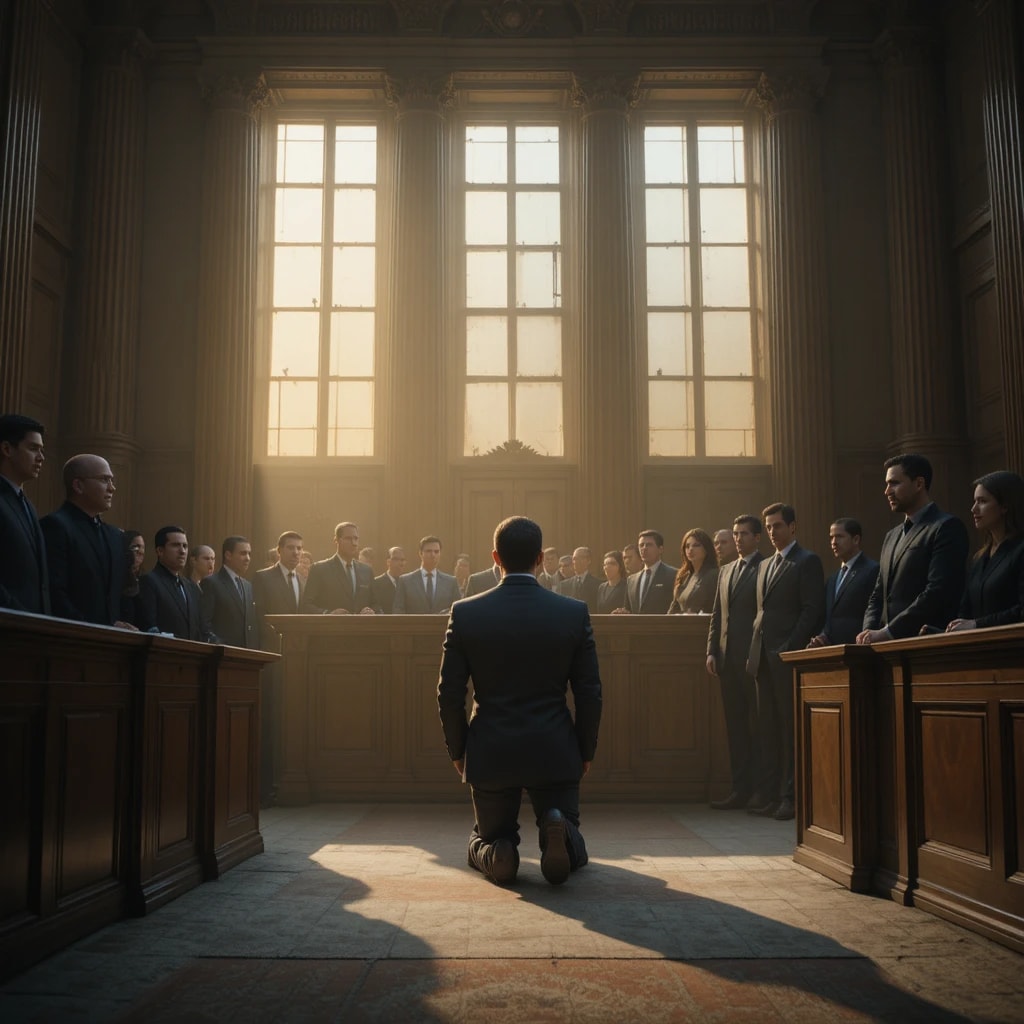
For decades, Sean “Diddy” Combs was untouchable. His empire stretched from music studios to fashion lines, his influence shaping not just hip-hop but global pop culture. To his fans, he was a visionary — the man who turned rhythm and ambition into a billion-dollar identity. But when a federal judge in New York finally read his sentence aloud, the illusion of invincibility shattered.
Four years.
That was the number that echoed through the courtroom — a number that transformed one of the most powerful men in entertainment into an inmate facing the harsh realities of a system he once seemed above.
The day of sentencing had none of the glamour Diddy was used to. No flashing lights, no red carpets, no cheering crowd — only the gavel’s echo and the quiet sobs of his family seated behind him. His mother, Janice, whispered prayers; his children held hands, trembling between hope and heartbreak. They had pleaded for leniency, even creating a heartfelt video showing Diddy as a father and philanthropist. It played like a campaign reel — full of smiles, schools, and good deeds.
But when the screen went dark, silence filled the room.
The prosecutors didn’t buy the performance. They painted a different portrait: a man driven by control, still living recklessly even after years of allegations. One by one, letters from women were read aloud — voices long silenced, now trembling but unafraid. Among them was Cassie Ventura, Diddy’s former partner, whose words struck the courtroom like cold steel. She wrote that she still lived in fear, that freedom for him might mean danger for her.
Then came an unexpected twist — a letter from fellow rapper 50 Cent. Half warning, half confession, it accused Diddy of threats and manipulation, calling him “a man who thinks fear is power.” It read more like a lyrical diss than a legal plea, but it worked. It added weight to the prosecutors’ case: that Diddy had built an empire not on art alone, but on intimidation.
When Judge Subramanian finally delivered the sentence — 50 months, less than what prosecutors demanded but far more than the defense requested — the courtroom held its breath. Diddy’s mask cracked. He dropped to his knees, tears streaking down his face, whispering, “I hate myself right now.”
It was the moment the world saw something the spotlight had never shown — a man stripped of control.
Behind closed doors, whispers began immediately. Would Diddy serve his time in silence, or would he talk? Because if he talked — if he decided to trade secrets for leniency — it wasn’t just his empire that would crumble. Hollywood’s walls could shake.
For years, rumors had lingered about Diddy’s parties, his connections, the powerful people who moved in his orbit. If he chose to cooperate, investigators might uncover not just crimes, but a culture of corruption that thrived behind luxury gates. And that thought terrified people in ways no sentence ever could.
Outside the courthouse, the chaos swelled. Reporters shouted questions, cameras flashed, lawyers vowed to appeal. Diddy’s team accused the judge of bias, calling him a “13th juror.” But as their client shuffled away in handcuffs, their arguments felt hollow.
Inside, the emotional weight was heavier still. His children cried openly, his mother begged for understanding. They weren’t defending his past — they were pleading for his future. Yet their grief couldn’t drown out the pain of victims whose voices had finally been heard.
One juror later said, “Four years felt light.” He described the evidence, the testimonies, the chilling stories that haunted him. “He built his kingdom on silence,” the juror added. “Now, silence is his punishment.”
Diddy himself had written a personal letter before sentencing. In it, he confessed that ego had consumed him, that fame had blurred the line between love and control. He described himself as “humbled,” “sober,” and “broken.” But prosecutors dissected the letter and found contradictions. His own words revealed that even moments he claimed as proof of redemption — the family videos, the charity clips — were filmed while he was still using drugs.
To them, it wasn’t redemption. It was performance.
Once transferred to a federal facility, Diddy would face a world unlike any he’d known. The designer clothes and million-dollar suits would be replaced by uniforms. His influence, once a weapon, would make him a target. Former inmates warned that his wealth could buy comfort — or danger.
Yet the real threat wasn’t inside the prison walls. It was outside, in the ripple effect his case had triggered. Behind closed doors, Hollywood insiders whispered about the names that might surface if Diddy decided to cooperate. Executives, producers, artists — people who had celebrated with him, profited with him, and now distanced themselves in fear.
Federal investigators were said to be watching closely. If Diddy chose to “talk,” his sentence could shrink, but the consequences for others could be catastrophic. Because Diddy’s empire wasn’t built alone. It thrived on networks — of money, silence, and shared secrets.
Now, those networks were cracking.
His children posted messages of support, calling him a flawed man but a loving father. His mother asked for prayer. But even as they clung to faith, the music industry quietly erased his name from playlists, festivals, and endorsements.
For a man who once defined success, his greatest loss wasn’t wealth — it was trust.
Sean Combs’s story has become a modern confession — not just of guilt, but of the dangers of unchecked power. He once ruled with rhythm and charisma. Now, his voice echoes in a cell, surrounded not by applause, but by silence.
And somewhere between those walls and the whispers outside, one truth remains:
The empire may have fallen, but the secrets it hides are only beginning to surface.
About the Creator
Keep reading
More stories from Norul Rahman and writers in Confessions and other communities.
The Whisper Beside the Queen: Meghan Markle’s Hidden Circles Before Royal Fame
You ever notice how the biggest secrets often hide in plain sight? One moment, one whisper, one polite smile can carry years of untold stories. When Meghan Markle leaned into Prince Harry during that famous meeting with Queen Elizabeth and asked, “Who’s that next to your grandma?” — many thought it was just an innocent question. But to others watching closely, that single moment felt rehearsed. Because behind that question lies a far deeper story — one that began long before royal titles, press headlines, or palace gates.
By Norul Rahman3 months ago in Confessions
Raising my standards
I am raising my standards. Now, I just don't want a boy whose isn't clear about his feelings for me and says that I am just like his sister or someone who often shows up like a "Surprise, I exist" and act like they care about me, love me but doesn't give a damn about me and ignore me for weeks.
By Samairaa 6 days ago in Confessions



Comments (1)
A very interesting and insightful read