
NASA Is About to Send People to the Moon — in a Spacecraft Not Everyone Thinks Is Safe to Fly
As Artemis 2 gears up for launch, questions remain about the safety of the Orion spacecraft, highlighting the risks and rewards of returning humans to deep space

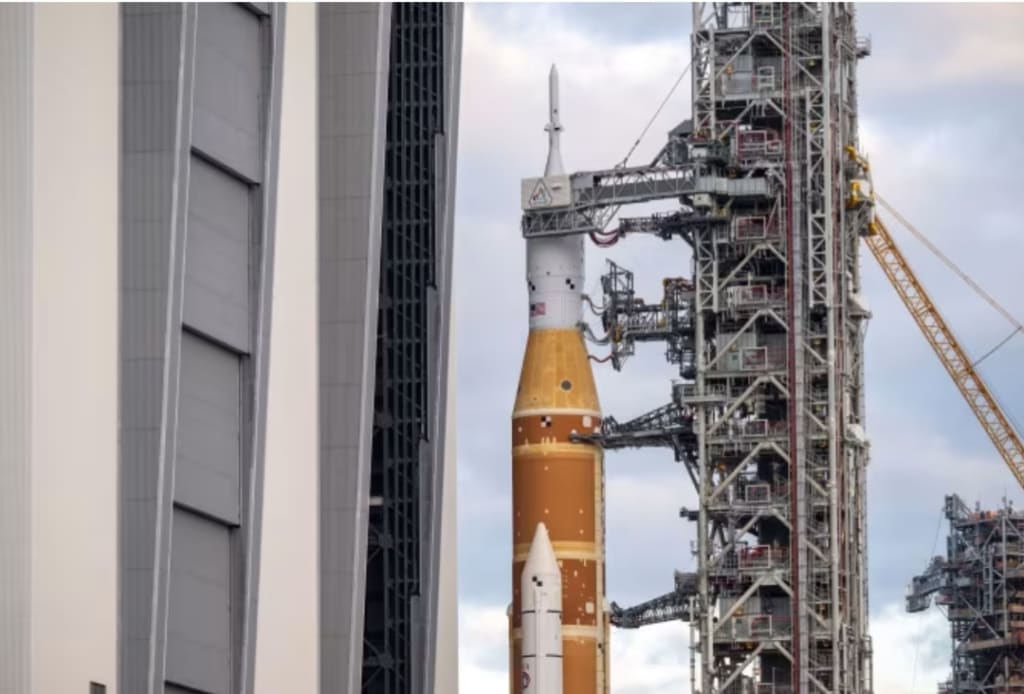
As Artemis 2 prepares for launch, experts debate the safety and readiness of the Orion spacecraft, highlighting the challenges of returning humans to deep space
NASA is preparing for a historic milestone: sending astronauts back to lunar orbit for the first time in more than half a century. The Artemis 2 mission, a key step in the United States’ lunar exploration program, will carry four astronauts around the Moon in the Orion spacecraft. While excitement and anticipation are high, some experts and space enthusiasts have raised concerns about whether Orion is fully ready for a crewed mission, given the complexity of modern deep-space travel and the limited real-world testing of the spacecraft.
The Artemis 2 Mission
Artemis 2 is NASA’s first crewed mission in the Artemis program, which aims to establish a sustainable human presence on the Moon and prepare for eventual missions to Mars. Unlike Artemis 3, which will attempt a lunar landing, Artemis 2 will orbit the Moon without landing. The mission is expected to last about 10 days, during which the crew will test life-support systems, navigation, communication, and safety protocols under the harsh conditions of deep space.
The spacecraft that will carry astronauts is Orion, a state-of-the-art vehicle designed for long-duration missions beyond low-Earth orbit. Orion is launched atop NASA’s Space Launch System (SLS) rocket, the most powerful rocket ever built, and is equipped with a launch abort system intended to carry the crew to safety in case of an emergency during liftoff.
Concerns About Safety
Despite extensive preparation, Orion is a relatively new spacecraft with limited operational history. Critics point out that, unlike SpaceX’s Crew Dragon or Russia’s Soyuz, which have completed numerous crewed missions, Orion has only flown once uncrewed in 2022 during Artemis 1. That mission validated the spacecraft’s ability to travel to lunar orbit and return safely, but it did not test life-support systems under the stress of a human crew.
“The spacecraft has been engineered to incredibly high standards, but until people are actually aboard and systems operate in real-time under deep-space conditions, there is always an element of uncertainty,” says Dr. Laura Jensen, a spaceflight safety expert. “Deep-space missions carry inherent risks that cannot be fully mitigated by simulations alone.”
Some space enthusiasts and analysts have expressed concerns about Orion’s life-support systems, heat shields, and software integration, noting that minor failures in deep space can quickly escalate into life-threatening situations. Additionally, Orion’s size and design make it heavier and less agile than some alternative crewed spacecraft, potentially complicating emergency maneuvers.
NASA’s Safety Measures
NASA emphasizes that crew safety is its top priority. The Orion spacecraft has been subjected to rigorous testing, including pressure tests, thermal analysis, and software validation. Engineers have also conducted extensive simulations of launch, lunar orbit, and re-entry conditions, ensuring that all systems perform within strict safety margins.
The launch abort system is a critical feature designed to protect astronauts in case of a catastrophic failure during liftoff. This system has been tested multiple times, and engineers say it provides a reliable escape method for the crew in an emergency.
Furthermore, mission planners have developed contingency protocols for communication loss, system malfunctions, and other unexpected events. Astronauts receive specialized training to handle emergencies, including manual navigation and system overrides, ensuring they are prepared for any scenario.
The Challenge of Returning to Deep Space
One reason for caution is that missions beyond low-Earth orbit expose astronauts to unique hazards. Cosmic radiation, microgravity for extended periods, and the long duration of lunar missions all increase the complexity of spacecraft design and mission planning. Unlike the International Space Station, which orbits close to Earth, lunar missions leave astronauts far from immediate help in case of an emergency.
Orion’s design addresses many of these challenges, but critics argue that until a crewed mission actually flies, it is impossible to fully verify performance in the unforgiving environment of deep space. The stakes are high, and any failure could have catastrophic consequences.
The Importance of Artemis 2
Despite the concerns, Artemis 2 is a critical step toward NASA’s broader exploration goals. The mission will provide invaluable data on spacecraft performance, crew operations, and life-support systems under real lunar orbital conditions. Lessons learned from Artemis 2 will directly inform Artemis 3, which aims to land astronauts on the Moon’s south pole.
The mission also underscores the long-term commitment to sustainable lunar exploration. By successfully orbiting the Moon, NASA can refine its techniques, test technologies, and build confidence in the safety of Orion and the Artemis program overall.
Public and Expert Perspectives
Public interest in Artemis 2 is intense, with millions following updates and preparations. While excitement dominates, the debate about Orion’s readiness reflects the broader reality of human spaceflight: it is inherently risky, especially when venturing beyond Earth’s protective atmosphere.
Experts stress that caution is appropriate but should be balanced with the need to advance human space exploration. Every step, from testing to crewed missions, builds experience and reduces risks over time. NASA officials insist that Artemis 2 is safe to fly and that all known risks have been thoroughly mitigated.
Conclusion
As NASA prepares to launch Artemis 2, the world watches a new chapter of human space exploration unfold. Orion may not have the decades of operational history enjoyed by some other crewed spacecraft, but extensive testing, rigorous safety protocols, and astronaut training aim to ensure a successful mission. While not everyone may agree that Orion is fully “proven,” Artemis 2 represents a crucial leap forward, testing humanity’s ability to live and work in deep space and paving the way for a new era of lunar exploration.
-
About the Creator
Keep reading
More stories from Salaar Jamali and writers in Beat and other communities.
Ludacris and Nelly draw backlash over bookings at MAGA-coded music festival
Ludacris and Nelly headlining a mostly right-wing event is good for them. It’s also great for the genre of hip hop. The two rap veterans have showcased their talents on other stages. Why can’t they perform for mostly MAGA folks and grab that bag?
By Skyler Saunders10 days ago in Beat
Landman Season 3 Fan Theory: The Dark Truth Beneath the Oil
Landman Season 3 Fan Theory: When Oil Stops Being Power and Starts Becoming a Curse If Landman has taught us anything so far, it’s this: oil doesn’t just make men rich—it reveals who they really are. Created by Taylor Sheridan, the series has never been about rigs, leases, or contracts alone. It’s about control, ego, and the quiet violence of ambition. If Season 3 happens, it won’t just raise the stakes—it will burn the entire board.
By Junaid Shahid 6 days ago in Beat



Comments
There are no comments for this story
Be the first to respond and start the conversation.