
NASA’s Artemis 2 Moon Rocket Is on the Launch Pad. What’s Next?
As Artemis 2 sits on the launch pad, NASA prepares for its first crewed lunar orbit mission, testing spacecraft systems and astronaut safety ahead of a historic journey

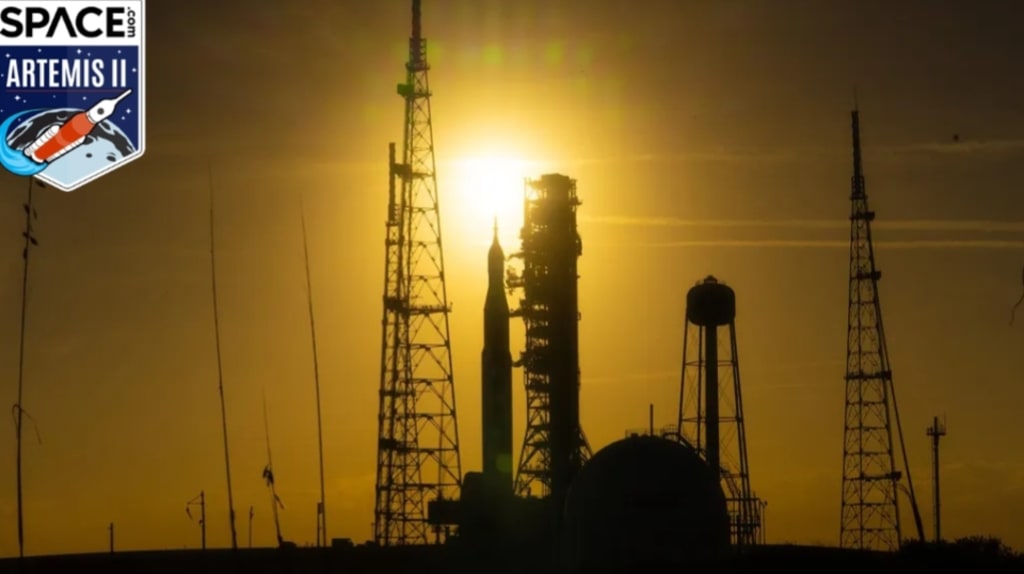
With Artemis 2 now poised for launch, NASA prepares for the first crewed mission in the Artemis program, aiming to return humans to lunar orbit and pave the way for deep-space exploration
NASA’s Artemis 2 mission, a pivotal step in the United States’ ambitious lunar exploration program, has reached a major milestone: the rocket is now securely on the launch pad, ready for final preparations. This mission, the first crewed flight in the Artemis series, is set to orbit the Moon, marking humanity’s return to deep-space travel since the Apollo era. As engineers finalize checks and schedules, anticipation is mounting across the space community and around the world.
The Artemis Program and Its Goals
Artemis is NASA’s long-term lunar exploration initiative, designed to establish sustainable human presence on and around the Moon. Unlike previous missions, Artemis aims not only to land astronauts but also to test new technologies, develop lunar infrastructure, and prepare for eventual human missions to Mars.
Artemis 1, an uncrewed test flight launched successfully in 2022, validated NASA’s Space Launch System (SLS) rocket and Orion spacecraft performance in lunar orbit. Artemis 2 will build on this success by sending astronauts around the Moon, testing life-support systems, spacecraft maneuvering, and crew safety protocols in a real deep-space environment.
Artemis 2 Mission Overview
The Artemis 2 crew will include four astronauts, who will orbit the Moon but not land. This mission is designed to test spacecraft systems under the conditions of space travel far beyond low-Earth orbit. The journey will last approximately 10 days, covering hundreds of thousands of kilometers as Orion travels around the Moon before returning safely to Earth.
Key objectives include:
Validating life-support systems for extended deep-space missions
Testing crew operations during lunar orbital maneuvers
Monitoring spacecraft performance under deep-space conditions
Demonstrating re-entry and recovery procedures after a high-speed return to Earth
This mission will provide critical data for Artemis 3, which aims to land astronauts on the lunar surface, including the first woman and the next man.
Current Status: On the Launch Pad
The Artemis 2 rocket, powered by NASA’s SLS—the most powerful rocket ever built—is now positioned at Kennedy Space Center’s launch pad in Florida. Engineers have completed major integration milestones, including attaching the Orion spacecraft atop the rocket, installing the launch abort system for crew safety, and performing final system checks.
The next steps involve rigorous testing over several weeks to ensure the rocket, spacecraft, and all systems are fully operational. These include:
Wet dress rehearsal: A full countdown simulation with fueling to replicate launch conditions
Final inspections: Confirming all mechanical, electrical, and safety systems are functioning
Mission simulations: Crew and ground teams practice launch, orbit, and emergency scenarios
Once these procedures are complete, NASA will select a launch date, taking into account weather, technical readiness, and orbital dynamics to optimize the trajectory around the Moon.
Challenges Ahead
While Artemis 2 represents a major milestone, several challenges remain. Launching a crewed mission to lunar orbit is inherently complex, and the stakes are high. Engineers must ensure flawless operation of the SLS rocket, Orion spacecraft, and the ground support systems.
Space weather, such as solar radiation and geomagnetic activity, can impact both spacecraft electronics and astronaut safety. NASA continuously monitors these factors to avoid launching during periods of heightened risk.
Furthermore, Artemis 2 will test emergency systems under extreme conditions. The launch abort system is designed to safely carry astronauts away from the rocket in the event of an anomaly, a critical safeguard for deep-space crewed missions.
International Collaboration
Artemis 2 also highlights the collaborative nature of modern space exploration. NASA is working closely with international partners, including the European Space Agency (ESA), which provides the service module that powers Orion in space. Partnerships like these help share costs, technological expertise, and mission risk, while strengthening global scientific collaboration.
What Comes After Artemis 2
Successful completion of Artemis 2 will pave the way for Artemis 3, which aims to return astronauts to the lunar surface, including a focus on the Moon’s south pole. The mission will involve landing on uncharted terrain, testing in-situ resource utilization, and deploying instruments for science and exploration.
Beyond Artemis 3, NASA envisions a sustainable lunar presence, including lunar habitats, robotic exploration, and preparation for Mars missions. Artemis 2 is therefore not just a test flight—it is the foundation for decades of human exploration in deep space.
Public Engagement and Global Impact
Artemis 2 captures the imagination of millions worldwide. NASA is leveraging the mission to inspire STEM education, foster public engagement, and highlight the importance of space science. Live broadcasts, educational programs, and interactive digital experiences will allow students and enthusiasts to follow the astronauts’ journey around the Moon in real-time.
The mission also demonstrates the United States’ continued commitment to leadership in space exploration. By successfully executing deep-space crewed missions, NASA sets a standard for safety, innovation, and international collaboration.
Conclusion
With Artemis 2 now on the launch pad, NASA is on the cusp of a historic mission that will test the limits of human space travel. The next weeks of rigorous testing, simulations, and final preparations will determine the readiness of the rocket, spacecraft, and crew. If all goes according to plan, Artemis 2 will not only mark humanity’s return to lunar orbit but also lay the groundwork for a new era of exploration, ultimately taking humans farther into space than ever before.
About the Creator
Keep reading
More stories from Salaar Jamali and writers in Beat and other communities.
Ludacris and Nelly draw backlash over bookings at MAGA-coded music festival
Ludacris and Nelly headlining a mostly right-wing event is good for them. It’s also great for the genre of hip hop. The two rap veterans have showcased their talents on other stages. Why can’t they perform for mostly MAGA folks and grab that bag?
By Skyler Saunders10 days ago in Beat



Comments
There are no comments for this story
Be the first to respond and start the conversation.