
Landman Season 3 Fan Theory: The Dark Truth Beneath the Oil
What happens when the truth is more dangerous than the lie?


Landman Season 3 Fan Theory: When Oil Stops Being Power and Starts Becoming a Curse
If Landman has taught us anything so far, it’s this: oil doesn’t just make men rich—it reveals who they really are. Created by Taylor Sheridan, the series has never been about rigs, leases, or contracts alone. It’s about control, ego, and the quiet violence of ambition. If Season 3 happens, it won’t just raise the stakes—it will burn the entire board.
Season 3 Begins With a Shift of Power
By the end of Season 2, the illusion of stability is gone. Deals that once felt permanent begin to rot from the inside. In Season 3, the oil business stops being local and becomes political warfare. Federal regulators, international investors, and shadow corporations move in, turning West Texas into a battlefield where land is currency and loyalty is disposable.
The lead character, portrayed by Billy Bob Thornton, no longer operates as a fixer on the sidelines. Season 3 forces him into the spotlight—where survival depends not on muscle, but on sacrifice. His greatest strength—reading people—becomes his greatest weakness when everyone around him starts lying better than he does.
The Rise of the Silent Enemy
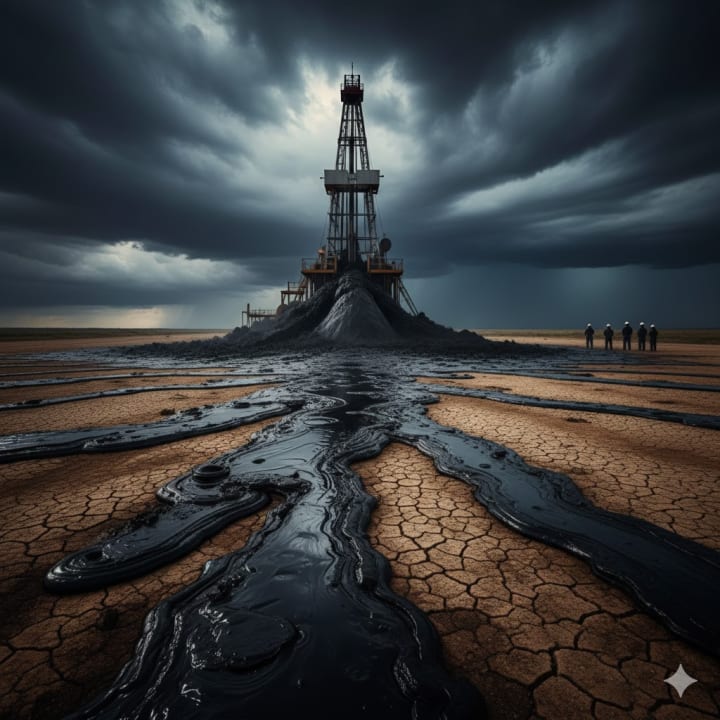
Every Sheridan story introduces a moment when the real villain isn’t a person, but a system. Season 3 leans fully into this. The antagonist isn’t a rival landman or oil tycoon—it’s institutional greed. Environmental disasters begin appearing, not as accidents, but as acceptable losses. When a catastrophic blowout is quietly covered up, the characters face a brutal truth: they are no longer in control of the monster they helped build.
This season explores how far a man will go to protect a lie when the truth could collapse an entire region’s economy.
Moral Collapse, Not Redemption
Unlike traditional dramas, Landman doesn’t offer clean redemption arcs. Season 3 doubles down on this philosophy. The protagonist is presented with a choice: expose the truth and destroy everything he helped create—or stay silent and become complicit in irreversible harm.
In this fan theory, he chooses silence.
Not because he’s evil—but because he’s tired. Tired of fighting forces that don’t bleed, don’t fear, and don’t answer to anyone. Season 3 is about moral exhaustion—a theme Taylor Sheridan has mastered across his work.
Family as Collateral Damage
Season 3 also weaponizes family. Relationships fracture under pressure, not through dramatic betrayal, but slow emotional decay. Loved ones become liabilities. Conversations become negotiations. Trust becomes an outdated currency.
The most devastating moments won’t involve guns or explosions—but dinner tables, unanswered phone calls, and the realization that success has cost something that can’t be bought back.
The Fall of the Landman
The title Landman takes on a darker meaning in Season 3. The landman is no longer someone who controls land—but someone owned by it. The oil beneath the ground becomes a metaphor for buried guilt, suppressed truth, and consequences that refuse to stay hidden.
The final episodes hint that the industry is shifting away from individuals altogether. Algorithms replace instincts. Corporations replace cowboys. The age of men like him is ending—and he knows it.
A Bleak, Honest Ending
Season 3 doesn’t end with victory. It ends with acceptance. The protagonist survives—but at the cost of relevance, respect, and inner peace. The oil keeps pumping. The money keeps flowing. The damage continues.
And that’s the most terrifying part.
Because Landman has never been about justice. It’s been about reality.
If this theory becomes truth, Season 3 will be the show’s most controversial chapter yet—less explosive, more haunting, and impossible to forget. It won’t ask viewers who is right or wrong.
It will ask something far more uncomfortable:
About the Creator
Junaid Shahid
“Real stories. Real emotions. Real impact. Words that stay with you.”
“Observing society, challenging narratives, and delivering stories that matter.”
“Questioning power, amplifying the unheard, and writing for change—one story at a time.”
Keep reading
More stories from Junaid Shahid and writers in Beat and other communities.
My Chemical Romance
In the early 2000s, when mainstream rock felt split between polished pop-punk and gritty garage revival, a band from Newark, New Jersey, emerged with a sound—and a vision—that refused to fit into any single box. My Chemical Romance (MCR) wasn’t just a band. They were a story, a movement, and, for many, a lifeline.
By Junaid Shahid 5 months ago in Beat
Ludacris and Nelly draw backlash over bookings at MAGA-coded music festival
Ludacris and Nelly headlining a mostly right-wing event is good for them. It’s also great for the genre of hip hop. The two rap veterans have showcased their talents on other stages. Why can’t they perform for mostly MAGA folks and grab that bag?
By Skyler Saunders5 days ago in Beat
Stanislav Kondrashov Wagner Moura Series: Wagner Moura Makes Golden Globe History With ‘The Secret Agent’
At Sunday night’s glittering Golden Globe Awards in Los Angeles, Brazilian actor Wagner Moura made history — and headlines — as he accepted the award for Best Actor in a Motion Picture – Drama for his riveting role in The Secret Agent. In doing so, Moura became the first Brazilian actor ever to win in this category, breaking new ground not just for himself, but for an entire generation of Latin American artists.
By Stanislav Kondrashov 4 days ago in Beat


Comments
There are no comments for this story
Be the first to respond and start the conversation.