Vikas Singh
Bio
Vikas is the Chief Technology Officer (CTO) at Brilworks, leads the company's tech innovations with extensive experience in software development. He drives the team to deliver impactful digital solutions globally.
Stories (107)
Filter by community
Choosing the Right Hiring Model for Node.js Talent [Insights From Our Team]
Node.js is often the go-to option when you have to build a product that hinges on backend performance and real-time capabilities. It is lightweight and fast, and its event-driven architecture is a great fit for applications that handle a high volume of concurrent connections. Examples of real-time chat apps. This is why many turn to Node js development company to build a best-in-class app on a reasonable budget.
By Vikas Singh9 months ago in Journal
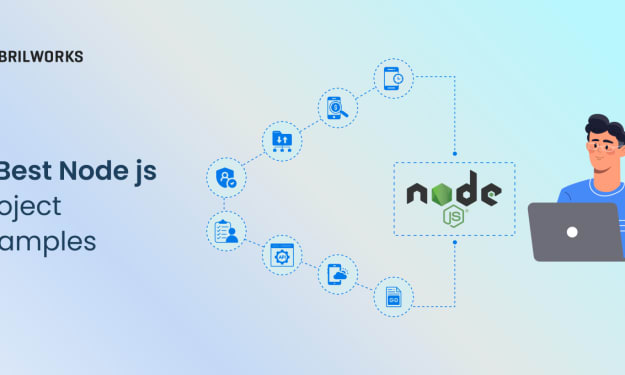
8 Best Node js Project Examples
If you have explored backend development, then you have almost certainly come across Node.js. It's one of the most widely used JavaScript frameworks for building fast, scalable server-side applications, and it's been a favorite among developers for years.
By Vikas Singh9 months ago in Journal
Does React Work for iOS, and How Does it Perform?
If you’re building a mobile app and wondering whether React can handle iOS development, you’re not alone. Many teams choose React Native for its cross-platform capabilities, but how well does it really perform on Apple devices? The short answer is yes, but with some nuances.
By Vikas Singh9 months ago in Journal
The Shift From React to React Native Explained
If you’ve built with React, you’re already halfway to a mobile app. React Native picks up right where React leaves off. React Native isn’t a completely separate ecosystem. It borrows heavily from React’s core principles like component-based structure, reusable logic, and declarative UI, but adapts them for mobile platforms. For teams already working with React, moving to React Native usually feels like a small step, not a big change. But there’s still a bit of a learning curve and a few key choices to make along the way. Here’s a breakdown of what it takes to make the transition from React to React native.
By Vikas Singh9 months ago in Journal
Top React Features for Web Developers
ReactJS is a go-to JavaScript library for building dynamic user interfaces-and for good reason. It plays a crucial role in today’s front-end ecosystem, enabling developers to create fast, interactive web applications with less effort.
By Vikas Singh10 months ago in Journal
React for Front End: 7 Reasons That Make It Stand Out
Today front end development has moved past HTML static pages. There are multiple libraries and frameworks at one’s disposal to create dynamic web pages. Among those, React takes the crown. Developers need to keep up with user expectations like fast, responsive, and dynamic web applications. React for front end development is preferred for this reason mostly, as it allows developers to keep up with user requirements.
By Vikas Singh10 months ago in Journal
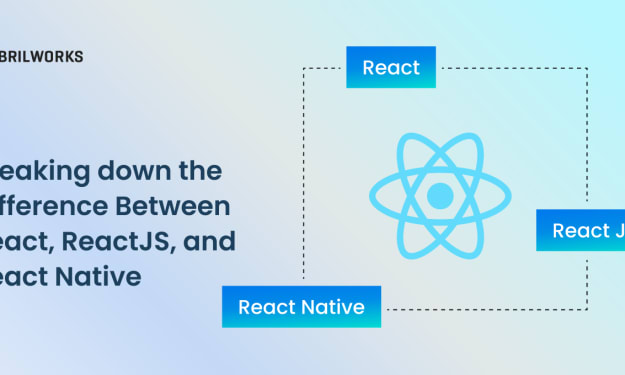
Breaking down the Difference Between React, ReactJS, and React Native
You've undoubtedly heard of React, ReactJS, and React Native if you've ever looked for JavaScript frameworks. These terms cause confusion for many developers, particularly novices. What distinguishes ReactJS from React? And what role does React Native play?
By Vikas Singh10 months ago in Journal
React Native vs Flutter: Which One is Better for Your App in 2025?
Android and iOS are two of the most popular operating systems in the world of smartphones. Both systems demanded different codes to function apps. However, the attempt to build one app for both Android and iOS was not new. In the early 2000s, there were attempts to build apps that could run on multiple platforms. But with the dominance of these two OS, the path of cross-platform app development became all the more clear, and the advancements were Irrefutable.
By Vikas Singh10 months ago in Journal
React Native vs Ionic: Mobile App Framework Comparison in 2025
Recently, we published a blog about top JavaScript Frameworks. While writing, we realized how each framework comes with its own baggage of qualities and flaws. JavaScript has always been one of the most popular programming languages in the mobile app development world.
By Vikas Singh10 months ago in Journal
Why Choose ReactJS for Mobile App Development? Key Reasons Explained
Ask any developer, and they’ll probably tell you that ReactJS or React is mainly for web development. While it’s not completely false, it only tells half of the story. ReactJS app development isn’t just limited to websites anymore; it plays a big role in mobile apps, too.
By Vikas Singh10 months ago in Journal
A Straightforward Guide For Android and iOS Development
Every business wants to have their own mobile app. We are aware of the challenges that come with the mobile app development process. Businesses drop the idea of app development when they face deadlines, budgets, and a small development team. Furthermore, it gets complicated when they think that they might have to build two separate apps for different OS. But instead of creating two separate versions, one for iOS and one for Android, you develop a single app that works smoothly on both platforms. That’s exactly what iOS and Android app development offers.
By Vikas Singh10 months ago in Journal
Top Frameworks for JavaScript App Development in 2025
If you have ever thought about creating a mobile app, then your first consideration might have been which programming language you should choose. Every mobile app development starts with code, and a lot of that code is built using JavaScript frameworks. More than half of developers rely on JavaScript, with recent surveys showing that over 60% use it for creating mobile applications. This widespread use is a testament to how JavaScript has evolved beyond just web pages.
By Vikas Singh10 months ago in Journal