
Choosing the Right Hiring Model for Node.js Talent [Insights From Our Team]
Freelancer, in-house, or agency? Our team shares real insights to help you choose the best hiring model for Node.js talent.
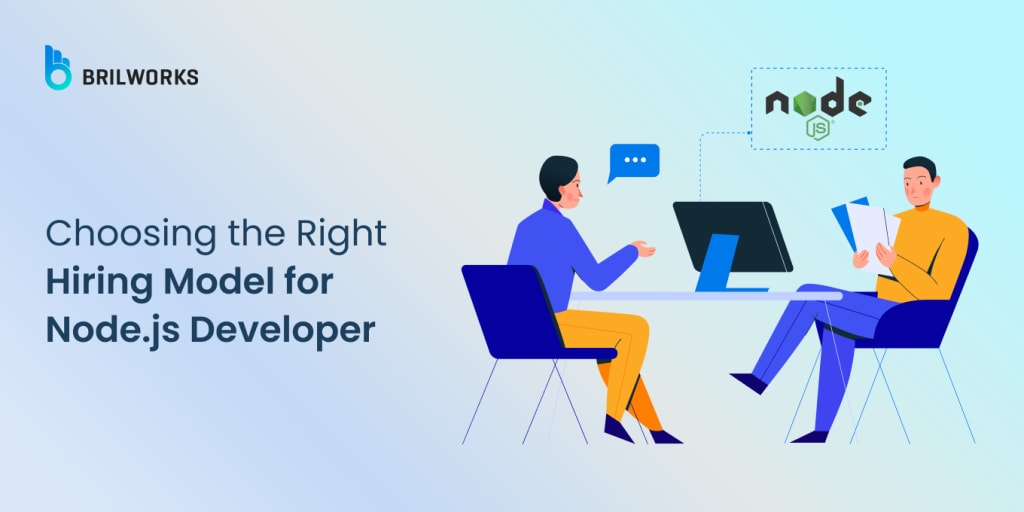
Node.js is often the go-to option when you have to build a product that hinges on backend performance and real-time capabilities. It is lightweight and fast, and its event-driven architecture is a great fit for applications that handle a high volume of concurrent connections. Examples of real-time chat apps. This is why many turn to Node js development company to build a best-in-class app on a reasonable budget.
Overall, Node.js development is a cost-effective option compared to others in the market. But while choosing the tech stack seems to be a straightforward option, deciding how to hire Node.js developers isn't. Decision makers often face a difficult choice of whether to go for freelancers, in-house engineers, or outsource the whole thing. This is a crossroads every decision maker/project manager faces.
Through our experience, we've found that every model has its own set of trade-offs, whether it's cost or control. The way you approach hiring can affect your product's success. In this post, we'll walk you through your options and share some practical tips to help you make the best choice for where you're at right now.
Our Take on Node.js Hiring Cost
When you're looking to hire a Node.js developer, there are a few things to know. If you're targeting developers in the U.S. or Western Europe, you will need to pay a premium. If you outsource from regions like India or Eastern Europe, you can hire Node.js developers at a fraction of the price.
According to Upwork and ZipRecruiter, in the United States, the cost of hiring Node.js developers is typically high. The hourly rate for freelance Node.js developers can be anywhere between $40 and $100+. For full-time roles, salaries range from $100,000 to $180,000 annually, with senior developers reaching salaries as high as $220,000.
Talent.com reports an average salary of CAD 115,000 annually for full-time Node.js developers. Freelance rates can range from CAD 35 to CAD 80 per hour.
According to Talent.com, the cost of hiring Node.js developers in the United Kingdom averages around £60,000 annually for full-time positions. Freelance developers typically charge £40 to £70 per hour.
In India, the cost of hiring Node.js developers is significantly lower than in Western countries. Annual salaries range from $7800 to $16,400 for full-time developers, with freelance rates ranging from $20 to $80 per hour. [Source]
Freelancing vs in-house vs outsourcing
Today, business owners have more flexibility when it comes to finding the right talent. Platforms like Upwork, Toptal, We Work Remotely, and Clutch are popular platforms to find vetted freelancers and verified Node.js development agencies.
There are three engagement models a company may utilize for its projects. Outsourcing is the most popular engagement model, followed by in-house hiring. Beyond these, freelancing is a less common but more reasonable option. The world's renowned companies like Netflix and Shopify have used outsourcing for Node.js to augment their teams.
With nearly 38% of the U.S. workforce now freelancing (Upwork report), and over half of global companies outsourcing at least one business function, organizations today have more options than ever when building their teams.
Whether you're a startup with limited resources or a growing company, choosing between freelancing, in-house hiring, or outsourcing can be challenging. To make things easier, we've put together all the critical details to help to help you find your footing and move ahead with clarity.
1. Freelancers [Flexible with limited control]
Freelancing is a cost-effective way to hire Node.js developers for short-term or niche projects. They offer flexibility that in-house and outsourcing models can't match. With platforms like Upwork and Toptal, there are millions of skilled developers to hire (as per Upwork's 2024 data). Companies can tap into expert developers at far below in-house salaries.
Freelancers can effectively handle the tasks like API integration and bug fixing. Plus, it is trouble-free to find and onboard expert freelancers. However, this flexibility comes with a cost of limited control and potential quality inconsistencies. On Upowork, more than half of the clients report this concern, thus requiring careful vetting for businesses requiring specialized experts in no time; freelancing is an excellent option with unmatched agility.
Pros:
- Lower upfront cost
- Quick onboarding for niche needs
- Access to a wide talent pool globally
Cons:
- Limited control over availability
- Risk of project delays and quality inconsistency
- Often juggling multiple clients
2. In-House Developers [Good for long-term projects]
For many companies, this is a default approach to building an internal team. Even though they may opt for freelancers and outsourcing simultaneously in certain situations. The in-house model provides full control over specialists and developers. In-house development puts your team in the driver's seat to build standout software. Your team is totally in sync with your goals.
You've full control over development strategies and timelines. On average, a company may need to pay $100,000-$150,000 annually to an expert developer, with 4-6 weeks to hire. The payoff? A dedicated team that grows with you, delivering tech that's laser-focused on your needs. For businesses hungry for custom, innovative, in-house drives long-term wins.
The downside of hiring in-house experts is a heavy investment that many startups may not afford. Plus, it often takes a longer time to find the right candidate. In that time, you may find enough freelancers.
Advantages:
- Seamless collaboration with other departments
- More control over code quality and team dynamics
- Stronger alignment with company culture
Challenges:
- Higher costs (salary, benefits, onboarding)
- Time-intensive recruitment
- Less flexibility to scale up/down quickly
3. Outsourcing
According to Deloitte's Global Outsourcing Survey, 70% of organizations said bringing in outside expertise helped them get better results on complex projects. Outsourcing lets you partner with a specialized Node.js development company that already has processes, teams, and experience in place.
With outsourcing, a company can focus on more critical tasks while offloading a significant portion to an expert who has many years of experience in making digital solutions. Outsourcing has been a popular development model used by small businesses and the world's biggest companies. Plus, outsourcing seems to be a cost-saving option for business leaders.
Read the full article here.
About the Creator
Vikas Singh
Vikas is the Chief Technology Officer (CTO) at Brilworks, leads the company's tech innovations with extensive experience in software development. He drives the team to deliver impactful digital solutions globally.
Keep reading
More stories from Vikas Singh and writers in Journal and other communities.
8 Best Node js Project Examples
If you have explored backend development, then you have almost certainly come across Node.js. It's one of the most widely used JavaScript frameworks for building fast, scalable server-side applications, and it's been a favorite among developers for years.
By Vikas Singh9 months ago in Journal
How I Learned to Adapt When Google’s AI Changed the Rules of SEO
I still remember the moment I realized SEO had changed forever. It wasn’t dramatic. No sudden traffic crash. No warning email. Just a slow, unsettling pattern pages that once ranked comfortably were slipping, while content that felt more thoughtful and human started rising. That’s when it clicked. Google wasn’t just ranking keywords anymore. It was reading intent.
By Anthony Rodgers4 days ago in Journal



Comments
There are no comments for this story
Be the first to respond and start the conversation.