
Breaking down the Difference Between React, ReactJS, and React Native
React and React Native are often confused, but they serve different purposes. Learn their differences, use cases, and which one suits your project.
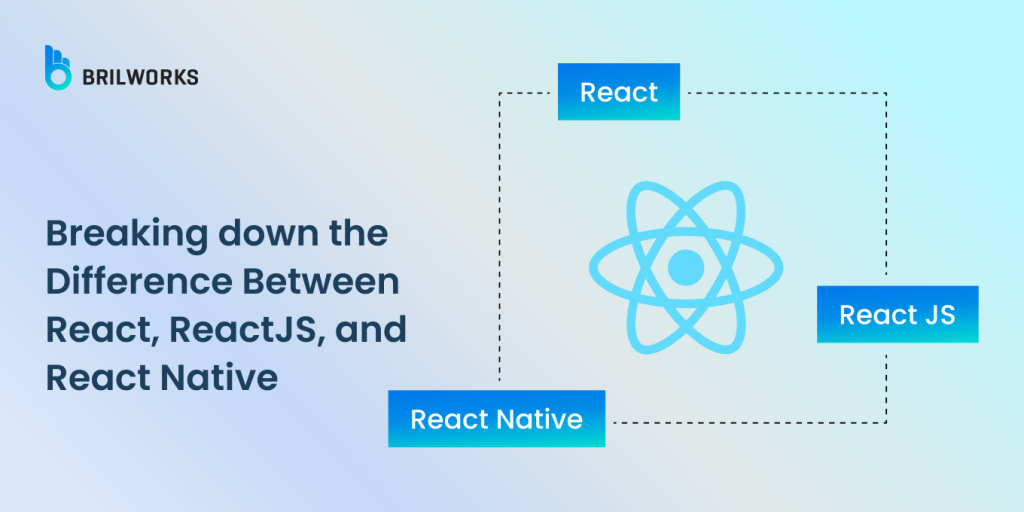
You've undoubtedly heard of React, ReactJS, and React Native if you've ever looked for JavaScript frameworks. These terms cause confusion for many developers, particularly novices. What distinguishes ReactJS from React? And what role does React Native play?
In a nutshell, React and ReactJS are interchangeable, but React Native is entirely distinct. React Native is a framework for creating cross-platform mobile apps, whereas React (or ReactJS) is a JavaScript library for creating web applications.
When choosing one for your project, it is essential to comprehend these distinctions. We'll explain everything in this blog, explain the distinction between React and React Native, and assist you in selecting the best tool for your development requirements.
React vs. ReactJS – Clearing the Confusion
Before moving on, let’s clear the first part of our blog title, which is the difference between React and ReactJS. So, the short answer is that the difference is “JS.” One name is used directly, and the other has JS at the end. React and ReactJS are interchangeable; they both refer to the same JavaScript library for building user interfaces.
So why do we see both terms?
React is the official name given by Meta (formerly Facebook) when they introduced the library in 2013.
ReactJS is an informal way of referring to React, simply emphasizing that it is a JavaScript-based library. Some developers and online resources use "ReactJS" to avoid confusion with other technologies that also use the name "React," such as React Native.
While both terms mean the same thing, "React" is the more commonly used and officially recognized name. If you browse through Meta’s documentation or most professional development circles, you’ll see "React" rather than "ReactJS."
The important takeaway here is that whether someone says React or ReactJS, they are talking about the same library used to build interactive web applications.
What is React (ReactJS)?
Now that we’ve established that React and ReactJS are the same, let’s take a closer look at what React actually is and why it’s so popular among developers.
React is a JavaScript library for building dynamic and interactive user interfaces, primarily for web applications. Developed by Meta (formerly Facebook) in 2013, it was designed to simplify the process of creating fast, scalable, and reusable UI components.
Key Features of React
- Component-Based Architecture - React applications are made up of reusable components, making development more efficient and easier to manage.
- Virtual DOM - Instead of updating the entire web page when something changes, React updates only the necessary parts, improving performance.
- Declarative UI - React allows developers to describe what the UI should look like in different states, making the code more predictable and easier to debug.
- Unidirectional Data Flow - Data in React flows in one direction, making state management more structured and reducing unexpected bugs.
- Strong Ecosystem - With tools like React Router for navigation and state management libraries like Redux, React provides a robust development experience.
Where is React Used?
React is primarily used for building single-page applications (SPAs), progressive web apps (PWAs), and complex web interfaces. Major companies like Netflix, Intagram, and WhatsApp Web rely on React for their front-end development.
Since React is a library (not a full-fledged framework), it focuses solely on the view layer of an application. This means developers often pair it with other technologies like Next.js for server-side rendering or Redux for state management.
Now that we understand React, let’s explore how React Native differs from it and why it exists in the first place.
What is React Native?
While React (ReactJS) is used to build web applications, React Native is a framework designed for building mobile applications. Introduced by Meta in 2015, React Native allows developers to create cross-platform mobile apps using JavaScript and React.
The catch here is that instead of rendering components as HTML elements like React does for the web, React Native renders native UI components for mobile platforms. This means that with a single codebase, developers can build apps for both iOS and Android, significantly reducing development time and effort.
Key Features of React Native
- Cross-Platform Development – Write code once and run it on both iOS and Android, avoiding the need for separate native apps.
- Uses Native Components – Instead of using web technologies like HTML and CSS, React Native directly interacts with native UI components, providing a smoother user experience.
- Hot Reloading – Developers can see real-time changes in the app without restarting the entire build, improving development efficiency.
- Access to Native APIs – React Native allows interaction with device features like camera, GPS, and push notifications using built-in modules or third-party libraries.
- Performance Optimized – Unlike web-based solutions such as Ionic or Cordova, React Native uses a bridge to communicate with native code, offering better performance than traditional hybrid frameworks.
Where is React Native Used?
React Native is widely adopted by companies looking to develop high-quality mobile applications quickly. Some well-known apps built with React Native include:
- Facebook - Meta’s own app partially uses React Native.
- Instagram - Certain parts of the Instagram app, such as the push notification settings screen, were developed with React Native.
- Uber Eats - The restaurant dashboard was built using React Native.
- Discord - The popular messaging app uses React Native for both iOS and Android.
React Native has grown into one of the most preferred frameworks for cross-platform mobile app development, especially for startups and businesses looking to launch apps faster without maintaining separate native codebases.
Now that we understand what React and React Native are, let’s break down their key differences in the next section.
React and React Native: How Do They Work?
Understanding how React and React Native operate helps clarify why they’re suited for different platforms. Though they share similar design philosophies, their execution mechanisms differ considerably:
React:
React operates primarily in the browser using the concept of a virtual DOM. When the state of an application changes, React creates a lightweight copy of the DOM (the virtual DOM) and compares it with the previous version using a diffing algorithm. This process identifies the minimal number of changes needed to update the actual DOM, resulting in a fast and efficient update cycle. The declarative nature of React means that developers describe what the UI should look like at any given state, and React takes care of rendering those changes seamlessly.
React Native:
React Native extends the core concepts of React to mobile development by leveraging a bridge between JavaScript and native code. Instead of updating an HTML-based DOM, React Native translates components written in JavaScript (using JSX) into native UI elements. This means that a <View> in React Native corresponds directly to a native container on iOS or Android. The bridge facilitates communication between JavaScript and the native platform, ensuring that the application can respond to user interactions and perform animations smoothly while delivering a native experience.
They also differ in the rendering process:
- React uses the virtual DOM to compare previous and current states and then selectively updates only the necessary parts of the real DOM.
- React Native bypasses the HTML/CSS stack completely by directly mapping components to native widgets via the bridge, resulting in a true native user experience.
Both systems follow similar component lifecycles and use state and props to manage data flow. However, in React Native, these updates trigger changes in native components rather than web elements, which requires handling different performance considerations and native interactions.
React and React Native both use declarative programming and component-based architecture. React concentrates on updating web pages efficiently using the virtual DOM, while React Native uses a bridge to render native components and guarantee a smooth mobile experience. Each is particularly strong in its own field because of this architectural difference.
Read the full article here.
About the Creator
Vikas Singh
Vikas is the Chief Technology Officer (CTO) at Brilworks, leads the company's tech innovations with extensive experience in software development. He drives the team to deliver impactful digital solutions globally.
Keep reading
More stories from Vikas Singh and writers in Journal and other communities.
React Native vs Flutter: Which One is Better for Your App in 2025?
Android and iOS are two of the most popular operating systems in the world of smartphones. Both systems demanded different codes to function apps. However, the attempt to build one app for both Android and iOS was not new. In the early 2000s, there were attempts to build apps that could run on multiple platforms. But with the dominance of these two OS, the path of cross-platform app development became all the more clear, and the advancements were Irrefutable.
By Vikas Singh10 months ago in Journal
What Healthcare Organizations Must Do to Stay Compliant
Introduction Compliance protects healthcare organizations. Regulations govern daily operations. Patient safety depends on adherence. Noncompliance creates serious risk. Financial penalties can be severe. Reputation damage is lasting. Oversight continues to increase. Expectations evolve constantly. Compliance requires commitment. Leadership must prioritize standards. Systems must support requirements. Staff must understand obligations. Proactive compliance prevents disruption. Preparation reduces exposure. Compliance supports trust. Accountability defines professionalism.
By Abdul Mueed2 days ago in Journal



Comments (1)
I love breaking down the difference! Fantastic!