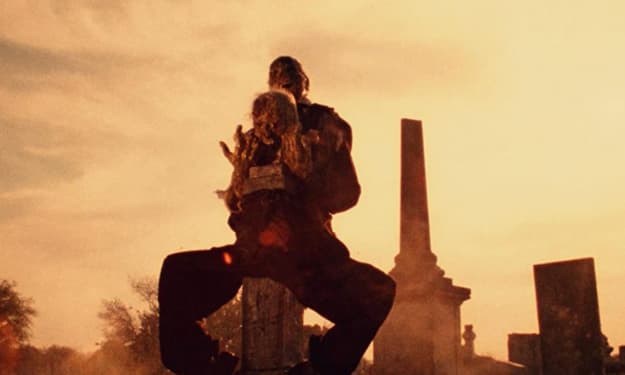
The Texas Chainsaw Massacre (1973)
I just finished watching, for what seems to be the hundredth time in my life, the 1974 grind house mega-classic, the horrific blockbuster, The Texas Chainsaw Massacre, a film that has achieved a legendary cult status. It is a stark, ugly, brutal film, calling to mind that other film of the era with which it shares the most infamy--Wes Craven's social shocker cum medieval morality play Last House on the Left (1973). Both films seem, by the standard of mere "entertainment," to be grueling, morbid experiences, films calculated to bring about the most dire feelings of revulsion, if not titillation, on the part of eager but undeniably guilty viewers; morally guilty for indulging such "entertainment", but, with that same sense of morbid wonder at the graphic display of violence, sadism, mutilation and morally repugnant acts offered by each respective film. Last House is the kinkier, most sexual, most "human" and rational, if utterly grotesque and macabre, of the duo. Texas Chainsaw Massacre is, by contrast, like sticking the viewer's head in the mouth of a particularly grisly and mutated feral animal, a vomitus descent from an "idyllic summer afternoon drive" (as described by opening narrator John Larroquette) into what, indeed, is the depths of an actual cinematic nightmare; albeit, one that is based upon the real-life doings of such individuals as Ed Gein and the medieval Scottish "monster brood" known to history as the "Sawney Beane" clan. (The last inspired, incidentally, Wes Craven to later go on and make The Hills Have Eyes (1977), exploring similar themes as Texas Chainsaw.)