
PLA Holds Drills Around Taiwan in Warning to ‘Independence Forces’ After U.S. Arms Deal
Subtitle: Beijing escalates military pressure following U.S. weapons sale as cross-strait tensions intensify
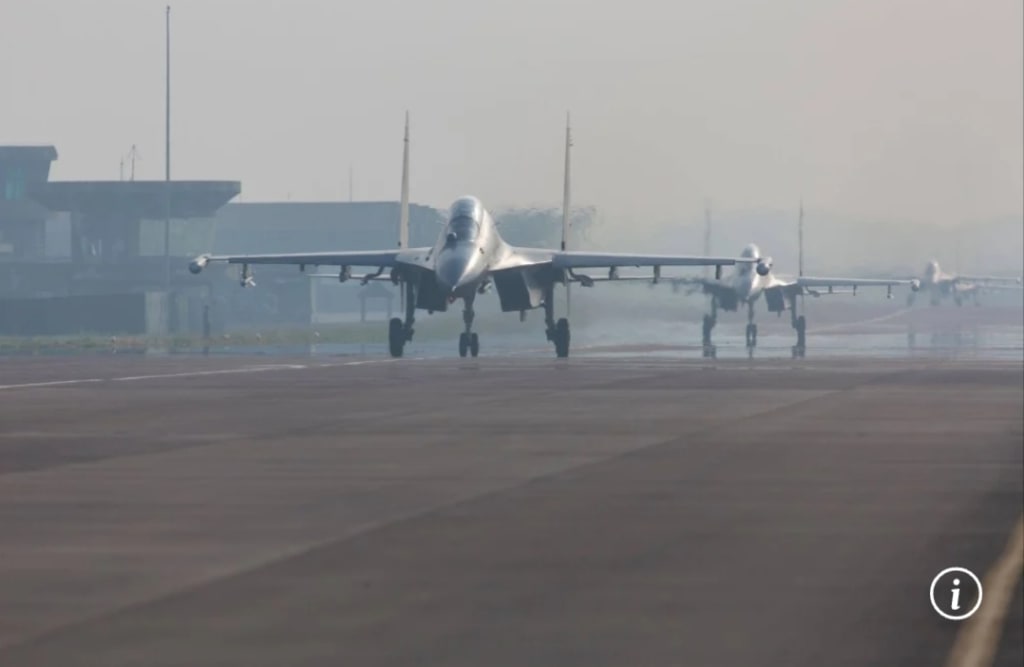
China’s People’s Liberation Army (PLA) has conducted a new round of military drills around Taiwan, issuing a sharp warning to what Beijing calls “independence forces” following a fresh arms deal between the United States and the self-governed island. The exercises underscore rising tensions in the Taiwan Strait, as military signaling intensifies alongside diplomatic friction between China, the United States, and Taiwan.
According to China’s Ministry of National Defense, the drills involved coordinated operations by naval, air, ground, and rocket forces, with an emphasis on joint combat readiness and precision strike capabilities. Chinese officials framed the exercises as a necessary response to the U.S. decision to supply advanced weapons systems to Taiwan, arguing that such moves seriously undermine regional stability and violate China’s sovereignty.
Beijing’s Response to the U.S. Arms Deal
China has long opposed U.S. arms sales to Taiwan, viewing them as interference in its internal affairs and a breach of commitments under the “One China” framework. The latest arms deal, which includes advanced defensive systems and military support equipment, has been described by Beijing as a dangerous escalation that emboldens pro-independence elements in Taiwan.
In an official statement, a PLA spokesperson said the drills were “a resolute countermeasure and stern warning” to separatist forces and external actors. The spokesperson added that the PLA is fully capable of defeating any attempt to divide the country and will take all necessary measures to defend national unity.
The timing of the drills, coming shortly after the arms deal announcement, highlights the close link Beijing draws between diplomatic actions and military responses. Analysts say this pattern reflects China’s broader strategy of deterrence, using military pressure to reinforce political red lines.
Nature and Scope of the Drills
Chinese state media reported that the drills took place in multiple directions around Taiwan, involving warships, fighter jets, bombers, and missile units. The exercises reportedly included simulated strikes on key targets, maritime control operations, and air patrols designed to test the PLA’s ability to operate in a complex, high-intensity environment.
Military experts note that such drills are increasingly sophisticated, reflecting the PLA’s rapid modernization. Joint operations across different service branches indicate a focus on integrated warfare, which would be essential in any potential conflict scenario involving Taiwan.
By operating close to Taiwan’s airspace and waters, the PLA also seeks to normalize its military presence in the area. Over time, analysts say, this could alter the security environment by reducing response times and increasing pressure on Taiwan’s defense forces.
Taiwan Pushes Back
Taiwan’s government strongly condemned the PLA drills, accusing Beijing of using military intimidation to undermine peace and stability. Taiwan’s Ministry of National Defense said it was closely monitoring the situation and had activated appropriate response measures, including surveillance flights and naval patrols.
Taiwanese officials emphasized that the island’s defense posture is purely defensive and that U.S. arms purchases are intended to maintain a balance of power, not provoke conflict. They reiterated that Taiwan’s future should be decided by its people through democratic means, free from coercion or threats.
Public reaction in Taiwan has been mixed, with concern over rising tensions balanced by growing support for strengthening the island’s defense capabilities. Recent drills have reinforced debates within Taiwanese society about preparedness, resilience, and the cost of prolonged confrontation with the mainland.
U.S. and International Reactions
The United States has defended its arms sales to Taiwan as consistent with long-standing policy and necessary to help the island maintain sufficient self-defense capabilities. U.S. officials have called on China to exercise restraint and avoid actions that could escalate tensions in the region.
Other regional actors, including Japan and Australia, have expressed concern over the situation, noting that stability in the Taiwan Strait is critical to regional and global security. The strait is a major route for international trade, and any conflict could have severe economic consequences far beyond East Asia.
Strategic Calculations
From Beijing’s perspective, the drills serve multiple strategic purposes. Militarily, they provide valuable training and allow the PLA to refine its operational readiness. Politically, they send a clear message that China will not tolerate steps it sees as moving Taiwan closer to independence.
For the United States, continued arms support for Taiwan reflects a balancing act: deterring aggression while avoiding direct confrontation with China. Taiwan, meanwhile, finds itself navigating between strengthening its defenses and managing the risks of provoking further pressure from Beijing.
Risks of Escalation
While none of the parties appear to seek immediate conflict, the increasing frequency and intensity of military activity raise the risk of miscalculation. Close encounters between aircraft and ships leave little room for error, and an incident could quickly spiral into a broader crisis.
Analysts warn that without effective communication channels and confidence-building measures, the margin for mistake continues to narrow. As military drills become more routine, the danger lies not only in deliberate escalation but in accidents or misunderstandings.
Conclusion
The PLA’s drills around Taiwan, conducted in response to a U.S. arms deal, highlight the fragile state of cross-strait relations and the growing role of military signaling in great power competition. As Beijing warns “independence forces” and external actors, Taiwan reaffirms its commitment to self-defense and democracy, while the United States seeks to maintain deterrence without provoking conflict.
The situation underscores a delicate balance—one in which diplomacy, military readiness, and strategic restraint will all play crucial roles in determining whether peace in the Taiwan Strait can be preserved.
About the Creator
Keep reading
More stories from Salaar Jamali and writers in The Swamp and other communities.
China Launches War Games Around Taiwan as Island Vows to Defend Democracy
China has launched a new round of large-scale military war games around Taiwan, sharply escalating tensions in the Taiwan Strait and prompting a firm response from Taipei, which has vowed to defend its democratic system and way of life. The exercises, announced by China’s military authorities, involve coordinated operations by naval, air, and missile forces and are being framed by Beijing as a necessary response to what it calls separatist activity and foreign interference.
By Salaar Jamali14 days ago in The Swamp
America, Russia And Other Warships Head To India: What’s Coming Next?
In a rare demonstration of naval activity, fleets from the United States, Russia, and other key powers are reportedly heading toward India in what analysts describe as a “strategic maritime convergence.” This development has caught the attention of global security experts, as it signals potential shifts in geopolitical alignments and raises questions about the future of regional stability in the Indo-Pacific. The Arrival of Global Fleets Reports indicate that multiple naval vessels, including advanced warships from the US and Russia, are en route to Indian waters. While military exercises are routine, the presence of these fleets together in a region that has witnessed rising tensions over territorial disputes and trade routes has raised eyebrows. Analysts note that India’s strategic location, bridging the Indian Ocean and the Pacific, makes it a focal point for naval power projection. The United States has maintained a robust naval presence in the Indo-Pacific for decades, primarily to safeguard trade routes, deter Chinese expansion, and maintain alliances with regional partners. Russia, meanwhile, has been strengthening military cooperation with India, supplying advanced weaponry and conducting joint exercises. The convergence of both nations’ naval assets highlights the increasing strategic importance of India in global military planning. Potential Motivations Behind the Movement Several factors could explain this unprecedented maritime maneuver. First, India is emerging as a pivotal player in global defense and security. Its modernizing navy, coupled with strategic ports such as Visakhapatnam and Mumbai, provides a critical launchpad for joint operations or rapid deployment. Second, regional tensions are escalating. The South China Sea and the Indian Ocean have become hotspots for naval confrontations, with territorial disputes and trade security concerns at the forefront. A coordinated presence by multiple powers signals an intent to assert influence and project strength in the region. Third, these movements may reflect preparations for joint military exercises, which India frequently hosts with global partners. Such exercises allow navies to test interoperability, showcase capabilities, and strengthen diplomatic ties. However, the inclusion of both American and Russian forces—nations with historically divergent global objectives—adds a layer of complexity. Implications for Regional Security The presence of powerful fleets in India’s vicinity has multiple security implications. Regional players such as China, Pakistan, and smaller Indian Ocean nations are likely monitoring these developments closely. While some may view it as a stabilizing deterrent against unilateral aggression, others may see it as a provocative escalation. For India, this convergence is both an opportunity and a challenge. On one hand, hosting or coordinating with multiple powers underscores India’s rising strategic clout. On the other, managing the competing interests of major military players requires careful diplomacy to avoid unintended tensions. Additionally, maritime security experts warn that the dense concentration of warships can increase the risk of miscalculations or accidents at sea. Navigating crowded waters while conducting exercises demands precise communication and strict adherence to protocols. Any lapse could escalate tensions unexpectedly. The Geopolitical Angle Beyond the immediate region, this naval movement has broader geopolitical implications. The United States appears to reaffirm its commitment to balancing China’s growing influence in Asia. Russia, meanwhile, seems keen on maintaining strategic ties with India while signaling its continued global relevance amid Western sanctions and pressures. Other nations, possibly including European partners and Australia, may also observe or participate in related naval activities. Their involvement would further indicate the interconnectedness of global security concerns and the increasingly multipolar nature of maritime strategy. What Comes Next? While official statements remain cautious, experts anticipate a combination of joint exercises, port visits, and strategic consultations over the coming weeks. Analysts suggest that India may leverage this opportunity to strengthen defense agreements, secure technology transfers, and position itself as a central player in Indo-Pacific security. Diplomatic channels will be equally important. India must balance cooperation with major powers while maintaining an independent foreign policy, ensuring that these naval movements do not inadvertently heighten regional tensions.A Turning Point at Sea The arrival of American, Russian, and allied warships in India is more than a headline—it is a reflection of shifting global power dynamics. The Indian Ocean is no longer a quiet backdrop to world affairs; it is a central stage where the future of global security is being negotiated. As these fleets dock, train, and depart, the world will be watching closely. What happens next may well shape the balance of power across oceans for years to come.
By Fiaz Ahmed 2 days ago in The Swamp


Comments
There are no comments for this story
Be the first to respond and start the conversation.