Riya singh
Bio
Stories (34)
Filter by community
How Will Our Universe End? Big Crunch Theory
we've all heard about the big bang and I am really sad that the series has ended well here of course I'm talking about the Big Bang that actually started everything again most people have heard of that but what do you know about the Big Crunch and now I'm not talking about some random candy bar while most scientists believe that our universe began with a massive burst of energy opinions remain divided about how everything will one day come to an end there's a range of theories such as the big fries and the big rip but the one that's considered to be the most likely scenario is the Big Crunch so what is the Big Crunch but the Big Crunch Theory has its roots in Einstein's theory of general relativity everything in life follows an ebb and flow when one event occurs the reverse is likely to occur after hitting the extreme if the Big Bang causes the expansion of the universe then eventually the opposite will become true once the universe has reached its largest size and as determined by the amount of energy that's present it will begin to be collapsed in on itself and in the end form a massive black hole that contains all matter due to the conditions that are present in the singularity of the size everything will be squashed down to a miniscule size which is why it's called the Big Crunch so probably not great news for all those of you who are a class or for bacon and tend to live billions of years well here's the good news while the math suggests that the Big Crunch is possible and even probable there's a problem for those who dedicate their careers to understanding questions like this we don't yet fully comprehending everything in a universe and there are a couple of unknowns that will affect our ultimate fate first the universe's expansion appears to be the interplay of two factors density and outward momentum density has a direct correlation to the amount of gravity that is present so the denser the universe is the more gravitational forces that take place this on its own would mean that everything will eventually gravitate towards everything else and the final Big Crunch becomes an inevitability although there's no friction in space the effect of gravity would be more than enough to counteract the initial outward momentum caused by the Big Bang and all matter what essentially returned to where come from the problem with this though is that observations of the universe have shown that things aren't behaving as simply as we would expect the outer reaches appear to be expanding at a faster rate than those closer to us and galaxies are actually moving further apart from each other scientists don't know why this is happening but they have given a name to this unknown entity dark energy this extra element in the expansion of the universe means that there are two potential outcomes it will either continue to expand forever and objects will be so far apart from each other that everything will freeze were we could still faced a Big Crunch the determining factor is how much dark energy are actually there if there is enough which some scientists believe could be the case then everything will continue to expand if there isn't enough though then the forces of gravity will once more eventually over comment and bring everything back together again some believe the seeming prevalence of dark energy could well signal the beginning of the Big Crunch however in a report released in 2015 it was suggested that the current increased rates of expansion is the last gasp of the expanding universe and that within tens of billions of years the contraction will begin so how would the Big Crunch happen if we assume that there isn't enough dark energy and that the Big Crunch does take place then it won't be as spectacular as the Big Bang was the universe will begin to contract evenly because matter is more or less distributed consistently it would be a slow process for what begin to gradually pick up in speed as galaxies got closer to one another and the forces of gravity have more of an effect in about a hundred billion years from now as things reach and climax temperatures would significantly increase in this will result in stars exploding and in vaporizing and all objects will be broken down into their constituent atoms which themselves will begin to break apart in the final stages as all matter from the universe compacts into a small space things will become extremely chaotic so much so that some predictions suggest as space-time will become so warped that it would shatter into droplets meaning all concepts of time distance and a direction would become meaningless of course no living organism would have been able to survive to this point in we would have all been doomed a long time before this so with our lack of full understanding of the process taking place in the universe it's impossible to know for sure how everything will end one of the scenario is the Big Crunch which will see every piece of the matter returning to where it originated in and all that will remain to be an unimaginably large black hole what happens at that point really is anyone's guess and it could potentially see the birth of a new universe it's also possible that this has all happened a number of times already and we're alive in just another in a long line of cyclical expansions and contractions again only those of you who's planning to be alive for billions of years will really have to worry about this.
By Riya singh12 months ago in Earth
5 Most AMAZING Scientific Discoveries of the Decade
the last decade was undeniably one of the richest periods of scientific discovery ever researchers across all disciplines tested hypotheses found proves and visited places that have made us rethink our understanding of not only our own planets but of the entire universe it was the decade when we finally begin to understand one of the greatest challenges humankind has ever faced and we've learned far more than ever before about some of the most destructive objects in existence so let's take a look at five of the most amazing scientific discoveries of the 2000 intense number 5 Pluto despite having been unceremoniously downgraded from being a fully fledged planet in 2006 that year also saw the launch of the New Horizons spacecraft that was destined to travel to the farthest reaches of our solar system to study the dwarf planet it finally reached its destination in July of 2015 in the images and data that were sent back were astonishing far from being the boring frozen rock that some had expected it was found to have moving glaciers floating ice mountains and a huge frozen sea made of solid nitrogen the ice is constantly moving Arbit at a slow rates because it is warmed by the pressure above it which in turn causes it to rise the constant replenishment of the top layer of ice creates a surface structures that no one had expected and that has given a new introduction and understanding to what happens on the mysterious dwarf planets at the edge of our solar system number four the Higgs bosons it took the construction of the world's largest machine at a cost of just under five billion dollars but in 2012 it was finally announced that the mysterious Higgs a Bolton also known as the god particle have been discovered at the Large Hadron Collider in CERN Switzerland the particle had first been theorized in 1964 and is one of the most influential pieces of the subatomic world the reason that it's so important is that the standard model of physics which includes familiar particles like electrons and protons and um from such as muons and quarks doesn't actually explain why objects have mass the answer though is the elusive Higgs boson particle which exists in the Higgs field and due to its interaction with other particles it's the reason why mass exists his discovery was the confirmation of the last unknown part of the standard model of physics and now researchers are able to repurpose the LHC to begin investigating even stranger phenomenon number 3 Kepler for thousands of years humans have looked to the skies wondering what's up there as astronomical devices were invented we learned that countless stars existed throughout the universe and danced there are other planets in our own solar system but it was impossible to learn how common it is for planets to orbit stars this all changed in 2009 with the launch of the first Kepler probe which was used to study distant stars and measured the amount of light they emit fluctuations in their brightness can be used to determine whether any objects are orbiting them and the results have been unbelievable by the end of the last decade more than 4055 exoplanets have been discovered including a few that are potentially habitable and this number is only expected to increase as we enter a new decade the more we look the more common our own solar system seems to be and you can only imagine what else is out there to be found number three the world's climates throughout the Earth's history the climate has changed drastically there have been periods of extreme heat and extreme cold and there's no doubt that things are noticeably changing again during our lifetimes what's different this time though is that the changes are largely due to human behavior something that became clearer than ever in the last decade and we've begun to understand the extent to how it's affecting the planet in 2012 400 billion tons of ice was lost from Greenland and more than 250 two billion tons of ice has been lost from Antarctica every year throughout the decade this is an increase of almost six times the amount being lost just thirty years earlier and at the current rate the world's sea levels are expected to rise by 3 feet by the year 2100 this would directly affect the homes and lives of at least 630 million people but the consequences are far further reaching human activity has meant that 40% of all amphibian species more than 33% of marine mammals and 10% of insect species are endangered and things continues to get worse while the last decade was the time where the extent of the problem was beginning to be fully realized let's hope that the next decade is when the solution is finally found finally number one black holes black holes have long been some of the most mysterious objects in the universe but thanks to researchers dedicating their efforts to studying the phenomena we've uncovered far more about them and they are much more interesting than you may think black holes are typically formed by large stars at the end of their lives and when all the material collapses in on itself to create an unbelievably dense structure and because of their intense gravity costs some very unusual things to happen in 2016 - black holes were detected colliding into one another which confirmed the prediction made by Einstein in 1916 whereby they created ripples in space-time known as gravitational waves this amazing discovery wasn't the biggest black hole revelation of the last decade however as a team working with the event horizon telescope managed to capture the first-ever image of a single arity it's a massive black hole that lies at the center of the Messier 87 galaxy about 54 million light-years away from us in his mass is so big that that is the equivalent to 6.5 billion of our Suns black holes like those are thought to be at the center of every galaxy and their gravitational poles are the reason why so many billions of stars orbit them in such large structures the 2010 were an incredible time for scientific discoveries and we've learned so much about the world and universe all around us and I for one can't wait to see what happens.
By Riya singh12 months ago in BookClub
Are Cell Phones Mutating the Shape of Our Bones?
what if cellphones were so powerful that they could mutate the shape of our bones this is a surprising new topic that's recently been popping up all over the media it stems from a scientific report that suggests using phones and tablets can cause serious and long-lasting changes to our bodies and not in a way that you might think in the past few years a study has been carried out by David Shahar and mark sayers who specialized in biomechanics at Australia's University of the Sunshine Coast biomechanics looks at how mechanical laws apply to living organisms from how humans run to how insects beat their wings Shahar and sayers study also involves osteo biography this is used to work out what someone's life was like from their bones it's been known for some time that skeletons adapt to a person's lifestyle every set of bones tells a story for example some unusually large skeletons were found on the Pacific island of Tinian in 1924 stone structures in the vicinity of the skeletons explained the substantial nature of the islands bones by working with heavy stones they had naturally developed bigger arms legs and collarbones and over in Australia Shaw heart and sayers believe that modern tech is shaping young people's skeletons so how is it doing this it's all to do with something called an EOP or external occipital protuberance some experts and commentators have been more colorful and described it as foam ball or a devil like horn in reality the EOP is a growth of bone found in the back of the skull it's connected to the nuchal ligament this is an important ligament that plays a role in connecting Nick muscles to the skull the EOP creates an effect a lot like an anchor at the top of the nuchal ligament now let's go back to what the researchers were actually doing with the study in the first place by looking at chiropractors x-rays of people aged between 18 to 86 they wanted to get an up-to-date insight into how skeletons change because a lot of these x-rays were investigating things like neck pains there's also an elements of what consequences these changes may have on our health Shahar has sayers noticed that in young people the EOP appeared to be more widespread from this they hypothesized that young people's posture while constantly checking their phones and tablets was a major factor during screen time the neck instinctively cranks forward the theory is that by craning forward extra pressure is put on the area where sculpt me smuzzle to compensate the EOP gets gradually longer growing to around several milliliters the effect has also referred to as text neck the fundings also revealed that it was mostly found in men in 2016 Shah Harden sayers reported a bigger Yi Opie and 67% of men compared to 20% of women based on a test group of 218 people by 2018 they had looked at 1200 people with males appearing to be 5 times more likely to get these large texts necks but what is the potential impact on humanity we hear a lot about the radiation from phones potentially linked to cancer but can using a mobile device actually create significant health problems in the body this new report has opened up the debates on this topic since it's the first case where experts are explicitly pointing out how tech is affecting our bodies Shahar & sayers described the elongated yo PS as a degenerative process implying things are only gonna get much worse for young people if they keep using their devices there is also something called text thumb or thumb arthritis where thumb can develop serious problems similar to the dreaded carpal tunnel syndrome however the study of EOPS and referring to them as horns where spikes has been criticized by others in the press experts point out that the report is not conclusive and like any scientific paper it makes assumptions archeologists will tell you that longer skull bones are nothing new and that there are especially common in males the general view according to the studies critics is that there simply isn't enough hard evidence to back up the claim that you are actually turning into Hellboy by using your cell phones so are Shahar and sayers on to something or have they simply taken along established facts and fitted them into their own explanation either way there's no denying the dramatic impact that technology has on our lives the idea that upcoming generations are changing due to constant interaction with their devices is really a serious issue that needs to be addressed ultimately it will be the archaeologists of the future that make that call maybe don't even have big spikes sticking out of the back of their necks in the future who knows so yeah maybe a little more walk in the park and a little less Angry Birds you.
By Riya singh12 months ago in Psyche
How AI could help us talk to animals.
Way back in the 80s, I noticed that sometimes, when an elephant called a member of her family, one individual would answer, and everybody else ignored the calling animal. And then she would call again, and a different elephant would sort of lift her head up and rumble very loudly. This is Joyce Poole. She's been studying African elephants and their communication for 50 years. Then I started to think, well, okay, so maybe they have a way of directing a call to a specific individual. But we had no way of detecting that. Decades later, she partnered up with Mickey Pardo, who designed a study around her observations. I went out into the field. I recorded calls with careful behavioral observations. So we knew who made each call, we knew who the call was addressed to, we knew the context of the call... They encoded the acoustic information from the recordings into a long string of numbers, along with the data Mickey collected about the calls. They fed nearly 500 different calls like this into a statistical model. And when given the acoustic structure of a new call, the model could predict who the receiver of the call was, much better than chance. In other words, evidence suggesting African savanna elephants give each other names. When we posted it on Facebook, somebody wrote back, said that the Earth just shifted a little bit. And I think that's true. This is just one example of how machine learning is decoding complexities in animal communication
By Riya singh12 months ago in Education
How pit bulls got a bad reputation
being attacked by dogs a pitbull breeder is savagely mauled to death killed by his 13 pitbulls you've probably seen a lot of stories about pitbull attacks and anecdotes about how dangerous they are and when movies need to show a vicious dog it's often a pitbull why is that is there something about these dogs that makes them inherently more demonizing certain dogs the first dog that caused a public outcry was this The Spits a type of dog we'd most likely Now call a Pomeranian they got the reputation as women's dogs with one doctor essentially saying that women deserve whatever consequences come from having dogs instead of babies articles said that these dogs were aggressive and deadly and called them treacherous beasts meanwhile pit bulls were once thought of as a great family dog they really were just seen as the Honda Civic of dogs this this is bronwin dicki she spent over 7 years researching and writing a book about pit bulls the kind of Horatio aler Plucky Everyman dog a pitbull was The Lovable sidekick of The Little Rascals and they were even used in military posters to advertise patriotism so what changed in the 1960s and '70s the cultural landscape started to shift dramatically crime rates Rose across the country especially in America's largest cities it made people believe that they were in danger all the time and what you see is a lot of people getting those dogs to acquire like a small medium smooth coated dog with a big head whatever you want to call it it's always been easier to acquire that type of dog than again your $3 to $5,000 Champion Labrador one New York Times article from 1971 said that residents of the Bronx got guard dogs to take care of themselves since the city wasn't doing it for them the 1980s also Usher in a new era of rap music which directly confronted the deterioration of inner cities and featured many references to pit bulls once these dogs became associated with Urban poverty and the plight of black youth they became proxies for human Prejudice and racism new stories Associated these dogs with drug dealers and criminals you would see comments like we have enough of those people here they don't need to bring their dogs here a stereotype of pit bulls had emerged in the media they had gone from familyfriendly to National foe but let's back up for a second what even is a pitbull the term Pitbull is a lot like the term Hound it's a breed group it's a generalized shape it's not a specific breed within that category there are four pure breeds the American Pitbull Terrier the American Staffordshire Terrier the American Bully and the Staffordshire Bull Terrier they were bred down from the British Bull and Terrier dogs which were in turn descendants of English Bulldogs because of this a lot of people use the term pit bull-shaped dog but for the sake of Simplicity I'll be saying pitbull in this video Pitbull's reputation has led them to being included in the more than 700 US cities breed specific legislation also known as BSL breed specific leg legislation is an attempt to restrict or ban ownership of a dog based purely on essentially their breed right what they look like you have this unfortunate um perception that they're aggressive dogs who are born to fight and dangerous to justify BSL Pitbull opponents often cite legal rulings such as the 2012 court of appeals ruling from Maryland which says that pit bulls are inherently dangerous the way that we as a society um sometimes treat dogs as what makes them dangerous I don't think there's a breed that's inherently dangerous the dissenting judge from the 2012 case pointed out a lack of proof to support the inherently dangerous designation and highlighted that dog bite statistics are unreliable we don't have good numbers on dog like which dogs bite the most in general because of reporting biases smaller dogs or other dogs bite and it just doesn't get reported the same way it does if it were a pull I think pit attacks make for good news just like shark attacks do we know that not a lot of people die from shark attacks every year but when one does it's on the news even just determining a dog's breed is incredibly difficult people see a large dog in think Pitbull automatically unless it's a breed that they can readily identify but it's almost impossible to judge what breed a dog is by sight most dogs are mixed breed with some being a mixture of several different kinds a study found that nearly 90% of dogs and shelters that were labeled as a particular breed were misidentified and dogs were labeled as Pitbull type dogs almost half the time even without DNA evidence which means that a lot of dogs that may look like pitbull mixes don't actually have any pitbull in them and then there's just their sheer population they're they're one of our most popular dogs so if you're looking at just straight numbers there are always going to be more bites reported from popular breeds than there are from dogs who are not as popular for this reason and more the American Veterinary Medical Association cautioned in 2001 that dog bite statistics are not really statistics and they do not give an accurate picture of dogs that bite we know that uh BSL doesn't work that and that's sort of the bottom line as even in places where these laws exist they haven't prevented bites and attacks Denver spent $5.8 million over 30 years enforcing their Pitbull ban with little measurable impact on Public Safety similarly in Denmark pit bulls were banned in 2010 and the country didn't see any significant changes in dog bite hospitalizations so what does this mean for these dogs and their owners there are many many many rental properties where you cannot live if you have a dog that is considered a pit bull it was either a size thing like no dogs over 30 30 lb or um if they did accept large dogs they said that caveat no pitbulls this is Lauren a friend at Vox who has a pitbull named Dilly she said many landlords simply don't allow pitbulls it's very difficult I think a lot of people agree that they're misunderstood when we first got him I was afraid he was going to like shred our apartment and the worst he did was like nibbled on like the side of my hat once anytime I have to fill out any paperwork for I say mixed breed just to be safe I see so many people come through and they'll AB absolutely fall in love with a dog and then they'll say is it a pit bull and I'll say well we don't really know and then they move on to another dog it's a really sad moment for me when that dog who is awesome and those people who are really interested in taking him home and they can't because of restrictions I think people want an easy answer to preventing dog bites and they think that that easy answer is you know if we can focus on this one breed the is known for fighting but the answer is that we need to really look at the way that we treat dogs and are we meeting the needs of these dogs and the answer is we're not always dogs left alone for large periods of time in a backyard with no socialization and no training those dogs aren't getting their needs met and they're not having a good life and if we can Empower people to help those dogs then we can prevent bites and attacks from happening.
By Riya singh12 months ago in Serve
Reason why cheese is yellow
animals like cows. buffalo, goats, sheep They naturally eat grass, which gives them the nutrients they need to produce milk. and that milk gets turned into cheese. That is one vascular utter by the way. In the 12 and 1300s, sheep were often
By Riya singh12 months ago in Serve
Are fingerprints rally unique
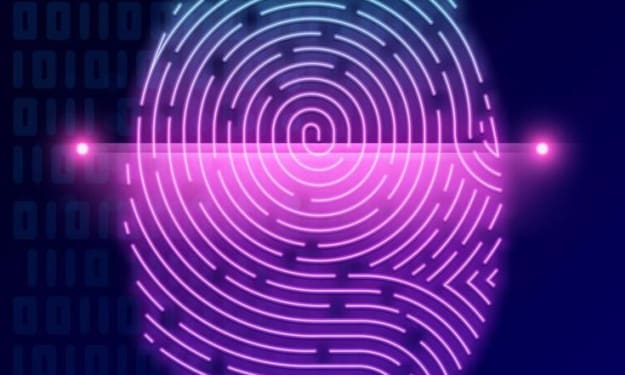
so Kim I'm might you try a little amateur forensic work here I've collected fingerprints from a few of our colleagues and what you see here is four fingerprints I took two of which are from the exact same finger so I want to see if you can match which two prints are from the same finger this is explainer Club where video producers like me sit down and explain something to one of our co-workers and today that is Kim I'm a video producer and I work on primarily health and science content and I do history culture and sometimes science videos so I think A and B that's my first guess and that's just because I see this like little swirl coming up and these two just look so different cuz you have like this little hump down here I think I still want to say A and B are the same okay I feel like I completely blew that I feel like the okay was a little like you are the answer was a and C oh shoot they're both from the left some so what is interesting to me about this though is all of these fingerprints are from the same person oh I think we all know every person has their own fingerprint but I didn't know before I started working on this that each individual finger on your hands is different from each other did you know that like they're completely different police practice when you get fingerprinted they'll take all 10 that makes sense yeah but that makes it seem like it's so much harder to actually identify if a fingerprint belongs to a person if every single one is different right without this full reference you wouldn't be able to match one fingerprint to another and say this came from the same hand or even the same person but there is this new AI tool that says it can do it that's what we're going to talk about today okay cool yeah cool we're going to probably run the logo there logo okay show you something else this is a copy of the actual fingerprinting card that the FBI uses this one is kind of a practice for me I learned while making this video that taking someone's fingerprint if you're not training to do that is actually kind of hard did it work no I think I it up the FBI's fingerprint archive currently houses around 165 million fingerprint records and they start on these cards so if you're arrested for a crime in the US you will get your fingerprints taken by the police and they're stored on file even if you're not proven guilty so if you flip this over these are the three main patterns used to classify fingerprints the arch whirl and loop okay I feel that you should have given me this before the quiz Coleman I feel I wasn't Fair okay that is fair but no this is cool so the ridges in an arch pattern come from one side of the fingertip and then exit out the other side then a whirl spirals into a center point and a loop comes from one side of the finger and then back out the same side this little bottom part's like an arch right and this is a loop cuz this is coming back this way yeah exactly not a lot of whirls going on is whirl more rare it's kind of in the middle about 60% of people have loops that's the most common whirl is considered like around 35% and then arches are actually very rare oh interesting these General categories are really just for classification actually analyzing and matching an individual fingerprint is in the minutia the little brakes and splits along each individual Ridge not the overall pattern and the most common markings are when you follow a ridge and it ends that's called a ridge ending and then if you follow along a ridge and it splits into two that's called a bifurcation there's an island which is like that little dot when a ridge splits but then quickly rejoins is called a lake and then that's a bridge connecting two ridges so analyst will basically just go ridge by Ridge and Mark these details and that is where uniqueness and fingerprints really comes from not even identical twins who have matching DNA have matching fingerprints when you get to the minutia so the minutia is how analysts have been matching fingerprints for more than a century is that coming from outside factors like it's not genetic anymore like if I burn my finger or something like that is that where most of mini is from that's a great question it doesn't come from your lifetime I'm just thinking of like Men In Black where Will Smith has to like grab the thing and it just burns his fingerprints off one you encounter that would be hard to actually do it's very hard to get rid of your fingerprints and they don't change over your lifetime they're actually tiny Ridges of tissue under your skin oh they're called friction ridges even if you burned off your fingertips your palms your other joints they're all equally unique cuz they have the same friction ridges so I want to show you something on my computer by the time you're born your fingerprints are already set so they form in the womb their pattern begins with some genetic influence from your parents as a shape in the center the fingertip and top of your first knuckle The Ridges grow from there in waves following what's called a turing pattern this is a concept proposed by Alan Turing in the 1950s that helps explain other unique patterns in nature like how a leopard gets its spots how zebra gets its stripes and sandunes that's pretty it's beautiful and so what I want to show you is there some cool simulators online that can kind of give you an idea of how a turning pattern how they work oh that's so fun oh it looks like a brain that's creepy these waves and and the way they merge and Collide ends up with a unique pattern so I want to ask you about the video that you made about how our voice is like a fingerprint too as humans each of us produces a sound that's about as unique as a fingerprint so the whole point of that video was to just explain the amount of things that go into producing your voice your nasal cavity your tongue your vocal cords have different thicknesses and lengths there's just so many minuscule little factors is that will just change how you sound and therefore we went with why your voice is like a fingerprint people in the comments were just like actually fingerprints are not unique the thing is is like we can't prove it I think maybe that's what they mean I could see the doubt and I've seen questions online like they didn't take everybody's fingerprint how do they know they're all unique it's a probability issue especially the way these things form under our skin which is truly random and there's just so many data points in here that it was estimated even sort of towards the beginning in the history of fingerprinting the odds of having the exact same pattern when you get down to the minutia are like 1 in 64 billion and I think that people feel comfortable enough saying that no two fingerprints are alike but about a year ago that might have changed I'm going to play a clip from a phone interview that I did uh recently this is a transcript of what you're about to hear take a listen to this my name is H lipon I'm a roboticist AI researchers here at Columbia and uh have nothing to do with forensics fingerprints anything like that once you understand AI you can apply to taking a fresh look at some heart problems and this is one of them what he's talking about is this study published in science advances that one of his students was the lead author on that claims to have trained in AI to identify whether a pair of fingerprints came from the same person or not so what they did was feed pairs of fingerprints sometimes from different people sometimes the same person but different fingers into the AI and ask a simple question same person or two different people and so he found the data set which was a set of about 60,000 fingerprints from I think mostly from deceased people is a public data set he set up the AI again all a fancy Ai and had it look at this and lo and behold he was able to do it fairly effectively which led us to ask more questions like how are you doing it what are the features you're using and the AI shows you and it's looking at fingerprints in a completely different way than humans it found similarities to pretty successfully identify whether it was the same person or not how does it do that I want to show you what it was looking at instead of examining the minutia like a human analyst does the machine focused on the subtle curve shape and different angles of Ridge lines in the center of the fingerprints so what this chart is basically showing is when it examined a raw image the machine was right about 80% of the time when asked the question same person or different people and even when you removed a lot of the detail including the minua and you were left with just this orientation it was still right about 75% of the time so it doesn't need the minutia and in fact fact when they did just the minutia and removed all other details it was the least effective it was around 60% which is not much better than a random guess that's just to examine if the prints came from the same person or not to match an exact fingerprint to an exact fingerprint you would still need the minutia there's been some push back from experts in the field of forensics about the study who say the paper alone won't change the way we interpret fingerprints and the authors themselves acknowledged that there's more research that needs to be done we took it as far as we can using the public data sets but I'm sure if the FBI wanted to do this they could do a much better job the a slightly deeper issue is uh Discovery is that we've been looking at fingerprints perhaps we're missing a lot of information because we were overlooking things like curvature and things that AI suggests are actually very meaningful it gives us a new language to look at fingerprints a general optimistic view of AI that I hope to have is how it can teach us to see new things and also just in the field of medical Diagnostics to be able to catch things like tumors or Cancers and like how much we can use machine learning to improve the lives of people I asked you to do a little bit of homework I was wondering if you had any thoughts just on that General big picture I yeah the interesting thing about AI is that typically when we're reading about it or talking about it or everything there's this like huge future of work thing that comes up where they're just like the robots are going to replace us and I kind of like this other lens that came up when I started looking into you it asked me to look into like the medical field specifically one quote that I saw more more than once was that AI is not going to replace the doctor it's going to replace the doctor that doesn't use AI the idea there being that doctors will just evolve with this technology and they will start using it to help Advance themselves diagnosing things like cancers how much more quickly can we work in a crisis if we have a machine next to us eliminating the problems these tools raise so many questions I think we're trained to kind of take a really cynical approach with most of them yeah but the idea that it's just we can learn from the machine too I like that back and forth I like that version of things I like that too that makes me feel better about the machines person for this video that meant doing a lot of my After Effects and design work which is usually the last thing I do early on while I researched and wrote the video and then instead of doing multiple takes in a vo Booth shooting the whole thing in one go and hoping it goes well we've been so focused on the minutia or minuche minutia it's Minier.
By Riya singh12 months ago in Humans
How to balance paying
Let's say you're at a place financially where you're able to start saving rather than living paycheck to paycheck a situation that describes more than one in three American workers across many different income levels after covering your monthly expenses like groceries Health Care your rent or house payment you've got $200 left over what should you do with this money there's two places people usually look paying off their debt or investing in the stock market to watch the money grow and save for retirement so which one sets up for a better Financial outcome in the long run there's no simple answer but there is a rule of thumb that can help you start thinking about this scale in either direction be it pay your debts or invest is seven that's a 7% interest rate the amount by which a debt or investment grows over time you'll sometimes see this Tipping Point number as 6% or 5% after factoring in considerations like how close a person is to retiring but since 7% is the low end of the growth you can expect from investing over time that's where the scale will balance out for the purposes of this video if your debt has a lower interest rate below 7% it's considered mathematically more beneficial to put that $200 toward investing in an index fund an investment fund that tracks the performance of a market index like the S&P 500 for example these are a hands-off way to invest your money that generally carry a lower risk than investing in individual stocks the S&P 5 500 going back decades grows at an average rate of about 7% when adjusted for inflation some years are much higher than that and some years are much lower but generally if your debt interest rate is below 7% you stand to earn more over time by investing rather than tackling the debt right away past 7% though the interest adding to what you owe outpaces any growth you could reasonably rely on through investing the way to think of it is just which one enhances your net worth from year to year because it is sort of a balance sheet issue what you own minus what you owe and I think 7% is a good guideline looking at the math really shows how this 7% rule of thumb Works let's say you have $10,000 in debt at a 5% interest rate that's about the average rate of federal student loans for undergraduates over the past 10 years and let's say this debt has a monthly minimum payment of $150 that you have to pay every month along with all your other necessary expenses there's a bunch of calculators online that can show you how long it will take to pay down this debt based on your monthly payments and how much total interest it will cost you in the end in our hypothetical scenario if you pay just the minimum payment without contributing anything extra it will take you about 6 and 1 12 years to pay off this debt and you will have acred around $1,700 in interest on top of the original $1,000 but if you put that extra $200 per month as an additional payment toward this debt it's gone in 2 and 1/2 years and your total interest is under $700 paying it off faster means you have $1,000 more in your pocket but let's go back to scenario one you pay your debts minimum payments and rack up $1,700 in interest over 6 and 1/2 years and during that time period you invest your $200 per month into the S&P 500 instead of paying down the debt sooner even at the more conservative 7% expected rate of return you end up earning around $4,000 in total interest so sure you've added $1,700 of interest to your debt but you earned $44,000 by investing that's $2,400 extra in your pocket instead of 1,000 from paying off your debt faster but now let's crank this debt interest rate up to 13% a typical interest rate to take out a subprime loan one given to someone with a below average credit score to buy a new car paying just the minimum payment it would take you almost 10 years to pay this off and you'd have racked up $7,800 in interest on top of the original debt but if you put in your extra $2 $ per month here this debt is gone in just under 3 years and you'll pay around $2,000 in interest so you come out ahead by $5,800 in interest saved by using your money to get this debt paid sooner so let's do the invest scenario for this one if you pay just the minimum payment on your debt and invest your $200 per month over those 10 years you can conservatively expect to earn around $10,000 in compound interest which sounds nice but when you subtract the $7,800 the debt grew in interest you end up with a net gain of just under $2,400 which is less than half as much as you would have ended up with if you had paid the debt down sooner so whichever side of this scale accumulates more interest has the higher rate of return that's where you generally want to put your money of course using seven as the Tipping Point on this scale is just a rule of thumb and life is much more complicated than a single math equation plus different kinds of debt carry dramatically different costs let's debt in the US in dollar amounts is from mortgages these are long-term loans that generally have lower fixed interest rates usually below 7% % then there's student loans the next highest debt amount in dollars but also often with low interest rates especially at the undergraduate level one of the harder to manage sources of debt is credit card debt credit card interest rates have been turning above 20% for the last few years and can go even higher especially for people with lower credit scores the likelihood that even the most Savvy investor could consistently reach that level of return from the stock market is very very low when you have debt that is growing at over 20 % there's almost no reason not to eliminate that as soon as possible a federal law pass in 2009 actually required credit card companies to display on each statement how long it will take to pay off the debt and the additional interest incurred by going with the minimum payment and show you what you need to pay each month to eliminate the debt in 3 years plus what you'd save an interest by doing it there's one other important step a financial planner will tell you to take care of before deciding what to do with extra cash and that is to have an emergency fund set aside just in case the guidance you'll often get is for this fund to be at a minimum $1,000 to cover an unexpected expense ideally though this security blanket is bigger the classic advice is 3 to 6 months of must pay expenses that's the mortgage or the rent that's the groceries that's Health Care things like that the experts I talked to for this story emphasized that any investment in the stock market always comes with some risk and that could be a big factor for someone choosing between these two paths 7% rule or not I will just double down on there are no guarantees in the stock market you have so many more options and so much more flexibility if you're debt-free there's just a a benefit to being debt free that you really can't quantify so if you're someone who would rather avoid the risk of investing no matter how high or low your debts interest rate is well.
By Riya singh12 months ago in Trader
The moon's volcano🌋
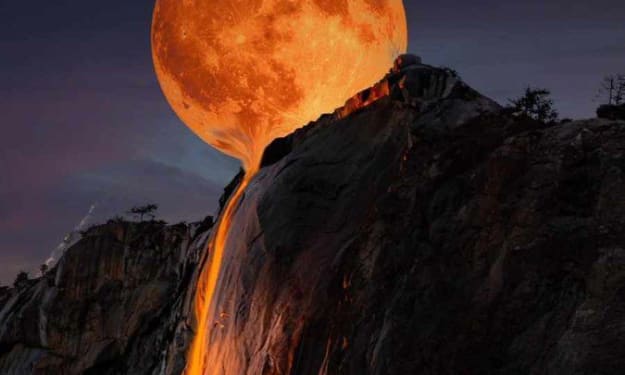
the moon's volcanoes are not dormant and they can erupt any minute for years we lived knowing nothing about it but now it's officially proven thanks to China's Chong 5 Mission shocking Discovery the lunar soil samples it brought back to Earth contained something absolutely unexpected hinting that volcanic eruptions may have occurred on the moon as recently as 123 million years ago geologically that's practically yesterday but the big question is are we safe down here on Earth we've long known that the moon was once volcanically active due to the dark regions lunar maria on its surface these Maria the dark plains that give the moon its characteristic markings are ancient lava flows that date back to around 3 to 3.8 billion years ago until recently scientists thought that those ancient flows marked the end of the moon's volcanic activity but the Chong 5 Mission brought back lunar soil that included several microscopic glass beads and three of them in particular revealed an extraordinary story they formed around 123 million years ago from volcanic eruptions an uncertainty range is a mere 15 million years the discovery of those tiny beads is super important because of their composition and Rarity measuring between 20 to 400 microns which is smaller than a grain of sand these beads are volcanic in origin and this fact sets them apart from most other lunar glass beads which typically form due to meteor impacts impact events on the moon create Glass by melting surface rock with Incredible heat and pressure the result is Tiny glass beads scattered all over the landscape yet the volcanic beads identified in Chong 5 sample were formed by magma erupting from beneath the moon's crust and cooling it into glass as it reach the Surface by using uranium lead dating which measures the decay of uranium into lead within the beads scientists managed to pinpoint their age with striking accuracy the results suggest that the last known volcanic activity on the moon happened within the past 200 million years making it a recent event in the moon's long history this discovery also aligns with prior observations of unusual surface features known as irregular M patches those are smooth Mounds surrounded by Rocky terrain they were first spotted by NASA's lunar reconnaissance Orbiter in 2014 these patches appear much younger than other lunar features potentially formed by volcanic eruptions less than 100 million years ago before Chong 5's glass beads these irregular M patches were among the best evidence of recent volcanic activity on the moon yet without confirmation their Origins remain uncertain and now the glass beads confirm volcanic action the findings raise new questions about the moon's inner workings in particular how could it retain enough heat to sustain volcanic eruptions we thought that the Moon had cooled significantly after its formation 4.5 billion years ago which made it volcanically inactive and without tectonic activity or an atmosphere the moon should have shed its internal heat long ago yet the beads suggest the possibility of some localized heat sources within the moon's mantle scientists think that heat producing elements such as potassium and thorium might be creating small warm pockets which generate enough heat to melt rock and Trigger isolated volcanic eruptions but wait Beyond rewriting the moon's history this discovery adds an intriguing twist to ongoing studies of transient lunar phenomena these sightings often reported as ghostly glows or hazes by amateur astronomers remain unconfirmed by scientific probes some experts just dismiss them as Illusions caused by Earth atmosphere but if the moon has small pockets of volcanic or outgassing activity TLP might have a real basis gases emitted from beneath the surface could explain such mysterious glows and possibly be a hint of residual volcanic action on the moon now if volcanic activity still lingers on the moon this might have exciting implications for future lunar missions in the coming decades astronauts might be able to use volcanic heat for generating power melting ice into water or even warming bases built into the frigid luner surface but recent geological discoveries aren't limited to Earth's natural satellite we learn more about volcanic moons beyond our solar system too the detection of a possibly volcanic exomoon orbiting exoplanet wasp 49b around 635 light years away means that volcanic activity may be a common feature among moons up until now Jupiter's moon EO held the title of the most volcanic body we know about but researchers at NASA's jet propulsion laboratory may have found a new candidate this potential exomoon came to light when scientists observed a cloud of sodium gas around the exoplanet but the thing is sodium clouds are unusual in planetary atmospheres and can suggest volcanic activity the sodium Cloud near wasp 49b had a bizarre unexpected Behavior it was moving erratically shifting size and occupying a space too large to be explained by the exoplanet's own atmosphere scientists thought the cloud could actually be generated by a volcanically active exomoon in orbit around wasp 49b volcanic moons like EO are known to release gases such as sulfur dioxide sodium and potassium which form massive clouds around their parent Planet EO for instance regularly produces vast amounts of gas that form a cloud encircling Jupiter up to 1,000 times the size of the gas giant itself if something similar occurs near wasp 49b the gas cloud could be a clue to volcanic activity on an exomoon orbiting the planet observ from the European Southern observatory's very large telescope in Chile seems to confirm this Theory the sodium Cloud around wasp 49b is positioned high above the exoplanet's atmosphere and behaves in ways that don't match the exop planet's 2.8 Earth Day orbit this could suggest that it originates from a separate body likely a volcanically active Moon additionally wasp 49b and its host star consists primarily of hydrogen and helium which makes the sodium Cloud even more unusual The observed rate of sodium release over 220,000 lb per second can be a sign of an immensely powerful volcanic Source if scientists verify the existence of this exomoon it would be the first discovery of a volcanic exomoon back in our solar system EO Remains the main space object helping us understand volcanic moons recently NASA's Juno spacecraft provided some of the closest images of eio since the Galileo Mission over 25 years ago io's intense volcanic activity is caused by tidal heating the result of the gravitational pull of Jupiter and nearby moons like Europa this tavore generates immense friction within eio producing heat that fuels continuous volcanic eruptions one of Juno's most exciting recent findings was a new volcano that appeared just south of io's equator Juno's images show a large complex volcanic region approximately 111 by 111 mil in size the craziest thing it wasn't there when Galileo imaged the same spot in 1997 this new volcano formed near the previously known volcano kind of he researchers say that this new volcanic structure is a great change that highlights the dynamic nature of EO surface eo's equatorial region is home to most of its volcanoes because of the concentrated tidal heating it experiences the most powerful eruptions emit sulfurous gases and produce bright lava flows they cover the moon in colorful sulfur Rich deposits Juno Cam's image taken from about 1,000 570 M away shows EO dramatically lit by sunlight reflected off Jupiter and you can see a stunning view of its constantly changing volcanic surface despite these detailed observations there are still many mysteries about eo's volcanism scientists are particularly curious about how tidal heating affects eo's interior and whether it has a subsurface magma ocean plus research try to understand what triggers different types of eruptions for example plumes versus lava flows and how volcanic gases shape eo's surface and thin atmosphere the study of volcanic moons from EO to the possible exomoon near wasp 49b sheds light on how tidal forces create volcanic activity in different moons in icy moons like Europa tidal heating sustains liquid oceans beneath the surface creating potential habitats for life but for EO without an ocean the same forces instead generate powerful volcanic activity plus if volcanic exomoons do exist like the one possibly orbiting wasp 49b we might soon discover more volcanic bodies across the Galaxy.
By Riya singh12 months ago in Earth
Dark matter start
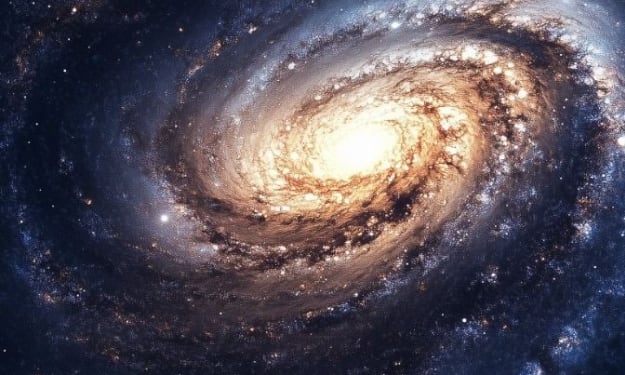
scientists have found an invisible star at the Milky Way Center a star that helped our galaxy be born 26,000 light years away in the galactic center a massive invisible object started spreading everywhere and you don't even know that you're breathing it right now it all started in the 7s when an astronomer named Vera ruin was studying the Andromeda galaxy she decided to check whether stars move in a predictable way now let's say you're spinning a ball on a string around yourself the closer the ball is to you the faster it moves in a tight Circle but if you let the string out longer the ball moves more slowly in a bigger Loop that's how gravity works and the same goes for planets the closer ones like Mercury Zoom around quickly completing their orbits in months the far ones like Neptune and Saturn take their time decades to make one rotation the Stars the El should orbit the centers of their galaxies the same way the closer ones move fast the farther ones are slower right but when Vera measured the speeds she saw something impossible they weren't slowing down the farway stars were moving just as fast as the ones near the center by all Logic the galaxies should have torn themselves apart but they didn't and that meant something was holding them together something undetectable some massive invisible object in the galactic center warping reality without ever revealing itself so she checked over and over with different galaxies this wasn't a flute it was happening everywhere Reuben had accidentallyuncovered proof that galaxies were drowning in something far heavier than all the stars planets and gas in our entire universe combined it was holding us with ghostly hands astronomers called it dark matter because it doesn't glow doesn't reflect light doesn't seem to interact with anything at all it's just there but all the calculations show us that it exists and not merely exists but makes up 85% of all the mass in the universe we know that it's sculpted galaxies without it the world as we know it wouldn't exist and yet just like with an invisible star scientists found at the Milky Way Center the only way to detect it was through gravity so how do you find something that refuses to be found recently scientists discovered there might be an invisible star at the Milky Way Center and this fascinating Discovery might finally help us understand what Dark Matter looks like they began looking for Dark Matters fingerprints any signs of its presence anywhere they studied how galaxies moved and smashed particles together in giant machines hoping to create tiny bits of dark matter in the lab this didn't really lead to anything they didn't even know what to look for is dark matter even made of particles there was a theory that suggested that it's made of ghostly particles that barely touch anything or even weirder ones that might flicker in and out of existence in the blink of an eye there was a problem though if dark matter really worked like that then the centers of galaxies should be packed tight tons of matter would be crammed into a tiny space but but in our universe Galactic cores seem strangely soft spread out almost gentle a new Theory emerged and it was wild what if the dark matter at the heart of galaxies isn't made of heavy particles at all what if it's made of something so delicate that it behaves more like a strand of hair these hairs could be made of something incredibly light lighter than anything we've ever seen and billions of times smaller than a neutrino which is already the lightest known particle they called this idea fuzzy dark matter and it might change everything we thought we knew about the universe a team of astrophysicists wanted to test this idea so they ran a simulation creating a simple model of a galaxy with two main ingredients a whole lot of fuzzy dark matter and a little bit of gas the same kind of gas that forms the star as we can see they Press Start and just let the system evolve by itself watching how the two would interact at first everything was pure chaos but then the fuzzy Dark Matter started to gather it pulled itself together forming a massive invisible object near a galactic center the gas followed spreading throughout this ghostly Mass mixing with it and glowing faintly and then it suddenly formed something incredible dark stars not typical stars like our sun blazing with heat and light instead it it's enormous massive invisible objects a hybrid of two different kinds of matter we've never never seen anything like this before an object that would stretch across thousands of light years and yet they'd be almost weightless more like Cosmic puffy clouds than anything else scientists called them firmian bosen Stars finally this dark matter thing is starting to make sense the core of this strange invisible star would have just the right density not too dense not too loose and it looked exactly like what astronomers actually see in real galaxies if it's confirmed then it would finally explain how dark matter behaves and works and if they're right then every galaxy in the universe could be tied to one of those vast unseen Giants the Milky Way hidden star might be one of them shaping our galaxy in ways we never realized what's Wild is that this stuff wouldn't behave like normal matter it wouldn't form anything solid instead it would be more like a complex ever moving web of filaments or hairs this also means that Earth might be completely surrounded by it dark matter still follows the rules of gravity as it moves past planets and stars gravity pulls it into Focus streams so it's both hugging and passing through our planet wobbling consistently if we could see them they might look like glowing invisible threads heads everywhere and they' Pierce right through the planet stretching far into space but this is only the beginning now scientists need to refine their models make them even more detailed and compare their predictions to real galaxies but this darkar discovery in the Galaxy Center isn't our only clue luckily the universe has given us a way to look for that fingerprint gravitational lensing when light from a far away Galaxy Travels toward us it sometimes passes by another massive Galaxy on the way or other massive objects with crazy gravity instead of continuing in the straight stream light actually gets bent around the massive object because of that gravity and when it finally reaches us it creates a distorted and magnified version of the original Galaxy basically it's like looking through a piece of curved glass if dark matter is fuzzy then it should leave a strange pattern on these distorted images things should be a bit wavy and unclear scientists needed the perfect object to study this and they found one a far away Galaxy whose light was Bent by gravity creating a strange stretched out image they used super powerful radio telescopes connected them all over the world and turned them into one giant telescope as big as the Earth itself with this they could zoom in so much that they could see details of that Galaxy as Tiny as a grain of sand on the moon then they ran a huge experiment they created their own fake versions of this picture simulations with various sizes of fuzzy Dark Matter particles and at a certain point they found the perfect match this helped us calculate the exact mass of Dark Matter particles before we even detected them and the clues are leading us right to our own Galaxy it seems like densest parts of these hairs the root might be super close in the cosmic scale just tens of thousands of miles from Earth that's close enough for a space probe to reach now that scientists have found this invisible star at the Milky Way Center we just need to study it up close send a mission to one of these roots.
By Riya singh12 months ago in Earth