
Reason why cheese is yellow
The actual reason why cheese is yellow

animals like cows. buffalo, goats, sheep They naturally eat grass, which gives them the nutrients they need to produce milk. and that milk gets turned into cheese. That is one vascular utter by the way. In the 12 and 1300s, sheep were often
the main producers of milk. But the catch was that: a sheep can turn, their grass intake
into either wool or milk, but not the same amount of both simultaneously. That's Paul Kindstedt, former president of the American Dairy Science Association and a multi-published author on the subject of cheese. Cheese, right from undergraduate work, you know, and then through graduate school became my love. My first love. And talking about love-- from this (sheep baa) to this (cow moo) Had a profound effect on people's perception of cheese, all because of something in the grass. Beta carotene. Beta carotene is, complex compound that creates color. It's what gives carrots and apricots and sweet potatoes their signature orange. Grass, when it's lush, and green, and in season, contains beta carotene. When sheep process the beta carotene in grass, It doesn't make its way into the milk. Therefore, sheep cheese
is pretty much always naturally white. In the cow it's a different metabolic pathway. Beta carotene, goes into the cow, passes into the milk, is part of the fat in milk and then gets concentrated in the cheese and that's what gives cows milk, cheese it's yellow color. Cheese made in sort of the spring, early summer always has been recognized as, really yellow, which it is, and also higher in quality. I mean, it was always revered. Because of that. People really wanted yellow cheese, but cheesemakers, they wanted to make money. And the second change in terms of marketing that happened that became really important: Cow’s milk forms cream easily. So cheesemakers figured out pretty quickly that they could skim off some cream before making cheese to make butter. Butter had a better price in the marketplace, But the problem with the cheese was, with less with less cream there’s less beta carotene carrying over because it's in the butter. so it didn't look as good. Farmers were ending up with yellow butter and pale cheese. But they realized that they could scam the system, by dyeing the cheese to look like it was full of that beta carotene filled fat. So that begins to happen in, the 1400s, 1500s. And and they use things like saffron or marigold or believe it or not, carrot juice But everything changed once these bad boys hit the market. The annatto seed. The seed comes from this shrub that grows in South America. the Dutch who followed in the wake of the Spanish colonizers as traders learned about annatto and they saw markets on the 1600s, they began to export annatto from South America to Europe because there aren't a lot really good colorants available, and Europe is getting very wealthy, and they like colorful things. And so it didn't take long for cheesemakers to realize they could replace these expensive colorants like saffron or marigold, or, you know, carrot juice. because they're not very intense and annatto was superior and it was cheap. And cheeses then began to be either surface applied with annatto, like the Dutch did for for Gouda or Gouda, or it was added to the milk to make English hard pressed cheeses like Cheshire and cheddar look like they were from, rich spring milk, you know, full of beta carotene. so the coloring was for marketing and this then becomes the tradition, over centuries this is the way, you know, real cheese is made. And that's
why today you still get cheeses that look like this. With factory farming, cows aren't as grass fed as they used to be. diets tend to include a lot more corn and soy. But because we've been used to centuries of saturated colors of cheese, none of that really matters when it comes to marketing. We still expect our cheddar to maintain a golden hue, and we can still think annatto for that, Annatto is used all over food too often, making its way into many other cheese adjacent snacks, all of which carry on that long orange legacy. But if you go to your local grocery store, you'll see that the cheese is varied. Take this cheddar, for instance. There's the yellow dyed cheddar that we expect. And then there's the undyed white cheddar. But if you go to your local cheesemonger, you might be able to find the perfect in between. grass fed cheddar cheese that's naturally tinted with beta carotene. Which one you prefer is up to your
own taste and expectations.
About the Creator
Keep reading
More stories from Riya singh and writers in Serve and other communities.
5 Strongest Signs of Aliens
the topic of UFOs and aliens is a personal favorite we spend many hours staring up at the night sky just wondering what's out there and hoping to see something now although we've never had any of our own personal experiences to date we have spent hundreds of hours researching UFO topics over the years in this video we want to explore five instances where the photograph trffic or video evidence of the anomaly seems to defy explanation and really justes make you wonder if alien life not only exists but has been to visit us humans here on Earth let's take a look now before we begin as always hit those lights sit back and enjoy the pilot UFO this video was released in 201 22 pilot George a artiaga recorded footage while flying a Cessna plane at an altitude of 12,500 ft over antiquia Colombia the video captures an unidentified object speeding through the sky in broad daylight passing by the cockpit window at an astonishing speed that artiga recorded on his phone take a look [Music] the object appears to be light in color and pointed at one end ARA would later claim that he and his co-pilot had spotted the anomaly floating in the air between the cities of Molin and Santa Fe before it drastically picked up speed the pair had originally wanted to follow the UFO but later abandoned the search after it suddenly turned and began to hurtle towards them when the footage emerged online commenters were quick to point out that it looked like just another runaway balloon or random piece of debris however artiga was adamant that at the height he was flying it was too cold for a balloon to survive and it didn't appear to be a drone or an airplane and was totally different to anything he'd seen before the recording caught the attention of controversial ufologist Jamie morson the Mexican journalist who promoted claims of supposed alien remains in Peru that have turned out to be hoaxes despite this araga sat down with musen to discuss what he saw and told him that the object moved with something totally unknown without means of propulsion with movement that he considered as intelligent Moren later claimed it was the greatest UAP evidence of all time it's a bold claim and whether or not you believe the clip is a UFO or floating piece of rubbish depends on what your stance is on alien life let us know your thoughts on this one below the New York UFO on October 13th 2010 thousands of New Yorkers going about their daily lives pointed to the sky as a highly illuminated mysterious flying object flew above them the site prompted several 311 calls claiming a UFO was flying above the Chelsea District of the city the bright object seemed to divide into several smaller objects and then slowly moved together again take a look at this footage posted by CBS News initially it looks like three white balloons tied together but as the clip progresses they all separate and then appear to come back together before more appear Witnesses of the objects that day have commented on the video with one describing it as an insane experience they said for those suggesting that these were just weather balloons trust me they were not what the footage fails to capture is that as as the event continued more of these objects appeared forming various shapes and moving closer together only to quickly disperse while hovering suddenly they vanished in a way I can only describe as cartoonish much like when the Road Runner would quickly run off screen leaving only smoke behind another witness said that they watched the objects for over 30 minutes insisting that they were not balloons they were not tied together they moved away from each other then back together as if in formation and they remained in the area for over an hour they were also very bright as they had been illuminated from inside the phenomenon prompted dozens of calls but City officials had no answers and not even the Federal Aviation Administration could explain the spectacle saying they were not weather balloons and were nothing they could account for despite the papers reporting wildly on the incident no explanation was ever offered adding to the mystery a former Air Force officer had predicted 4 months before the incident on a UFO website that an alien craft would visit major cities on October 13th saying the aliens will reveal themselves in a massive uniform display over our principal cities and I predict this will happen on October 13th 2010 the date of this incident as you know was October 13th 2010 so was this a coincidence did he have Insider information or was this a hoax and was he the one responsible UFO laser Tom Delong is best known as the co-founder co-lead vocalist and guitarist of the rock band Blink 182 but he also has a strong belief in UFOs and aliens something that has interested him since he was a child so when he posted this video to his Instagram account on February 4th 2023 with the caption enjoy they are real people took notice take a look at the video Tom also noted that the whirling sound was from the propulsion many of the commenters were amazed the footage had not made the news believing that it was solid evidence of some kind of alien craft there were others who claimed that they also witnessed something similar saying it was exactly the same shape and moved faster than anything they had seen before we did some research behind this footage and discovered there is footage out there of something very similar on October 27th 2013 in Michigan this video was captured in the very same year and month this was also captured in Lithia Springs and again this one in Cleveland Ohio the most recent sighting was on November 21st 2021 at around 2 p.m. GMT in Alberta Canada there has been speculation that the mysterious object may have been created by a laser beam originating from the underside of a drone this Theory does gain credence particularly since 2013 was the pivotal year when drones transitioned from military exclusivity to being accessible to the general public however despite being plausible this explanation has never been formerly confirmed in connection to any of the reported sightings in truth these sightings have been largely ignored and not drawn much attention so until anything different is proposed these are unidentified flying objects Airborne phenomena that cannot be immediately identified or explained do you make of this extraordinary footage the best UFO photo in history we're now going to show you two similar photographs both captured in Wisconsin although taken four years apart the first reported sighting was shared online by an anonymous female witness who was visiting a friend in W wer to protect her friend's privacy she was reluctant to reveal the exact location but mentioned that it was generally north of Main Street on the east side of Highway 110 South of the train tracks at the time her son was sledding in the snow and she was taking photos of him it was late evening and darkness was setting in quickly while they were outside her son pointed to the sky where they both saw a balloon-like object with lights the woman quickly took photos as the object passed directly over them the lights were changing erratically and as it moved overhead she realized the shape was more like a disc than a balloon leaving her and her son puzzled about what they had just witnessed fast forward to January 2007 again in Wisconsin but this time near Green Bay a very similar looking object was photographed and sent to the UFO evidence website there is very little information on either of these photographs and many have questioned the authenticity of both of them some believe that the photos have been manipulated using Photoshop and are fake although at that time you would have to be fairly skilled to manipulate an image in that way the other theory is that maybe a repelled object with lights attached was launched by whoever took the photo possibly a toy of some description similar to a Star Trek Enterprise model drones have also been mentioned but it's worth remembering that in 2007 only military drones were available and they do not look like military drones despite all of the theories the photographs haven't been completely debunked we'd love to know your thoughts on this one Philip Spencer's Alien Encounter and photograph ichy Moore located in Yorkshire England is a large Conservation Area and a popular destination for Walkers and tourists that offer breathtaking views of the Yorkshire Dales it is surrounded by fascinating stories of strange creatures and mysterious lights that appear in the fog and to add to the Intrigue it is near RAF men with Hill a top secret military base often referred to as the UK's area 51 a Strang looking facility that is protected by large 30t spheres designed to monitor any external threats given this context it's perhaps not surprising that the mo is the sight of one of the most extraordinary alien encounters in Great British history on December 1st 1987 retired British police officer Philip Spencer left his home early in the morning to meet his father-in-law who lived the other side of ichy Moore it was still dark when he said goodbye to his wife and children the fog hadn't lifted and Spencer used a compass to guide him through the murky air he was also armed with a camera as he was hoping to capture the beautiful sights of the mo as the sun started to rise however what he actually captured was not the beauty of the mo but something entirely different as he passed through an area called White Wells he was distracted by something and as he looked through the Mist he saw a creature with long arms similar in shape to a sock monkey the creature that was looking directly at him appeared to move its right arm as if it was waving and that was the moment Spencer pulled out his camera and took this Photograph shortly after the shot was taken the entity disappeared Spencer described the creature as having big black eyes pointed ears and strangely long arms with hoof-like feet split into two toes he tried to follow the creature hoping to find out what it was but unfortunately it moved out of sight but what he did see was a dome-shaped spacecraft that Rose from the mo and disappeared into the sky feeling slightly confused he continued on to his father-in-law's Village but when he arrived and saw the time on the church clock was 10:00 a.m. he realized that he had lost 2 hours somewhere on Route and had no idea why he questioned whether he had imagined the entire experience however his doubts were dispelled when he processed the photographs he had taken and saw the creature exactly as he remembered it the negative of the photograph was later examined by various experts who found no signs of tampering however the strangeness did not end there Spencer started experiencing odd but very real dreams in which he kept seeing a Starry Sky these were so vivid and constant that he was later advised to go into hypnosis to see if he could revisit what happened that day under hypnosis he recalled how the creature approached him just before he took the photograph he remembered it was quite windy and the creature which was green moved closer and closer to him he found himself Frozen to the spot unable to move then everything went fuzzy and he was floating in the air while the green creatures walked ahead of him he then saw a big silver sort of thing with a door on it that he doesn't want to go into then everything goes black he also remembered that he had been examined by the creatures inside the ship and they showed him a movie on a disaster that would occur if people did not stop population growth and pollution after that he was returned back to the moall with no memory of his abduction it's worth pointing out that Philip Spencer did not earn Fame and money from his story and he is one of the few abductees who showed evidence to prove his encounter we'd love to know your thoughts on this one did Spencer really capture a genuine image of an alien creature or was the whole thing made up so that's it for this video if you have some spare time this evening and it's a clear sky take some time to stare up at the night sky you've probably gone many years without doing this and you never know what you're going to see
By Riya singh11 months ago in Serve
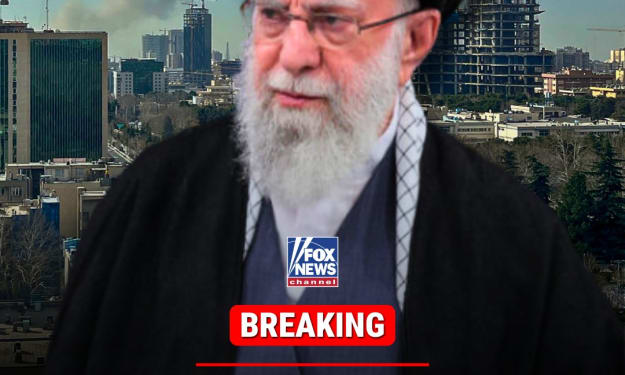
Ayatollah Ali Khamenei Is Dead Or Live?
Israeli and U.S. Officials’ Claims Israeli Prime Minister Benjamin Netanyahu has publicly stated there are “many signs” that Iran’s Supreme Leader Ayatollah Ali Khamenei is dead after a joint U.S.–Israel military offensive targeted Iranian leadership compounds, including sites linked to him in Tehran. �
By shaoor afridiabout 2 hours ago in Serve



Comments
There are no comments for this story
Be the first to respond and start the conversation.