Real content
Bio
Stories (96)
Filter by community
How Black Pepper and Olive Oil Boost Vitamin Absorption Naturally
Adding black pepper or dressings (such as oil and vinegar) to your food may help you absorb more vitamins and minerals. Scientists believe this can increase the nutritional value of food. Black pepper has been a valuable spice for thousands of years because it gives food a distinctive flavor. The black pepper plant originally came from India, where it has been cultivated for more than 3,500 years. It became one of the most valuable commodities of the ancient world. Today, most of us sprinkle it over our meals for flavor without thinking much about it. However, adding black pepper to your food can do much more than enhance taste. It can increase the amount of nutrients you get from your meals. Black pepper contains a chemical that helps vitamins and other nutrients be more easily absorbed into the bloodstream. It has also been observed that tiny fat droplets found in milk and olive oil can improve the body’s access to nutrients. Scientists are now trying to use these effects to develop new types of fortified foods and to help people who struggle to absorb the nutrients they need to stay healthy. Despite the availability of highly nutritious foods, we still face a problem: our bodies can lose vitamins and minerals as they pass through the digestive system. Take sweet corn, for example. Corn kernels are undoubtedly rich in nutrients—they are full of fiber, protein, vitamins, and micronutrients such as potassium. However, the outer layer of the kernels is difficult for our bodies to break down, especially if we do not chew them thoroughly. David Julian McClements, a professor of food sciences at the University of Massachusetts in the United States, says: “When you eat corn, it often passes through your body undigested, with all the nutrients still trapped inside.” However, chewing corn properly releases the nutrient-rich pulp inside so it can be digested.
By Real content13 days ago in Chapters
India to Buy 114 Rafale Jets in $40 Billion Defense Boost Ahead of French President’s Visit
India on Thursday granted initial approval for the purchase of $40 billion (3.6 trillion Indian rupees) worth of defense equipment, including additional French Rafale fighter jets for the Indian Air Force.
By Real content14 days ago in Chapters
Bangladesh Election 2026: BNP Victory Signals New Era for Pakistan-Bangladesh Relations and Regional Power Shift
After the Bangladesh Nationalist Party (BNP) won Bangladesh’s general elections, the likely prime minister Tarique Rahman has been receiving congratulations from world leaders. Pakistan’s Prime Minister Shehbaz Sharif also expressed his desire to work with Bangladesh’s new leadership.
By Real content14 days ago in Chapters
Pakistan Launches PRSC-EO2 Satellite: SUPARCO Successfully Sends Second Indigenous Earth Observation Satellite into Orbit
Pakistan has announced another important milestone in its national space program by successfully sending its second indigenous Earth Observation Satellite into space.
By Real content14 days ago in Chapters
Bangladesh July Charter Referendum 2026 Full Breakdown of 84 Reform Proposals Constitutional Changes & What a ‘Yes’ Vote Means
The referendum on the implementation of the July Charter was held on February 12, the day of the elections to the 13th National Parliament. The referendum on which voters will vote today on separate ballots will have only four very specific issues written on it. Voters will vote ‘yes’ or ‘no’ on the question of whether voters support the implementation of the Charter.
By Real content15 days ago in Chapters
Russia-Ukraine War Enters Fourth Year: Can Flamingo, Oreshnik Missiles, F-16 Jets and AI Drones Change the Balance?
On the 24th of this month, four years will be completed since Russia’s invasion of Ukraine. This war has continued without pause for four years, and there are still no visible signs that it will end. Negotiations between Russia and Ukraine are being held in Abu Dhabi under U.S. mediation. On Thursday, another round of these talks ended without any progress. If diplomacy is failing to deliver results, do the two countries possess such advanced weapons that could potentially tilt the balance of war in favor of either side?
By Real content16 days ago in Chapters
Bangladesh Student Revolution 2024: Rahat Hossain Story and the Future of Bangladesh Politics
Rahat Hossain was close to being killed himself while trying to save his friend, as the rebellion of many young people like him turned into one of the bloodiest episodes in Bangladesh’s history. In a video that went viral during the recent revolution in the country, he is seen trying to carry Imam Hasan Taim Bhuiyan to safety after he had been shot by police. On 20 July 2024, during the crackdown on protests, 24-year-old Rahat Hossain and 19-year-old Imam Hasan Bhuiyan took refuge at a tea stall in Dhaka. Police dragged them out, beat them and ordered them to run. Bhuiyan was shot. Seeing him fall to the ground, Rahat Hossain began dragging him away, but the police continued firing. Rahat realized that a bullet had struck his own leg. “I had to leave him behind,” Rahat says. Later, Imam Hasan Bhuiyan was declared dead at the hospital. Such violence transformed the student-led demonstrations into large-scale nationwide protests centered on the capital, Dhaka. Within two weeks, the government was removed from power and Prime Minister Sheikh Hasina fled the country. According to the United Nations, nearly 1,400 people were killed during the protests, most of them in the security crackdown ordered by Sheikh Hasina. Hasina’s fall appeared to promise a new era. The uprising was regarded around the world as the first and most successful Gen-Z protest movement. Some Bangladeshi student leaders assumed important positions in the interim government and tried to shape the country for which they had taken to the streets. After decades of rule by Sheikh Hasina’s Awami League and the rival Bangladesh Nationalist Party (BNP), they were expected to play a role in the country’s future administration. But as Thursday’s general elections approach, the newly formed student political party appears deeply divided. The Awami League is banned, and decades-old parties seem to be filling the vacuum. Rahat Hossain had taken part in the student-led protests of 2024. Those demonstrations brought together the younger generation—men and women, secular and religious people alike. Initially the protests were against new quotas in civil service jobs, but gradually they developed a “single common goal”: the end of authoritarian rule. “The interim government has failed to build the beautiful Bangladesh based on peace, equality and justice that was expected from it.” He is not alone in feeling that the student-led National Citizens Party (NCP) is inexperienced. Instead, many believe it is influenced by another older party, Jamaat-e-Islami. This Islamist party has historically played the role of a small ally in Bangladeshi politics, but its popularity has grown ahead of the 12 February elections, in which the Awami League is barred. Founded in 1941, the party has always been questioned over its stance during the 1971 war of independence from Pakistan, in which millions were killed and more than ten million displaced. Some of its politicians were accused of siding with West Pakistan at the time. But this history does not trouble Rahat Hossain. He believes the party has changed. He explains, “Jamaat supported the July uprising and the students in many ways.” Party leader Shafiqur Rahman said Jamaat promises to eradicate corruption and restore the independence of the judiciary. Although such claims are difficult in a country with historically high levels of corruption, they are resonating with many people. Professor Towfique Haque of North South University in Dhaka says most young voters born after 1971 can separate Jamaat from its past and do not see it as a “red line.” He says, “It is a generational issue,” arguing that the new generation does not want to be entangled in that debate. Haque adds that young voters see Jamaat as a party like themselves—one that suffered under Sheikh Hasina’s repression, was banned from politics, and whose leaders were jailed. Rahat Hossain is not alone in leaning toward Jamaat-e-Islami. Last September, candidates backed by Jamaat’s student wing won major victories in elections at Bangladesh’s top universities, seen as a sign of a national trend. Notably, for the first time since independence, an Islamist group gained control of the student union at Dhaka University. This was a major signal for student leaders, especially in a country where nearly four out of ten voters are under 37. A controversial compromise The lack of confidence in the NCP has been a major setback for student leaders. Twenty-seven-year-old Asif Mahmud, former adviser in the interim government and now chairman of the NCP election committee, admits, “We hoped to do far better.” But he argues the challenges were enormous. “For the last 50 years only two parties have ruled Bangladesh… we are trying to prove ourselves.” So the NCP made a decision. In December it announced a multi-party alliance with Jamaat-e-Islami. Like Jamaat, the NCP also promises to eliminate corruption. Its manifesto includes other pledges for young voters: justice for families of those killed in the uprising, lowering the voting age to 16, and creating jobs through tax and economic reforms. Asif Mahmud says, “We may disagree on some issues, but Jamaat has grassroots reach and the NCP needs that.” “We have always said we are not an Islamist party. This is not an ideological alliance.” However, Jamaat allowed the NCP to field only 30 candidates—just two of them women—while Jamaat itself has more than 200 candidates, all men. This compromise has been called an “ethical red line” by senior NCP women like Tasnim Zara, who along with others resigned from the party. Twenty-five-year-old student Shima Akhter, who played a key role in the protests, says, “They wanted to push us out.” Although women were central to the uprising, Shima says the interim government under Muhammad Yunus remains largely male-dominated. After the revolution, Shima and other female activists were targeted in social-media posts. “Some meme videos were very violent and depressing. We were defamed and mocked,” she recalls. Videos circulated calling them unintelligent, claiming their marriage prospects were ruined, and even mocking Shima’s complexion. Both parties deny ignoring women and claim the number of female candidates reflects Bangladesh’s “social structure.” Jamaat leader Shafiqur Rahman said he hopes the situation will change. Shima dismisses this as “just a patriarchal excuse.” She leans toward the BNP, which has fielded 10 women among more than 250 candidates. “At least it’s better than the worst,” she says. Will dynastic politics continue? The lack of support for the NCP and the ban on the Awami League are also benefiting the BNP, which now presents itself as a liberal democratic force. After seeing thousands of supporters and senior members jailed under Awami rule, the BNP is now the largest party contesting the elections, further pressuring the student party. Just as the Awami League was led by Sheikh Hasina, daughter of the country’s founding leader Sheikh Mujibur Rahman, the BNP is also tied to a political dynasty. Its new leader Tarique Rahman is the son of Khaleda Zia, Bangladesh’s first female prime minister. Khaleda herself came to power after her husband, a former president, was assassinated in a military coup. Former BNP commerce minister Amir Khasru Mahmud Chowdhury said, “Whether you belong to a family or not is irrelevant.” Ironically, this family legacy revived because of the student-led uprising, which allowed Rahman to return after 17 years of self-exile. After Hasina’s departure, both he and his mother were cleared of corruption charges they called politically motivated. He has criticized Jamaat for exploiting religious sentiment for votes and promises economic and democratic reforms and a “rainbow nation,” with a new national reconciliation commission to heal divisions. Sheikh Hasina ruled Bangladesh for 15 years, overseeing economic growth but continually silencing opposition through politically motivated arrests, disappearances and extrajudicial killings. Last year the Bangladesh war crimes tribunal sentenced her to death for the 2024 crackdown. A hidden district leader of the Awami League said, “Free and fair elections are impossible without including the Awami League. If Sheikh Hasina orders it, the party and its supporters will resist the elections.” He warned, “If she says people should not go to polling stations, we will not go. If she says disrupt the elections, we will do so.” He called allegations by independent human-rights groups of political arrests and extrajudicial killings “false and fabricated.” After the 12 February elections, students will know whether their revolution and bloodshed achieved anything. Rahat Hossain sits near the Jatrabari flyover in Dhaka—the place where he lost his friend. He is still waiting for the trial of the police officers accused in his friend’s death to be completed. Imam Hasan Bhuiyan’s father is himself a police officer. When he identified his son’s body, he called a senior officer and asked, “Sir, how many bullets does it take to kill a boy?” Rahat says he still feels fear from the day his friend was shot. He watched the video eight days later when the internet was restored. “My screams can be heard… I kept crying.” A year later, on 5 August, he marked the first anniversary of Hasina’s ouster with his “fellow rebels. But Rahat admits that his “new Bangladesh” has not yet been realized. He believes this will not be possible until an elected government carries out reforms. “You cannot expect mangoes from a tamarind tree,” he says.
By Real content17 days ago in Chapters
The Fight for Darfur: Gold, Oil, Water and the Geopolitics Shaping Sudan’s Future
Why are world powers interested in Sudan, the land of secrets, ‘Darfur’? Much has been written about the ongoing civil war in Sudan between the government army and the rebel militia RSF since April 2023, but the short story is that the center of all this fighting is Darfur province. Which is also the hometown of the Rapid Force, the rebel militia. The Darfur war is not new, but even in the nineties, the massacres played out in Darfur had disturbed the Islamic world. This time, the scope of the fighting has spread from the capital Khartoum to Darfur. Darfur means the land of the Fur tribe.
By Real content3 months ago in Education
Potential Role of Pakistan Army in the Gaza Peace Force: Benefits and Drawbacks
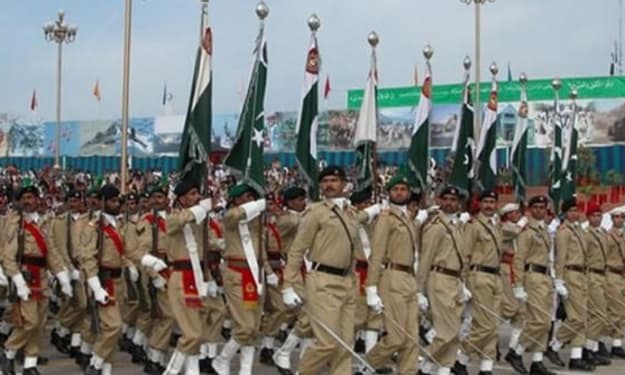
t Potential Role of Pakistan Army in the Gaza Peace Force: Benefits and Drawbacks Officials at Pakistan’s Foreign Office in Islamabad have stated that “Pakistan is also evaluating the possibility of joining this force; however, discussions are still at an initial stage, and much remains to be finalized.”
By Real content4 months ago in Chapters