
Potential Role of Pakistan Army in the Gaza Peace Force: Benefits and Drawbacks
Pakistan army role in Palestine

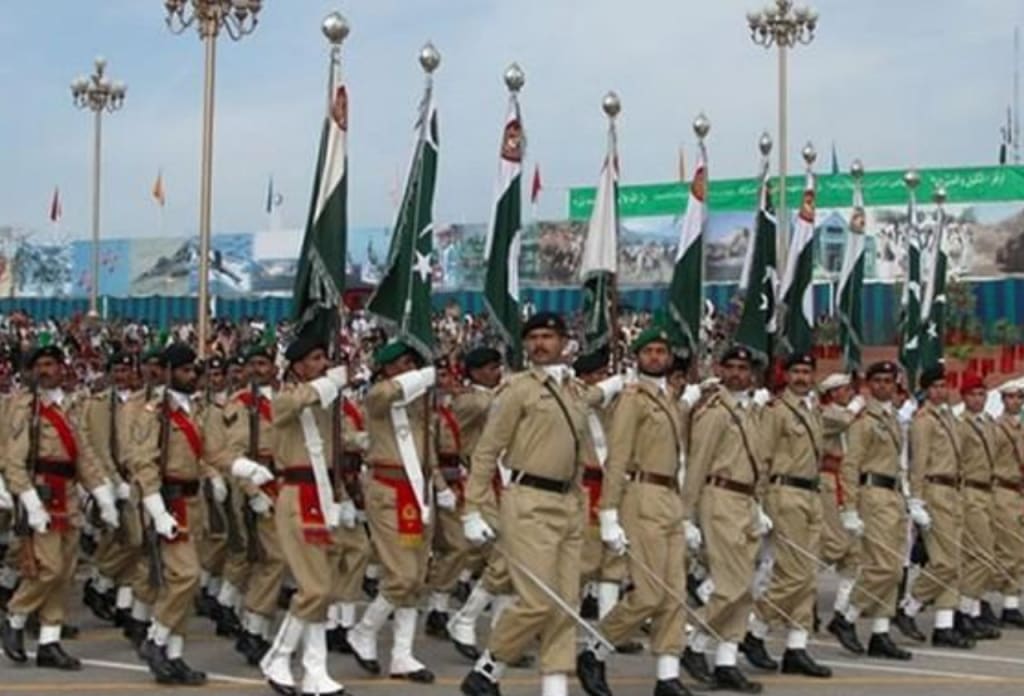
- t Potential Role of Pakistan Army in the Gaza Peace Force: Benefits and Drawbacks
Officials at Pakistan’s Foreign Office in Islamabad have stated that “Pakistan is also evaluating the possibility of joining this force; however, discussions are still at an initial stage, and much remains to be finalized.”
According to the 20-point peace agreement for Gaza, the deployment of a multinational force is one of the key elements. Pakistani officials confirmed that “Pakistan is assessing whether to be part of this force.” However, such a decision could introduce several complexities for Pakistan.
U.S. President Donald Trump’s peace plan, presented in late September 2025, also included the establishment of an International Stabilization Force (ISF).
Following reports that the Pakistan Army may join the Gaza Peace Force, a nationwide debate has emerged among political and social circles. While some support the deployment, others are raising serious concerns.
Defense Minister Khawaja Asif said that Pakistan is “still considering sending its troops to Gaza under the international stabilization initiative proposed by U.S. President Donald Trump.” He added that “no final decision has been made yet, and the matter remains under consideration. The government will make a decision only after fulfilling all necessary requirements.”
The minister also assured that “any decision in this regard will be made after taking the Parliament and all relevant institutions into confidence.”
The proposed force aims to ensure security in Gaza, train a new Palestinian police force, oversee the demilitarization of the Gaza Strip, and monitor reconstruction efforts. The initiative is backed by Arab countries and international partners.
So far, Indonesia, Azerbaijan, and Turkey have expressed readiness to send troops. However, Israel has objected to Turkey’s participation.
The opposition party, Pakistan Tehreek-e-Insaf (PTI), expressed deep concern over reports circulating in Israeli and international media suggesting Pakistan’s potential military involvement. PTI demanded that the government immediately take Parliament and all political leadership—including former Prime Minister Imran Khan—into confidence, clarify all facts, and avoid any non-transparent or secret policy.
Lt. Gen. (Retd.) Ghulam Mustafa said, “Although no final decision has been made, I believe Pakistan should not join this force because its main objective seems to be disarming Hamas. What would Pakistan gain from this? Moreover, if Israel continues its aggression, what actions would this force take? If the United Nations sends a peacekeeping mission, Pakistan can contribute to that—but under current circumstances, most of the burden would fall on Pakistan.”
Former senior diplomat Abdul Basit remarked, “Hamas has not yet agreed to disarm. Therefore, I do not believe Pakistan should participate in any campaign designed to pressure Hamas into surrendering weapons under American or Israeli influence.”
Meanwhile, Senator Raja Allama Nasir wrote on social media that “the ISF lacks a formal UN Security Council mandate, meaning it would inevitably operate under U.S. leadership. This compromises its neutrality, making it subservient to Washington and Tel Aviv’s interests. The force would depend on Israel for access, logistics, and movement—undermining both its independence and credibility. Sustainable peace in Gaza cannot come from foreign military presence but through Palestinian leadership, governance, reconstruction, and national reconciliation.”
However, some analysts argue that sending Pakistani troops would be an honor, not a liability.
Brigadier (Retd.) Haris Nawaz said, “Pakistan is one of eight key Muslim countries supporting the Gaza peace initiative to end the genocide and pave the way for a two-state solution. The essential goal is to immediately replace the occupying Israeli forces with a peacekeeping presence to restore security and stability in Gaza.”
He added, “Pakistan is among the top contributors to UN peacekeeping missions. Therefore, if Pakistan joins a globally approved mission alongside Muslim nations to support peace, address the humanitarian crisis, and aid in Gaza’s reconstruction, it would not only be a distinctive honor but also a sacred duty—one that should be fulfilled with pride and devotion.”
Senior journalist Kamran Yousaf said he believes Pakistan is likely to join the force. However, he insisted that “the issue must be viewed realistically, not emotionally. Pakistan’s participation in the ISF alongside other Muslim nations, though risky, cannot automatically be deemed a wrong step. The perception that this force will be used against Palestinians is far from the truth.
“No policymaker in Pakistan would take such an irresponsible step. For instance, if the Palestinians themselves consent to the plan, then there remains little room for objection. Foreign policy should not be shaped purely by emotion; any country seeking relevance in global politics must remain proactive and pragmatic.”
Defense analyst Dr. Qamar Cheema stated, “Pakistan has always contributed troops to UN peace missions. Regarding Palestine, Pakistan has a special emotional and religious connection; therefore, deploying forces to Gaza would be an honor, particularly in the defense of the first Qibla (Al-Aqsa Mosque).
“I do not believe this poses any serious risk. The important thing is that Pakistan would also be contributing to Arab security, particularly since it already has a defense pact with Saudi Arabia. Furthermore, these troops are not being sent for combat but for maintaining peace, training Palestinian police, and overseeing reconstruction in Gaza.”
Possible Advantages and Disadvantages of Pakistan Army’s Role in Gaza Peace Force
Advantages
Pakistan’s participation in the Gaza Peace Force would enhance its international profile and representation.
It would reinforce Pakistan’s image as a peace-loving, responsible state contributing to regional stability.
Disadvantages
Deployment of Pakistani troops in Gaza could raise domestic security concerns.
The move might trigger political and public opposition or distrust within Pakistan, especially if the government fails to provide clear communication or parliamentary approval.
Israeli and other international reports suggest that such military deployments could heighten regional tensions, exposing Pakistan to criticism or diplomatic friction from other states.
About the Creator
Keep reading
More stories from Real content and writers in Chapters and other communities.
Negotiations between Pakistan and Afghanistan and Russia's threat to Pakistan
between Pakstan and Afghanistan and Russia's threat to Pakistan The Russian embassy in Pakistan has declared a video attributed to Russian President Vladimir Putin—purportedly threatening Pakistan—to be fake, stating that the clip is actually part of the president’s remarks to the media in which Pakistan was not mentioned.
By Real content4 months ago in Chapters
The Cave Part 6
If you have ever heard a tale about yourself that you cannot remember and doubtless think is made up, you will know how I felt when Tharkin related all that the eagle had seen of me before my memories were scattered. Of far distances and traveling companions that I did not recall, camping out under the stars and making our way to the mountains with deliberate purpose. The great bird had lost contact with my party once we entered the forests, and the seven other members were not seen again by him or his brethren since.
By Jamye Sharp13 days ago in Chapters
A Knight of the Seven Kingdoms Series Review (Season 1)
As one of the biggest properties in fantasy, A Song of Ice and Fire remains immensely popular with audiences. After reaching far into the past with House of the Dragon, a second spin-off was on the cards. A Knight of the Seven Kingdoms serves up a bite-sized slice of action and drama, but it still claims a spot among the best small-screen titles.
By Robert Caina day ago in Geeks




Comments
There are no comments for this story
Be the first to respond and start the conversation.