
Saudi Arabia to Issue Passports for Millions of Camels
Camels and Their Deep Roots in Saudi History

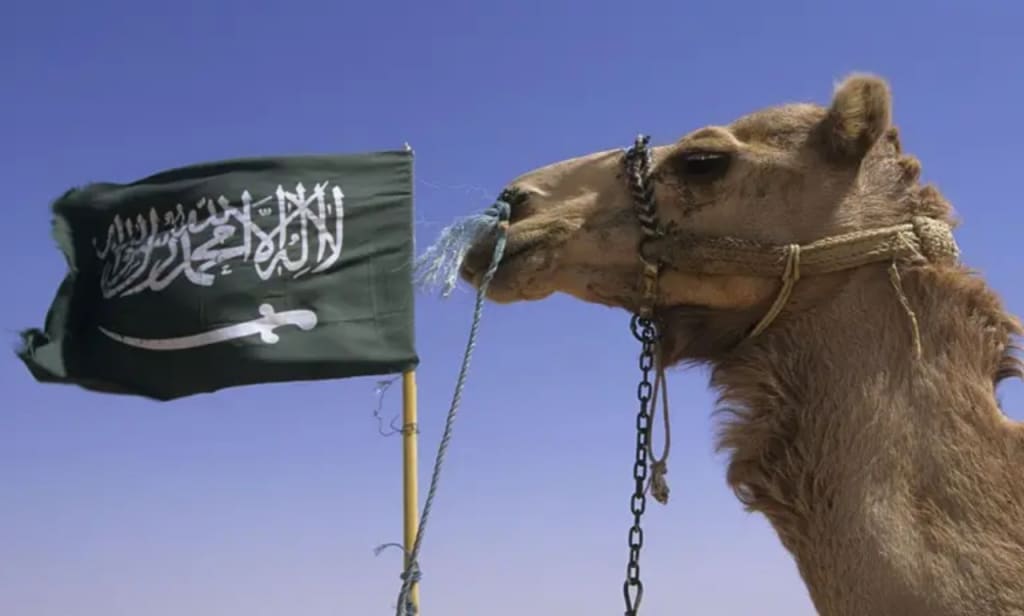
Saudi Arabia has announced that it is issuing passports to millions of the country’s camels, in a move that officials say will help better manage the country’s prized animals.
According to Saudi officials, the move will increase the impact of camel farming and create a reliable information asset regarding the identification and ownership of the animals.
A video posted on social media by the Ministry of Environment, Water and Agriculture also showed an image of the document. It showed a green passport, which features the country’s coat of arms and a golden image of a camel.
In 2024, the government estimated that there were about 2.2 million camels in Saudi Arabia, which contribute more than 2 billion riyals to the country’s economy each year.
According to Arab News, there are about 35 million camels worldwide, of which 17 million are in the Arab world. Somalia ranks first among Arab countries, followed by Sudan, Mauritania, Saudi Arabia and Yemen.
The camel is part of the national emblem of Saudi Arabia. Camel beauty contests and shows are also held in the country, where the best camels are awarded prizes.
The Saudi display on national days, special and historical occasions is incomplete without the presence of camels.
The role of camels in Saudi Arabia and the Arab Gulf countries in general has a long history.
History of camels
If we look at a brief history, we find images from the early years of the 20th century showing that camels were the only means of travel for visiting the holy cities of Mecca and Medina of Islam.
Pilgrims and caravans of pilgrims from Afghanistan, Central Asia, South Asia, and even the Far East used to reach Saudi Arabia after long journeys on camels.
The tradition of using camels for transportation in the arid deserts of the Gulf is centuries old.
A study has found that camel sculptures carved on rocks in Saudi Arabia may be the oldest animal depictions in the world.
When first excavated in 2018, researchers estimated that they were made about 2,000 years ago.
This estimate was made because of their similarity to artifacts found in the famous ancient city of Petra in Jordan, but later research put the age of these camels at 7,000 to 8,000 years.
Determining the exact age of rock carvings has been a major challenge for researchers because, unlike cave paintings, there is often no organic material to support the artifacts. Finding rock art at this level in the region is also rare.
In September 2021, a team of international researchers published their findings in the journal Archaeological Science. They analyzed destruction patterns, traces, and animal bones found in the area to determine the new date of the sculptures.
The antiquity of these monuments makes them older than the Stone Age, which is 5,000 years old, or the Pyramids of Giza in Egypt, which are 4,500 years old.
These monuments were built even before the domestication of camels, which was an important factor in the economic development of the region.
At the time these statues were made, Saudi Arabia was not what it is today. Instead of today's deserts, there were vast green and grassy areas with lakes.
It is still unclear why these camel statues were made, but researchers believe that they may have been a meeting place for nomadic tribes.
Badr bin Saud, a Saudi historian and columnist for the Riyadh newspaper, says that camels have been an integral part of life in the Arabian Peninsula for centuries. "Without camels, survival in this dry and scorching desert would have been impossible."
Because of this necessity, camels have contributed to the economy, culture and other aspects of life in the Arab world. As Badr bin Saud says, ‘In the pre-Islamic era, poets like Tarfat Ibn al-Abd mentioned the camel in their poems.’
According to Dr. Badr bin Saud, ‘Camels played such a role in human life that they cannot be ignored. This is why ‘the Prophet of Islam also had a camel named (Qaswa)’
Although the need for camels for transportation has decreased, the love and historical connection between Arab leaders and them remains.
King Abdulaziz, the founder of modern Saudi Arabia, had a herd of camels called ‘Al-Ramaat’ and a special camel called ‘Al-Duwayla’.
King Salman is also a great lover of camels.
Badr bin Saud says, ‘The king once asked Prince Saud bin Muhammad to send him one of his beautiful camels (Manqiyya) on a feast. Saudi Crown Prince Mohammed bin Salman also has a beautiful and well-bred camel named (Al-Sharf).
Camels are called the ‘ships of the desert’ because each camel can carry a load of 400 kilograms.
In the absence of cars and other modern means of transport, caravans of the Quraysh chiefs in Mecca used to travel to Syria and Yemen on these camels.
Traders called ‘aqlat’ traded camels as far as India, Turkey, Morocco and Nigeria 400 years ago.
Even a few decades ago, camels were used to extract and refine oil.
Camels are divided into several types based on color.
Camels range from brown to red in color. Camel experts say that camels from Oman and Sudan are famous for their running ability, while camels from the coastal areas of Saudi Arabia are famous for their abundant milk production.
Wealthy Saudi Arabia, which is now investing heavily to compete with the technological and modern world, has not given up on the historical value and cultural color of camels in this regard is trying to make a share of the bat.
Currently, a company called (Swani) is investing in the camel milk and powder industry and has already exported its products to 25 countries. They also make ice cream from camel milk.
The brand (Abel) makes clothes, handmade bags and shoes from camel wool and skin.
Camel skin is considered the strongest and most durable skin after crocodile skin.
Under Saudi Arabia's Vision 2030, the camel industry will become one of the country's major non-oil income sources. In addition to income, there is also a sense of history, religious traditions and customs that bring both profit and pride to Saudis.
About the Creator
Keep reading
More stories from Real content and writers in Petlife and other communities.
Bangladesh July Charter Referendum 2026 Full Breakdown of 84 Reform Proposals Constitutional Changes & What a ‘Yes’ Vote Means
The referendum on the implementation of the July Charter was held on February 12, the day of the elections to the 13th National Parliament. The referendum on which voters will vote today on separate ballots will have only four very specific issues written on it. Voters will vote ‘yes’ or ‘no’ on the question of whether voters support the implementation of the Charter.
By Real contentabout 18 hours ago in Chapters
The Summer I Was Chosen by a Northern Mockingbird
During the long, suspended days of the pandemic, a wild mockingbird began visiting my driveway and chose me, again and again. What started as a strange encounter became a brief, meaningful connection that I still carry with me.
By Erica Roberts 24 days ago in Petlife




Comments
There are no comments for this story
Be the first to respond and start the conversation.