Muhammad Saad
Stories (465)
Filter by community
Justice in Verse: When Karma Rhymes with Right
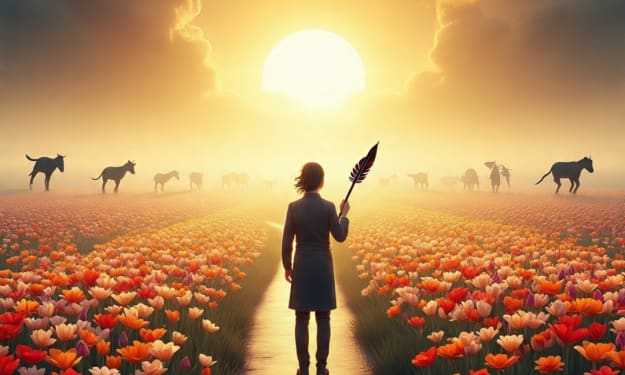
About poetry Justice in Verse: When Karma Rhymes with Right In the small town of Greenwood, nestled between whispering forests and sun-drenched hills, stories had a way of unfolding like poetry — some sweet, some bitter, and some with justice so fitting, it felt as though fate itself had picked up a pen. Among its residents was Elena Marlowe, a high school literature teacher known for her soft voice, fierce intellect, and unwavering belief in the power of doing what’s right. She was the kind of teacher who saw potential in every student — especially the ones others gave up on. One of those students was Chase Donovan — smart, witty, and endlessly disruptive. While others saw a troublemaker, Elena saw a mind bursting with creativity. But Chase had a habit of cutting corners, mocking classmates, and using his quick tongue to manipulate situations to his favor. One day, the school announced a prestigious poetry competition. The winner’s poem would be published nationally, and a scholarship would be awarded. Elena encouraged all her students to enter, hoping the opportunity might inspire them, especially Chase. A week before the submission deadline, Chase turned in a stunning poem — vivid, emotional, and mature beyond his years. Elena was astonished. She praised his work but asked, “Did you write this yourself, Chase?” He smirked. “Of course I did.” But something didn’t sit right. The voice of the poem — its depth, its tone — didn’t match Chase’s usual style. That night, Elena did a little research. Within minutes, she found the exact poem online, written by a lesser-known poet in a forgotten blog. Elena was torn. She believed in second chances, but also in truth. Quietly, she took the matter to the principal, presenting the evidence without shaming Chase publicly. The school disqualified his entry without making a scene, but word spread among the students. Whispers followed Chase down the halls, and respect for him faded quickly. At first, he was angry. He called Elena a snitch. He sulked. He skipped class. But as the weeks passed, something shifted. The shame turned into reflection. Meanwhile, another student — Maya Singh, shy and often overlooked — had submitted a modest poem about hope and resilience. It wasn’t flashy, but it was honest. When the judges announced her as the winner, the school was surprised, but Elena smiled knowingly. Months later, Chase stayed after class. “I was mad at you,” he admitted, eyes low. “But you were right. I didn’t write that poem. I just wanted to win… for once.” Elena didn’t scold. She nodded gently. “Wanting to win isn’t wrong. But how you get there matters more.” Chase paused. “Can I try again? I want to write something real this time.” And he did. In the following months, Chase poured himself into writing. His poems weren’t perfect, but they were raw, authentic, and undeniably his. Elena helped him revise, encouraged his voice, and when the next year’s competition came around — Chase submitted a new poem. It didn’t win a scholarship. But it was featured in the school’s literary magazine, and more importantly, it earned him the respect he’d lost. Even Maya congratulated him. “Your voice is strong,” she told him. “Don’t trade it for someone else’s again.” Elena watched from afar, heart full. She didn’t need recognition. The moment justice had been served — quietly, correctly, and with compassion — she knew she’d done her part. Years later, Chase sent her a letter from college. > Ms. Marlowe, You taught me more than poetry. You taught me that doing the right thing doesn’t always feel good at first, but it lasts. Thanks for seeing me when I couldn’t see myself. P.S. I’m majoring in English. --- Moral of the Story: Poetic justice isn’t always dramatic or loud. Sometimes, it’s quiet, slow-burning, and deeply human. It’s when the truth gently triumphs, when integrity is rewarded, and when those who stray are guided — not punished — back to their better selves. In a world quick to condemn or cancel, Elena chose correction over humiliation, guidance over revenge. And that made all the difference. Because in Greenwood — as in life — the most meaningful verses are the ones written with honesty, courage, and heart. Thank you
By Muhammad Saad 4 months ago in Poets
Colors in Verse: The Rainbow of Poetry
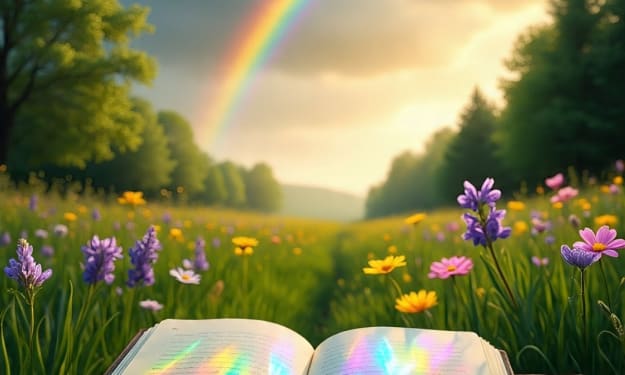
After a quiet rain, the sky opened like a freshly painted canvas. A delicate arch of colors stretched from one horizon to the other—seven glowing bands that seemed to hum softly with life. As droplets still clung to leaves, a young poet named Arham stood beneath the rainbow, notebook in hand, feeling as though the heavens themselves had spilled ink into the air. For Arham, poetry had always been a mystery. He loved words, yet they sometimes felt dull and gray—like clouds waiting for the right spark to release rain. He often wondered what gave poems their color, what made them breathe with emotion. That afternoon, as he gazed at the shining arc in the sky, the answer began to unfold. Each color of the rainbow, he realized, was a verse of its own—a poem written by nature. The deep red spoke of strength and love, bold and brave. The orange shimmered with creativity and warmth. Yellow danced like laughter and friendship. Green whispered of renewal and life. Blue carried peace and reflection. Indigo dreamed of mystery, and violet glowed with imagination and spirit. Arham took a deep breath and began to write. His words flowed like the rain that had just fallen. “Red, you are the heart of fire and dawn, Orange, the song of hope newly born, Yellow, the smile of a waking sun, Green, the promise when storms are done. Blue, the calm that follows pain, Indigo, the dreamer’s lane, Violet, the soul that feels the unseen— Together, you paint what words have been.” As his pencil moved, something inside him shifted. He realized that poetry wasn’t about difficult words or perfect rhymes—it was about feeling. Just as the rainbow didn’t ask to be admired, poems didn’t beg to be understood; they simply appeared, born from emotion, reflecting light through the prism of the heart. That day, Arham began to write differently. He no longer forced words onto paper. Instead, he listened—to the wind, to the birds, to the soft rhythm of his own thoughts. He wrote about moments: the hush after rain, the laughter of children splashing in puddles, the scent of wet earth, and the promise of sunlight breaking through clouds. Weeks passed, and his notebook filled with verses. When he read them aloud to his friends, their eyes glowed with the same wonder he had felt under the rainbow. “Your poems make us see feelings,” one friend said. “It’s like each line has a color.” Arham smiled. He had discovered that true poetry paints the soul. Every poem carries shades of joy and sorrow, light and shadow—just like a rainbow. And even when storms pass, what remains is the beauty they leave behind. Inspired, he began teaching younger children in his town how to write poetry. Instead of giving them rules, he gave them colors. “Write a red poem when you feel brave,” he said. “Write a blue poem when you need peace. Write a yellow one when you want to smile.” Soon, the little classroom walls were covered with colorful verses—words that glittered with feeling and imagination. One afternoon, as the sun dipped low, another rainbow appeared in the distance. The children ran to the windows, pointing and cheering. Arham watched them, smiling, and thought about how poetry—like the rainbow—connects heaven and earth, heart and mind. It appears when light meets rain, when joy meets struggle, when imagination meets truth. He picked up his pen once more and wrote: “In every color lies a song, In every heart, a place to belong. The rainbow fades, but leaves behind, A poem painted in the mind.” As the last rays of sunlight melted into the horizon, Arham closed his notebook. He knew then that poetry wasn’t just something to write—it was something to live. Every color of the world was a verse, and every day was a chance to read a new one. And so, the poet walked home beneath the glowing sky, carrying the colors of his heart—his own rainbow of poetry.
By Muhammad Saad 4 months ago in Poets
Colors of Hope: The Magic of the Rainbow
After a long day of endless rain, the world seemed quiet, almost breathless. The gray clouds that had swallowed the sky for hours slowly began to drift apart, revealing soft rays of sunlight. And then, as if painted by an invisible artist, a rainbow arched gracefully across the sky — bold, bright, and beautiful. Maya stood by her window, her eyes widening at the sight. She had always loved rainbows, not just for their beauty but for what they represented — hope after hardship, light after the storm. It reminded her that even when the world seems covered in clouds, something beautiful is always waiting to shine through. She quickly ran outside, letting the damp grass soak her feet. The rainbow stretched endlessly, its colors glowing like a promise from the heavens. “Red, orange, yellow, green, blue, indigo, violet,” she whispered softly, remembering the words her grandmother had taught her. Each color had its own meaning, she recalled — a message from nature itself. Red, her grandmother said, was for courage — the fire that pushes us forward when life feels uncertain. Orange was for joy, reminding us to find happiness in simple moments. Yellow symbolized hope, like the sun returning after a long night. Green stood for growth, a promise that even in difficult times, we keep learning and changing. Blue brought peace, soothing the heart and calming the mind. Indigo spoke of wisdom, the quiet understanding that comes with time. And violet, the last color, carried spiritual strength, connecting us to something greater than ourselves. As Maya watched the rainbow fade slowly into the clouds, she thought about her own life — the struggles she had faced and the moments that had shaped her. She had lost her job earlier that year, and the uncertainty had felt heavy. Yet, here was nature, reminding her that storms never last forever. Later that evening, she decided to take a walk through her neighborhood. The puddles glistened with reflections of the sky, and the air smelled fresh, like new beginnings. Children were laughing and splashing in the water, their carefree joy infectious. One of them pointed up and shouted, “Look, another rainbow!” Sure enough, a faint second arc appeared above the first, softer but equally magical. Maya smiled. Sometimes, life gives us not one but two rainbows — two chances to start again. She felt a warmth rise inside her, as if the colors had brushed her soul. That night, she opened her old notebook and began to write again, something she hadn’t done in months. Words flowed like rivers, carrying feelings of peace and renewal. Days turned into weeks, and Maya’s story of the rainbow took shape — a tale of light, color, and courage. She shared it online, and soon messages from strangers began to pour in. People from all around the world thanked her for reminding them that beauty always follows struggle. One message read, “Your story helped me see hope again after losing everything in the flood. Thank you.” Another said, “I showed your rainbow story to my daughter, and now she looks for rainbows after every rain.” Maya realized then that rainbows don’t just appear in the sky — they appear in people’s hearts too. Every act of kindness, every moment of love, every small spark of hope adds color to the world. From that day onward, whenever dark clouds rolled in, Maya no longer felt afraid. She would smile, whisper her grandmother’s words, and wait for the colors to return. Because that’s what the rainbow teaches us — that no matter how heavy the storm, the sun will always shine again. And when it does, it paints the sky with a message for everyone who dares to look up: “Don’t lose hope. Even after the rain, there is beauty waiting to be found.”
By Muhammad Saad 4 months ago in Earth
Seven Colors of the Rainbow
The world of colors is one of nature’s most beautiful gifts, and among all its wonders, few sights inspire awe quite like the rainbow. Appearing as a luminous arc painted across the sky, the rainbow captures the hearts of dreamers, scientists, and poets alike. Its seven radiant hues — red, orange, yellow, green, blue, indigo, and violet — are more than just a stunning spectacle; they represent science, symbolism, and the timeless beauty of the natural world. The Science Behind the Spectrum Rainbows are not magic, though they certainly look like it. They are, in fact, the result of light, water, and a touch of perfect timing. When sunlight passes through raindrops in the atmosphere, the drops act as tiny prisms. The light bends (refracts), bounces (reflects), and spreads (disperses) into its different color components. Each color bends at a slightly different angle — red at about 42 degrees and violet at about 40 — creating the curved, multi-colored arc we see from the ground. This process, first explained scientifically by Sir Isaac Newton, reveals the hidden spectrum of sunlight. What we perceive as “white light” is actually a blend of many colors, waiting to be released through nature’s prism — the raindrop. The Seven Colors and Their Meanings Every color of the rainbow carries its own charm and symbolism: Red stands for energy, strength, and passion — the first and boldest hue that catches our eye. Orange radiates creativity and enthusiasm, blending the warmth of red with the cheerfulness of yellow. Yellow glows with happiness and optimism, symbolizing the brilliance of sunlight itself. Green represents balance, nature, and growth — a color of life and renewal. Blue brings calm, peace, and trust, like the sky and the sea. Indigo embodies wisdom and intuition, a deep, thoughtful color that connects the mind and spirit. Violet shines with imagination and spirituality, closing the rainbow with a sense of mystery and beauty. Together, these seven colors reflect the harmony of nature and the diversity of life. A Symbol Across Cultures Throughout history, the rainbow has carried deep meaning across different cultures. In Greek mythology, it was believed to be a path connecting the Earth to the heavens, created by Iris, the messenger goddess. In the Bible, it is a symbol of peace and promise — the sign of God’s covenant after the great flood. For many Indigenous cultures, rainbows represent harmony between people and nature. In modern times, the rainbow has also become a symbol of hope, unity, and diversity — a reminder that beauty often appears after the storm. Rainbows in Art and Imagination Beyond science and symbolism, rainbows have inspired countless works of art, poetry, and music. From the famous song “Somewhere Over the Rainbow” to children’s drawings that fill classrooms with color, the image of the rainbow always brings joy and positivity. It reminds us that light can return even after the darkest of clouds. Artists use the seven colors to represent emotions and ideas, while scientists continue to explore the nature of light and color in even greater depth. Yet, despite all our knowledge, the sight of a rainbow still feels magical — a moment where science meets wonder. A Lesson from the Rainbow Perhaps the greatest lesson the rainbow teaches us is that beauty often comes from contrast. Without rain, there can be no rainbow. The blending of sunlight and storm mirrors life itself — full of challenges and bright moments that coexist to create something extraordinary. So, the next time a rainbow arches across the sky, take a moment to pause and look up. Behind its seven dazzling colors lies the story of light, nature, and hope — a story as old as time and as fresh as the rain that made it.
By Muhammad Saad 4 months ago in Earth
Echoes Through Time: The Journey of Poetry
From the moment humans first learned to express their emotions beyond simple sounds and gestures, poetry was born. It wasn’t written on paper or carved in stone—it lived in the rhythm of spoken words, in chants around campfires, and in the melodies of early songs. Poetry began as the heartbeat of language itself, carrying feelings, beliefs, and dreams from one generation to the next. In ancient times, when stories were passed down by word of mouth, poets were not just artists—they were historians, teachers, and spiritual guides. In Mesopotamia, “The Epic of Gilgamesh” was etched onto clay tablets around 2100 BCE, making it one of the oldest known works of poetry. This epic spoke of friendship, heroism, and the search for immortality—universal themes that still move hearts today. Meanwhile, in Egypt, hymns were written to honor gods and pharaohs, while in India, the sacred verses of the Rigveda echoed through temples as offerings to the divine. As centuries passed, poetry took on new forms across civilizations. In ancient Greece, poets like Homer and Sappho shaped literature forever. Homer’s Iliad and Odyssey were grand tales of war and adventure, while Sappho’s lyrical poems captured delicate emotions and love’s quiet beauty. The Greeks introduced structured meter and rhythm, showing that poetry could be both art and architecture of language. The Roman poet Virgil followed, blending myth with patriotism in his Aeneid, while Ovid celebrated the power of transformation in Metamorphoses. At the same time, in China, poets like Li Bai and Du Fu painted nature and emotion with words as delicate as brushstrokes on silk. Each culture added its own melody to the universal song of poetry. During the Middle Ages, poetry found new homes in the courts and churches of Europe. Troubadours and minstrels sang of love, chivalry, and sorrow, carrying their verses from castle to castle. In Persia, Rumi and Hafez wrote poems that blended mysticism with passion, showing that poetry could speak not only of earthly love but also of divine union. Their verses remain among the most quoted lines in the world, proving that true poetry never ages. The Renaissance marked another rebirth of poetry. In England, William Shakespeare transformed poetic drama with his sonnets and plays, exploring every corner of human emotion—from joy and jealousy to despair and hope. Meanwhile, poets like Dante Alighieri in Italy and Geoffrey Chaucer in England opened doors for poetry to become more personal, philosophical, and profound. As the world entered the modern age, poetry continued to evolve. The Romantic poets of the 18th and 19th centuries—Wordsworth, Keats, Shelley, and Byron—celebrated nature, imagination, and emotion. They believed poetry was not just art but a voice of the soul. Later, in the 20th century, modernists like T.S. Eliot and Ezra Pound broke traditional rules, experimenting with structure and sound to reflect a changing world. Today, poetry lives in more forms than ever before. It thrives not just in books but also on screens and stages. Spoken word poets and rappers bring rhythm, emotion, and truth to modern audiences. Social media has given rise to a new generation of poets—sharing short, heartfelt verses that connect millions across the globe. The tools may have changed, but the purpose remains the same: to express what words alone cannot. From the echo of ancient chants to the rhythm of modern verse, poetry continues to evolve, yet its essence remains timeless. It is both ancient and new—bridging the past and the present, the personal and the universal. Poetry reminds us that beneath all our differences, humans have always shared the same need: to speak from the heart and be heard. And so, the journey of poetry continues—flowing like a river through time, carrying with it the stories, dreams, and emotions of all who dare to write, to feel, and to listen.
By Muhammad Saad 4 months ago in Poets
Journey Beyond the Classroom
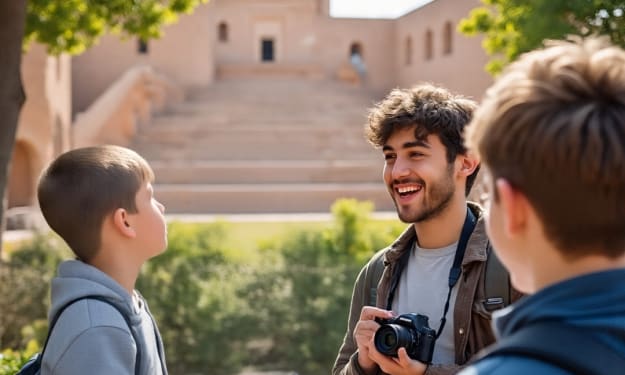
It was a bright morning filled with excitement and anticipation. The air buzzed with chatter as students gathered near the school gate, ready to begin their long-awaited study tour. Bags were packed, cameras were charged, and hearts were full of curiosity. For many, it was their first journey away from the familiar walls of the classroom — a chance to learn through experience rather than from books. Our destination was the ancient city of Lahore, a place rich with history, architecture, and culture. The bus ride began with laughter and songs echoing through the air. Teachers smiled as students shared snacks, took pictures, and admired the passing scenery. Slowly, the concrete city faded away, replaced by green fields and distant mountains. It felt as if we were traveling not just through space, but through time itself — leaving behind the routine of school to explore the world beyond. Our first stop was the Lahore Museum, often called the “treasure house of history.” As we stepped inside, we were greeted by rows of artifacts, each telling its own story. The ancient coins, sculptures, and paintings revealed the artistic beauty and cultural depth of our ancestors. Our history teacher guided us through each section, explaining how these relics connected to what we had studied in our textbooks. But this time, the learning was different — it was alive. We could see, touch, and feel the things that once existed only in our imagination. Next, we visited the Badshahi Mosque, one of the grandest architectural wonders of Mughal times. Standing beneath its massive domes, we felt both small and inspired. The fine carvings on the red sandstone walls glowed warmly under the sun, reflecting centuries of craftsmanship. Our teacher spoke softly about the Mughal emperors, their vision, and their love for art and architecture. As the call to prayer echoed through the courtyard, a deep sense of peace and respect filled our hearts. After lunch, we went to the Shalimar Gardens, a masterpiece of symmetry and beauty. The sound of flowing water, the fragrance of blooming flowers, and the sight of ancient fountains created an atmosphere of calm and wonder. Students sketched, took photos, and noted down their observations for later reports. Some of us even sat under the shade of old trees, discussing how nature and history blend together to form such timeless beauty. The next day, our study tour continued with a visit to a science museum. The experience was completely different but equally fascinating. We interacted with models of planets, human anatomy, and machines. There were hands-on exhibits that allowed us to experiment and understand how things worked. For the first time, many of us realized that science is not just about formulas — it’s about discovery. Learning through experience made even the most complex ideas seem simple and exciting. Throughout the trip, our teachers encouraged us to observe, ask questions, and connect what we saw to what we had learned. Every evening, we gathered together for short reflection sessions. Students shared what inspired them most during the day — some spoke about the history, others about the science, and a few about the bonds of friendship that had grown stronger during the journey. On the final day, before returning home, we visited the Wagah Border. The flag-lowering ceremony filled us with pride and emotion. The discipline, energy, and unity of the soldiers reminded us of the strength and spirit of our nation. It was a powerful lesson in patriotism that no classroom could ever teach. As the bus drove back toward our school, silence filled the air. Everyone seemed lost in thought, replaying memories of the trip. We had seen, learned, and felt so much in just a few days. The study tour had not only enriched our knowledge but also transformed the way we looked at learning. We realized that education is not confined to four walls or limited to exams. It’s a lifelong journey — one that involves seeing, questioning, and understanding the world around us. The laughter we shared, the lessons we learned, and the experiences we gained became treasures we would carry forever. When we finally reached our school, the same gates that once symbolized our starting point now felt like a return from a meaningful adventure. The study tour had ended, but its impact would continue for years to come — inspiring us to keep exploring, keep learning, and keep growing beyond the classroom.
By Muhammad Saad 4 months ago in Education
The Birth of Poetry
Long before words were written and stories were inked on paper, there was sound — the gentle hum of rivers, the rustle of trees, the heartbeat of the earth beneath bare feet. In that ancient world, before kingdoms and books, before pens and scrolls, human hearts still longed to express what they felt. And so, poetry was born — not from knowledge, but from emotion; not from invention, but from the natural rhythm of life itself. It is said that poetry came into being the first time a human felt something so deeply that mere gestures or cries could not contain it. Perhaps it was a mother humming softly to her child under the stars, her voice swaying like the wind, carrying love and comfort. Perhaps it was a hunter standing beneath the moon, whispering thanks to nature for its gifts. Or maybe it was a traveler, gazing at the endless sky, wondering where life came from and where it would go. In those days, speech was still new. People used sound to name things, to warn, to call. But one day, someone’s voice rose differently — not to command or describe, but to feel. The sounds became rhythm; rhythm became melody; and melody became meaning. Those who heard it were moved in ways they could not explain. They didn’t yet call it “poetry,” but they felt its power — the power to connect heart to heart, soul to soul. From then on, people began to listen not only with their ears, but with their hearts. Around campfires, under the open sky, words began to dance. Men and women spoke of love, courage, fear, loss, and hope — the same emotions that fill poems even today. When rain fell, they sang of its sadness; when the sun rose, they praised its warmth. They found music in the world around them and echoed it in their words. In ancient civilizations — Egypt, Mesopotamia, Greece, and India — poetry became a sacred art. It was used to praise gods, record victories, and teach wisdom. The earliest poems were prayers, songs, and hymns. In temples, priests chanted verses to honor life and creation. In royal courts, poets shaped words into tales of heroes and dreams. Their verses carried the spirit of humanity across generations. But beyond temples and palaces, poetry lived in every heart. Farmers sang as they worked. Lovers whispered verses to one another under the moonlight. Mothers lulled their babies with rhythm and rhyme. Poetry became the bridge between life’s silence and its music — between what could be said and what could only be felt. As time passed, writing gave poetry a new home. The words that were once spoken by firelight were carved on stone, then written on scrolls and pages. Yet even as the world changed, poetry remained timeless — a reflection of the human soul. It grew in every language, every land, carrying new meanings but the same heartbeat. The reason poetry endures is simple: it speaks to something eternal within us. It captures moments we cannot hold, emotions we cannot measure, and truths we cannot explain. It reminds us that even in our most silent times, we are never alone — because someone, somewhere, has felt the same. Today, poetry still flows through our lives. It lives in songs, in prayers, in stories, and even in the quiet words we whisper to ourselves when no one is listening. It connects the past with the present, the ancient voice by the riverside with the modern heart that still longs to speak in rhythm. And so, the birth of poetry was not the invention of an art form — it was the awakening of the human spirit. It was the moment when feeling found a voice, when the heart learned to speak in beauty. From the first hum beneath the stars to the verses written today, poetry remains what it has always been — the purest language of emotion, the gentle song of the soul, and the eternal proof that humanity has always needed more than words to truly be heard.
By Muhammad Saad 4 months ago in Poets
Echoes of the Mind
Echoes of the Mind Unfolding Emotions Through the Language of Poetry The evening sky glowed with soft shades of purple and gold as Adeel sat on the edge of the old stone bridge. The world around him was quiet — only the whispering wind and the distant sound of flowing water kept him company. In his hands lay a small, worn-out notebook. Its pages were filled with scribbled words, unfinished lines, and silent emotions he never dared to speak aloud. For as long as he could remember, poetry had been his secret language — a bridge between his heart and his mind. Whenever life felt too heavy to carry, he would write. Words became his therapy, rhythm became his breath, and every poem was a mirror reflecting the parts of himself he could not explain. But lately, even poetry had stopped answering him. Adeel stared at the blank page before him. “Why can’t I write anymore?” he whispered. The question floated in the cool air, unanswered. He had been through months of silence — not the peaceful kind, but the type that pressed against his chest and clouded his mind. It wasn’t sadness, exactly. It was something quieter — a numbness that drained the color from his days. Friends called it stress; he called it emptiness. Yet deep down, he knew it was something more. It was the weight of unspoken thoughts, locked away behind polite smiles. Then, almost as if guided by instinct, his hand began to move. He wrote one line: “The mind is a garden — sometimes it blooms, sometimes it burns.” The words felt alive. His pen flowed again, as though a dam had broken inside him. He wrote about confusion — about feeling everything and nothing at once. He wrote about loneliness in crowded rooms, and about dreams that fade before they are understood. Each line was a quiet confession, each verse a small release. When he stopped, tears had welled in his eyes — not from pain, but from recognition. He had finally put his emotions into words, and in doing so, he had found himself again. He looked at the river below. The water shimmered in the dying light, reflecting the hues of sunset — gold, violet, and silver. “Maybe,” he thought, “healing isn’t about forgetting. Maybe it’s about understanding.” As days passed, Adeel began to write daily — not for others, but for himself. He realized that poetry was not about perfect rhymes or clever words; it was about honesty. It was about giving shape to the chaos within and turning it into art. He wrote about fear and faith, about despair and hope. Slowly, his poems began to shift. They were no longer cries for help but whispers of understanding. The tone changed — softer, wiser, kinder. Through poetry, he was learning to be gentle with his own mind. One afternoon, while reading one of his pieces at a small poetry gathering, something unexpected happened. A young man approached him after the reading and said quietly, “Your words… they sound like my thoughts.” That simple sentence stayed with Adeel. He realized then that poetry did more than heal him — it connected him to others who felt the same silent storms inside. His personal echoes became shared experiences. From that day, he promised to keep writing — not just to express, but to inspire. Years later, when Adeel published his first collection titled Echoes of the Mind, he wrote in the introduction: > “We all carry a universe within us — fragile, chaotic, beautiful. Poetry is not about solving it. It’s about listening to it.” His readers didn’t just read his words; they felt them. Some found comfort, others found courage, and many rediscovered their own voice through his verses. And every evening, Adeel still returned to that same bridge, his silhouette framed by the sunset. The wind carried the faint sound of his poetry — soft, rhythmic, healing — like echoes whispering from the heart of the mind.
By Muhammad Saad 4 months ago in Poets
In the Garden of Words
Whispers of the Heart How Poetry Turned Emotions into Eternal Words The early morning sunlight spilled through the half-drawn curtains, painting golden patterns on the wooden desk. A notebook lay open, its pages waiting—silent, patient, and full of promise. Beside it sat Arman, his fingers gently tracing the rim of a cup of tea that had long gone cold. For years, Arman had been a man of few words. He spoke only when needed, smiled politely, and hid his storms behind quiet eyes. But inside, his heart was a restless ocean, filled with unspoken feelings and unanswered questions. Life had given him joys, yes—but also losses, the kind that left soft scars on the soul. One evening, after a long day of work, he stumbled upon an old book of poems by chance at a small roadside stall. The cover was faded, the pages smelled of time, and the words—though written by a stranger—felt deeply personal. He read a few lines standing right there, and something stirred within him. “Perhaps,” he thought, “words could speak for what I never could.” From that day on, poetry became his quiet companion. Every night, when the world outside fell asleep, Arman would sit by his window and let his heart whisper onto the pages. His first poem was clumsy, full of half-formed thoughts and uncertain lines. But with each word, he felt lighter—as if the ink itself absorbed a bit of his pain. Over time, his notebook became his sanctuary. Each page captured a fragment of his life: a memory, a dream, a regret, a hope. He wrote about the laughter of children in the street, about sunsets that refused to fade, and about love that bloomed in silence. The poems were not perfect, but they were honest—and that made them beautiful. One day, his friend Samir visited and happened to glance through the notebook lying open on the desk. He read one of the poems quietly and looked up, amazed. “Arman,” he said softly, “you’ve written what many people feel but can never say. You should share these.” Arman smiled faintly. “They’re just whispers of my heart,” he said. “Nothing more.” But Samir didn’t give up. He convinced Arman to submit a few poems to a local literary magazine. Arman hesitated for days, battling self-doubt. Finally, one night, with trembling hands, he sent three of his poems under the pen name A. Rahim. Then he waited, half-regretting the decision, half-hoping someone might understand. Weeks passed, and Arman almost forgot about it. Then, one morning, he received a letter. His poems had not only been published but had touched readers deeply. The editor wrote, “Your words carry warmth and truth. They remind us that even quiet hearts have powerful voices.” That single letter changed something within Arman. He realized poetry wasn’t just about rhyme or beauty—it was about connection. Each poem he wrote was a bridge from his heart to another’s. What began as a way to heal himself had now become a way to reach others. Soon, he started attending poetry readings at a small café in town. The first time he stood before an audience, his voice trembled, but as he read, the words flowed like a stream finally finding its course. When he finished, there was a soft silence, followed by heartfelt applause. In that moment, Arman understood—his whispers had finally been heard. As months turned into years, Arman’s poetry found its way into books, classrooms, and hearts. Yet, he never wrote for fame or recognition. He wrote because poetry had become his language of truth—his way of embracing the world and himself. Now, every morning, he still sits by that same window, pen in hand, the golden light spilling over his desk. Sometimes he smiles as he reads the old notebook—the one filled with his earliest poems, shaky and uncertain. They remind him where it all began: a man, a pen, and a heart full of whispers. For Arman, poetry was never about words on paper. It was about listening—to life, to love, to the quiet music within. And as long as hearts could feel and ink could flow, his story would never truly end—only continue, one whisper at a time.
By Muhammad Saad 4 months ago in Poets
By Chance, a Wedding Ceremony
By Chance, a Wedding Ceremony Subtitle: How an Unexpected Celebration Turned Strangers into Family and Moments into Memories It all began on an ordinary afternoon in the small town of Gulshanpur. The sun hung lazily in the sky, and a gentle breeze carried the aroma of freshly baked bread from the corner bakery. Arif, a young teacher from the local school, was cycling home after a long day when his bicycle chain snapped right outside a small park. Grumbling, he pulled over near the gate, hoping to fix it quickly. Just then, he noticed a few men rushing around inside the park, hanging lights, setting up chairs, and decorating the entrance with colorful ribbons. Curiosity got the better of him, and he leaned closer to the gate. “Brother, you there!” one of them called out. “Can you give us a hand with these lights?” Arif hesitated for a moment but then smiled. “Sure, why not? My bike isn’t going anywhere right now.” Within minutes, he found himself helping the group of men lift a string of glowing bulbs and hang it across the trees. He soon learned that they were setting up for a wedding ceremony — but not a planned one. “It’s my cousin’s wedding,” said Bilal, the man giving instructions. “The original venue fell through last night because of a power issue. So we decided to move it here, last minute. Everything’s a mess — the caterer’s late, and half the guests don’t even know where this new place is!” Arif laughed. “Sounds like fate wanted to make this day interesting.” As the afternoon turned into evening, Arif kept helping — tying decorations, arranging chairs, even lighting candles. He didn’t know a single person there an hour ago, yet now it felt as if he belonged. The men laughed, teased one another, and shared cold drinks as they worked together under the fading sunlight. When the groom, Imran, finally arrived, he looked both nervous and grateful. “You’re not from the family, are you?” he asked Arif. Arif grinned. “No, I just passed by — by chance.” Imran chuckled and clapped him on the shoulder. “Then you’re part of the story now. Thank you, brother.” The ceremony began simply, under the glow of string lights. The men stood around, clapping and cheering as the groom exchanged garlands and prayers with the officiant. Someone began to play a traditional tune on a dhol, and soon laughter filled the park. The earlier chaos was replaced by pure, joyful celebration. After the vows, the men gathered around long tables for dinner. Plates of rice, grilled meat, and sweet halwa were passed from hand to hand. Arif sat beside Bilal and Imran, talking about everything from life in the city to old school memories. They shared jokes and stories as if they had known each other for years. At one point, Imran raised his glass of juice and said, “To new friends who come by chance but stay by choice!” Everyone cheered, their laughter echoing under the stars. Later that night, when most guests had left, Arif helped the men pack up the chairs and lights. The once-busy park was now quiet, lit only by a few lanterns swaying gently in the breeze. Bilal looked at him and said, “You know, we couldn’t have done this without you. You were a stranger this afternoon, but now you’re family.” Arif smiled softly. “Funny thing about life,” he said. “Sometimes the best moments happen when nothing goes as planned.” He wheeled his fixed bicycle toward the gate. Imran came over and placed a small box in his hand — a leftover sweet from the ceremony. “Something to remember today by,” he said. Arif nodded and waved goodbye. As he rode home under the starry sky, he couldn’t help but feel lighter — not just because his bike was working again, but because his heart was full. The next morning, when his students asked why he looked so cheerful, he simply replied, “I attended a wedding yesterday.” “Whose wedding?” they asked eagerly. He smiled. “A stranger’s… but it felt like my own.” And from that day forward, whenever he passed by the park, he couldn’t help but think of the night when life — by pure chance — gave him a new story to tell, a few new friends to cherish, and a beautiful reminder that sometimes, the most meaningful connections come unplanned.
By Muhammad Saad 4 months ago in Humans
My Story: A Journey of Growth and Gratitude
The sun was just beginning to rise when I stood on the quiet hill near my childhood home. The golden rays touched the tips of the trees, and the cool breeze whispered through the grass. It was a moment of peace—a reminder that no matter how difficult the past had been, each new day offered a fresh start. Standing there, I reflected on my journey—the story of how life’s challenges shaped me into who I am today. My story doesn’t begin with success. It begins with uncertainty. I grew up in a small town, where dreams often seemed too big for the place they were born in. My family didn’t have much, but we had each other. My parents taught me the value of honesty, hard work, and gratitude, even when times were tough. I remember the days when I’d help my father fix old furniture or accompany my mother to the local market. Those small moments, though ordinary, built the foundation of who I would become—resilient, patient, and hopeful. As I grew older, life began to test me. School was not easy. There were times when I felt invisible—one face among many, unsure of where I belonged. I struggled with self-doubt, questioning if I had what it took to achieve something meaningful. Yet, I found comfort in books and stories. They became my window to a world beyond my limitations. Reading about people who turned their struggles into strength made me believe that perhaps I could, too. When I reached my teenage years, I faced one of the biggest challenges of my life. My father fell ill, and suddenly, our family had to face not only emotional pain but financial hardship as well. I watched my mother’s determination as she worked extra hours, never complaining. It was during this time that I truly understood what strength meant—it wasn’t loud or boastful; it was quiet, steady, and full of faith. I started taking small jobs after school to help at home, and though it was exhausting, it filled me with pride. Every day became a lesson in responsibility and love. After finishing school, I moved to the city for further studies. It was both exciting and terrifying. The city lights were bright, but they also revealed how far I still had to go. There were moments of loneliness, days when I missed home, and nights when I questioned my choices. But each setback became a stepping stone. I learned to adapt, to manage my time, and to believe in my abilities. Slowly, I began to see progress. My grades improved, I made friends who shared my dreams, and I started believing in the power of perseverance. Years later, when I got my first job, I looked back and realized how far I had come. Every struggle, every tear, every sleepless night had been worth it. My first salary wasn’t much, but it symbolized independence—the result of hard work, hope, and faith. I sent a small portion of it home to my mother, and her proud smile was the greatest reward I could ever ask for. Life, of course, didn’t stop challenging me. There were still obstacles—mistakes, disappointments, and moments of doubt—but I had learned how to face them. I discovered that success isn’t just about reaching a destination; it’s about growing along the way. Gratitude became my greatest strength. I learned to appreciate not only the good moments but also the difficult ones, because they shaped my character and deepened my understanding of life. Now, as I stand here on this hill, I realize that my story is not just about me—it’s about everyone who believed in me, guided me, and inspired me. It’s about every failure that taught me patience and every victory that reminded me to stay humble. My story is still being written, page by page, with each new day bringing fresh lessons and new reasons to be thankful. I no longer fear the unknown future. Instead, I embrace it with hope and gratitude. The road ahead may twist and turn, but I know one thing for certain—every sunrise brings another chance to grow, to give, and to keep walking toward the light. And that, truly, is the beauty of my story—a journey not of perfection, but of perseverance, purpose, and gratitude.
By Muhammad Saad 4 months ago in Motivation
Healing Beyond Walls
The hospital had always been seen as a place for the sick — a space where pain and anxiety lingered in the air. But over the years, that perception began to change. What was once a sterile building filled with hurried footsteps and silent waiting rooms was now becoming a place of hope, innovation, and compassion. Sunrise Hospital stood as a shining example of this transformation. Located in the heart of the city, it wasn’t just a center for treating illness — it was a hub of healing and humanity. Its gleaming glass exterior reflected the morning sun, but it was the warmth inside that truly set it apart. Every morning, as the automatic doors slid open, a soft melody played in the lobby. The air smelled faintly of fresh flowers placed near the reception desk. Patients who once feared hospital visits now found comfort in the gentle smiles of nurses and the encouraging words of volunteers. Dr. Ayesha, a senior physician who had served for nearly two decades, remembered the old days vividly. “Hospitals used to focus only on curing diseases,” she said, standing by the pediatric ward’s window. “Now, we focus on healing lives.” Her words reflected a powerful truth. Modern hospitals like Sunrise had shifted from being centers of treatment to centers of transformation. Beyond medicines and machines, the focus was now on emotional support, mental health, and patient empowerment. One such example was young Ali, a 10-year-old boy battling leukemia. When he first arrived, he was withdrawn and afraid of every needle and test. But the hospital had recently launched a “Healing Through Art” program, where children could paint, draw, and express their feelings. Every afternoon, a volunteer named Mr. Rahim would bring in boxes of colorful paints and paper. Slowly, Ali began to open up. He painted bright suns, blue skies, and trees full of life. Within weeks, the change was visible not just in his artwork but in his attitude. He smiled more, talked freely, and even encouraged other young patients to join. “It’s not just medicine that heals,” Mr. Rahim often said, “it’s love, laughter, and little acts of kindness.” The hospital also focused heavily on community outreach. Every month, a team of doctors and nurses would visit nearby villages to conduct free health camps. They screened for common diseases, taught mothers about nutrition, and spread awareness about hygiene. For many people, it was the first time they had ever received proper medical advice. One such visit changed the life of Fatima, a mother of three. She had been suffering from untreated diabetes for years, unaware of the risks. The hospital’s mobile clinic detected her condition and provided her with care and education. “They didn’t just give me medicine,” she said later, tears in her eyes. “They gave me another chance at life.” Behind all these efforts was the hospital’s director, Dr. Kamal. He believed that hospitals should not be islands of recovery, but bridges that connect health to humanity. Under his leadership, Sunrise Hospital introduced green spaces, meditation rooms, and patient-support groups. “A healthy environment is part of healing,” he often said. The hospital’s emergency department, once a place of chaos, was now a model of calm efficiency. With trained trauma teams, advanced technology, and compassionate care, lives were saved every single day. But what truly made a difference was the culture — every staff member treated patients as family, not as files. By evening, as the golden light faded and the hospital corridors grew quieter, a deep sense of peace filled the air. Visitors walked out with smiles, doctors shared lighthearted conversations, and nurses hummed softly as they checked on resting patients. Sunrise Hospital was no longer just a building of walls and wards — it had become a living symbol of hope. It showed that true healing isn’t only about curing the body, but also about touching the heart, lifting the spirit, and restoring faith in humanity. And in that gentle harmony of science and compassion, the hospital continued to stand — a beacon of light, healing far beyond its walls.
By Muhammad Saad 4 months ago in Horror