Muhammad Saad
Stories (465)
Filter by community
Poetry at Noon
The afternoon sun had reached its gentle peak, filling the world with a mellow golden glow. The town seemed to breathe slower at this hour, as if even time paused to rest in the warmth. For Alina, it was the perfect moment—the sacred hour of stillness she called poetry at noon. Every day, after the morning’s rush of work and noise, she would retreat to the small park near her home. It wasn’t grand or famous—just a patch of green surrounded by old trees, a stone bench, and a tiny pond where dragonflies danced above the water. But to Alina, it was a haven of quiet inspiration. She carried with her a brown leather notebook, worn at the edges, and a pen that had outlived countless refills of ink. She sat beneath her favorite oak tree, feeling the sunlight spill over her shoulders. The hum of the world around her faded as her thoughts began to take shape. Words came to her not like commands, but like whispers—gentle, inviting, alive. “At noon, the sun writes on the skin of the world,” she wrote, smiling softly. She paused, letting the breeze turn a page for her. A group of children played nearby, their laughter blending with the soft rustling of leaves. Every sound seemed to belong in her poem, as though the afternoon itself was collaborating with her. Writing had always been Alina’s escape and her connection. Through poetry, she found a way to express feelings that speech often failed to hold—grief, hope, wonder, and love. Years ago, after her father passed away, it was poetry that helped her rediscover joy. He had been the one who introduced her to it, often reading lines aloud from his favorite poets as sunlight filtered through their kitchen window. “Every poem,” he once said, “is a small prayer to the moment.” That memory lingered as she wrote. Her lines flowed with gratitude—for life, for memories, for the golden peace of the afternoon. Suddenly, a voice interrupted her thoughts. “That looks beautiful,” said a young man holding a camera. He smiled, his eyes reflecting the same sunlight that danced on her pages. Alina looked up, startled but not annoyed. “Just a few lines,” she replied modestly. “Do you write often?” he asked. “Every afternoon,” she said. “It’s my way of listening to the world.” He chuckled. “I guess I do the same, but with photographs. I try to capture moments before they disappear.” They shared a quiet laugh, realizing they were both chasing the same thing—beauty in fleeting time. He introduced himself as Omar, a photographer who often wandered through the park looking for inspiration. That day, however, he had found it not in scenery but in the sight of someone writing beneath the sun. “May I take a picture?” he asked gently. Alina hesitated, then nodded. As he adjusted his lens, she returned to her notebook. The camera clicked softly, framing her in sunlight and shadow. When he showed her the photo, she was surprised—it wasn’t just her image he had captured, but the serenity of her moment. The light on her notebook, the stillness of her smile, the poetry of the afternoon—all frozen perfectly in that single frame. “That’s beautiful,” she whispered. “So are your words,” Omar replied. “Maybe one day, they’ll meet again—your poem and this picture.” The thought made her smile. They talked for a while longer, sharing stories of art, dreams, and the quiet beauty of ordinary days. When he finally left, Alina felt something new stirring in her heart—an unwritten poem forming softly, like sunlight spilling across a blank page. As the day drifted toward evening, she wrote one last line before closing her notebook: “At noon, I found the world speaking in golden tones— and I listened.” She looked up at the sky, now glowing amber, and felt a deep peace settle within her. Poetry had given her words; the afternoon had given her meaning. And somewhere in that harmony of light and life, she realized—every moment holds its own poem, waiting for someone to listen.
By Muhammad Saad 4 months ago in Poets
Poetry at Dawn
The first light of dawn crept gently across the horizon, brushing the sky with shades of rose and gold. In the stillness of the hour, before the world fully awoke, a young poet named Elara sat by her window with an open notebook and a steaming cup of tea. The village outside was wrapped in silence—broken only by the faint rustle of leaves and the occasional chirp of a waking bird. For Elara, dawn was more than a time of day. It was a promise—a soft reminder that every ending carried a new beginning. She loved how the world seemed reborn each morning, washed clean of yesterday’s noise and dust. And in that quiet rebirth, she found the perfect rhythm for her thoughts, the purest ink for her emotions. Her pen hovered over the page as she watched a ray of sunlight spill across her desk, turning her blank paper into a canvas of light. “What should I write today?” she whispered, smiling to herself. Words often arrived slowly, like shy guests waiting at her door, but she had learned to welcome them with patience. Today, her thoughts drifted to dreams—those delicate threads woven through sleep that sometimes disappeared by morning. “Dreams,” she murmured, tasting the word. “They are the poetry of the night.” With that thought, she began to write. Her poem spoke of stars fading as the sun rose, of silence transforming into song, and of hope awakening in the heart like light through a window. She wrote about the way dawn carried whispers of forgiveness, how it painted everything new, and how—if one listened closely enough—it sounded like a poem recited by the earth itself. Each word flowed effortlessly, as though the morning breeze itself was guiding her hand. And for a moment, she felt an invisible connection between her heart and the horizon—between her breath and the light that spread across the sky. As she paused to sip her tea, a soft breeze slipped through the window, carrying the scent of dew and jasmine. The village bell chimed in the distance, calling farmers to their fields and children to their morning chores. But Elara remained still, caught in that magical space between silence and sound. Her cat, Luna, leapt softly onto the windowsill, curling beside her notebook. Elara chuckled and scratched behind its ears. “You’re my first audience,” she said. Luna purred in approval, blinking at the sunlight as if to say, What a fine performance it will be. Elara reread her lines, tracing the ink with her finger. There was beauty, she thought, in watching the day unfold like a verse—each moment another stanza of existence. The laughter of a child outside, the flutter of wings, the glimmer of dew—all were part of life’s endless poem. Suddenly, she felt an impulse to share what she had written. She tore the page gently from her notebook, folded it, and stepped outside. The air was cool, and the village street shimmered faintly in the golden light. She walked to the old oak tree near the crossroads—her favorite spot—and pinned the poem to its trunk with a small wooden clip. She had done this many times before. Every morning, she left one poem for someone to find. Sometimes it was the baker who smiled when he read her verses about warmth and bread. Sometimes it was the young mother who paused on her way to fetch water, or the old shepherd who tucked her words into his coat pocket. To Elara, poetry was a gift meant to be shared, like the light of dawn itself. As she turned back toward her home, she glanced once more at the sunrise. The sky now blazed with brilliance, and the world had fully awakened. Yet in her heart, she still carried the peace of those first quiet moments. That morning, as the sun climbed higher, the poet’s simple verse fluttered gently in the wind—its ink shining in the light. Someone passing by stopped to read it, smiled softly, and whispered, “Beautiful.” And so, once again, dawn had fulfilled its promise—awakening not only words, but hearts.
By Muhammad Saad 4 months ago in Poets
Introducing Myself
The first page of every story begins with a name. Mine is a name that carries not just letters, but memories, values, and dreams. When I sit by my window every morning, watching the golden light of dawn spill across my desk, I often think about how every sunrise feels like life giving me another chance—to learn, to grow, and to continue becoming the best version of myself. I am someone who believes that life is not defined by what happens to us, but by how we respond to it. I grew up in an environment where challenges were common and success came only with effort and patience. From a young age, I learned that nothing valuable is ever achieved without dedication. Whether it was school, relationships, or personal goals, I discovered that persistence always wins over perfection. One of the most defining traits about me is my curiosity. I love learning new things—about people, cultures, ideas, and the world around me. I find inspiration in books, nature, and even in ordinary conversations. To me, every person I meet is a new story waiting to be discovered. This curiosity is what has shaped much of who I am today. It has helped me step out of my comfort zone and explore opportunities that once seemed impossible. However, the journey of introducing oneself is not only about achievements or passions; it is also about understanding one’s imperfections. I have made mistakes—many of them—but I no longer see them as failures. Each mistake has been a lesson, a quiet teacher guiding me toward better choices. I’ve learned that self-acceptance doesn’t come from being flawless, but from recognizing that we are constantly learning and evolving. My dreams have always been the heartbeat of my journey. I dream of making a difference in the world, even if it’s in small ways—by inspiring others, helping those in need, or simply spreading kindness wherever I go. I want to live a life that matters, not one measured by wealth or fame, but by the positive impact I leave behind. There have been times when I doubted myself, moments when fear whispered that I wasn’t good enough. But every time I fell, I reminded myself that growth begins when comfort ends. It is through challenges that strength is built, through failures that wisdom is gained, and through self-belief that dreams become real. One of the most important lessons I’ve learned is the power of gratitude. When I began appreciating the small things—a friend’s smile, a kind word, a quiet evening—it changed the way I saw life. Gratitude taught me that happiness isn’t found in having everything, but in cherishing what we already have. It turned ordinary days into blessings and challenges into opportunities for growth. As I continue to write my story, I know that who I am today is not the final version of myself. Every day adds a new page, a new paragraph, a new understanding of who I can become. Life is a book in progress, and I am both the author and the main character. I want my story to be filled with courage, kindness, and hope—a story that reminds others that no dream is too big and no beginning too small. Introducing myself is not just about telling you who I am; it’s about showing the journey of becoming. I am a learner, a dreamer, and a believer in the beauty of growth. I am proud of where I’ve come from and excited for where I’m going. So, as the sunlight warms the pages of my notebook, I write one more line: “This is me—imperfect but improving, uncertain but hopeful, ordinary yet extraordinary in my own way.” And with every new sunrise, I continue writing, discovering, and becoming—because my story, just like life, is beautifully unfinished.
By Muhammad Saad 4 months ago in Motivation
Colors After the Chill 🌈❄️
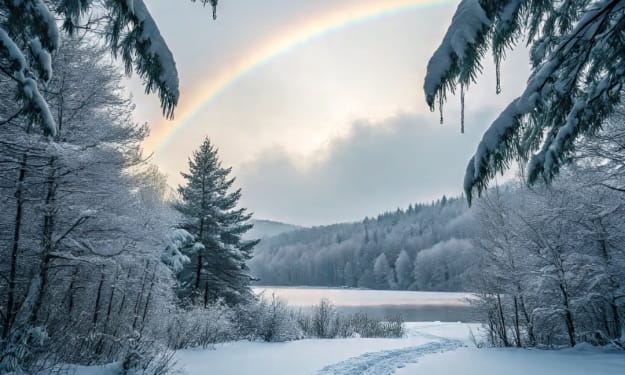
The morning had begun with a quiet drizzle, the kind that whispered against windowpanes and wrapped the world in a soft gray mist. Winter rains were rare in the little mountain town of Elmswood, and when they came, they brought with them a hush of calm. Streets glistened, rooftops shimmered with melting frost, and the air carried the scent of wet pine and earth. Mira stood by her window, watching the drops slide down the glass like silver threads. It had been a long winter—cold, isolating, and full of stillness. She missed the laughter of her friends in the park, the warmth of bonfires, and the sight of color in a world painted only in shades of white and gray. The rain today felt like a curtain closing on the season—a final touch of melancholy before the promise of spring. But nature, as always, had its surprises. By midmorning, the rain slowed, then stopped entirely. Mira stepped outside, her boots crunching softly against the damp earth. A faint golden light began to peek through the heavy clouds. She tilted her face upward, breathing in the crisp air that smelled of rain and renewal. The silence was peaceful—broken only by the dripping of water from tree branches and the distant song of a robin returning too early for the season. Then she saw it. Across the gray sky, just above the hills, a rainbow began to appear. At first, it was faint—a delicate curve of color shimmering between the clouds. But as the sun strengthened, the arc brightened into full brilliance, painting the heavens with red, orange, yellow, green, blue, indigo, and violet. Each hue seemed to dance upon the sky, glowing against the pale light of winter. Mira’s heart lifted. It had been months since she’d seen anything so vivid, so full of life. She felt as if the rainbow had been drawn just for her—a sign that beauty could still bloom after the coldest of days. She remembered how, as a child, she used to run outside barefoot to chase the end of the rainbow, believing a pot of gold waited there. But now, she realized the treasure wasn’t at the end—it was the rainbow itself, the reminder that even after rain and darkness, color always returned. She walked down to the park near the frozen pond, where small puddles reflected the rainbow’s glow. The air shimmered with light, and the snow sparkled like scattered diamonds. A few children were out too, bundled in scarves and mittens, pointing in awe at the sky. Their laughter echoed across the open space, mingling with the gentle wind. An old man passing by smiled at Mira. “Beautiful, isn’t it?” he said, his voice soft but full of wonder. “Yes,” she replied, her eyes still on the sky. “It feels like hope.” He nodded. “That’s what rainbows are—promises that storms don’t last forever.”
By Muhammad Saad 4 months ago in Motivation
Studying Abroad: A Journey Beyond Borders
The dream of studying abroad is one shared by millions of students around the world. It’s more than just earning a degree from a foreign university—it’s about discovering new cultures, gaining independence, and broadening one’s view of the world. Every year, young learners pack their bags and step into a new chapter of life in a country far from home, driven by curiosity, ambition, and the desire to make a meaningful difference in their future. Studying abroad opens doors to countless opportunities. It allows students to learn from world-class educators, experience advanced research facilities, and become part of an international community. But beyond academics, it teaches lessons that no textbook can cover—resilience, adaptability, and cross-cultural understanding. Living in a new country requires adjusting to different customs, languages, and lifestyles, which helps students grow both personally and professionally. One of the most remarkable benefits of studying abroad is cultural exposure. Students learn to appreciate diversity, understand global perspectives, and develop empathy for people from different backgrounds. Sharing classrooms, meals, and experiences with students from all over the world encourages open-mindedness. For many, this experience helps dissolve stereotypes and fosters respect for other traditions and beliefs. In today’s interconnected world, such global awareness is more valuable than ever. Language learning is another key advantage. Being immersed in a new environment naturally improves communication skills. Whether it’s mastering English in the UK or USA, learning French in Paris, or picking up Japanese in Tokyo, language becomes more than just a subject—it turns into a living experience. The ability to communicate across cultures is not only enriching but also highly valued in the global job market. Beyond academics and language, studying abroad nurtures independence and confidence. Students learn to manage their finances, cook their own meals, and make important decisions—skills that shape them into mature, responsible individuals. For many, it’s their first experience living away from home. The challenges they face, such as homesickness, cultural differences, or even navigating a new city, become stepping stones toward self-growth. Each obstacle overcome builds courage and character. Career opportunities also expand significantly. Employers value international experience because it demonstrates flexibility, problem-solving ability, and cultural awareness. A degree earned abroad can open doors to global companies and international networks. Many graduates find that their overseas education sets them apart from others in competitive job markets. It signals not just academic achievement, but also a readiness to embrace the world. Another inspiring aspect of studying abroad is how it fosters lifelong connections. Students form friendships that cross continents and time zones. These relationships often evolve into professional collaborations or simply remain cherished personal bonds. The sense of belonging to a global family stays long after graduation, reminding students that the world is vast but deeply connected. However, the journey isn’t always easy. Students often face challenges like financial pressure, homesickness, or adapting to new academic systems. But these experiences teach resilience and perseverance. Overcoming these hurdles gives students a sense of accomplishment and pride. In the end, these very challenges become the most memorable parts of the experience—the ones that build strength and gratitude. Studying abroad also broadens one’s perspective on global issues. Students witness how different societies approach topics like sustainability, equality, and innovation. This exposure encourages them to think critically and creatively about solving problems back home. They return not just with a degree, but with a renewed sense of purpose—to contribute meaningfully to their communities and the world. In essence, studying abroad is a journey of discovery—of the world, of knowledge, and of oneself. It transforms young minds into global citizens who think beyond borders and boundaries. Each experience abroad adds a new layer to one’s personality, making them more adaptable, confident, and compassionate. For those who dream of exploring the world through education, studying abroad is not just an option—it’s an opportunity of a lifetime. It’s where learning meets adventure, where classrooms expand into cultures, and where every challenge becomes a stepping stone toward success. So, if you ever get the chance to study abroad, take it with both hands. The world is waiting to teach you lessons that go far beyond books—and those lessons will stay with you forever.
By Muhammad Saad 4 months ago in Education
Best Exercise for Young People 💪🌟
Morning light streamed across the city park, where a group of young people gathered every day to move, laugh, and breathe life into their routines. They called themselves The Energy Squad, a name that perfectly described their spirit. Among them were students, professionals, and dreamers—all different, yet united by one goal: to stay healthy in both body and mind. For many young people today, life moves at lightning speed. Between studies, jobs, and social media, it’s easy to forget the importance of physical fitness. Yet, exercise is not just about building muscles—it’s about building focus, confidence, and happiness. That’s what the Energy Squad had learned. Aisha, a 21-year-old university student, had joined the group after struggling with low energy and stress. “I used to spend hours sitting in front of my laptop,” she said. “I thought rest was enough. But when I started exercising regularly, everything changed—my mind became clearer, and I felt stronger every day.” Her story is not unique. Across the world, young people are realizing that the best exercises are not always the hardest ones—they are the ones that make you feel alive, consistent, and confident. The group’s daily routine began with jogging around the park. Jogging is one of the simplest and most effective exercises for young people. It improves heart health, boosts stamina, and helps release stress. The rhythmic sound of their footsteps on the path became a kind of meditation—each step reminding them of progress, each breath a reminder of life itself. After the jog came bodyweight exercises—push-ups, squats, planks, and jumping jacks. These movements required no equipment, just determination. They built strength, improved posture, and increased endurance. The park echoed with cheerful encouragement as friends helped each other complete one more set. Then came a slower phase—yoga and stretching. Under a tall tree, the group practiced poses like the Downward Dog, Warrior, and Tree Pose. Yoga improved their flexibility and balance, but it also taught them patience and mindfulness. “It’s not just about bending your body,” said Zara, the group’s yoga instructor. “It’s about bending your limits.” For those who loved a challenge, a few sessions each week included HIIT (High-Intensity Interval Training)—short bursts of intense activity followed by rest. It was tough but rewarding. HIIT helped burn fat, build muscle, and improve cardiovascular health in less time. The laughter and competitive spirit made even the toughest workouts fun. But not all exercise had to be structured. On weekends, the Energy Squad played football, cycled through nearby trails, or went hiking. Group activities like these not only strengthened their bodies but also built teamwork and friendships. After all, fitness wasn’t just about individual effort—it was about community. Alongside physical activity, they also focused on mental fitness. They practiced breathing exercises and short meditations after workouts to calm the mind and recharge the soul. A healthy body deserves a peaceful mind to guide it. Nutrition was another pillar of their lifestyle. “Exercise alone isn’t enough,” said Bilal, a fitness enthusiast in the group. “What we eat builds our strength.” They encouraged each other to eat whole foods—fruits, vegetables, lean proteins, and plenty of water. Balanced eating kept their energy high and their moods stable. The results of these small, consistent efforts were visible. Members of the Energy Squad felt more confident, more focused in their studies and work, and more positive about life. They no longer saw exercise as a burden, but as a celebration of what their bodies could do. Experts often say that young people should engage in at least 60 minutes of moderate to vigorous activity daily. But the real secret is to find what you enjoy—whether it’s dancing, running, swimming, or playing sports. The best exercise is the one you’ll keep doing. As the sun began to set, the group gathered to stretch and share a few words of encouragement. The air was filled with laughter and the warm glow of satisfaction. Aisha smiled, looking around at her friends. “We started exercising to stay fit,” she said, “but what we really found was balance—between body, mind, and life.” And in that moment, as the sky turned gold, they all understood something profound: the best exercise for young people is not just about building strength—it’s about building joy, discipline, and the courage to live each day with purpose. --- Moral: Exercise is not a task—it’s a gift. For young people, staying active means investing in a stronger, happier, and more confident future.
By Muhammad Saad 4 months ago in Motivation
Best Exercise for Old People 🏃♀️✨
Every sunrise brings with it a new beginning, and for many elderly people, it’s also a chance to embrace health, happiness, and peace. In a small, tranquil town, the local park comes alive each morning as a group of seniors gathers for their daily exercise routine. They call themselves The Morning Bloomers, because, just like flowers, they open up to the warmth of the new day. Among them is Mr. Ahmed, a retired teacher in his seventies. For years, he believed that exercise was something for the young. But after his doctor gently advised him to stay active, he decided to try walking each morning. What began as a few slow steps soon turned into a life-changing habit. Today, he leads his group with a whistle around his neck, reminding everyone, “Movement is medicine!” The importance of exercise for older people cannot be overstated. As we age, our muscles lose strength, our joints stiffen, and our balance weakens. But simple, consistent exercise helps maintain flexibility, improves mood, and even sharpens memory. For the elderly, the best exercises are not about heavy lifting or fast running—they’re about moving with care and purpose. In the park, the Morning Bloomers begin with gentle stretches. They lift their arms toward the sky, roll their shoulders, and take deep breaths. “Stretching wakes up the body,” says Mrs. Fatima, an 80-year-old grandmother who radiates energy. “It’s like saying good morning to your muscles.” After stretching, they walk in small circles along the path. Walking, especially in fresh air, is one of the best exercises for older adults. It strengthens the heart, keeps joints flexible, and refreshes the mind. The group enjoys these moments not just for the physical benefit but also for the laughter and conversation that flow along the way. They share stories, jokes, and sometimes even home remedies for aching knees. A few members prefer light yoga instead. Under the shade of a big banyan tree, they practice breathing exercises and simple poses like the Tree Pose and Mountain Pose. Yoga, with its focus on balance and breathing, helps reduce stress and improve flexibility. It’s also a gentle way to strengthen the core, which supports better posture and prevents falls. Then there’s Mr. Rashid, the music lover of the group, who brings a small speaker and leads the chair dance. It’s a fun, rhythmic routine done while sitting, ideal for those who cannot stand for long periods. The laughter that follows these sessions is as healthy as the movement itself. “We exercise our hearts twice,” he jokes, “once with movement, and again with laughter.” Beyond the park, many continue small exercises at home — climbing stairs slowly, lifting light water bottles for strength, or simply standing up from a chair multiple times to improve leg power. Even gardening counts as great exercise. “Every time I water my plants, I feel my spirit grow too,” says Mrs. Noreen, tending to her roses with love. The benefits are easy to see. Members of the Morning Bloomers have stronger stamina, better moods, and more confidence in their daily lives. Their children often notice the difference — fewer doctor visits, more smiles, and a sparkle in their parents’ eyes that says, “I feel alive.” Experts recommend that older adults do at least 30 minutes of light activity most days of the week. It doesn’t have to be intense — consistency is what matters. Pairing physical activity with a balanced diet, proper sleep, and social interaction keeps both the body and mind healthy. As the sun rises higher, the group finishes their session with gratitude. They form a small circle, close their eyes, and take a deep breath together. The park is silent except for the rustle of leaves and the songs of birds. Mr. Ahmed smiles and says softly, “Age may slow the body, but it cannot stop the spirit.” That morning truth echoes in every heart present. For them, the best exercise isn’t just about fitness — it’s about joy, friendship, and the will to live each day fully. --- Moral: Staying active, no matter your age, is the key to living a happier, healthier, and more meaningful life. Movement keeps not just the body strong but also the heart young.
By Muhammad Saad 4 months ago in Motivation
Whispers of Winter Light
The night lay still beneath a soft blanket of snow, each flake a whisper from the heavens. The forest was hushed, the air so crisp it seemed to chime when the wind brushed through the frost-laden trees. Amid the silver silence stood a small wooden cabin, its windows glowing softly like two golden eyes against the indigo sky. Beside it, a single lantern glowed warmly on the snow, casting an amber halo that shimmered like hope itself. Inside the cabin, Emma sat near the window with a cup of steaming cocoa in her hands. She watched the light outside, a simple lantern she had placed earlier in memory of her grandfather, who had built the cabin decades ago. He always said that light was a promise — a small, glowing reminder that warmth could exist even in the coldest of places. Every year, on the first heavy snow of winter, Emma returned to the cabin. It was her sanctuary — a place untouched by time, where memories of laughter, stories, and the comforting scent of pine logs still lingered in the air. Outside, the forest stretched endlessly, cloaked in quiet beauty. The trees bowed under the weight of snow, their branches sparkling under the starlit sky. The North Star gleamed high above, a constant companion to the light below. As she gazed out, Emma thought about how her grandfather used to tell her stories by the fire. “The world may freeze, little one,” he would say with a twinkle in his eye, “but hearts like ours carry the flame.” His words had guided her through life — through challenges, losses, and new beginnings. The light, he said, was not just a symbol, but a way of living: to bring warmth, kindness, and courage into a world that sometimes felt cold. Tonight, that light seemed to glow brighter. Perhaps it was the stillness of the night, or perhaps it was the feeling of being home again after so long. Emma took a deep breath, feeling the quiet peace settle in her heart. She stepped outside, her boots sinking into the fresh snow with a soft crunch. The lantern’s flame flickered gently as she approached, its glow reflecting in her eyes. She knelt beside it, brushing off a light layer of snow from its glass top. “Grandpa,” she whispered, “I made it back.” Her voice trembled, not from the cold, but from the rush of memories flooding her heart. “You were right. Even in the darkest times, there’s always light.” The wind stirred gently through the trees, carrying a faint whisper — or maybe it was her imagination — that sounded like a sigh of contentment. She smiled, standing up and looking toward the horizon where the first hints of dawn began to soften the sky. A pale golden hue mingled with the deep blue, and the stars slowly faded into the morning light. The lantern’s glow blended with the rising sun, two lights meeting — one human, one heavenly. Emma knew she wouldn’t be alone, not really. The warmth she carried was more than memory; it was legacy — the same light her grandfather once carried, now passed on through her. She turned back toward the cabin, where the fire still crackled in the hearth. The little home glowed like a beacon in the midst of winter’s stillness, its windows radiating welcome to any soul lost in the snow. That night, and every night after, the lantern would continue to burn outside her cabin — a soft promise that even the coldest season cannot dim the light within. Visitors who passed through the forest in later years often spoke of that single glowing lantern, how it stood unwavering through every storm, a quiet guide for those seeking warmth or direction. And though Emma would one day be gone, her light — like her grandfather’s before her — would remain. For in every winter’s heart lies a spark waiting to shine, a whisper of warmth that says: Even in the deepest snow, love keeps the world aglow.
By Muhammad Saad 4 months ago in Fiction
Fires of Friendship
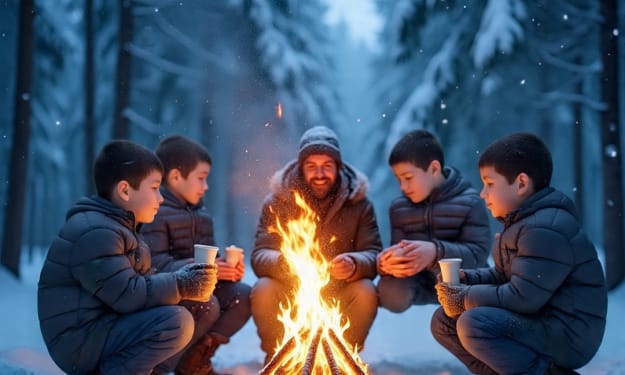
The forest was wrapped in a thick blanket of snow, every branch glistening with frost under the pale blue light of a winter evening. The air was crisp, the kind that nipped at your nose and painted your breath white. In the heart of that serene silence, a small fire crackled brightly—its flames dancing like golden ribbons in the cold air. Around it sat a man and four boys, bundled in thick jackets, their cheeks flushed pink from the chill. It was the first snowfall of the season, and the forest looked like a wonderland. The man—Mr. Harris, their teacher—had promised his students an outdoor adventure before the holidays began. “We’ll learn something more valuable than books today,” he had said that morning with a wink. The boys, curious and thrilled, had followed him into the woods with backpacks, laughter, and a sense of wonder. Now, as twilight deepened and snowflakes fell softly around them, the boys huddled closer to the fire. The flames cast a warm glow on their faces, and their steaming cups of cocoa filled the air with a sweet aroma that mingled with the scent of burning pine. “Sir,” said Ethan, the youngest of the group, “why did you bring us here? It’s freezing!” Mr. Harris smiled, rubbing his hands near the fire. “Because, Ethan, some lessons aren’t taught in classrooms. Sometimes, the best lessons are learned in the middle of nature—where we listen, feel, and understand the world better.” The boys exchanged puzzled looks but stayed silent, sipping their cocoa. The fire popped cheerfully, and for a few moments, only the wind and the sound of burning wood filled the air. Mr. Harris leaned forward. “Do you know why we sit around a fire like this?” “Because it’s warm?” said Liam, grinning. “True,” the teacher chuckled. “But there’s more. Fire brings people together. It’s been that way since the beginning of time. Our ancestors used fire not just to cook or stay warm, but to share stories, laughter, and hope. Around a fire, people become a family.” The boys looked at the flickering flames, mesmerized. The warmth seeped into their cold fingers, but something deeper stirred inside them—a quiet sense of connection. After a while, Mr. Harris pulled out a small notebook. “Let’s try something. I want each of you to share one thing you’re grateful for this year.” The boys hesitated at first. But soon, one by one, they spoke. “I’m grateful for my mom,” said Ryan softly. “She works hard so I can study.” “I’m thankful for my dog, Max,” laughed Liam. “He makes every day fun.” Ethan looked shy but said, “I’m grateful for my friends… and for hot chocolate.” They all chuckled, and the sound of their laughter echoed through the snowy trees like music. When it was Mr. Harris’s turn, he said quietly, “I’m grateful for all of you. You remind me that teaching isn’t just about lessons—it’s about moments like these.” The snow continued to fall gently, covering the ground in a silvery sheen. Above them, the stars began to peek through the winter clouds. The forest no longer felt cold or distant. It felt alive—breathing, glowing, and full of warmth. As the night grew darker, the fire burned lower, but none of them wanted to leave. They told stories—some funny, some brave, and some filled with dreams. They spoke about what they wanted to be when they grew up, the adventures they wanted to take, and the places they wanted to see. Mr. Harris listened with a smile, thinking how this simple night would one day become a treasured memory for them all. The flames flickered like time itself—bright, fleeting, but unforgettable. Finally, as the embers glowed red and the stars shone brighter, Mr. Harris stood up and said, “Remember this fire, boys. When life feels cold, find people who warm your heart. And when you can, be the fire for someone else.” They nodded, understanding more than words could express. As they packed up and began their walk back through the snow, the forest seemed to whisper with life. The fire’s warmth lingered not just on their hands but deep in their hearts. That night, under the starlit sky, they learned one of life’s simplest and most beautiful truths— that warmth isn’t just found in flames, but in friendship.
By Muhammad Saad 4 months ago in Motivation
Studying Abroad: A Journey Beyond Borders
The dream of studying abroad is one shared by millions of students around the world. It’s more than just earning a degree from a foreign university—it’s about discovering new cultures, gaining independence, and broadening one’s view of the world. Every year, young learners pack their bags and step into a new chapter of life in a country far from home, driven by curiosity, ambition, and the desire to make a meaningful difference in their future. Studying abroad opens doors to countless opportunities. It allows students to learn from world-class educators, experience advanced research facilities, and become part of an international community. But beyond academics, it teaches lessons that no textbook can cover—resilience, adaptability, and cross-cultural understanding. Living in a new country requires adjusting to different customs, languages, and lifestyles, which helps students grow both personally and professionally. One of the most remarkable benefits of studying abroad is cultural exposure. Students learn to appreciate diversity, understand global perspectives, and develop empathy for people from different backgrounds. Sharing classrooms, meals, and experiences with students from all over the world encourages open-mindedness. For many, this experience helps dissolve stereotypes and fosters respect for other traditions and beliefs. In today’s interconnected world, such global awareness is more valuable than ever. Language learning is another key advantage. Being immersed in a new environment naturally improves communication skills. Whether it’s mastering English in the UK or USA, learning French in Paris, or picking up Japanese in Tokyo, language becomes more than just a subject—it turns into a living experience. The ability to communicate across cultures is not only enriching but also highly valued in the global job market. Beyond academics and language, studying abroad nurtures independence and confidence. Students learn to manage their finances, cook their own meals, and make important decisions—skills that shape them into mature, responsible individuals. For many, it’s their first experience living away from home. The challenges they face, such as homesickness, cultural differences, or even navigating a new city, become stepping stones toward self-growth. Each obstacle overcome builds courage and character. Career opportunities also expand significantly. Employers value international experience because it demonstrates flexibility, problem-solving ability, and cultural awareness. A degree earned abroad can open doors to global companies and international networks. Many graduates find that their overseas education sets them apart from others in competitive job markets. It signals not just academic achievement, but also a readiness to embrace the world. Another inspiring aspect of studying abroad is how it fosters lifelong connections. Students form friendships that cross continents and time zones. These relationships often evolve into professional collaborations or simply remain cherished personal bonds. The sense of belonging to a global family stays long after graduation, reminding students that the world is vast but deeply connected. However, the journey isn’t always easy. Students often face challenges like financial pressure, homesickness, or adapting to new academic systems. But these experiences teach resilience and perseverance. Overcoming these hurdles gives students a sense of accomplishment and pride. In the end, these very challenges become the most memorable parts of the experience—the ones that build strength and gratitude. Studying abroad also broadens one’s perspective on global issues. Students witness how different societies approach topics like sustainability, equality, and innovation. This exposure encourages them to think critically and creatively about solving problems back home. They return not just with a degree, but with a renewed sense of purpose—to contribute meaningfully to their communities and the world. In essence, studying abroad is a journey of discovery—of the world, of knowledge, and of oneself. It transforms young minds into global citizens who think beyond borders and boundaries. Each experience abroad adds a new layer to one’s personality, making them more adaptable, confident, and compassionate. For those who dream of exploring the world through education, studying abroad is not just an option—it’s an opportunity of a lifetime. It’s where learning meets adventure, where classrooms expand into cultures, and where every challenge becomes a stepping stone toward success. So, if you ever get the chance to study abroad, take it with both hands. The world is waiting to teach you lessons that go far beyond books—and those lessons will stay with you forever.
By Muhammad Saad 4 months ago in Education
Whispers of Winter ❄️
Whispers of Winter When Frost Painted the Earth and Warm Hearts Lit the Season The whisper of winter drifted near, Soft as a sigh that hearts could hear. Through silver clouds, the north winds flew, Bringing dreams dressed in sparkling dew. The trees stood still in robes of white, Their branches kissed by crystal light. Each leaf asleep beneath the snow, While stars above began to glow. In a quiet village, calm and small, Snowflakes danced and seemed to call. They twirled through air in soft embrace, And brushed each cheek with gentle grace. Children’s laughter filled the skies, As flakes fell soft before their eyes. They built tall men of snow and cheer, And crowned them kings of the passing year. A boy named Rehan watched the scene, His eyes alight with winter’s sheen. He loved the hush that nights would bring, When frost would hum and lanterns sing. But deep within, a longing stayed, For warmth beyond the fire’s shade. His father gone to lands unknown, His mother waiting all alone. Each evening by the window’s glow, They’d watch the flakes drift down below. And though the wind was cold and wide, Their love burned bright, a flame inside. Then came a night both calm and deep, When stars above refused to sleep. They shimmered bright through midnight blue, As if the heavens whispered too: “Hold on, young heart, though skies may freeze, For warmth is found in memories. Beyond the storm, beyond the snow, The seeds of spring already grow.” Rehan smiled, his eyes turned high, To constellations crowding the sky. He felt his father’s voice once more— A gentle echo through the door. “Be strong, my boy, the world is wide, But love will always be your guide.” And with that whisper, faint yet near, The night grew calm, the stars drew clear. He ran outside, his breath a cloud, The moon above both soft and proud. He built a lantern out of glass, And placed it shining in the grass. Its golden glow cut through the cold, A tiny sun the dark could hold. Neighbors saw its tender gleam, And came to join his silent dream. Soon every window lit with flame, And laughter through the village came. The snow still fell, but hearts were warm, Together safe through winter’s storm. The frost became a painted art, On every roof, on every heart. And though the world was still and white, It pulsed with love and gentle light. By morning’s rise, the hills would gleam, Like silver stitched in heaven’s seam. And Rehan knew — as all hearts do — That winter’s chill can’t dim what’s true. For warmth is not in hearths alone, But in the love that we have grown. And when the winds of winter sigh, They tell of hearts that never die. So let it snow, let night be long, For even cold can birth a song. In every frost, a spark will stay — To guide lost souls along their way. And when the seasons shift once more, And springtime knocks at winter’s door, The world will bloom — but still recall, The whisper that once blessed it all. For frost may fade and stars may flee, But love outlasts eternity. And through each flake, each frozen art, Winter will whisper — from heart to heart.
By Muhammad Saad 4 months ago in Poets
At the Time of Stars in the Sky
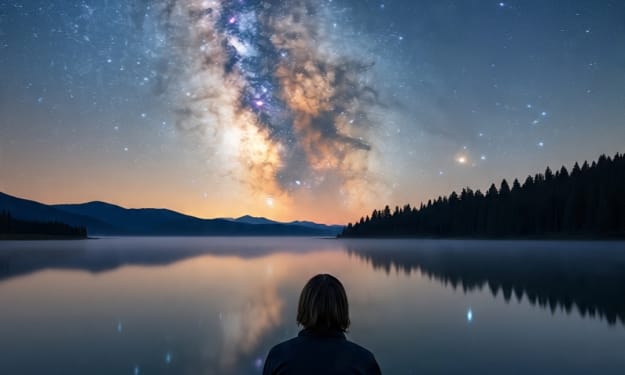
The evening wind whispered softly through the tall grass as the sun slipped below the horizon. The sky turned from golden orange to a gentle purple, and soon, the first stars began to appear—tiny, shimmering lights scattered across an ocean of darkness. For Ayaan, this was his favorite time of the day, the moment when the world seemed to hold its breath, waiting for the stars to come alive. Every night, he would climb the small hill behind his home and sit quietly beneath the vast sky. It wasn’t just a habit—it was his escape, his comfort, and his inspiration. The stars, to him, were more than distant fires; they were silent companions who listened to his dreams. Ayaan was a dreamer in a small village where dreams often got lost in the noise of daily life. People worked from sunrise to sunset, caring for crops, animals, and families. They rarely looked up. But Ayaan always did. His heart was full of questions about the world beyond the stars. He wanted to understand what lay past the horizon—what stories the universe told when no one was listening. One night, as he sat gazing at the glittering sky, his grandfather joined him. The old man walked slowly, his stick tapping softly on the ground. He sat beside Ayaan, his eyes reflecting the same starlight. “You love the stars, don’t you?” his grandfather asked, smiling. “Yes, Dada,” Ayaan replied. “They make me feel like there’s more—more to life, more to the world, more to everything.” His grandfather nodded. “There is always more, Ayaan. The stars remind us that we are small, but they also remind us to dream big. Each star you see has its own story, just like every person on Earth.” The boy listened closely, his heart warmed by the words. “Do you think the stars can hear us?” he asked. “Maybe,” the old man chuckled. “But more importantly, when we talk to them, we start to hear ourselves.” That night, Ayaan made a promise to himself. He would follow his dreams, no matter how far they took him. The stars would be his guide, and their light would be his path. Years passed, and Ayaan’s fascination grew. He began studying astronomy through books borrowed from a nearby town’s library. He learned about planets, galaxies, and constellations—each fact like a spark that fueled his passion. He even built a small telescope from spare parts, spending countless nights observing the heavens. But life, as it often does, tested his resolve. His family couldn’t afford to send him to the city for higher education. The dream that once felt so close suddenly seemed unreachable. Yet, whenever despair whispered in his heart, he would look up at the sky and remember his grandfather’s words. One evening, a meteor shower lit up the heavens. Ayaan watched in awe as streaks of silver crossed the black sky. It felt like the universe itself was speaking to him, telling him not to give up. That night, he wrote a letter to an astronomy research institute, sharing his work, his drawings, and his ideas. He didn’t expect a reply—but weeks later, one came. The institute was impressed by his observations and offered him a scholarship to study astronomy. Ayaan’s heart soared higher than the stars themselves. It was as if the sky had opened a new chapter just for him. When he left his village, he stood once more on his hill under the vast night. The stars twinkled above, familiar yet somehow new. He whispered softly, “Thank you,” and felt the quiet breeze answer. Years later, as a scientist, Ayaan returned home. He brought with him a powerful telescope for the village school. That night, he invited everyone to look up and see what he had always seen—the beauty, the mystery, and the hope written in the stars. Children gasped with wonder, and even the elders smiled with the joy of rediscovery. The village that once looked down now looked up. As Ayaan stood there, surrounded by faces glowing with starlight, he realized his dream had come true—not only for himself but for everyone around him. And once again, at the time of stars in the sky, dreams shone brighter than ever.
By Muhammad Saad 4 months ago in Motivation