jahidul Islam Sifat
Bio
Stories (21)
Filter by community
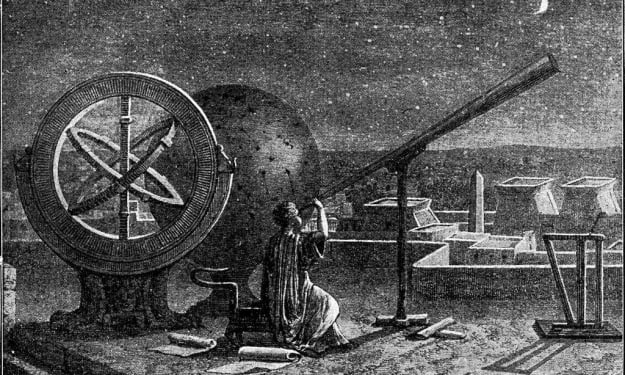
The Invention of the Telescope
Each month as part of this new series from the Historical Astronomy Division of the AAS, an important discovery or memorable event in the history of astronomy will be highlighted. This month, we look at the discovery of Neptune
By jahidul Islam Sifat8 months ago in History
Top 10 Books for Astronomy
1. “The Backyard Astronomer’s Guide” by Terence Dickinson and Alan Dyer “The Backyard Astronomer’s Guide” is an essential companion for amateur astronomers of all levels. It covers a wide range of topics, from choosing the right telescope and observing equipment to understanding the basics of celestial mechanics. Terence Dickinson and Alan Dyer, both renowned experts in the field, provide expert guidance on finding and observing various celestial objects, including stars, planets, galaxies, and nebulae. The book is beautifully illustrated with stunning images, making it an excellent resource for both practical advice and visual inspiration.
By jahidul Islam Sifat8 months ago in BookClub
Ancient Greek Philosopher Anaxagoras
Ancient Greek philosopher Anaxagoras was the one who introduced the concept of the universal mind (nous) as the motive cause of the cosmos. The pre-Socratic philosopher (c. 500-428 BC) was a brilliant scientist who understood the rainbow phenomenon and as an avid astronomer discovered the true cause of eclipses.
By jahidul Islam Sifat8 months ago in History
Who Was Leo XIII, The Pope Whose Name The New Pontiff Chose
Who would have bet that a cardinal widely seen as a placeholder, elected Pope back in 1878, with people whispering he wouldn’t last long, would end up inspiring the newly-elected Pope Leo XIV? Yet, here we are, watching the first American Pope in history step out and deliberately refer back to this very man, Pope Leo XIII, by choosing his name.
By jahidul Islam Sifat8 months ago in History
Six types of love according to the ancient Greeks
1. Eros, or sexual passion The first kind of love was eros, named after the Greek god of fertility, and it represented the idea of sexual passion and desire. But the Greeks didn’t always think of this as something positive, as we tend to do today. In fact, eros was viewed as a dangerous, fiery, and irrational form of love that could take hold of you and possess you—an attitude shared by many later spiritual thinkers, such as the Christian writer C.S. Lewis.Eros involved a loss of control that frightened the Greeks. This is odd, of course, because losing control is precisely what many people now seek in a relationship. Don’t we all hope to fall “madly” in love?
By jahidul Islam Sifat9 months ago in History
Ramses II
Ramesses II, also known as Ramesses the Great, was the third pharaoh of the Nineteenth Dynasty of Egypt. In the sands of time, there emerges a colossal figure who transcends the boundaries of history and legend. A name that persists through the ages, a legacy that still captivates the imagination – King Ramses II, known to the world as Ramesses the Great.
By jahidul Islam Sifat2 years ago in History
Tutankhamun
King Tutankhamun, also known as King Tut, was a pharaoh who ruled Egypt from 1332 to 1323 B.C. He ascended to the throne of Egypt as a child, when he was eight or nine years old, and was guided by several key figures including Ay, the Grand Vizier and potentially Tut’s maternal grandfather, and Horemheb, the commander-in-chief of the military.
By jahidul Islam Sifat2 years ago in History