
Who Was Leo XIII, The Pope Whose Name The New Pontiff Chose
Who Was Leo XIII, The Pope Whose Name The New Pontiff Chose

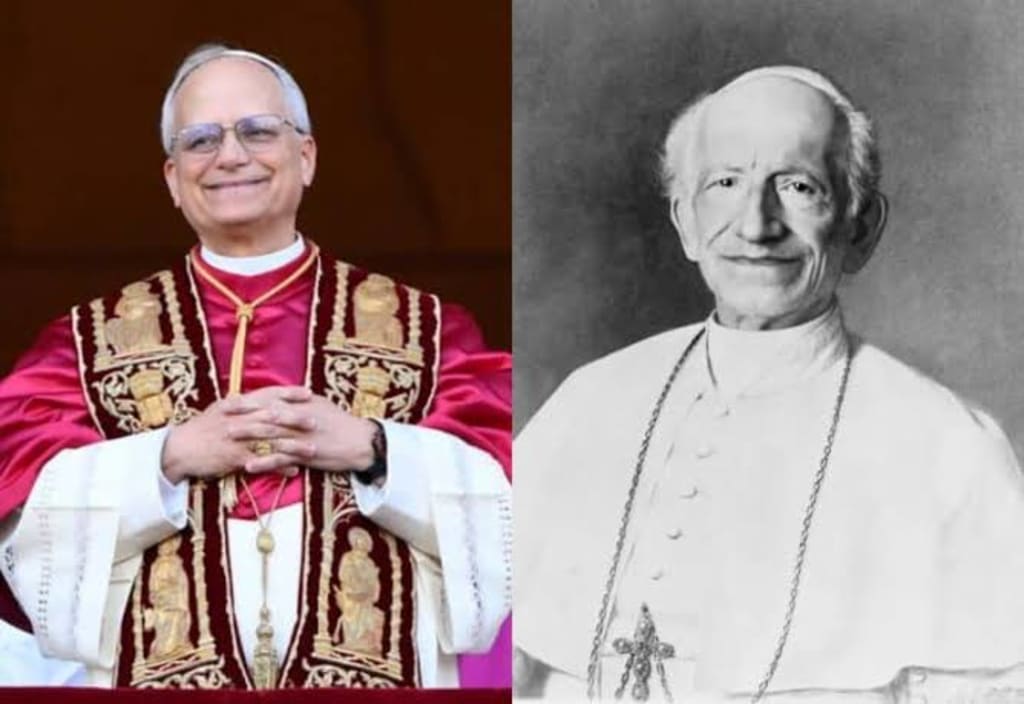
Who would have bet that a cardinal widely seen as a placeholder, elected Pope back in 1878, with people whispering he wouldn’t last long, would end up inspiring the newly-elected Pope Leo XIV? Yet, here we are, watching the first American Pope in history step out and deliberately refer back to this very man, Pope Leo XIII, by choosing his name.
As with every papal name, it is far from a random choice; it is a signal, a nod to a papacy that wrestled with its own seismic changes and laid down markers that still guide the Catholic Church today. The newly-elected Pope Leo XIV has probably been paying attention and seen something vital in Leo XIII’s papacy that he wants to carry forward in the 21st century.
Pope Leo XIII, the ‘Transitional’ Pope who stayed
Italian cardinal Gioacchino Pecci got the nod at nearly 68, after Pope Pius IX’s incredibly long papacy at the end of the 19th century, a crucial historical period for the entire world. Pope Leo XIII was supposed to be a gentle interim figure, someone to see the Church through a tricky time after losing most of its influence and power in Italy.
A nice, quiet end to a chaotic century for the papacy was expected. Except, surprise! The man lived to be 93 and reigned for a quarter of a century—the fourth longest papacy ever. So much for ‘transitional!’ Instead of quietly fading out, Leo XIII dove headfirst into the chaos of the late 19th century: the factories of the Industrial Revolution, the cities swelling with poor and exploited workers, the new ideas of socialism and communism challenging systems and beliefs everywhere you looked.
Imagine inheriting an ancient institution just as the world decided to invent the modern age—mass production, global communication (well, telegraphs!) and brand new political ideologies. It is like being given a map from the Middle Ages and told to navigate a world with highways and airports. But Pope Leo XIII wasn’t one to shy away and proved to be ready for this challenge. He showed a sharp mind and a real drive to keep the Church relevant.
Why Pope Leo XIII is relevant in 2025
If you want to pinpoint the key reason the new Pope likely chose his name, it is most probably the Rerum Novarum. Issued in 1891, this was the moment the Catholic Church waded directly into the messiness of industrial life, speaking up for the ordinary people working more than half a day in dangerous conditions for exceptionally low wages. Pope Leo emphasized workers’ rights to fair wages, safe working environments and the formation of trade unions, whilst also upholding the principles of private property and free enterprise. At the same time, he rejected both socialism and unregulated capitalism, at a time when the extremes of the political spectrum were getting stronger by the day.
Leo XIII looked at the huge gap between factory owners getting rich and workers struggling to survive and he effectively said, “Hold on a minute.” He called out the harshness of completely unregulated capitalism and, equally, pointed out the flaws in socialist ideas which were gaining traction, particularly the undemocratic nature of some of its more extreme versions. So what was his answer?
, Right: Wikimedoa Commons, Public Domain
Who would have bet that a cardinal widely seen as a placeholder, elected Pope back in 1878, with people whispering he wouldn’t last long, would end up inspiring the newly-elected Pope Leo XIV? Yet, here we are, watching the first American Pope in history step out and deliberately refer back to this very man, Pope Leo XIII, by choosing his name.
As with every papal name, it is far from a random choice; it is a signal, a nod to a papacy that wrestled with its own seismic changes and laid down markers that still guide the Catholic Church today. The newly-elected Pope Leo XIV has probably been paying attention and seen something vital in Leo XIII’s papacy that he wants to carry forward in the 21st century.
Pope Leo XIII, the ‘Transitional’ Pope who stayed
Italian cardinal Gioacchino Pecci got the nod at nearly 68, after Pope Pius IX’s incredibly long papacy at the end of the 19th century, a crucial historical period for the entire world. Pope Leo XIII was supposed to be a gentle interim figure, someone to see the Church through a tricky time after losing most of its influence and power in Italy.
A nice, quiet end to a chaotic century for the papacy was expected. Except, surprise! The man lived to be 93 and reigned for a quarter of a century—the fourth longest papacy ever. So much for ‘transitional!’ Instead of quietly fading out, Leo XIII dove headfirst into the chaos of the late 19th century: the factories of the Industrial Revolution, the cities swelling with poor and exploited workers, the new ideas of socialism and communism challenging systems and beliefs everywhere you looked.
Pope Leo XIII
Pope Leo XIII, still an archbishop, helping the poor of Italy. Credit: Karl Benzinger, Wikimedia Commons, Public Domain
Imagine inheriting an ancient institution just as the world decided to invent the modern age—mass production, global communication (well, telegraphs!) and brand new political ideologies. It is like being given a map from the Middle Ages and told to navigate a world with highways and airports. But Pope Leo XIII wasn’t one to shy away and proved to be ready for this challenge. He showed a sharp mind and a real drive to keep the Church relevant.
Grecian Delight supports Greece
Why Pope Leo XIII is relevant in 2025
If you want to pinpoint the key reason the new Pope likely chose his name, it is most probably the Rerum Novarum. Issued in 1891, this was the moment the Catholic Church waded directly into the messiness of industrial life, speaking up for the ordinary people working more than half a day in dangerous conditions for exceptionally low wages. Pope Leo emphasized workers’ rights to fair wages, safe working environments and the formation of trade unions, whilst also upholding the principles of private property and free enterprise. At the same time, he rejected both socialism and unregulated capitalism, at a time when the extremes of the political spectrum were getting stronger by the day.
Leo XIII looked at the huge gap between factory owners getting rich and workers struggling to survive and he effectively said, “Hold on a minute.” He called out the harshness of completely unregulated capitalism and, equally, pointed out the flaws in socialist ideas which were gaining traction, particularly the undemocratic nature of some of its more extreme versions. So what was his answer?
A Catholic “third way”—one that upheld the right to own material goods, yes, but stressed it came with responsibilities to the community. He championed fair wages, safe working conditions, and, crucially, the right for workers to team up and form unions. This was truly revolutionary talk coming from the Vatican back then. It basically wrote the initial blueprint for everything the Catholic Church has said since about social justice, influencing everyone who followed. So, when the name Leo pops up again now, it’s a pretty strong hint that tackling inequality, standing up for workers and advocating for the common good are high on the agenda. That historical connection feels incredibly relevant today, doesn’t it?
There’s more to Leo XIII than just social teaching, even though that is the most prominent element of his papacy. He also had a remarkable ability to look at the modern world not just with suspicion, but with a desire to understand and engage.
He was the pope who said, “Hey, let’s get serious about astronomy,” and boosted the Vatican Observatory, for example. He pushed for a deeper study of the Bible using better historical methods. He also really championed the philosophy of Thomas Aquinas—not because he was old-fashioned, but because his logical, reasoned approach was a robust way to grapple with modern philosophical challenges in an era of constant change. He understood that the Catholic Church, if it wanted to survive, had to be part of the conversation, offering its wisdom in ways people could grasp, and reforming its approach to adjust to the modern world.
This willingness to step out, to engage with science, philosophy and global politics (he was quite the diplomat too), marked a vital shift from older, traditional approaches. It showed that you could hold onto ancient beliefs and truths while still being open to new knowledge and new ways of thinking. It’s a lesson that has hardly gone out of style, particularly after the papacy of Francis.
So, the first-ever American Pope choosing the name Leo XIV feels like the embracing of a particular approach to the papacy—one that will most probably be intellectually engaged, deeply concerned with social fairness and human rights and willing to step onto the world stage to address the pressing issues of the day rather than withdrawing to its own little cocoon.
Pope Leo XIII took the Church into the 20th century by looking squarely at its challenges and responding with courage and intellect. Perhaps the new Pope Leo sees that same spirit is exactly what the global Church needs to move forward towards the middle part of the 21st century.
About the Creator
Keep reading
More stories from jahidul Islam Sifat and writers in History and other communities.
Why Early Aircraft Designs Failed Before They Ever Flew
Long before airplanes became symbols of speed and global connection, flight was an idea filled with uncertainty, ambition, and repeated disappointment. Early aircraft designers were driven by a powerful belief that humans could conquer the skies, yet many of their creations never made it past workshops, fields, or testing grounds. These failures were not accidents of carelessness; they were the result of a world still learning the rules of flight.
By Beckett Dowhan6 days ago in History
3 Times Ordinary Objects Did Something Deeply Unsettling
Objects surround us every day. They make life easier, more comfortable, or more entertaining. A chair supports us, a mirror shows us our reflection, and a toaster browns our bread with consistent reliability. Most of the time, they behave exactly as expected.
By Enoch Sagini5 days ago in History
So You Decided To Become a Nurse Practitioner:
So you decided to become an "Advanced Practice" nurse. Congratulations!... is what I would say if this was a good idea. Grad school? In this economy? What were you thinking? Likely it was something along the lines of either 1) “I've seen these other chucklefucks do it— Why can't I?” or even 2) “I've got a nice career, I should shake it up. I miss feeling like I have no clue what I'm doing.”
By Sandor Szabo2 days ago in Fiction




Comments
There are no comments for this story
Be the first to respond and start the conversation.