
Six types of love according to the ancient Greeks
Six types of love according to the ancient Greeks

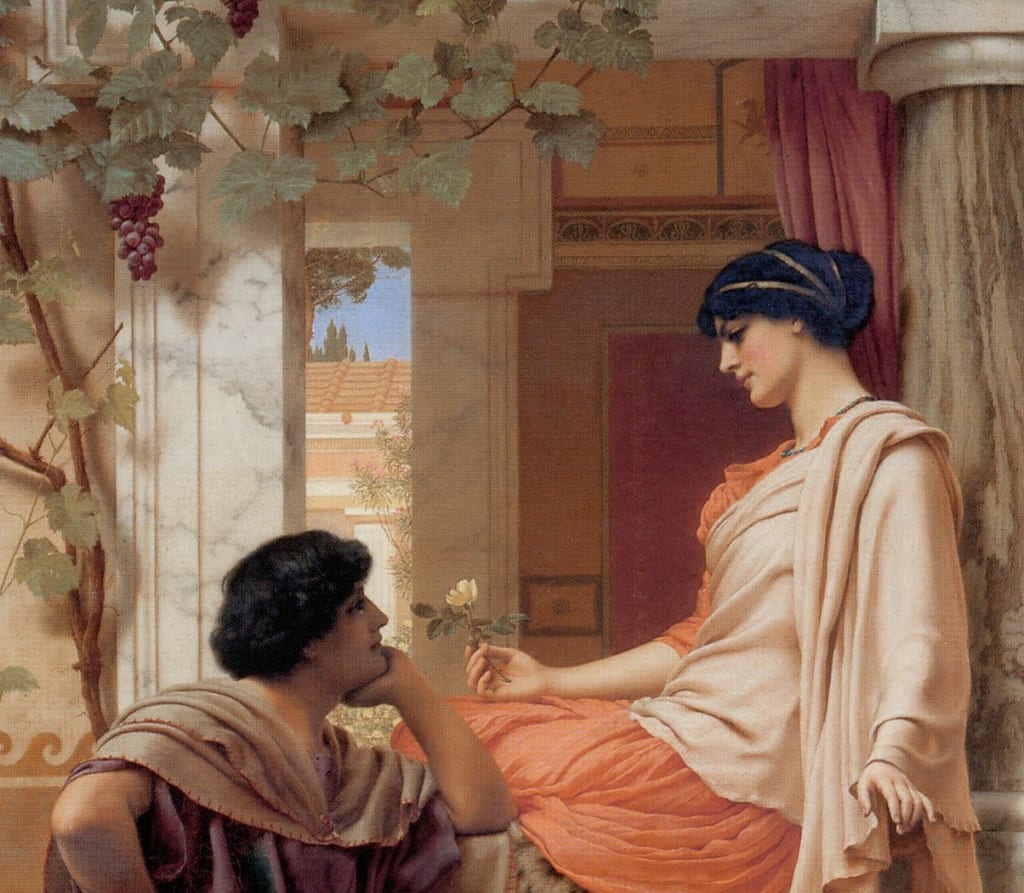
1. Eros, or sexual passion
The first kind of love was eros, named after the Greek god of fertility, and it represented the idea of sexual passion and desire. But the Greeks didn’t always think of this as something positive, as we tend to do today. In fact, eros was viewed as a dangerous, fiery, and irrational form of love that could take hold of you and possess you—an attitude shared by many later spiritual thinkers, such as the Christian writer C.S. Lewis.Eros involved a loss of control that frightened the Greeks. This is odd, of course, because losing control is precisely what many people now seek in a relationship. Don’t we all hope to fall “madly” in love?
2. Philia, or deep friendship
The second variety of love was philia or friendship, which the Greeks valued far more than the base sexuality of eros. Philia pertained to the deep comradely friendship that developed between brothers in arms who had fought side by side on the battlefield. It was about showing loyalty to your friends, sacrificing for them, and sharing your emotions with them. (Another kind of philia, sometimes called storge, embodied the love between parents and their children.)
We can all ask ourselves how much of this comradely philia we have in our lives. It’s an important question in an age when we attempt to amass “friends” on Facebook or “followers” on Twitter—achievements that would have hardly impressed the Greeks.
3. Ludus, or playful love
Ludus was the Greeks’ idea of playful love, which referred to the affection between children or young lovers. We’ve all had a taste of it in flirting and teasing in the early stages of a relationship. But we also live out our ludus when we sit around in a bar bantering and laughing with friends or when we go out dancing.
Dancing with strangers may be the ultimate ludic activity— almost a playful substitute for sex itself. Social norms may frown on this kind of adult frivolity, but a little more ludus might be just what we need to spice up our love lives.
4. Agape, or love for everyone
The fourth love, and perhaps the most radical, was agape or selfless love. This was a love that you extended to all people whether family members or distant strangers. Agape was later translated into Latin as caritas, which is the origin of our word “charity.”
C.S. Lewis referred to it as “gift love,” the highest form of Christian love. But it also appears in other religious traditions, such as the idea of mettā or “universal loving kindness” in Theravāda Buddhism.
There is growing evidence that agape is in a dangerous decline in many countries. Empathy levels in the U.S. have declined sharply over the past forty years with the steepest fall occurring in the past decade. We urgently need to revive our capacity to care about strangers.
5. Pragma, or longstanding love
Another Greek love was the mature love known as pragma. This was the deep understanding that developed between long-married couples.
Pragma was about making compromises to help the relationship work over time and showing patience and tolerance.
The psychoanalyst Erich Fromm said that we spend too much energy on “falling in love” and need to learn more how to “stand in love.” Pragma is precisely about standing in love—making an effort to give love rather than just receive it.
With about a third of first marriages in the U.S. ending through divorce or separation within the first ten years, Greeks would surely think we should bring a serious dose of pragma into our relationships.
6. Philautia, or love of the self
The Greek’s sixth variety of love was philautia or self-love, and the clever Greeks realized there were two types. One was an unhealthy variety associated with narcissism in which you became self-obsessed and focused on personal fame and fortune. A healthier version enhanced your wider capacity to love.
The idea was that if you like yourself and feel secure in yourself, you will have plenty of love to give to others (as is reflected in the Buddhist-inspired concept of “self-compassion”). In other words, as Aristotle put it, “All friendly feelings for others are an extension of a man’s feelings for himself.”
The ancient Greeks found diverse kinds of love in relationships with a wide range of people—friends, family, spouses, strangers, and even themselves. This contrasts with our typical focus on a single romantic relationship in which we hope to find all the different loves wrapped into a single person or soul mate.
source
greekreporter.com
About the Creator
Reader insights
Good effort
You have potential. Keep practicing and don’t give up!
Top insights
Compelling and original writing
Creative use of language & vocab
Easy to read and follow
Well-structured & engaging content
Excellent storytelling
Original narrative & well developed characters
Eye opening
Niche topic & fresh perspectives
Heartfelt and relatable
The story invoked strong personal emotions
Masterful proofreading
Zero grammar & spelling mistakes
Keep reading
More stories from jahidul Islam Sifat and writers in History and other communities.
Ramses II
Ramesses II, also known as Ramesses the Great, was the third pharaoh of the Nineteenth Dynasty of Egypt. In the sands of time, there emerges a colossal figure who transcends the boundaries of history and legend. A name that persists through the ages, a legacy that still captivates the imagination – King Ramses II, known to the world as Ramesses the Great.
By jahidul Islam Sifat2 years ago in History
Are Banks Open on Martin Luther King Jr. Day?
Introduction Martin Luther King Jr. Day, also called MLK Day, is a national holiday in the United States. Many people enjoy a day off from work or school on this day. However, a common question people ask is: Are banks open on MLK Day?
By Farhan Sayedabout 6 hours ago in History
Power's Sake
When it comes to gaining power, bad people use it to gain more They never gain power to do something with it, they gain power to have it, relish in it, double it down on itself so it grows exponentially and never goes anywhere. Even if you see the people in power commit an atrocity, that is never the true goal. It is a deplorable action for sure but the action itself usually doesn't matter it's the outcome.
By Donny Foley6 days ago in History




Comments
There are no comments for this story
Be the first to respond and start the conversation.