Ian Sankan
Bio
Writer and storyteller passionate about health and wellness, personal development, and pop culture. Exploring topics that inspire and educate. Let’s connect and share ideas!
Stories (124)
Filter by community
The Best Way To Surpass 99% Of People
Get brutally aware of these two things, and you'll be ahead of 99 percent of individuals in 6 to 12 months. The initial scenario is what you don't want, and the second is where you will end up. If you continue to do the same things, watch the crowds to see what happens when you don't think. It's not nice At All by any means if you do this when you watch a large group of people. Sit with your ideas and think about them. Don't just shut your mind off and believe what you observe on the surface. That's not how it works. Your lack of depth of thought is what put you into this predicament in the first place. It would be best if you thought more deeply. It's easier to figure out what you don't want through observation and experience than to figure out what you do want through fantasy, just thinking, and having big plans for the future. Don't get me wrong; I'm not saying you shouldn't have big plans for the future. I'm not giving up on those things because they are good and not harmful. I need to decide whether what I say is good or bad. Try it out for yourself to see if it's true.
By Ian Sankan3 years ago in Journal
The Laws of Human Nature
How many times do I have to say to you, Trevor? She is an egotist! You've been in three unhealthy relationships so far this year. If only, says Robert Greene, you knew The Laws of Human Nature. - You've tried 64 business ideas, Baxter, and have yet to succeed. Perhaps it is you who needs to comprehend your nature. - Oh, I see your point.
By Ian Sankan3 years ago in BookClub
Nihilism
We all understand how it works. We are both born and die on the same day. We are aware of and understand everything that occurs in between, but we are unaware of everything that happened before and will occur following. It is, therefore, quite challenging to pinpoint the precise significance of our presence. How can we comprehend why we are here if we can't explain how or from where we came? In the same spirit, how can we determine whether our current behaviors are meaningful if we don't know where we're headed or what we will become? Since humans first developed consciousness, the question "What is the meaning of life?" has troubled humanity, and this uncertainty about our shared pasts and futures is to blame. As a species, we have never been able to respond definitively to this question. Still, many of us have sought solace in various ideologies to at least lessen the uneasiness it generates.
By Ian Sankan3 years ago in Humans
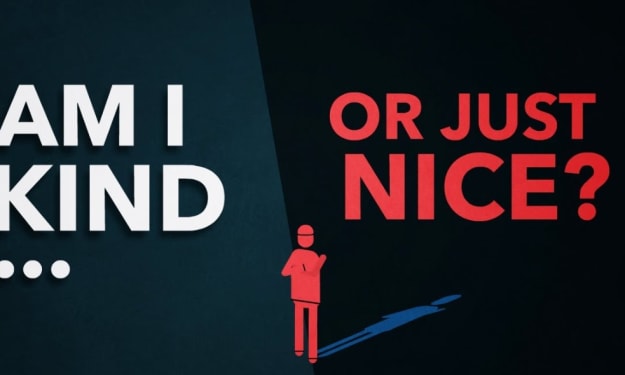
Stop being nice and find your kindness.
I just took a rather lengthy road trip. Usually, I'm a relatively healthy eater, but when I travel, I fully permit myself to eat as much junk food as possible. Then again, you know what I'm talking about when I say that I stopped at McDonald's to purchase one of those egg McMuffins that they like to sandwich between two pancakes. However, the person there was a genuine, warm-hearted, welcoming flash of sunlight. I believe I have ever encountered someone who kept calling me "love" and said, "You want the breakfast bundle, love?" I said, "Yeah, sure." You want a two-for-one love? She asks. I said, "Yeah, sure." You want the five-for-five snack bag, she asks. I said, "Sure, why not."
By Ian Sankan3 years ago in Humans
Do God and science conflict with one another?
We had this notion that it had to be either God or science. On the one hand, we claim that what science has taught us essentially refutes and makes sense of God. On the other hand, we argue that we don't believe in God anymore. I'm going just sort of to disregard everything that science has taught us over the past 500 years because, well, science is probably just incorrect. The issue, in my opinion, is not whether this one or that one is the only one; instead, it is that we believe there must be only one or the other.
By Ian Sankan3 years ago in Fiction
Why Men Get So Few Matches on Dating Apps
Installing a dating app, two pals give it a shot. The man makes an effort to create the ideal profile. A lovely frontal image. A group photo to give the impression that he has buddies. A photo taken in Paris gives the impression that he is cultured. And an image of him scaling mountains gives the impression that he is daring. After much effort, the profile is complete. The woman decides to use the first image she finds because she doesn't feel comfortable disclosing much personal information. They begin to swipe and pray for the best. When the woman checks her phone at the end of the day, her counter is complete.
By Ian Sankan3 years ago in Journal
Which Leg Count Is Best?
'What is the best amount of legs?' is a question you may have asked yourself. Most likely not. But the number of legs a species has is crucial to survival, so it's time to determine which number is the most advantageous. To study every option for leg count that nature provides for the current entry into the archive, we will exclude occurrences of genetic mutation or limb loss. This is a subject you need to have the answer to, regardless of whether you're about to reincarnate or a worldbuilder trying to make an alien lifeform seem more realistic.
By Ian Sankan3 years ago in Fiction
What if we produced less stuff?
Could you provide a number in response to the question, "How much items do you have?" Consider each article of clothes, kitchen appliances, and pieces of furniture. every appliance, cup, and pair of shoes. The rest follows. That isn't easy unless you're an extreme minimalist. Because the majority of us own a lot of things. More has provided us with great comfort and choice but at a hefty cost. such as increased pollution, resource depletion, and carbon emissions. The planet is becoming overburdened by our propensity to produce and consume more things. Everyone talks about preventing a climate catastrophe, but will maintaining the status quo while utilizing renewable energy sources and purchasing electric vehicles actually help? More and more people are refusing. They urge us to alter how we manage our economies fundamentally and, consequently, how we live. Some refer to it as degrowth. This entails producing less harmful material for the environment while increasing investment in beneficial components for human health. Can less actually be more, then? Let's investigate.
By Ian Sankan3 years ago in Earth
Practical Advice for Remaining Present and Still
At the very least, set aside 15 minutes once a day to check your Tinder. Even if everything is crucial, there is something more crucial that is the reason you are in this place. And here are a few more useful hints to help you focus more intently while you're here and avoid getting sidetracked. Increase the depth of your focus on being or attentiveness. simply useful. Please refrain from turning on the TV in your room. I didn't put in secret cameras to watch over you. Second, keep your interactions with your devices to a minimum. If you can't completely stop using your devices, and I realise that you might not survive if you do, at least set aside once a day for 15 minutes to check whatever comes in: texts, emails, Facebook, Snapchat, Tinder. They're all very important, but there's a thing more important, and that's why you're here. So let's see, I recommend that you commit to yourself that you won't go there until it is required. And by that I mean, it's okay if you periodically use it to take pictures, but you should also avoid interacting with anything nearby. only by visualising how it might seem in a smartphone snap. Say, "Okay, I'll fully experience this lovely thing when I get home and look at my photos," and then continue. In the interim, I'm more intrigued in shooting this picture since Homo Touristicus, a species that split off from Homo sapiens and now exists as a branch species, is often walking around with any camera. Every day you see them arriving on buses. The Homo Touristicus typically returns home in the evening, leaving you here on your own. At this point, you might have noticed that the outside has grown very quiet. And here, the days are extraordinarily long. If you're from a more southern region, you might find it strange that it's still daylight at 10:30 and that the sky is still lit. It suddenly becomes still here. So you can simply become conscious of the surrounding calm while you stroll around the lake or wherever you are. Naturally, when you become conscious of the silence all around you, you also quiet down. Additionally, being still indicates that you are not thinking at all or very little. And it indicates that you are informed. It indicates your presence. It indicates that you are experiencing life from a deep I. Use the natural beauty that is all around you to live deeply. For example, if you're out for a walk during the day and it's a long weekend or a Canadian holiday, there will be more tourists than usual or Homo tourists. And if you find that a large number of tourists bothering you, just practise the lovely spiritual discipline of accepting the present as it is. And at that time, you stop moving as well, without the need for stillness from others. You accept everything about this moment, even the tourists. I'm unsure of how the species of tourists will evolve in the future. They interviewed a few farmers and farm labourers in Thailand, close to a Buddhist monastery and just outside of Bangkok. They would feed the monks, as is the custom in Buddhism, which is rooted in the south Theravada school. Every morning, the monks arrive with their begging bowls. They only stand there until the locals arrive and distribute food. They are reliant. When asked why they don't work for a living in the West, they would respond that it is done on purpose and has wisdom behind it. The monks are positioned there holding begging bowls. Then the poor individuals who don't have enough come and put some food, some rice, or anything else in the begging bowls, leaving the monks to stand. They don't express gratitude because providing food for the monks is a privilege for you. That is a part of the custom. Why do you donate your food to the monks when you have so little yourself, the Westerners asked the agricultural workers during their interview. They then started conversing with one another, saying things like, "Well, we want an improved incarnation next time so we are accumulating merit." Therefore, when we return, we are born healthier. What do you want to reincarnate as in your next life, the Westerner continued. They then began to converse among themselves. We finally concluded that we wanted to return as tourists. They exit their buses after observing these individuals. They're dressed nicely. And other people are so affluent that they have a lot of money since their bodies are quite large. They are free to consume as much as they want. That's fantastic, then. They then carry out a variety of actions. It's wonderful that they appear to engage in sexual activity constantly. So wouldn't it be wonderful if I spent my entire future lifetime travelling? They are unaware that it would be a terrible nightmare. Oh yes, alcoholic beverages are yet another useful item. There isn't anything specifically forbidden here; the only advice is to avoid getting drunk as much as you can. It signifies booze if English is not your first language. Try to limit your consumption of alcoholic beverages. You may, however, take a glass of wine if you find it impossible to enjoy a meal without one. If you are truly already fully involved in the presence and deeply anchored in the presence if you would not even want to drink too much, one glass of wine won't interfere with the growing presence in you, but two could, and three will. And you most definitely wouldn't get wasted. Therefore, I advise doing as little as possible; better yet, do nothing at all. But you won't face criticism if you do have a glass of wine because everyone here is spiritually developed. I don't belong to the group of spiritual instructors who employ quite atypical methods of instruction. I'm aware of two or three people that did that. To see if they can remain aware when intoxicated, they give their pupils as much alcohol as they desire and instruct them to "drink, drink up." a highly dubious practice. However, I won't do that in front of you. One or two, I believe, are now feeling guilty. So far, we've covered external distractions like television, technology, alcoholic beverages, and other intoxicants. I would suggest avoiding it, at the very least here, and never doing so even when you are not present. As you are presumably aware, I've already said that I gave it a few tries. I have to do it because I get inquiries about it. If I haven't tried it, I can't say; it wasn't all that fantastic. I prefer to be conscious of my regular condition. It was a little bit repressive, but I can see how someone whose mind is torturing them every day may find relief in smoking. Fortunately, we have something better. We are not losing our ability to think. We are moving beyond thought. That represents the subsequent stage in human progress. Because you are freed from your mind in the dimension that is transcendent to thought, you no longer need to sink below thinking when you rise and when you rise above thinking. Another practice is, of course, embracing the present moment as it is on a daily and minute-by-moment basis. The ego itself can be quickly and powerfully transcended in this fashion, which means you should quit grumbling to yourself or others. I hope I'm not generating it by talking about it, but if there is something that has to be rectified, obviously you go to the reception or you call if suddenly there is water coming through the ceiling. You are lying on the mattress getting soaked as water pours from the roof and into it. You cannot say, "Accept what is, stay in bed, and don't whine." So, that's not the custom, but it does imply that when you do finally pick up the phone and let them know what happened, you won't do so in a negative way by lamenting how awful this company is. How on earth can you let me experience something like this? This is horrible. That boosts one's ego. No, simply describe what is and what we can do to address it. You give up the idea that you're wet in the meantime. It is as it is.
By Ian Sankan3 years ago in Psyche
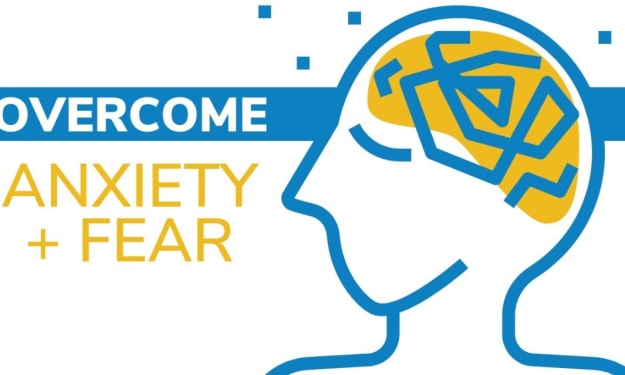
How to lessen fear and anxiety
Does the fear trigger any particular thoughts? In simple terms, what are the ideas that are running through your head as you experience fear? Fear, and anxiety, which is a type of fear, are both quite widespread. Some people constantly have it on, while others do so sometimes. And even if you're not aware of it, I'd say there's some level of fear. If your egoic mind is wholly in control of you, dread will exist in the shadows and may manifest in various ways. Anger is one way it could show up. A mood of fear is typically concealed beneath rage if you look at it closely. Therefore, if there is fear, you need to focus on it as one of the most crucial things to do. You admit that there is dread. Are there any thinking processes linked to fear? is a crucial question that arises. In other words, what are the ideas that are running through your head as you experience fear? Is it possible that some of the regular or habitual ideas you have lead to fear? Is it conceivable that you overly try to manage something that you have no control over by projecting yourself into the next instant or the future moment? What will transpire to me? Or imagine a loss you might have and project that into a story. Although it isn't happening right now, it could. Additionally, a lot of things—including cognitive activity—create circumstances in which things go wrong now but do not currently. possibly never occur. Frequently, it probably won't ever occur. And even if they did, there is nothing you can do, therefore the actual circumstance would be easier to deal with than the imagined circumstance in your mind. You can only stop thinking about a hypothetical issue to solve it. But if a real problem does emerge, you deal with it head-on, pay attention to it, and then take the necessary action. A hypothetical circumstance, however, just lives in your mind and has you completely at its mercy. You must thus determine whether your mind is causing the dread by thinking unfavourable thoughts or by making predictions. If so, you can see that I'm inventing things because my body is unable to distinguish between a genuine event occurring outside and what my mind is conjuring up. Because of this, my life circumstance is crucial when I have thoughts. If this is essentially what your thoughts are trying to tell you, then your body will think that this is the real truth and that you are currently in danger. The absence of the tiger in the room does not affect the body. Your ideas are the ominous presence. Whether there is a threat, there is a real threat in the room, or even just your thoughts can cause palpitations, the body reacts in the same way. Because you're having frightening ideas in your head, your breathing may become short. You go after dark. Years ago, I had that. Terrible state. It's crazy. Despite the sickness, nothing is changing. Exactly nothing. There is nothing in the empty room. Everything takes place in the mind. If that's the case, then you should address your ideas since they will be the source of your worry. You can deal with thoughts by deciding to go outside of them after realising their pointlessness and harmful nature. And how do you leave the house? You initially refuse to believe your thoughts when it informs you that you are unable to leave. You must keep on contemplating. No, you go outside and take a conscious breath or focus on your body's internal energy field. a decision to turn off the thinking process. And doing it might require you to be watchful. It may even be the case if you are submerged in a mindstream that you are unable to exit it due to its strength. Such gravitational attraction is present. You feel the draw, but at least you are aware of what is occurring. When you are aware that this is what is happening, there is a condition where you cannot yet help yourself, but at least there is a beginning of a disidentification from it. Your living condition, finances, work, relationships, and health. Typically, those items comprise both your life and mine. In contrast to life, which is just ever now, I refer to that as your life circumstance. In your thoughts, your current condition in life exists. It must be kept alive there. It's crucial to deal with circumstances as they come up in your life, but they can only do so in the here and now. Additionally, you are only able to think about your current situation in your life at the time. It's crucial to balance your life and your situation; you shouldn't let one entirely obstruct the other. This applies to your presence, sense of aliveness, and spaciousness. And learning to pay attention to your senses while doing so is beneficial. Come to your senses is the phrase we may use. the five senses so that you are more conscious of your surroundings. occupy the body. It's one more that ties you to life and brings you. removes you from the conceptual stage. Be present right now. Become more sensible. occupy the body. Be present right now. They are one. Your current status in life is no longer something you carry about with you constantly like a heavy burden. Of course, you respond to whatever problems arise. You address them as they come up in the here and now. You might occasionally need to conduct some planning or strategizing, but it also takes place in the present. For the remainder of the time, resist letting your current living circumstances entirely strangle or distort your sense of aliveness. Because if you do, your personality will weigh heavily on you as you go about your day. Then you stop noticing your surroundings. You struggle with the weight of your problematic life circumstance, and whose life condition is not problematic? As a result, you struggle to properly relate to other people. Problematic situations are just a part of life. Naturally, you plan your life as best as you can. Your circumstances in life are as best as you can. Yes, you can learn new skills to boost your career prospects or in any other way try to make your life better. Look for a finer place to call home. Exactly why not? It's all good now. The anticipation that life will eventually stop testing you and leave you alone, as well as the belief that there must be a problem when life does, however, are both illusions. There is an unconscious assumption and an oblivious resentment and negative reaction the moment you are faced with a new challenge because of the fundamental belief that these things should not be happening. This is the unconscious assumption that there is something wrong when life presents you with so-called problems, or challenges, rather than problems. But no matter how well you plan your life and how much you think positively, which is a good thing, you will still face challenges in life. The polarities of life will continue to be felt by you. You will learn, for instance, that every circumstance has a unique set of difficulties. So, to break the connection between your feelings and your thoughts, you must, albeit it is unpleasant, do the following. You focus on the feeling and experience it. Even though it's uncomfortable, you won't die from it. If it's intense, a kid generally won't be able to perform it. It might have to find a way into someone, perhaps through dissociation. However, as an adult, terror won't end your life. It won't kill you in and of itself, but if you let it rise into your consciousness, it might kill you because if you can't take it any longer, you might even kill yourself. Therefore, feel it before illuminating it with consciousness. And you might need to do that frequently. And while it is initially unpleasant, the old emotion is being burned up. And accepting it as it is right now is the only way to get rid of it. It's impossible to get rid of, but accepting everything as it is opens the door to doing so. It has undergone a metamorphosis. And if it's extreme, that might end up serving as your major meditation, your main teacher, and the catalyst for your metamorphosis. One major impairment, one major source of anguish or suffering in the life of some people may be physical. It might be something like being incarcerated. You may be carrying around an emotion like that that you don't want to let go of. So in some people's lives, there is one significant event that seems to colour and influence their entire existence. And ostensibly prevents you from ever experiencing freedom, happiness, or joy. However, if you focus on that one thing, surrender to it, let it be, and make it a constant spiritual practice, you won't need anything else. If you allow that one item to transform you, it will. And there will come a time when you will be glad that you went through it because it was the best spiritual teacher you could have received. So even Epictetus, the philosopher, said, "It's not the situation that makes you unhappy; it's the thought that makes you unhappy," if I recall correctly. If I recall properly, he was also disabled, unable to walk normally, and a slave before being set free. Thus, it is common for humans to have one significant impairment or other significant life challenge, which serves as the impetus for their spiritual awakening. If they can accept what appears to be unacceptable, they will have succeeded in surrendering to it. For instance, in Stephen Hawking's situation, I'm not sure how much his spirituality was awakened, but since he accepted the unacceptable, miraculous things happened. He got by. Simply said, no one would have believed it possible, and his life was successful. at least on one level. The greatest source of grace in this life is acceptance of the unacceptable. It's only a miracle, but getting there can be difficult, especially for the person asking the question. It might take some time. Most of the time, you have to put up with it, stay with it, and give in to it. You do not require transcendental meditation, and that is yours. Your suffering and terror are enough. Be patient. The odd thing is that we can only develop consciousness and produce energy by facing these problems. It ultimately wakes us up. You could harm your body if you overdo physical activity, overstrain it, or both. You could overdo it and end up killing yourself; this has occurred to persons who were overly concerned with fitness. I've read, for instance, that a man who wrote about the amazing advantages of jogging passed away from a heart attack while he was running, and he wasn't that old. So you could go overboard. After then, the body dies rather than becoming stronger. Additionally, you could assert that when you consider humanity and life in general—on this planet as well as perhaps many others—you would conclude that everything is OK. It sometimes seems to happen that by dealing with difficulties and obstacles, we develop. We grow past the ego and the identification with the mind. A new awareness emerges when we surpass our established state of consciousness. Without encountering problems and trials, there would not have been any progress in consciousness and no enlightenment, in my experience, although I am not speaking for myself. What would I have called it if I had one? For instance, a trust fund would let children know from a young age that their parents have already taken care of their financial stability and that they do not need to work or do anything else. You don't need to accomplish anything to have a pleasant existence. There are those kinds of folks. If you are here and a trust fund baby, then other things have to have happened to you that led to troubles. There might be one or two here. The issue wasn't monetary, but there were other factors.
By Ian Sankan3 years ago in Psyche
Getting Rid of the Voice Inside
But since thinking has gradually evolved, people now have a propensity for overthinking. There are many instances of superfluous thinking that results in unneeded, and frequently nonexistent, difficulties, for example when you lie there in bed at night and begin to worry. It causes a great deal of needless unhappiness. People don't realise that a sizable portion of their sadness is caused by unneeded, negative, frequently damaging mental activity, and they are unaware of this. First and foremost, mindfulness is realising that you have a voice in your mind that constantly makes judgements about your life and the world around you. Everyone is familiar with self-talk, which is when you speak to yourself. You may occasionally address yourself in the initial person, I. Some people use the second person, you when speaking to themselves. As a result, you may become frustrated with yourself and declare, "You weren't supposed to do that." A second idea follows, which is "Yes, but I wasn't able to prevent it." Additionally, a third voice may enter your head and ask, "Why can't I stop talking to myself?" That is also self-talk. But it's incredible. The first step, or what I refer to as the first spiritual awakening, is something fundamental and straightforward. It's a revelation to realise that you constantly hear a voice in your head, usually speaking softly. If it consistently speaks aloud and no one else is there, you are regarded as insane. Only if it's said out loud; otherwise, most individuals have that thought in their thoughts and are not seen as insane because of it. However, there isn't much of a distinction between the two. Additionally, occasionally a man may be heard grumbling while strolling down the street while you listen to them. You then comment, "Oh, he's really insane." However, you may be already performing it silently in your thoughts rather than aloud. Why did I not? I ought to have stated that. How come I didn't mention that? I already know precisely how I'm going to respond if he does that again.And it never ends. Or you keep yourself up at night fretting. When you awaken, you wonder, "Oh my God, what's likely to happen?"And what if he does that?" I asked. "What if that fails to work and that goes wrong?" And so it goes, and you eventually get dragged in. One idea sparks another, then another, and another. God, oh God. The body, on the other hand, is unable to discriminate between what the mind is saying and a fact, an event that is occurring in real life. Therefore, the body responds to each fearful idea you have. That's an emotion, too. The feeling you feel in your body causes the body to react to that emotion. The body cannot tell the difference between a concept and an actual event, so when you have anxious ideas, you experience the emotions that are essentially saying, "I am in danger."There is a real risk here. You consequently experience fear and worry. You could... If you engage in that kind of pointless, dysfunctional, harmful thinking year after year after year, it affects your body and makes it harder for it to have the energy to fight sickness. It also makes you feel anxious, which is not only unpleasant. Even conventional medicine is beginning to understand the link between mental wellness and physical health. We are progressively learning that they vehemently disputed it in the past. They only focused on your physique, not the rest of you. They didn't only focus on one specific symptom; they also looked at the body as a whole and even within the body. What's amiss with that specific organ, exactly? Additionally, there are specialists in conventional medicine. I'm an expert in the liver, as well as this, that, and other things. not only not considering the entirety of the body, but also, more crucially, not considering the entirety of the individual, which encompasses both the physical body as well as the mind. Therefore, it's crucial to acknowledge that you have a voice in your mind that mostly engages in self-talk. It's interesting to note that this self-talk is not necessarily negative for many people. However, it is more unfavourable for many people than favourable. You might have attended a great reunion or gone outside and watched a stunning sunset if yesterday's good event was one you attended. Okay, you can reflect on it now and say, "We had a nice conversation yesterday," or "That was a beautiful sunset." However, you are unable to focus so much on a pleasant experience. However, the mind can cause you to start thinking, "Oh my God, what he did," when something bad happened yesterday, such as when someone offended you or failed to give you the attention you needed or desired from him. "He's really..., "Why doesn't he say that the next time he does that? "I'm going to clarify that or he actually should. You can linger on something terrible for a lot longer than you can on something wonderful. It appears that an apparently unfavourable event feeds pointless mental activity considerably more than a pleasant event does. And for many individuals, this is life. Their mental activity is overwhelmingly negative. Although it is nearly entirely negative for certain people, it is highly unlikely that such individuals would be hired by this company. And I say that because there is a relationship between your primary state of awareness, your predominant mental, emotional state, who you associate with, where you are, and even the kinds of things that happen to you. There is a correlation, however it is not always obvious. However, there is a connection between someone's primary mental and emotional condition and the people they are with, their friends, their workplace, and even the things that happen to them. Therefore, if you are in a really negative state for a prolonged period of time, you tend to draw similar situations. However, the only way to know for sure is to investigate it. I don't say, "Believe me." I am aware of it through experience because I was a child when I first learned about it. I found that there is a connection between what I think about and what occurs to me. When I was 17, someone left a book and several other books with my family. I discovered those books. As a result, I was shocked to discover that my mind was primarily negative the first time I read about someone's mind because I had been a really miserable child. My childhood was therefore not a joyful one. As a result, my existence was initially conditioned by my mind's constant commentary on how miserable it was. And every time something horrible happened to me, the thought "Of course, bad things usually happen to you, don't they?" would come to mind.You're going to experience them. "You always get hit by it." Therefore, I was speaking to myself and telling myself that I would always have horrible things happen to me, and they did. As a result, you might first recognise that the spiritual awakening is the realisation that there is constant mental activity. And for other people, learning that a sizable portion of their mental activity is negative is a revelation. The most important thing is to know that this constant chatter in my thoughts is normal and is thought to be a normal human state. You obviously cannot stop thinking, either. There will undoubtedly be some thought. But is there awareness guiding your thinking, or not? And if you can recognise when you are engaging in or caught up in this pointless mental activity, as well as any recurrent thoughts that keep coming to mind, you may be able to recognise it more readily in other people. I believe it will be the week after Thanksgiving when you have your feast. When you see your family members or relatives, you can find that you already know what they will say because it is the same as what they said last year, five years ago, and ten years ago. And the next time you see them, you will hear the same thing if they have negative opinions about you or someone else. It is therefore simpler to see how others become mired in automatic mental patterns. It's harder to recognise it in oneself. Because of this, it is said that "Self-knowledge is the most challenging knowledge." Seeing other people is simpler. But if you can realise, even in the midst or perhaps just when a certain thought enters your head, "Oh, that's all just, " that would be wonderful.This is an idea I've had for a long time. "It comes time and time again." Therefore, you are surrounded by an observer. You can do so from there. The ability to recognise that there is a voice in your brain and that there are thoughts is what constitutes that observing presence, which is not a thought. You then come to the realisation that many of those ideas are not only superfluous, but also negatively impact your outlook on life. such as anxiety. So the majority of people have what I refer to as a cluttered mind. A person with a busy mind is fully unconscious of the constant stream of their own internal dialogue. And once they meet someone, they make snap judgements about them. And they do all they think is necessary to take a stand right now. Say, "I'm against it, right away. I don't like it. adopt a mental stance right away and identify yourself with your mental position, which is an idea. Therefore, if you find that a lot of the time you're lacking, insufficient, or feeling unenough, you may feel that the solution is to be engaged in this world and accomplish and do as much as you can. You'll probably discover that, in the end, it is not the solution to your lack. Spiritual practice and spiritual realisation are required to transcend, to move past your current state of scarcity, need, and inadequacy. Concentrate on understanding who you are. Only there are you able to transcend the ego's lack-based state. Find out who or what you are outside the individual by looking within.
By Ian Sankan3 years ago in Psyche
Why Some Individuals Lack an Inner Dialogue
Perhaps it shouldn't come as a surprise that so many superheroes, aliens, and fantastical animals have telepathic abilities. If you had access to someone else's thoughts, consider what you may learn about them. I simply kind of guessed there that there might be anything to hear. Because not everybody has this sort of inner dialogue, or inner speech as it is known to psychologists. Furthermore, not everyone who hears their thoughts talks constantly in their heads. Inner speech, it turns out, can reveal a lot about how our brains function, how they grow, and how we speak. However, the study into all of this is only now beginning. When a person "speaks" important thoughts without making a sound or moving any of their body parts, such as their tongue or lips, this is sometimes referred to as inner speech. Although it can sometimes be more easily defined by what it isn't. It differs from imagining or visualizing anything in your thoughts. Additionally, it excludes sensations like joy or hunger as well as your perception of sensory events like catching a glimpse of something dazzling on the ground. In essence, it just pertains to ideas that are expressed through particular words. Although not always, which we'll discuss in a moment, these words typically have the same tone, inflection, and accent as they would if they were uttered aloud. Psychologists found it difficult to even determine that much about inner speech because surprise! it's quite difficult to quantify people's internal experiences. Therefore, there has been considerable variety in study methodologies and little consensus among various studies and professionals. For instance, some studies have attempted to see inside people's thoughts by asking them to mentally repeat certain words or phrases, such as by asking them to read aloud or assess whether two words rhyme. That has uncovered some strange inner speech quirks, such as the fact that people are much more probable to mentally speak single terms that symbolize a passage while they read than each word in each sentence. Inner speech that is prompted and spontaneous, however, differ from one another. Additionally, prompts can't tell us anything about how often or for what purposes people utilize inner speech in daily life. As a result, some researchers opt to employ questionnaires. These discussions we conduct with ourselves, according to them, are typically about... us. And sort of in a negative way. Our inner monologue frequently consists of judgments of ourselves, unpleasant feelings, or attempts to determine our level of worth. Strangely enough, all of it is typically said in complete sentences. Just one word or phrase can reflect a fully complicated concept in abbreviated inner speech, which is only experienced by around one-third of people. Therefore, the reverse of what occurs when we read. The frequency of inner speech has also been the subject of questionnaire attempts, but they have several drawbacks. Most obviously, questionnaires often exaggerate the amount of inner speech since most people aren't very good at being conscious of their inner experiences. In recent years, researchers have switched to a technique known as Descriptive Experience Sampling or DES. People that use DES have a beeper on them that occasionally sounds during the day. When that happens, they make some notes regarding precisely what was going through their minds at the time. It's similar to when you ask your friend, "What ya thinking about?" while sitting across from them. It's not flawless. For instance, some studies believe that DES overestimates inner speech. However, it is helping scientists understand how often and how frequently people "hear" their thoughts. And it turns out that inner monologues, like the majority of psychological phenomena, are on a spectrum. There are very few people who have no inner speech at all, and even fewer who use it constantly. According to DES studies, between 75 and 80 percent of persons occasionally engage in some form of spontaneous inner speech. And among those individuals, between 15% and 30% of the time is spent talking to oneself. You might be visualizing something and speaking to yourself about it simultaneously since it's possible to have many internal experiences at once. Other differences in inner speech are also present. While many people refer to this as having internal monologues, about 75% of people claim that occasionally they have back-and-forth conversations with themselves. Only around 25% of people claim that other people enter their inner speech, yet they typically play both roles in the dialogue. Even if they no longer have their imaginary companion, individuals who have ever used this type of dialogic communication are more likely to do so. which is adorable. Others might encounter what psychologists refer to as imagined encounters, which are slightly different but comparable experiences. In essence, that's when you practice what you're going to say to your date later or think about all the things you ought to have said to the person who took your parking spot. The reasons behind why people have varied inner monologues or dialogues, as well as what those differences imply about them, are not entirely evident from all of this. Even the source of interior speech is unknown to us. Many specialists believe that inner speech developed as a result of the process of producing overt speech from an evolutionary perspective. It might be a byproduct of spoken language that has been appropriated for use in other cognitive processes. You see, when you talk, your brain concurrently sends signals to two separate regions: one to the motor parts of the brain, which control your mouth, tongue, and other body parts, and another to the sensory sections of the brain. The sensory information enables the brain to anticipate what it will soon hear. In essence, you mentally repeat the phrases as you speak them. It turns out that inner speech also generates the same kind of signal. You may be engaging the hearing portion of your brain, which is why you can quote "hear" yourself. And other psychologists believe that internal speech serves the primary function of catching mistakes made when speaking. Your brain understands it can filter out your words from what it is hearing and concentrate on the remainder of the sounds flowing in if the internal forecast fits what you say. Your brain alerts you to a mistake if they don't line up, such as if you trip over a word, so you can pause and fix it. However, since the two can be distinguished from one another, it appears that this correction of errors is not strictly necessary for speaking. There are instances where individuals with brain damage retain their inner speech but not their capacity to speak, and the opposite is also true. However, inner speech might have improved communication, which could account for its development. But since this is only the widely accepted theory, it may be incorrect. Furthermore, even if inner speech originated in this manner, the brain may have modified it for other purposes. These additional applications could account for why it varies between individuals. Some psychologists believe that our everyday inner speech is a reflection of the spoken discussions we had as children, particularly those times when our carers helped us solve a problem or calm down. It is hypothesized that as we mature, these formative experiences become internalized and that later on, we essentially repeat them in our minds. This would account for why inner speech frequently resembles a conversation. And this may be the reason why topics like problem-solving, organizing, time management, and motivation are frequently covered in terms of content. All of those are things that someone would assist in explaining to their young child. Additionally, the same brain regions are active during internal dialogic discourse and when a person considers the experience and viewpoint of another person. If the voice in your head is essentially your brain recycling someone else's words, then it would make sense. Therefore, if this hypothesis is accurate, inner speech may differ amongst people merely because of their varied upbringings and social experiences. Mind you, we still don't know if or how those differences matter. But there are some strong indications that inner speech—i.e., all those thinking-related brain functions—plays a significant role in cognition. For instance, researchers have examined how inner speech influences problem-solving using a test known as the dual-task paradigm. In essence, they request that the person solve an issue while performing another task. Additionally, if the second duty involves physical activity, such as tapping their foot, they typically have no issues. But when it comes to linguistic tasks, like recalling a list of words, they perform poorly. Researchers hypothesize that this is because such phrases obstruct their inner speech, making it difficult for them to effectively reason through the issue. Working memory in particular may benefit from the use of inner speech, which is another useful memory aid. The information you need to retrieve quickly is stored in that memory. Working memory includes the capacity to repeat knowledge to oneself until it is no longer necessary; this requires inner speech. Some cognitive tasks appear to be easier for those who engage in more self-managing inner speech, such as talking themselves through a problem. Therefore, variations in self-talk may underlie variations in how effectively people conduct various types of thinking. Inner speech may contribute to mental health issues. It has been linked in studies to depression as well as anxiety, for instance. More depressive thoughts are frequently expressed by those with greater depressed tendencies. Additionally, we are aware that those who are more worried often express their inner critic more. It's unclear if these bad inner speech patterns aggravate or even cause those conditions, or if the conditions themselves cause more negative inner speech to occur. However, studies show that asking individuals to think verbally about hypothetical events—even favorable ones—lowers their mood more than asking them to imagine the situations. And that does lend credence to the hypothesis that, for some reason, the speaking component of inner speech can make people less joyful. Other studies have connected inner speech to signs of psychotic illnesses. For instance, patients with schizophrenia frequently claim to hear voices ordering them what to do or speaking to them. The idea that those "voices" are genuinely inner speech is one possibility. Recall the signal I mentioned before for prediction. According to some experts, the brain's typical method of recognizing self-generated noises and thoughts may also be flawed if anything in that neuronal circuit is malfunctioning. In other words, the person's brain may struggle to distinguish between the sounds they create and the ones they hear. And that might imply that it also ascribes inner speech to another person. Psychologists are eager to learn more about what inner speech is and why it occurs to better understand its possible functions in cognition and mental health. And sorting all that out could provide us with a wealth of information about, well, everything, from how our brains function to what exactly goes on in a range of mental diseases. But right now, we simply don't know a great deal about this daily activity that the majority of us engage in. Many important topics remain unresolved today, including the origins of inner speech, the reasons why it varies between individuals, and the significance of those variations. Can you, say, alter your internal dialogue? Can you learn to listen to your voice more frequently or to think throughout conversations? We aren't even sure if you should wish to make those modifications or whether there are advantages or disadvantages to certain forms of inner speech. And it's likely to take some time before we have any definitive answers since our methods for studying it aren't very good, and there's a lot of disagreement about fundamental issues like how many people engage in it. However, you can still discuss it amongst yourselves in the meanwhile.
By Ian Sankan3 years ago in Humans