Ian Sankan
Bio
Writer and storyteller passionate about health and wellness, personal development, and pop culture. Exploring topics that inspire and educate. Let’s connect and share ideas!
Stories (124)
Filter by community
The Problem with Nice People
It was only the second time that Fred had spent time with his new friend Aubry beyond the classroom. As such, Aubry was Fred's first true friend and the first person with whom he had to put everything he had learned about being a good person and interacting with others on the line. After riding their bikes around the driveway, the two had just entered the house. As they rushed from the door to the couch in the living room, Aubry exclaimed, "Do you want to watch Star Trek? Do you like that show?" Fred said, "Yeah, it's my favorite; it's so good, do you? Yeah, let's watch it." Fred acknowledged that he had seen the program before but didn't like it. However, he wanted to be kind, which he understood meant putting other people's needs and wants ahead of your own and avoiding upsetting people. As a result, he put Aubry first to prevent potential conflicts of interest and agreed to watch at least once nearly every time they hung out. After that, Aubry turned on Star Trek: Alternate Reality.
By Ian Sankan3 years ago in Motivation
LET IT BE
Either things are emerging from nothing, or they are devolving towards nothing. Leonard Corin makes a little crack on a dish and a stain on a couch. For most of us, things like askewness and wrinkles on the face are to be avoided or, at the least, less desirable. We avoid evidence of damage, imperfection, and impermanence in favor of the ideals. Western tradition, which is symmetrical, youthful, timeless, unblemished, absolute, and faultless, uses reason and order as its weapons of choice in its conflict with the so-called laws and truths of the cosmos. For many of us, the hope that anything may have been discovered or obtained that will make the universe's coldness go away has already been lost. For others, we may have been consumed by the fire burning ourselves with unrelenting desire. Nevertheless, this fire requires constant feeding and is always on the verge of burning out collectively and individually.
By Ian Sankan3 years ago in Journal
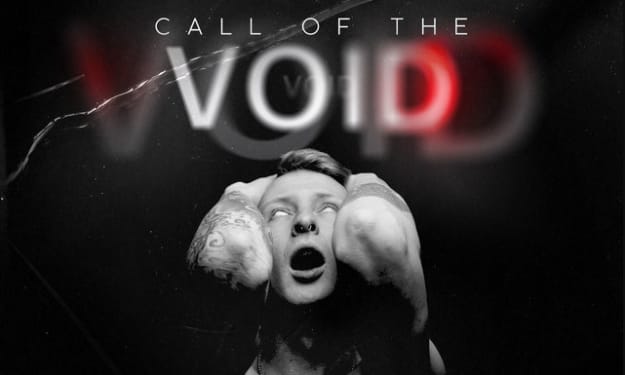
The Call of the Void
If you've ever been in the driver's seat of a real car while driving along on an otherwise regular day in an otherwise ordinary positive mindset and then allegedly out of nowhere, you had a sudden desire to drive, even if just for a moment, you know that we usually feel as though we are in the driver's seat and that we are in charge of ourselves going where we desire for reasons that we are aware of.
By Ian Sankan3 years ago in Journal
A PERFECT MORNING
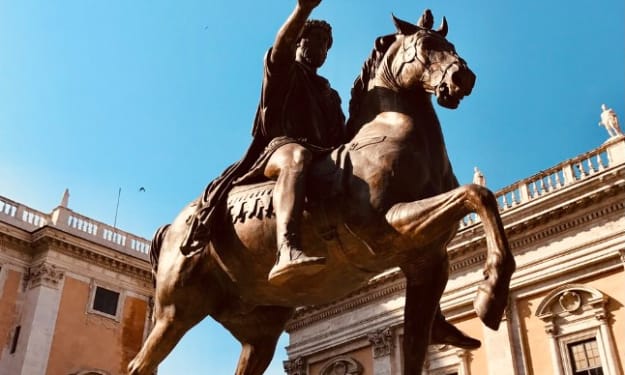
What if I advised you that it doesn't have to be like this? Let's travel back to ancient Rome for advice from an unlikely Mentor. We've all had those mornings, haven't we? The alarm goes off, but instead of springing out of bed full of energy, we hit the snooze button repeatedly, attempting to postpone the inevitable start of yet another day. Emperor Marcus Aurelius of Rome Beyond his political prowess, Marcus Aurelius was a devoted stoic who left millions with a legacy of profound wisdom. His philosophy and way of life, painstakingly documented in his writings, provide important insights into how to begin each day with clarity and tranquility. Imagine waking up and, rather than feeling rushed or dreading the day ahead, looking forward to it and being prepared to face challenges. Come with me as I investigate Marcus Aurelius's old wisdom and discover how we may apply it to alter our mornings and perhaps Our Lives. Head on, you're calm and centered sounds fantastic.
By Ian Sankan3 years ago in Chapters
The Stoic's Guide: Why You Shouldn't Try to Chase Love
What if we told you that this relentless pursuit of Love is more of a hindrance than a help in achieving true happiness and contentment? Do you ever feel that Love is the missing piece that would finally complete your life? Society frequently presents Love as the ultimate goal, the pinnacle of human experience, and the magical solution to all our problems. Hello, and welcome to our in-depth look at a viewpoint that might contradict all you've learned about Love. We will go back to today and examine the stoics' ancient wisdom. Stoicism, a philosophical movement that originated in the third century BC, asserted that knowledge is the foundation of virtue, that the wise live following the Divine Reason that controls nature, and that wisdom is the highest good. The stoics had some wise things to say about our emotions, especially regarding Love. They held that we should understand and control our emotions rather than let them control us. What relevance might this have to our world? Attempts at Love. Stay tuned as we dissect the stoics' philosophy and investigate their reasoning that we should not pursue Love.
By Ian Sankan3 years ago in Chapters
A Stoic's View of Why Rejection is a Gift
What if I told you that there's another way to view Rejection? What if we gave you a perspective where Rejection is not considered a setback but an intriguing gift? In life, we all experience the biting sting of Rejection in its many forms. It could be a job we didn't get, a proposal turned down, a love unrequited, or an idea dismissed. Many of us perceive these denials negatively, frequently allowing them to demotivate us interfere with our peace, or even define The Stoics, a school of philosophers that originated in the Hellenistic era. Their philosophy is one of resilience, acceptance, and comprehension of the natural order of things. Stoicism as a philosophy doesn't avoid the harsh realities of life; rather, it gives us a framework to accept and even accept these realities. Stoics like Seneca Epictetus and the Roman Emperor Marcus Aurelius emphasized the dichotomy of control, emphasizing that some things are under our direct control while others are not. We control our thoughts, perceptions, and reactions, but most external events, such as other people's actions, societal acceptance, and Rejection, are outside our direct control. We ought to grow to embrace or not care about things beyond our control because our energy is most effective in concentrating on the things we can manage. When we use this concerning Rejection, it offers a paradigm shift; we realize that Rejection doesn't seem a personal slight or a reflection of our value but rather an outside event that has occurred and, most importantly, something we may benefit from. Let's look more closely at this stoic perspective on Rejection.
By Ian Sankan3 years ago in Motivation
The Tragic Nature of Luck
Eric is out on a stroll with Nova, his dog. While out for a stroll, Eric becomes separated from Nova as she yanks the leash off his grasp to get a rabbit that had just jumped out of a bush. Nova sees Eric chasing after her, but this only makes her run even faster, allowing her to escape his sight as she pursues the rabbit, which has, by this point, concealed itself someplace in the opposite direction. It takes a long time before it is evident that Nova has outpaced her sense of direction and is now lost. The remainder of the day, plus the next few days, are devoted to Eric's search for Nova. He alerts nearby residents, asks relatives and friends to lend a hand, posts signs, and so on.
By Ian Sankan3 years ago in Motivation
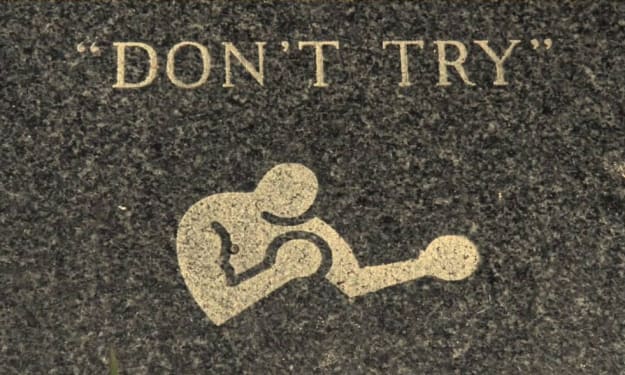
Don't Try: Charles Bukowski's Approach to Life
American writer and poet Charles Bukowski is renowned for his uncensored, biting, and frequently crass perspectives on life. In 1920, Bukowski was born in Germany, and in 1923, he moved to America with his family. Beginning when he was six years old, Bukowski's father often beat him. Bukowski, a German immigrant, endured bullying at school and throughout his adolescence due to comments made by other children about his dialect and garb.
By Ian Sankan3 years ago in BookClub
Kafkaesque: What Is It? - Franz Kafka's 'Philosophy'
One of the most influential writers in recent memory is Franz Kafka. He is renowned for his singularly dark, strange, and fantastical writing. Anything that mimics a certain style and quality that still exists is said to as Kafkaesque. To comprehend his writing's Kafkaesque characteristics It is beneficial to comprehend his early years. The couple Hermann and Julie had a son named Kafka in Prague in 1883. His dad was a highly successful, wealthy businessman who, as parents often do, rose from the working class, built a great company, married an educated woman, and joined the upper middle class via pure force of will and an outspoken, assertive attitude. Hermann desired a child who would be as tall as his ideal human being. That was not Franz Kafka. Franz was a little, fearful, and ill child at birth, and he largely stayed that way as an adult. Franz ended up being his father's worst disappointment and a kind of psychological punching bag as he tried to change him into the person he always wanted to be but was unable to be.
By Ian Sankan3 years ago in BookClub
Terrible Paradox of Self-Awareness
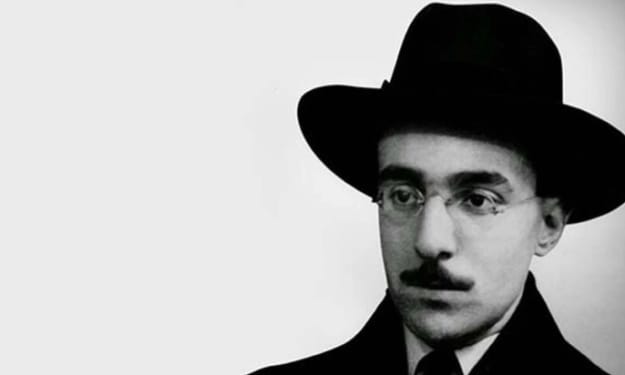
Sometimes the background to a piece of art is just as interesting as the finished product. Sometimes a piece's content's origin influences it. The narrative of 20th-century author Fernando Pessoa as well as his masterpiece, the Book of Disquiet, constitutes one of those instances where the background information reads like an original piece of fiction. Pessoa became accustomed to loss and impermanence at the young age of just five years old. He was born in 1888 in Lisbon, Portugal. after his younger brother passed away the next year after his father's death from TB. Soon after his mother's second marriage, his family migrated to South Africa, carrying with them Fernando's familiar surroundings.
By Ian Sankan3 years ago in BookClub
This is how to love.
I am in love with you. Before you laugh at me, make fun of me, or just think I'm odd, let me explain what I mean by that before you do any of those things. I don't mean it in a phony, feel-good, or overly sentimental way. And I'm not simply saying that to be nice, make a good impression, or gain your favor. To clarify, what I mean is that I have nothing but the best interests of you and those closest to you in mind. If it's the last resort, what I mean is that I will sacrifice myself and even my life for you in every way that I can think of. And I couldn't care less about how I feel about myself, how I look about myself, what I'm getting out of it, or whether or not I feel like doing it. This path does not lead to love. Simply not any other way. Who are you, exactly? You might be anyone in this room. My close friend, members of my family, my partner, and other people I care about. That's a simple question—anyone can love anybody they choose to love. What about the person I disagree with, the person who is utterly different from me, the person I want to despise, the person everyone else hates, and the person who repulses me? What about those people? What about the person who doesn't like me? What about the person who doesn't like me? What about the person who nobody likes?
By Ian Sankan3 years ago in Poets