Annie Kapur
Bio
I am:
🙋🏽♀️ Annie
📚 Avid Reader
📝 Reviewer and Commentator
🎓 Post-Grad Millennial (M.A)
***
I have:
📖 280K+ reads on Vocal
🫶🏼 Love for reading & research
🦋/X @AnnieWithBooks
***
🏡 UK


Stories (2894)
Filter by community
"The Odyssey" by Homer
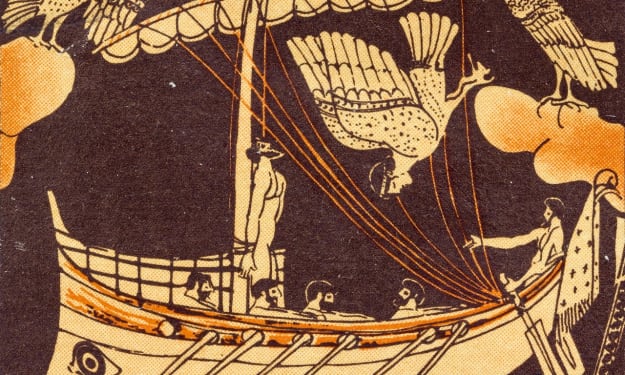
It’s been about ten years since I first attempted my read of both the Iliad and the Odyssey. I would like to admit that I preferred the latter to the former because I was far more interested in the grand adventures of trying to get back to his beloved Ithaca rather than a bloody and brutal war in which I already knew the outcome before reading the book. The first reading experience I had of the Odyssey completely changed my entire view on the adventure genre. It changed my perception on what was possible for literature and it definitely made me believe in the fact that adventures could all grand, depressing, dangerous and purposeful at once. There was a great amount that I had to write down. I made a flow chart of each adventure Odysseus encountered on his ten-year journey back home and even rated them out of five on how dangerous I believed them to be. The most dangerous, in my fourteen-year-old opinion, was the cyclops. Even though I read this book about ten years ago, I have read it a few times since and I cannot help but losing myself in the rhythm of the seas every time I read it.
By Annie Kapur6 years ago in Geeks
"The Diamond as Big as the Ritz" by F. Scott Fitzgerald
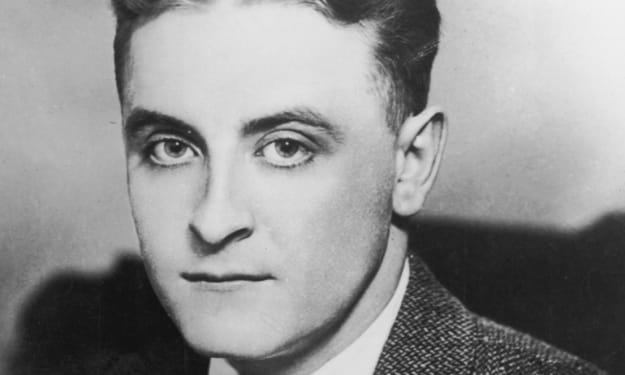
I first read “The Diamond as Big as the Ritz” by F. Scott Fitzgerald when I was fourteen years’ old. I discovered it whilst searching for short stories about money and wealth in the early American 0th Century and the reason being was I wanted something to counteract my views of how it all worked based on the fact I’d just finished O.Henry’s “Gift of the Magi”. By this point, I had already read “The Great Gatsby” and wasn’t all too impressed. I found Gatsby a bit too short in its explanations and descriptions. I wasn’t all impressed because of the fact that Gatsby was attempting to explain these deep philosophical workings of how wealth can absolutely corrupt even when the intentions are, in the eyes of those carrying out the intentions, particularly good. But I was determined that I wouldn’t give up on Fitzgerald. I hardly ever give the author only one chance and normally read two or three books by them in order to make an informed decision of whether I will continue reading their books. My first reading experience of this particular story though was intensely good. It was amazing. I was completely consumed with all the pomp and decadence of the story and the way it worked so cleverly and so symbolically. There are certain parts of the story that I have simply not been able to forget - including the extremely famous ‘bribing god’ scene. This book completely changed my opinion of Fitzgerald and even though to this day, I’m still not entirely won over by Gatsby, I am however won over by Fitzgerald’s other novels.
By Annie Kapur6 years ago in Geeks
"Brideshead Revisited" by Evelyn Waugh
“Brideshead Revisited” by Evelyn Waugh is one of those books you read and you just don’t forget. You don’t just put it away after one read, you don’t just leave it out of your life. After you’ve read it, like a spell it will keep pulling you back into its charm. I read it for the first time when I was fifteen. I remember it very well because it just so happens I wrote that day down in my diary. Apparently, I was in a moving car and it was the bleak midwinter. My mother was driving and kept telling me to put the book down because apparently it would give me a headache (which to this day I do not understand, I have never had a headache from reading in a moving car, train, bus etc.).
By Annie Kapur6 years ago in Geeks
A Filmmaker's Review: "The Devil Next Door" (2019, Netflix)
There were some aspects of this documentary that were better done than others. First and foremost we have the portrayal of information. Let us first go through what that information is. The information is simply this: a man who is now living in America after coming from Europe years before was once the ‘Ivan the Terrible’ at the Soribor Death Camp in Poland during the Second World War. This man ‘Ivan the Terrible’ was the one who took the most joy in sending the Jews to their deaths and was considered one of the scariest and harshest guards on site at the time. The suspect is taken to Jerusalem to face trial and is initially sentenced to death by hanging. But, when other pieces of information emerge, he is claimed to be not guilty and sent back to the USA. It is after a further point that he is considered to be a guard at the Treblinka Death Camp but not the ‘Ivan the Terrible’ they are looking for and he is arrested in America and put in prison with due course. During this time, he fakes disability and being too sick to face trial, a farce used by the Nazis during the Nuremberg trials in the 40s. However, he is still sentenced and we are left to make up our own minds about who he is after being given every piece of information about his past, his present and finally - his end.
By Annie Kapur6 years ago in Geeks
A Filmmaker's Review: "The Accountant of Auschwitz" (2018)
This documentary really shakes you, but the feeling you also get from it is anger because it is so late for the trial to happen. The overview is this: the now 93 year-old “accountant” of Auschwitz that was responsible for stealing the valuable items from the Jews as they entered the death camp was now on trial after several years. The background tells us the story of what the survivors of Auschwitz thought of this guy and what happened at the failed Nuremberg trials. It also talks about the case of Ivan the Terrible at Treblinka and Soribor and the trials that went ahead in Israel for that some years before. When we know all of this, we can only imagine that the man who was once the “accountant” of Auschwitz is living rather on borrowed time since he would’ve always been in fear of being caught. We get the opinions of others - Jews and non-Jews on what the general consensus is around putting this man on trial. It is very clear that the non-Jewish people don’t care for it and think that the 93 year-old should live in peace. Whereas the Jewish people, understandably do not think this is the case. There are many many opinions during the film in which the speakers state that a man of 93 who committed a crime at 23 or 33 etc. is still a guilty man and that he should not get away with it. Then we get on to the trial itself.
By Annie Kapur6 years ago in Geeks
A Filmmaker's Guide to the Best Performances: Al Jolson
Al Jolson was known as one of the greatest entertainers of his day and is possibly one of the greatest entertainers in history after the likes of Michael Jackson and Elvis Presley. An incredible singer, Jolson also played the piano, did vaudevillian theatre and dance, performed on screen in film and gave live performances. He really was a man of all talents. But, he was probably most famous for his role in the very first 'talkie' in 1927 playing the lead role in the legendary classic film - "The Jazz Singer" (1927). The storyline of the film is just as famous as the fact it was the first 'talkie' in which a Jewish man is torn between the tradition of his faith due to his strict father who wishes for him to move forward in Judaism, and his love for being a Jazz Singer. The rage of choosing between the two causes rift between the family and ultimately, he leaves home to seek his dream out.
By Annie Kapur6 years ago in Beat
20 Books of 2020 (Pt.27)
Books are a wonderful thing and I've been reading a lot of them of course. One thing I wanted to discuss shortly was the fact that there are lots of good websites on which you can get really good book recommendations apart from just going on GoodReads.
By Annie Kapur6 years ago in Geeks
A Filmmaker's Review: "Attacking the Devil" (2014, Netflix)
Never in my life have I seen a documentary that not only carried emotional trauma of the young with it, but also carried the historical trauma of the old as well. Here we have the heartbreaking story of the children of thalidomide and exactly why their cases had gone forgotten even though they wanted answers ever since day one.
By Annie Kapur6 years ago in Geeks
"The Pale King" by David Foster Wallace
This book is based on the mundane atmosphere of the everyday lifestyle of the common worker. It ranges from summaries from the IRS, snippets of the life of a man who profusely sweats, conversations between various people who work for the IRS, a man who is taking an examination and feels very anxious about it and so much more. Within the book, we get various interruptions from the author himself in which he tries to explain the difference between this book and a piece of nonfiction creative writing. He calls it “substantially true and accurate” (p.71) and explains it as a “nonfiction account (with) some slight changes and rearrangements” (p.72). Whereas, previously he had not actually referred to the changes and said that “all of this is true. This book is really true.” (p.69) and thus, we do not make note of the problems encountering fiction and nonfiction definition until later on in Chapter 9. But between characters like Lane Dean Jr, David Cusk, Leonard Stecyk and the unforgettable anxieties of Claude Sylvanshine - I honestly believe that this book is a piece of creative semi-autobiography where the only thing everyone has in common is their ability to work their way into the IRS from very different walks of life. The book admittedly, does not have a plot since David Foster Wallace left it unfinished and unedited. It is therefore raw and emotional in its nature of talking about the human psyche and our reaction towards the fact that life is really quite meaningless. The nihilism and the constant fear that is portrayed by nearly every character in the book is a great way of getting across the message that there are other things far better than being alive in the modern age.
By Annie Kapur6 years ago in Geeks
Happy 79th Birthday to Bob Dylan!
Bob Dylan is one of the greatest songwriters in the history of music. He has amassed a great amount of songs that even his unreleased ones would make any other songwriter green with envy. The way in which his songs seem to transcend genre and time are amazing and he has written over 25 albums each containing their own individual sound. From the classic folk sound of “The Freewheelin’ Bob Dylan” (1963) to the almost R’n’R folk sound of “Highway 61 Revisited” (1965) all the way to the dark philosophical songs with backing singers on “Street-Legal” (1978) and of course, the new wave era of “Empire Burlesque” (1985). Beyond this, Bob Dylan has explored newer folk sounds on the albums “Time Out of Mind” (1997) and “Love And Theft” (2001) - going through the jazz songbook and covering many Frank Sinatra songs as we know him today. Bob Dylan has not only amassed a great amount of songs but has his own academic research sector called the “Dylanologists” who dedicate their lives to studying the works of Bob Dylan. His music is like no other, his books are incredible, his songwriting is unmatched. So now, I would like to go through the 20 best sources on Bob Dylan in order to study his life and work. This will include a multitude of mediums so, grab your notebooks.
By Annie Kapur6 years ago in Beat
"The Brothers Karamazov" by Fyodor Dostoevsky
I first read “The Brothers Karamazov” by Fyodor Dostoevsky when I was about fourteen years’ old and I’m not going to lie to you, it confused me. It confused me because it was unlike any other Russian novel I had read up to that point and I realised then that things were about to get ever more interesting on my journey in literature. The way in which I discovered this book wasn’t actually at all that interesting. I had heard of it because I had seen the classic movie poster and thought it was a book cover. I looked it up and I got turned towards the book rather than the film (I would only realise some years later that it was actually a film poster I was looking at and not a book cover). I did not yet know, looking at that picture, that this book would come to change everything about my perception of Russian Literature and my perception on the possibilities of human connections in literature. It was almost overwhelming.
By Annie Kapur6 years ago in Geeks
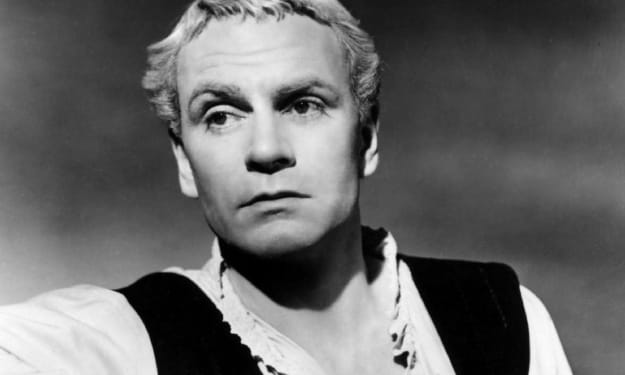
A Filmmaker's Guide to the Best Performances: Laurence Olivier
Laurence Olivier is known as one of the greatest actors in human history. Known for his portrayals as leading Shakespearean characters, Olivier's most famous performance as Hamlet, Prince of Denmark really set the bar for other actors who have tried and failed to best Olivier's portrayal. Olivier was a serious actor, taking his job as seriously as he possibly could and had a massive fear of failure. When working, he would often know all of his lines before production began. In one instance where he worked with Marilyn Monroe on The Prince and the Showgirl, he noted absolutely hating her for her lack of ability to act. I find that a bit pompous, but if you're Laurence Olivier, you're allowed to say something like that. Monroe, he said, would turn up not knowing her lines or her character traits. He was justified, but had a bit of a temperament when it came to his job - which, in the end, is why he was so good.
By Annie Kapur6 years ago in Geeks