
The Unsung Visionaries: 10 Underrated Graffiti Artists of the Modern era
Another Dive into graffiti with A.I.

Graffiti is more than paint on walls — it’s a voice, a rebellion, and an art form that bridges streets and galleries. While names like Banksy and Basquiat dominate headlines, there exists a constellation of unsung artists whose work has defined, evolved, and expanded graffiti’s modern identity.
This article highlights ten underrated graffiti artists — from local legends to global innovators — whose contributions deserve wider recognition.

1. SABER (Los Angeles, California)
Known for his massive-scale graffiti works, SABER (born Ryan Weston Shook) achieved legendary status in 1997 when he created the largest graffiti piece ever recorded — a sprawling mural on the concrete banks of the Los Angeles River, visible from aerial photography and even Google Earth.
SABER’s artistic evolution has taken him from illegal walls to galleries, yet he continues to speak about free expression, censorship, and mental health, using his platform to highlight how art can heal urban communities. His hybrid style — part realism, part rebellion — makes him both a technical innovator and a voice for the underrepresented.
Why he’s underrated: While recognized within the graffiti community, SABER’s political and emotional layers are often overlooked by mainstream art critics focused on street “aesthetics” rather than the message.
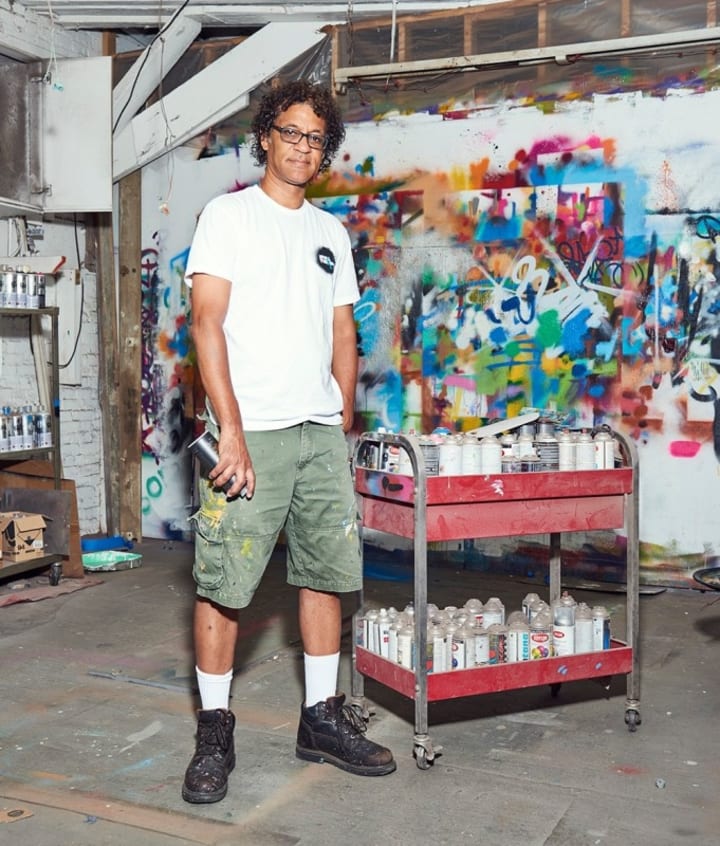
2. DAZE (Chris “Daze” Ellis — New York City)
Emerging from the subway graffiti movement of the late 1970s, Daze became one of the few artists who successfully transitioned from street walls to respected galleries. His work, showcased at the Brooklyn Museum and The Museum of the City of New York, captures the kinetic rhythm of the city while keeping true to his graffiti roots.
Through vivid color and abstraction, Daze paints New York’s pulse — chaos, humanity, and survival. His storytelling approach preserves the soul of graffiti as cultural anthropology rather than mere vandalism.
Why he’s underrated: Despite being an original bridge between graffiti and fine art, Daze’s narrative power often remains overshadowed by flashier street-art icons.
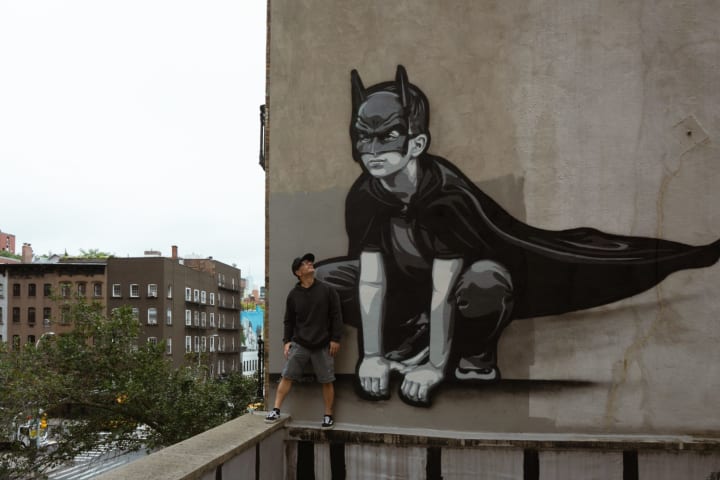
3. Joe Iurato (New Jersey / National)
Joe Iurato merges street art, sculpture, and storytelling. Known for his hand-cut wooden figures and stencil-based imagery, Iurato places miniature, photo-realistic characters in public spaces — often interacting with real-world objects like pipes, curbs, or street signs.
His installations, while temporary, are poetic in their simplicity: a skateboarder frozen mid-jump, a child peering from a mailbox. Each piece invites discovery and reflection.
Why he’s underrated: Iurato’s small-scale, meditative approach resists viral fame, yet his craftsmanship embodies graffiti’s most profound trait — turning the everyday into art.

4. ESPO / Steve Powers (Philadelphia, Pennsylvania)
Before street art went mainstream, Steve “ESPO” Powers was tagging entire roll-down store gates across Philadelphia and New York — during the day. His moniker, “Exterior Surface Painting Outreach,” turned vandalism into dialogue.
Today, Powers blends commercial typography with public poetics, transforming neglected urban walls into murals of empathy and humor. His Love Letter to Philadelphia project (2009) remains one of the most celebrated public art series of the 21st century, blending romance, nostalgia, and civic pride.
Why he’s underrated: Powers’ conceptual brilliance bridges graffiti, graphic design, and civic engagement — but because his work looks “clean,” he’s often excluded from hardcore graffiti conversations.
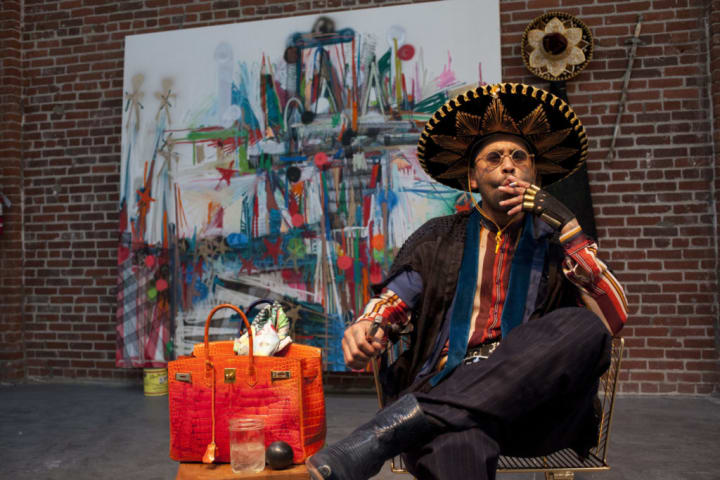
5. RETNA (Marquis Lewis — Los Angeles)
RETNA’s signature calligraphic script is a visual symphony — part ancient hieroglyph, part modern graffiti. His work, showcased in MOCA’s Art in the Streets exhibition, redefined lettering as fine art.
Drawing from Egyptian, Hebrew, Arabic, and Native American symbols, RETNA’s murals pulse with coded spirituality and rhythm. His work appears in international galleries, aircraft fuselages, and even fashion collaborations — yet his cultural depth often eludes mass interpretation.
Why he’s underrated: RETNA’s mysticism and abstract language transcend graffiti norms, but his esoteric symbolism keeps him just outside mainstream recognition.
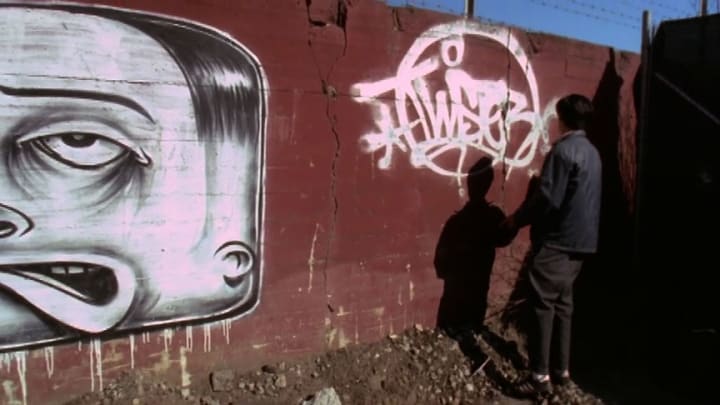
6. Barry McGee (TWIST — San Francisco, California)
Barry McGee, known by his tag TWIST, brought Bay Area graffiti into museums while keeping its anarchic soul intact. A founder of the Mission School art movement, McGee’s work explores identity, homelessness, addiction, and the beauty in imperfection.
From gallery installations filled with hundreds of hand-painted faces to raw tags on decaying walls, McGee’s art bridges class and culture — a visual essay on life’s fragility.
Why he’s underrated: Though highly respected by curators, McGee’s quiet activism and melancholy tone often get buried beneath louder street-art brands.

7. Swoon (Caledonia Curry — New York)
Swoon blends graffiti with empathy. Her wheatpaste portraits of women, families, and survivors appear across cities and disaster zones, humanizing the often impersonal urban landscape.
Beyond street art, Swoon has led humanitarian art projects, including floating sculptures that traveled from New York to Venice and community rebuilding in post-earthquake Haiti.
Why she’s underrated: Despite critical acclaim, Swoon’s socially engaged art defies market trends — she prioritizes human stories over hype.

8. FAILE (Patrick Miller & Patrick McNeil — Brooklyn, NY)
The duo FAILE (rhymes with “fail”) reinvented street collage and pop surrealism. Since the late ’90s, they’ve blended pulp imagery, religious iconography, and advertising aesthetics into dense, layered murals and prints.
Their public works — including interactive installations in Times Square and London — merge high art with low culture, creating vibrant urban mythologies.
Why they’re underrated: FAILE’s work is conceptually rich but doesn’t fit neatly into a single style — often making them invisible in a world obsessed with branding.
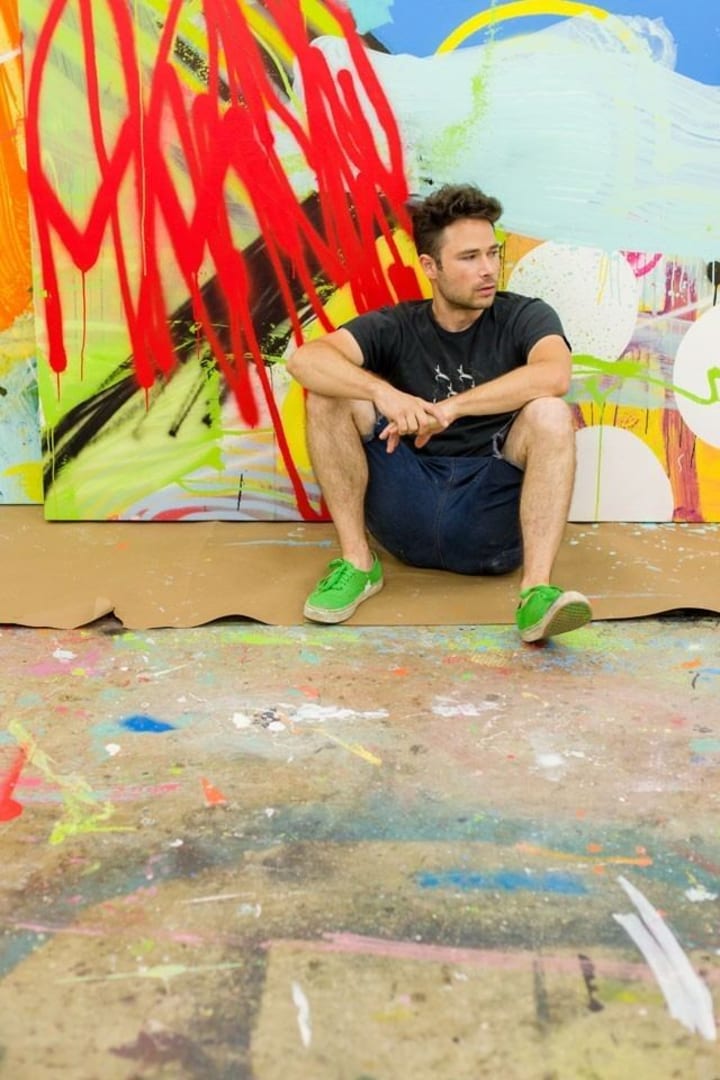
9. HENSE (Alex Brewer — Atlanta, Georgia)
From tagging underpasses in Atlanta to creating monumental abstract murals, HENSE has elevated graffiti into fine geometry and motion. His large-scale public pieces — like the painted church in Washington, D.C. — combine color theory, calligraphy, and architectural balance.
HENSE’s murals, often commissioned by the city, bridge community beautification with graffiti roots — proving that rebellion can evolve without losing its soul.
Why he’s underrated: Critics label him a muralist, not a graffiti writer — overlooking how his abstract evolution stems directly from the letterforms and risks of early tagging.
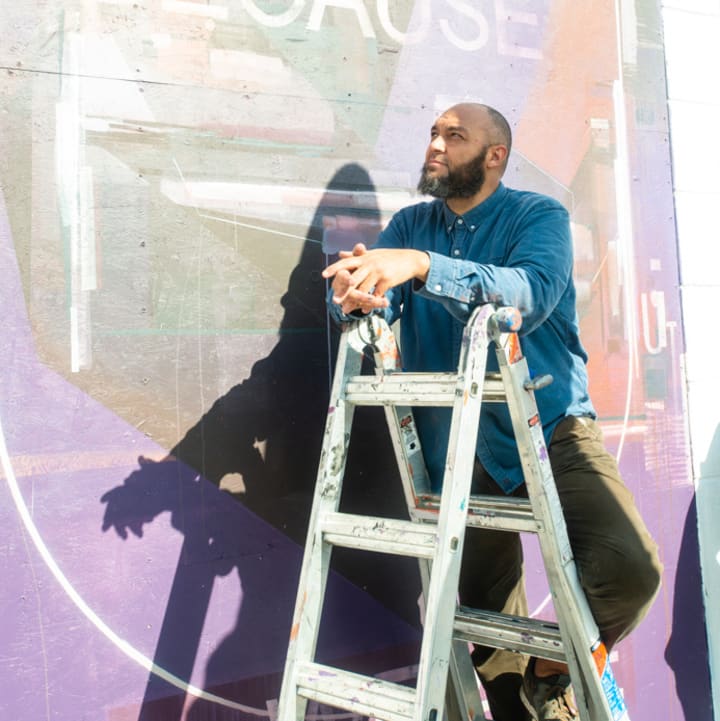
10. Augustine Kofie (Los Angeles, California)
Augustine Kofie is a pioneer of graffuturism — a fusion of graffiti and mid-century modern design. His works feature layered geometry, muted palettes, and mechanical precision. Drawing inspiration from architecture, blueprints, and jazz, Kofie’s art symbolizes discipline and futurism within the graffiti lineage.
He’s exhibited globally but remains more revered among artists than the public — a craftsman of structure in a movement born of chaos.
Why he’s underrated: Kofie’s cerebral precision is ahead of its time — too refined for graffiti purists, too “street” for fine art circles.
Graffiti’s Hidden Legacy
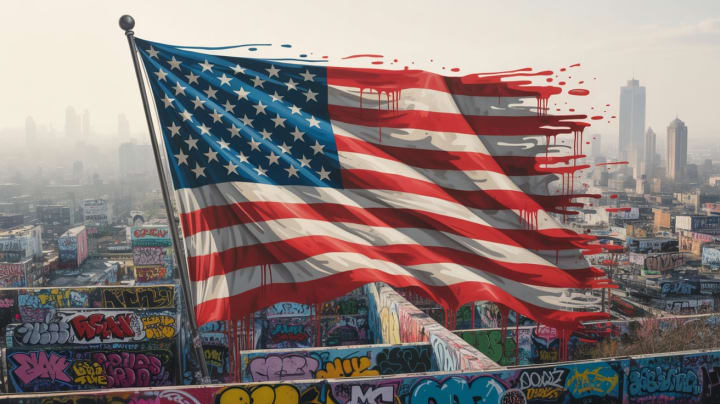
Each of these artists expanded the boundaries of graffiti — from the outlaw days of subway trains to murals recognized by museums. They prove that graffiti is not just rebellion; it’s evolution. Whether through Joe Iurato’s miniature figures or RETNA’s sacred script, these artists speak the universal language of transformation.
The irony of graffiti’s history is that its greatest innovators rarely crave fame. They paint for cities, not galleries — for connection, not commerce. In their anonymity lies authenticity.
Next time you pass a wall humming with color and code, look closer. You might just be standing before the next chapter in graffiti’s living story.
References:
Art21. (n.d.). Barry McGee: Graffiti. https://art21.org/read/barry-mcgee-graffiti/
Bomb Magazine. (2018). Sending out the signal: Swoon interviewed. https://bombmagazine.org/articles/2018/06/28/sending-out-the-signal-swoon-interviewed/
Complex. (2013). Interview: Augustine Kofie. https://www.complex.com/style/a/cedar-pasori/augustine-kofie-interview
Designboom. (2014). Interview: Alex Brewer (HENSE). https://www.designboom.com/art/alex-brewer-hense-interview-01-09-2014/
Juxtapoz. (2024). FAILE: A Riot of Existence. https://www.juxtapoz.com/news/street-art/faile-a-riot-of-existence-container-santa-fe/
MOCA TV. (n.d.). RETNA: Art in the Streets. https://www.youtube.com/watch?v=Jqa5RI2xfVQ
Museum of Graffiti. (2022). SABER: Escape from Los Angeles. https://museumofgraffiti.com/blogs/news/saber-escape-from-los-angeles
Office Magazine. (n.d.). Interview with Daze. https://officemagazine.net/interview/daze
Pitchfork. (2013). ESPO and Kurt Vile mural project. https://pitchfork.com/news/49478-watch-kurt-vile-and-street-artist-espo-make-the-cover-art-for-his-new-album-wakin-on-a-pretty-daze/
Urban Nation. (n.d.). Joe Iurato biography. https://urban-nation.com/artist/joe-iurato/
About the Creator
xJRLNx
Im a dude letting out his madness with the help of Ai.
No Word Comes Near Enough
The English language has its limits. I learned this when I became a student of the Bible and looked up the Greek and Hebrew definitions behind the Scriptures I loved. Some languages have so much more depth and power than the one I use to convey my thoughts. But, even so, I don't think any word could ever come close to describing this void and pain I am journeying through. I don't know how to swim through its murky waters.
By Shirley Belk4 days ago in Poets


Comments
There are no comments for this story
Be the first to respond and start the conversation.