
The Presented World
Exploring the fragile boundary between the world as it is—and the world as it appears to us
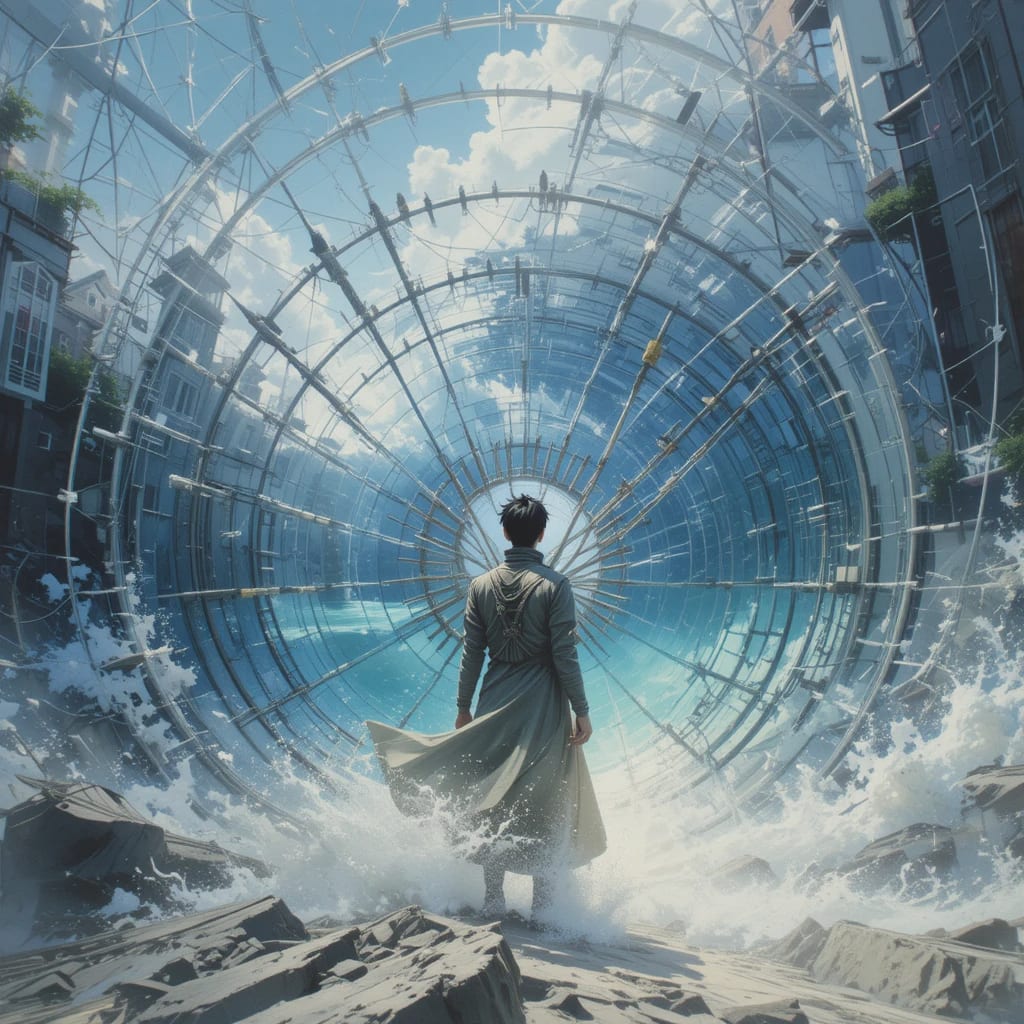
In a time when screens mediate more of our experiences than ever before, the idea of a "presented world" takes on an urgent new relevance. Every image, news headline, video snippet, and algorithmic suggestion forms a mosaic—not of objective truth, but of a curated reality shaped to meet psychological, commercial, or political ends. The "presented world" is not simply what we see; it is what we are meant to see. And what we are meant to see often becomes what we believe is real.
But what exactly is the "presented world"? At its core, it refers to the reality that is constructed for us—by media, technology, institutions, and even by our own subconscious cognitive biases. This concept is not new. Philosophers like Immanuel Kant and later phenomenologists like Edmund Husserl and Maurice Merleau-Ponty all examined how reality is filtered through perception. What is novel today is the scale, speed, and sophistication with which this perception can be manipulated.
The Evolution of a Mediated Reality
Throughout history, human beings have lived in a kind of mediated reality. Oral traditions, religious narratives, art, and later, printed texts shaped people’s understanding of the world. These were the original filters—creating a shared worldview within specific cultures. But these filters were relatively slow to change and often localized.
With the advent of mass media in the 20th century, the presented world expanded rapidly. The radio and television brought distant wars, political scandals, and cultural revolutions into living rooms across the globe. Yet even then, the presented world was still largely constructed by editorial boards and broadcasters with limited tools and reach compared to today’s digital platforms.
Enter the internet and social media. Now, the presented world is more fragmented, personalized, and reactive than ever before. Each user receives a version of the world tailored to their preferences, habits, and emotional triggers—whether they realize it or not.
The Algorithm as Architect
Today’s algorithms are invisible architects of the presented world. Platforms like Facebook, TikTok, X (formerly Twitter), and YouTube use machine learning not just to show you what’s happening, but to determine what they think will keep you engaged. In this model, truth is not the goal—attention is. And attention, as countless studies have shown, is often best captured by outrage, novelty, and simplicity.
This means the presented world can quickly diverge from any shared or objective reality. One person’s social feed might be filled with climate catastrophe warnings, while another's is filled with climate change denial. Each individual feels informed—perhaps even enlightened—yet each is living in a parallel informational universe. It is no longer that people see the world differently. They live in different presented worlds entirely.
The Neuroscience of Perception
Beyond the influence of media and technology, the human brain itself plays a crucial role in constructing the presented world. Vision, for example, is not a passive reception of light. It is an active construction. The brain fills in gaps, prioritizes certain patterns, and applies learned expectations to interpret what we see.
The same is true for memory and emotion. We remember events not as they occurred, but as they made us feel. Our brains are wired for narrative, not accuracy. The presented world, then, is not just external. It is also internally manufactured—layered with our biases, histories, and psychological needs.
Virtual Realities and Digital Selves
In more literal ways, technologies like augmented reality (AR), virtual reality (VR), and the metaverse are making the presented world fully immersive. A person can now walk through a virtual forest, attend a digital concert, or even hold meetings in a virtual office with avatars replacing human faces. These environments are entirely constructed, yet they evoke genuine emotional and physiological responses.
The line between real and presented blurs further when individuals begin to curate their own identities. Through social media profiles, filters, and AI-generated content, people construct idealized versions of themselves. They become curators of their own personal presented world—not just consumers.
But what happens when the presented self becomes more compelling than the real one? Studies show that constantly comparing ourselves to curated online identities can lead to anxiety, depression, and a sense of disconnection. The presented world, while often beautiful or entertaining, can be deeply alienating.
The Ethics of Presentation
All of this raises profound ethical questions. Who decides what is presented—and why? Should algorithms be transparent? Should users have control over the informational filters they are subjected to? How do we ensure that the presented world does not erode our grasp on shared reality?
Some answers may lie in media literacy, algorithmic transparency, and greater regulatory oversight of tech platforms. But more fundamentally, it may require a cultural shift—a recognition that the world presented to us is not the world as it is. Critical thinking, skepticism, and emotional intelligence are more vital than ever.
Reclaiming the Real
To navigate the presented world wisely, we must cultivate a dual awareness: the world as presented to us, and the deeper, messier reality that lies beneath. This means actively seeking out diverse perspectives, resisting the lure of curated convenience, and remaining open to uncomfortable truths.
Reality, in its raw form, is complex, contradictory, and sometimes overwhelming. But it is also rich, expansive, and profoundly human. In contrast, the presented world—though sleek and seductive—often flattens our understanding. It replaces experience with spectacle, nuance with soundbites, and curiosity with consumption.
To reclaim the real is not to reject technology or media, but to approach them with wisdom and intention. It means remembering that behind every screen, every headline, every image, there is a deeper world waiting to be seen—not just presented.
About the Creator
GoldenTone
GoldenTone is a creative vocal media platform where storytelling and vocal education come together. We explore the power of the human voice — from singing and speaking to expression and technique.
Keep reading
More stories from GoldenTone and writers in Art and other communities.
The Clock That Only Ticked at Midnight
In the otherwise unremarkable town of Wiggleshire (population: confused), there stood a very large, very old, very intimidating grandfather clock in the middle of Main Street. It was not in anyone’s house. It was not in the museum. It was simply… there. Erected like a Victorian skyscraper in the middle of the crosswalk.
By GoldenTone6 months ago in Art
What Fine Line Tattoo Excellence Looks Like in Professional Practice
When you sit in the chair of one of the best fine line tattoo artists, you feel it straight away. The calm, the care, the way they handle your skin and your nerves at the same time. Fine line work looks light and effortless from the outside, but real excellence is anything but casual.
By Tools of Trade Studios2 days ago in Art
Jim Sloan
By Brian D’Ambrosio At 90, Jim Sloan has lived several lifetimes’ worth of work—carpenter, sign painter, excavator, sawmiller, road-builder and the go-to rattlesnake remover of Galisteo, New Mexico. Art may be the through-line, but it has never been the source of his income, nor the center of his universe. Sloan has always kept one foot in the studio and the other in the soil, without bothering to decide which world he truly belongs to. The truth is that he fits cleanly into neither, and he has long since stopped trying.
By Brian D'Ambrosio a day ago in Art
📢 Raise Your Voice Thread: 01/08/2026
Our “Raise Your Voice Threads” are hosted most alternating Thursdays at 12PM ET to offer creators more avenues to uncover exceptional stories on Vocal. As we are continuously searching for fresh creators and inspiring stories, this thread provides an opportunity to exchange and discuss the stories that have moved and motivated us on Vocal.
By Raise Your Voice by Vocal7 days ago in Resources


Comments
There are no comments for this story
Be the first to respond and start the conversation.