
Surah Ar Rahman: The Essence of Divine Mercy and Balance
The Bride of the Quran
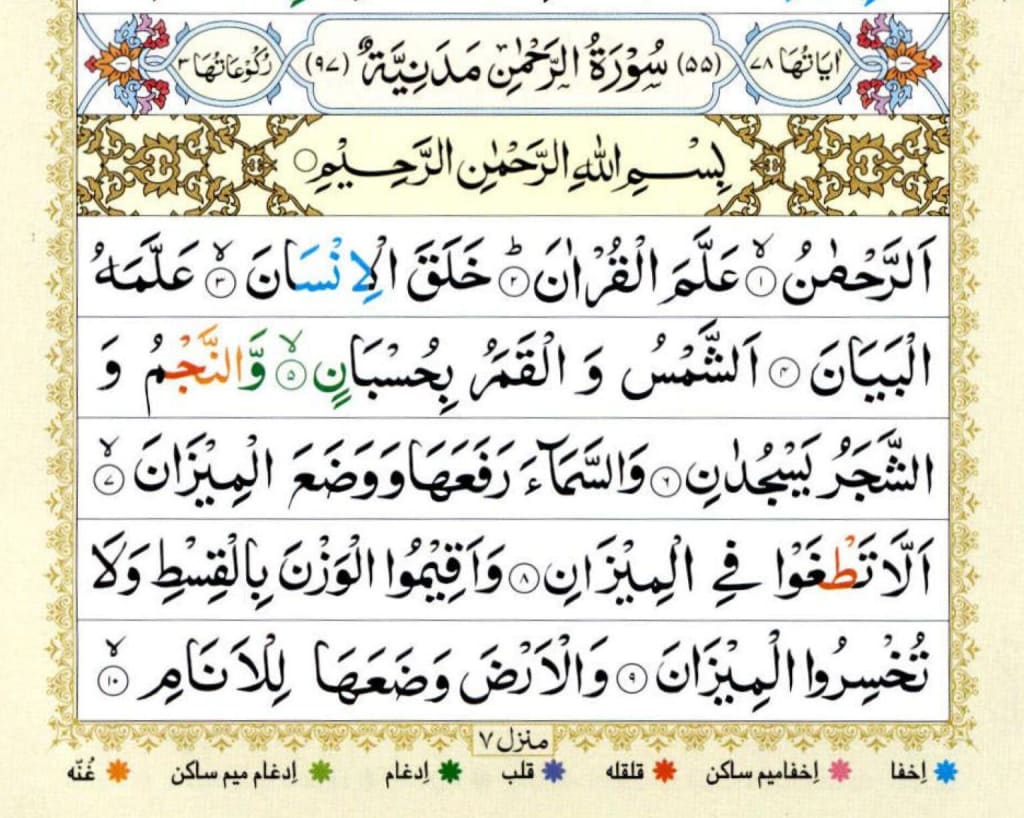
Surah Ar Rahman, the 55th chapter of the Quran, is among the most celebrated and widely recited surahs. Known as "The Most Merciful," this surah poetically emphasizes Allah's boundless mercy, grace, and the perfection in His creation.
Revealed in Mecca, it comprises 78 verses and uses vivid imagery, rhythmic language, and a consistent refrain to make profound spiritual and existential reflections on the nature of God and humanity. Its message highlights themes of gratitude, justice, and the wonders of creation, encouraging believers to recognize the favors and balance Allah has provided.
Key Themes of Surah Ar Rahman
1. Divine Mercy and Compassion
The surah opens with the name "Ar Rahman" (The Most Merciful), a unique name of Allah that represents His boundless compassion. This divine mercy is a central theme throughout the surah, woven into descriptions of the creation of the universe, the sustenance provided to all creatures, and the blessings bestowed upon humankind.
The chapter reflects on the kindness of Allah in creating humans and providing them with knowledge, sustenance, and beauty. By calling attention to each blessing, the surah urges believers to recognize Allah's mercy in every facet of life.
2. Recognition of Allah’s Blessings
The famous refrain of the surah, ("Then which of your Lord's favors will you deny?"), appears 31 times. This repetition serves as a reminder to acknowledge the countless blessings Allah has provided.
By emphasizing this rhetorical question, the surah invites self-reflection on the part of the listener, encouraging gratitude and humility. It underscores that both humans and jinn—who are explicitly addressed in the surah—are beneficiaries of these divine favors and are accountable for their recognition and gratitude.
3. Signs of Allah in Creation
Surah Ar-Rahman eloquently describes the natural world—the heavens, the earth, the oceans, and the sun and moon—as reflections of divine wisdom and creativity.
The verses speak of the balance in the universe, signified by phrases like "He has raised the heaven and imposed the balance" (55:7), which allude to the harmony and order Allah has established in creation.
This order not only sustains life but also symbolizes justice, as every part of creation fulfills its purpose without disrupting the balance. The surah encourages believers to observe and appreciate these signs as manifestations of Allah’s existence and attributes.
4. Human Creation and Moral Responsibility
The surah further illustrates the creation of humans and jinn, making it clear that each being has a purpose and is endowed with unique gifts. Allah’s grant of speech and intellect to humanity sets humans apart and emphasizes their moral responsibility.
However, with these gifts comes accountability, as highlighted in the final sections of the surah, which describe the Day of Judgment. On this day, all creatures will be judged according to their deeds, emphasizing the importance of using the gifts bestowed by Allah wisely and responsibly.
5. Rewards for the Righteous and Consequences for the Unjust
Surah Ar-Rahman outlines contrasting rewards for those who live righteously and the consequences for those who reject Allah's signs. The righteous are promised gardens of delight, rivers, lush vegetation, and abundant blessings in the hereafter—beautiful imagery that appeals to the human desire for peace and prosperity.
Conversely, the surah warns of punishment for those who are ungrateful or reject Allah’s guidance, reinforcing the concept of divine justice. By highlighting both rewards and consequences, the surah urges individuals to lead lives of faith, integrity, and gratitude.
Literary Beauty and Structure
The style of Surah Ar-Rahman is poetic and rhythmic, using the refrain to punctuate reflections on different elements of creation and divine favor. This repetition builds a cadence that resonates deeply with listeners and readers, creating an almost hypnotic effect.
The surah’s unique structure and sound play a vital role in its impact, making it one of the most beloved chapters to recite, memorize, and contemplate.
The surah’s composition has led many to consider it a song of praise—a symphony that glorifies Allah through the marvels of the natural world and His interactions with humanity. The imagery is vivid and often transcendent, transporting the listener to scenes of heavenly gardens, flowing rivers, and skies in perfect balance.
Surah Ar-Rahman in Modern Times
In today's world, the message of Surah Ar-Rahman remains highly relevant. It encourages mindfulness of the blessings often taken for granted and a conscious recognition of the balance within nature and life.
By reminding humanity of the harmony in the cosmos, the surah underscores the need for balance in human behavior, urging individuals to lead lives of gratitude, compassion, and justice.
In an era where environmental concerns, materialism, and social injustices are prominent, Surah Ar-Rahman serves as a reminder of the interconnectedness of all creation. It prompts believers to strive for balance within themselves and their environment, fostering a sense of responsibility and humility.
Surah Ar-Rahman’s message is timeless, guiding Muslims and all of humanity toward a life of recognition, gratitude, and moral consciousness. It emphasizes that every blessing is a gift, every breath an opportunity for gratitude, and every moment a chance to seek harmony in accordance with divine wisdom.
Through its lyrical verses and profound reminders, Surah Ar-Rahman continues to inspire awe, urging each person to reflect on the beauty and mercy of their Creator.
As the surah asks repeatedly, “Then which of your Lord’s favors will you deny?” it reminds us to look within, recognize our blessings, and renew our commitment to a life of faith and gratitude.
About the Creator
Pak Web
Pakweb.net is your news, entertainment, music fashion, and live tv website. We provide you with the latest breaking news and videos straight from the entertainment industry.
In the Name of Allah
Ahmad Raza was a children’s author who specialized in mystery and detective stories. His tales were filled with suspense and wonder, captivating readers of all ages. At home, besides him, only one trustworthy servant, Akram, managed the household. Ahmad Raza’s wife had passed away years ago, and their only son, a doctor, lived in the United Kingdom.
By Sudais Zakwan5 days ago in Art




Comments
There are no comments for this story
Be the first to respond and start the conversation.