
An Overview of Six Kalimas Key Declarations of Islamic Faith
Six Kalimas in Islam

The Six Kalimas, or statements, are central to the creed and practice of Islam. These concise yet profound expressions encapsulate the core tenets of Islamic belief, recited by Muslims across the world.
Each Kalima holds deep spiritual meaning, representing fundamental aspects of faith and reflecting a Muslim’s devotion to Allah. Below is a breakdown of the Six Kalimas and their theological significance.
First Kalima: Tayyibah (The Word of Purity)
The first Kalima is known as Tayyibah, which translates to "pure" or "wholesome." It is the foundational proclamation of Islam, affirming the oneness of Allah and the finality of the Prophethood of Muhammad (peace be upon him):

Laa ilaaha illallah, Muhammadur rasoolullah
Translation
There is no deity but Allah, and Muhammad is the Messenger of Allah.
This Kalima forms the essence of Islamic faith, emphasizing the absolute monotheism (Tawhid) of Allah and the unique position of Prophet Muhammad (PBUH) as His final messenger.
Second Kalima: Shahadah (The Word of Testimony)
The Second Kalima Shahadah is a formal declaration of faith, often recited by those converting to Islam. It expresses belief in the unity of Allah and the prophethood of Muhammad (PBUH):
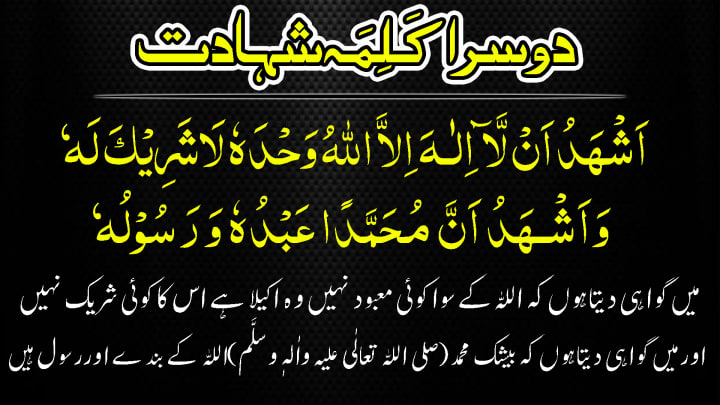
Ash-hadu alla ilaha illallahu wahdahu laa shareekalahu, wa ash-hadu anna Muhammadan abduhoo wa rasooluhu
Translation
I bear witness that there is no deity but Allah, He is One and has no partner, and I bear witness that Muhammad is His servant and Messenger.
This Kalima underscores the essential testimony that distinguishes a believer, affirming their faith in Allah's oneness and the Prophethood of Muhammad.
Third Kalima: Tamjeed (The Word of Glorification)
Tamjeed means glorification or praise of Allah. This Third Kalima reflects Allah’s greatness and perfection, proclaiming His transcendence over all creation:
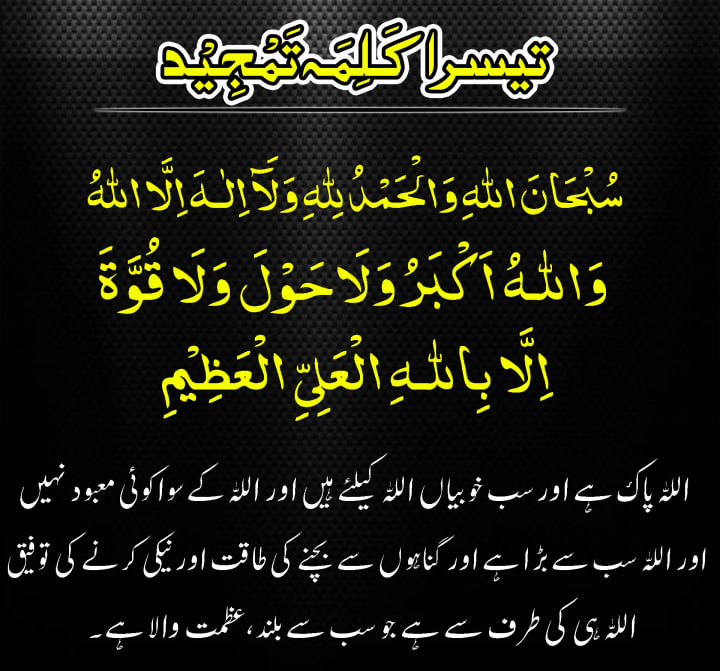
Subhaanallaahi wal hamdu lillaahi wa laa ilaaha illallaahu wallaahu akbar, wa laa hawla wa laa quwwata illaa billaahil ‘aliyyil ‘azeem
Translation
Glory be to Allah, and all praise is due to Allah; there is no deity but Allah, and Allah is the Greatest. There is no power and no strength except with Allah, the Most High, and the Most Great.
This Kalima highlights the belief that all praise is due to Allah, who alone deserves worship and whose power and will govern the universe.
Fourth Kalima: Tawheed (The Word of Oneness)
Tawheed refers to the oneness of Allah, and this Fourth Kalima reinforces His absolute supremacy and the rejection of any partners or equals:
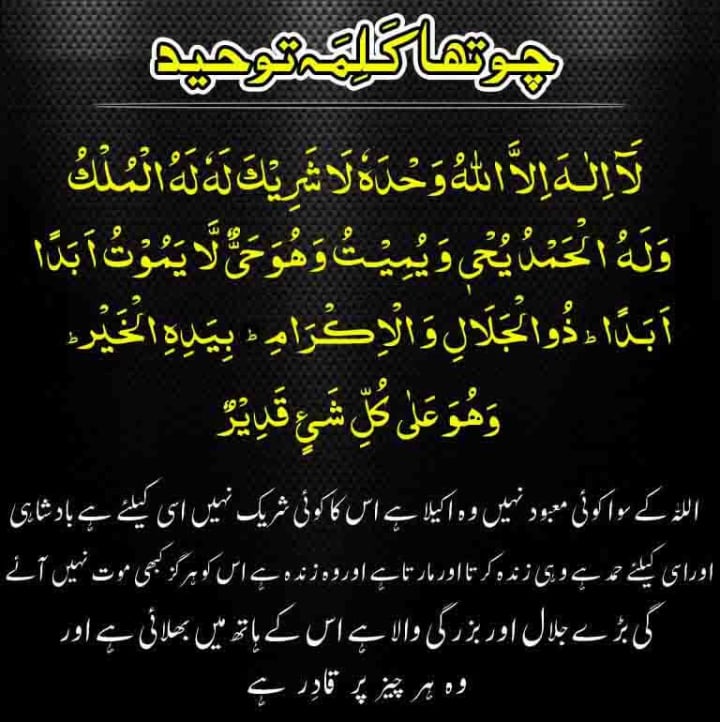
Laa ilaaha illallahu wahdahu laa shareekalahu, lahul mulku wa lahul hamdu yuhyi wa yumeetu wa huwa hayyun laa yamootu, abadan abada, zul jalaali wal ikraam, biyadihil khayr, wa huwa ‘alaa kulli shay’in qadeer
Translation
There is no deity but Allah, He is one and has no partner. To Him belongs the kingdom, and for Him is all praise. He gives life and causes death, and He is Ever-Living, without death, forever and ever. He is the Possessor of Majesty and Honor. In His hand is all good, and He has power over everything."
This Kalima affirms Allah’s eternal existence, sovereignty, and control over life and death, emphasizing that all good is in His hands.
Fifth Kalima: Astaghfar (The Word of Seeking Forgiveness)
Fifth Kalima Astaghfar is the act of seeking forgiveness from Allah. This Kalima expresses a believer's repentance for sins and their hope in Allah's mercy:

Astaghfirullaaha rabbi min kulli dhambin adhnabtuhu ‘amdan aw khataa’an sirran aw ‘alaaniyatan, wa atoobu ilayhi minadh dhambilladhi a’lamu wa minadh dhambilladhi laa a’lamu, innaka anta ‘allaamul ghuyoobi wasattaarul ‘uyoobi waghaf-faarudh dhunoobi wa laa hawla wa laa quwwata illaa billaahil ‘aliyyil ‘azeem
Translation
I seek forgiveness from Allah, my Lord, from every sin I committed intentionally or unintentionally, secretly or openly. I turn to Him in repentance from the sins I am aware of and those I am not aware of. Indeed, you are the Knower of the unseen, the Concealer of faults, and the Forgiver of sins. There is no power and no strength except with Allah, the Most High, and the Most Great.
This Kalima captures the essence of repentance in Islam, reminding Muslims of the importance of seeking Allah’s forgiveness for their mistakes.
Sixth Kalima: Radd Kufr (The Word of Rejecting Disbelief)
The Sixth Kalima is a renunciation of disbelief and polytheism, reaffirming the Muslim’s devotion to Islamic monotheism and distancing from any form of shirk:
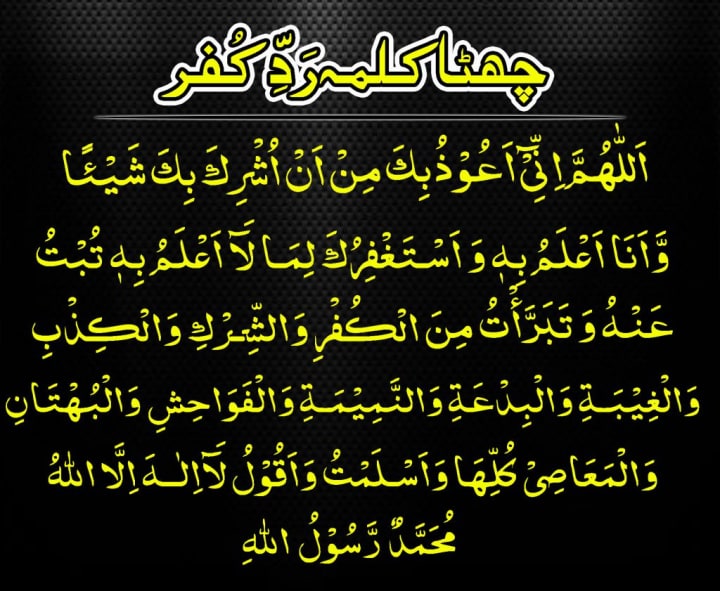
Allaahumma inni a’oodhu bika min an ushrika bika shay’an wa ana a’lamu bihi, wa astaghfiruka limaa laa a’lamu bihi. Tubtu ‘anhu wa tabarra’tu minal kufri wash-shirki wal kidbi wal ghibati wal bid’ati wan-nammeemati wal fawaahishi wal buhtaani wal ma’aasi kullihaa, wa aslamtu wa aqoolu laa ilaaha illallahu Muhammadu rasoolullah.
Translation
O Allah! I seek refuge in you from associating anything with you knowingly, and I seek your forgiveness for what I do not know. I repent from it and declare myself free from disbelief, polytheism, lying, backbiting, innovation, slander, immorality, and all disobedience. I have submitted and declare: There is no deity but Allah, Muhammad is the Messenger of Allah.
This Kalima is a powerful reaffirmation of faith, rejecting disbelief and all forms of disobedience, while affirming the Muslim’s commitment to Islamic principles.
Conclusion of Six Kalimas
The Six Kalimas are essential declarations that guide a Muslim's faith, worship, and conduct. These statements not only summarize core beliefs but also serve as daily reminders for believers to maintain their devotion to Allah and align their lives with His teachings and the example of the Prophet Muhammad (PBUH).
Through the regular recitation of these Kalimas, Muslims strive to purify their hearts, repent for their shortcomings, and reaffirm their submission to the oneness of Allah.
About the Creator
Pak Web
Pakweb.net is your news, entertainment, music fashion, and live tv website. We provide you with the latest breaking news and videos straight from the entertainment industry.
Reader insights
Nice work
Very well written. Keep up the good work!
Top insights
Easy to read and follow
Well-structured & engaging content
Eye opening
Niche topic & fresh perspectives
Heartfelt and relatable
The story invoked strong personal emotions
On-point and relevant
Writing reflected the title & theme
The Discipline Line That Protects Every Serious Trader
A lack of opportunity rarely destroys long-term trading success. A single uncontrolled loss far more often destroys it. Markets move quickly, emotions react faster, and hesitation at the wrong moment can erase months or years of progress. Pre-defined stop losses are in place to prevent that outcome.
By Agast Mishra7 days ago in Education
The Road That Taught Him Silence
In the small village where the mountains met the fields, mornings arrived quietly. The sun did not rise in a hurry there; it climbed slowly, as if respecting the stillness of the land. Birds were the first to greet the light, their soft calls weaving through the narrow lanes and mud-brick houses. Aamir had learned to wake before the village did. At first, this habit was forced. Sleepless nights, heavy thoughts, and restless dreams had pushed him out of bed before dawn. He did not know where to go, only that staying inside the house made his chest feel tighter, his breath shorter, his mind louder. One morning, without purpose, he stepped outside and began walking toward the path that lay between the barley fields and the low, blue mountains. That path soon became his silent companion. Every day, he walked there — sometimes quickly, sometimes slowly, sometimes stopping for long minutes to watch the wind bend the crops like a green ocean. The path was narrow and uneven, yet it carried him faithfully, never asking where he was going or why. In its quiet presence, he found a strange comfort. Aamir was not unhappy in the usual sense. He had food, family, and education. He taught children in the village school and was respected by many. Yet inside him lived a deep confusion — a soft but constant question: Am I becoming what I was meant to become? He had dreams once — of writing, of speaking beautifully, of guiding others not only through lessons but through life itself. But responsibilities had grown faster than courage. Slowly, without noticing, he had begun to doubt himself. And doubt, unlike pain, does not shout. It whispers. On one such morning, when the mist still clung to the fields like a thin veil, Aamir noticed footprints beside his own. They were not fresh, but they were regular — the marks of someone who walked the same road every day. A few minutes later, he found their owner. An old man sat on a flat stone near the edge of the path, a wooden staff resting beside him, a small flock of sheep grazing quietly nearby. His beard was silver, his clothes simple, and his eyes clear in a way that surprised Aamir. Those eyes did not seem tired by age; they seemed polished by time. “Peace be upon you,” Aamir greeted. “And upon you, peace,” the old man replied warmly. “You walk early.” “So do you,” Aamir smiled. The old man nodded. “The morning is honest. It shows you who you are before the world begins to tell you who you should be.” The words struck Aamir gently, like a leaf touching water. From that day onward, they met often. Sometimes they spoke, sometimes they shared long silences. The old man never asked many questions, yet somehow Aamir found himself speaking — about his students, his ambitions, his fear of wasting his abilities, his constant comparison with others who seemed more confident, more successful, more certain. One morning, Aamir confessed, “I feel as if I am standing still while the world moves ahead.” The old man watched the sheep for a moment, then said, “Have you seen a tree grow?” “Yes.” “Does it run to become tall?” “No.” “Yet it becomes tall.” Aamir smiled faintly. “But people judge trees by their height.” “They do,” the old man agreed. “But trees are not planted to impress people. They are planted to become themselves.” The sentence stayed with Aamir long after the walk ended. Days turned into weeks, and weeks into months. With each walk, something inside him shifted — slowly, almost invisibly. He began to notice small beauties he had ignored before: the way dew rested on grass like tiny mirrors, the rhythm of his own breathing, the calm dignity of the mountains that never hurried yet never failed to stand firm. One morning, Aamir arrived to find the stone empty. No sheep. No staff. No silver-bearded teacher. For several days, he returned at the same hour, hoping to meet the old man again. But the path remained silent, as if it had never known such a presence. Disappointment crept into his heart. On the seventh morning, as he walked farther than usual, he noticed a small bundle placed carefully beside the path. Inside it lay a worn notebook and a folded piece of paper. The note read: “To the one who walks with questions, Do not search for me again. I was only a mirror, not a guide. The road has taught you silence. Silence has taught you clarity. Now let clarity teach you courage. Remember: You are not late. You are not lost. You are simply growing underground.” Aamir sat there for a long time, holding the paper with trembling hands. That day, when he returned home, he opened his old notebooks, the ones where unfinished writings slept like forgotten seeds. For the first time in years, he wrote not to impress, not to compete, but to understand himself. He began to speak more gently to his students, not only teaching lessons, but listening to fears. He encouraged them to walk, to observe, to think, to trust their own pace. And every morning, he still walked the same path. The road never answered his questions directly. But slowly, quietly, it returned something far more precious: The belief that becoming oneself is not a race — It is a journey best taken in silence, With steady steps, And an honest heart.
By Muhammad yaseen6 days ago in Education




Comments
There are no comments for this story
Be the first to respond and start the conversation.