

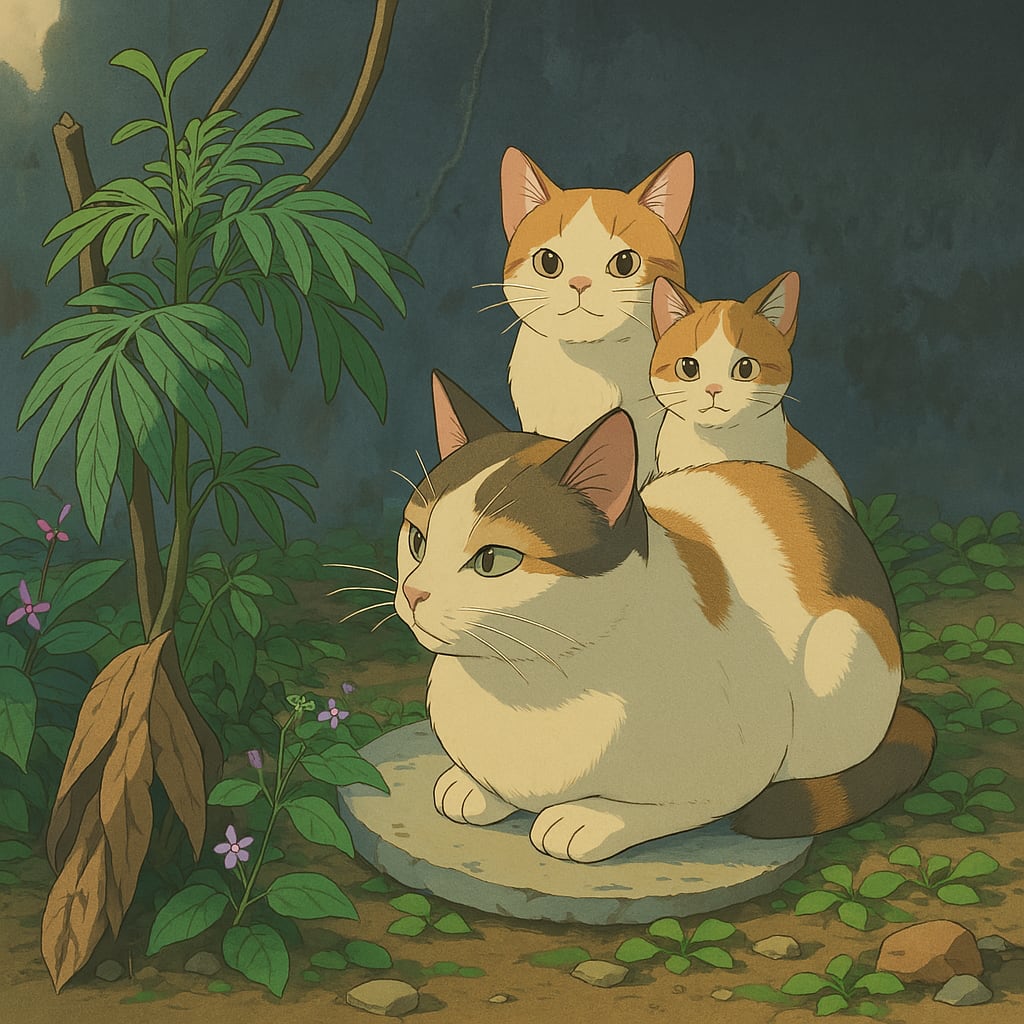
People often talk about the moving stories or memorable characters in Studio Ghibli, but the art style that brings those stories to life is just as important. When a Ghibli movie starts, you know you're in a world unlike any other: green forests, hand-painted skies, cozy towns, and creatures that look and sound strangely familiar but are completely out of this world. Studio Ghibli's work is more than just animation; it is a way of thinking, a mood, and a form of visual storytelling that appeals to people of all ages..
The variations of Ghibli art:
Central Ghibli character of nature
One of the most defining aspects of Ghibli’s visual style is its reverence for nature. Every tree, rock, and stream is painted with such attention that it breathes life into the film.
This connection to nature reflects Ghibli’s deeper themes of environmentalism and harmony between humans and the earth. The art invites you to pause and appreciate small details: the way wind moves through grass, the ripples in water, or how light filters through leaves.
A Blend of the Fantastical and the Familiar
Studio Ghibli’s worlds are imaginative, but they’re never so far-fetched that they feel disconnected. Their settings often merge fantasy and realism, drawing from traditional Japanese landscapes and folklore to create dreamlike environments grounded in everyday beauty.
Take Howl’s Moving Castle, for example—its towering, walking castle is pure fantasy, but the cobbled streets and surrounding countryside feel like real places you could visit. This careful blend makes the magical feel believable, and the ordinary feel magical.
Character Design:
Expressive and Endearing:
Ghibli characters are not overly stylized or exaggerated. Instead, they often have subtle facial expressions, natural body language, and detailed clothing that reflect their personalities and roles in the story. Whether it’s the wide-eyed wonder of Chihiro in Spirited Away or the tired, slouched figure of Seita in Grave of the Fireflies, their emotions are conveyed through quiet, expressive moments rather than flashy animation.
Even non-human characters—like the Catbus, Totoro, or No-Face—are designed with emotion and nuance, making them unforgettable without the need for excessive dialogue.
Color and Mood:
Color plays a huge role in Ghibli's visual storytelling. Each film has its own color palette that reflects its tone—soft pastels for the innocence of Kiki’s Delivery Service, deep earthy hues in Princess Mononoke, or the haunting twilight tones of Spirited Away. The lighting and shading are subtle, often mimicking real-world effects like dusk, candlelight, or fog. Every frame looks like a painting you could hang on your wall.
Influences and Inspirations
Ghibli’s art draws from a mix of Japanese culture, European storybooks, architecture, and even impressionist paintings. Hayao Miyazaki has often spoken about his admiration for artists like Jean Giraud (Moebius) and the influence of Swiss and Scandinavian towns on his visual world-building. Yet the studio always adds its own distinct flair, making every film unmistakably “Ghibli.”
Now lets talk about making Ghibli art
Nowadays you can make a Ghibli art easily by using AI. For realistic Ghibli we can use chatgpt. Also we can use grok ai .That's completely free for use. You can just upload your image and write a prompt "turn this image into Ghibli style". Then boom! just wait and see the magic of AI.
About the Creator
Marid Shahran Orik
I'm Orik, a student and writer from Bangladesh, passionate about literature, technology, and social issues. I aim to inspire and educate through fresh perspectives in my writing.
Keep reading
More stories from Marid Shahran Orik and writers in Art and other communities.
A Historical Overview of India-Pakistan Wars
The relationship between India and Pakistan has been marked by conflict and tension since the two nations gained independence from British rule in 1947. The historical context of their rivalry is complex, rooted in a mix of territorial disputes, religious divides, and national identities. Over the years, India and Pakistan have engaged in several wars and conflicts, significantly influencing South Asia's geopolitics and global security.
By Marid Shahran Orik9 months ago in History



Comments
There are no comments for this story
Be the first to respond and start the conversation.