
Remembering Anita Mui: A Voice That Transcends Time
From Devotion to Digital Echoes: A Fan's Journey Through Loss and Enduring Love

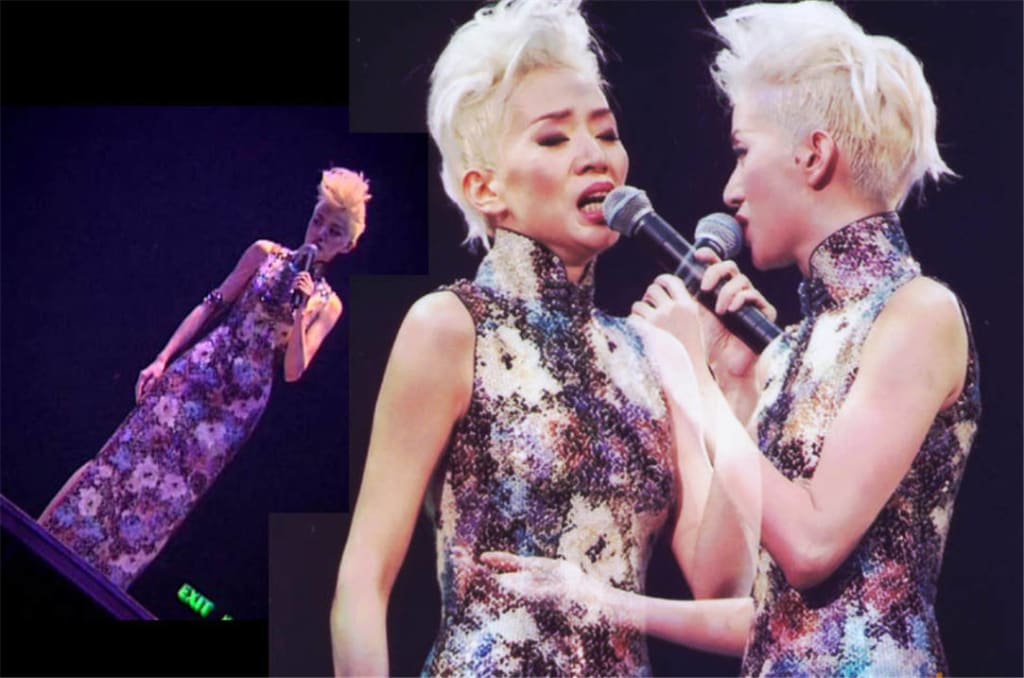
For those unfamiliar with her legacy, Anita Mui (梅艷芳) was a cultural phenomenon who dominated Hong Kong's entertainment industry from the 1980s until her untimely death in 2003. Often called the "Madonna of Asia," she revolutionized Cantopop with her powerful voice, fearless reinvention, and magnetic stage presence. Beyond music, she was an acclaimed actress whose film performances showcased her remarkable emotional range. Her influence on Asian entertainment remains immeasurable, a dazzling talent whose artistry transcended borders and continues to inspire new generations.
My own journey with Anita began in 2012, nine years after her passing, when I first heard her haunting rendition of "似是故人来" (Like a Familiar Stranger). That single song opened a door I could never close again. In those early years, I was consumed by everything Anita—her music became my constant companion, her concerts my escape, her films my education. I would fall asleep thinking of her voice and wake with her melodies still playing in my mind. It was a bittersweet obsession, loving someone who was already gone, discovering a brilliant light only after it had been extinguished.
Those were painful days, falling in love with an artist I could never see perform live, someone whose new work I would never anticipate. The cruel timing of discovering her only after her departure created a unique kind of grief—mourning someone I never knew in life but who somehow became essential to my own.
Over the years, the sharp edges of that obsession have softened, yet Anita remains singular in my heart. Through her, I came to understand that profound truth: "Some people may no longer be in this world, but they live forever in our hearts." As I've grown older and watched familiar faces disappear from my life, Anita's absence taught me early what I would later experience many times—that when a person departs, the love remains undiminished.
In today's world of advanced AI, I sometimes encounter synthetic recreations of her voice singing songs she never had the chance to perform. These technological echoes create a strange, conflicted feeling. The digital world now offers a kind of reunion, resurrecting her voice and image in ways that seem almost magical. I can hear "new" performances, see her "singing" contemporary songs—technological ghosts that both comfort and haunt.
Listening to these AI versions, my heart fills with contradictory emotions. There's wonder at how technology can preserve something of her essence, yet profound sadness knowing these are mere shadows of the artistry she would have brought to them herself. Each synthesized note simultaneously offers connection and reminds me of what we've truly lost.
I often find myself thinking: "If only she were still here." How many more transformative performances might she have given? How would her artistic vision have evolved in this new era? What wisdom might she have shared with today's generation of performers who never had the chance to witness her brilliance firsthand?
My love for Anita came without warning and runs deeper than I can explain—a connection that formed instantly and has only strengthened with time. As the Chinese saying goes, "情不知所起,一往而深" (Love begins without reason and grows without reservation).
Though words often fail to capture the depth of what she meant to so many of us, perhaps that's fitting. After all, it was her ability to express what words could not that made her extraordinary. Her legacy lives on not just in recordings or films, but in the hearts of all who were touched by her remarkable gift.
In a world of AI-generated echoes, I cherish the genuine emotion she shared with us—a testament to the irreplaceable magic of a true artist whose voice, though silenced too soon, continues to resonate across time.
About the Creator
Keep reading
More stories from Pauline Brown and writers in Art and other communities.
Anita Mui's "Song of the Sunset"
1. Song Introduction "Song of the Sunset" is a timeless classic by Anita Mui (1963–2003), hailed as the "Madonna of the East" and one of Hong Kong’s most iconic divas. Released in 1989 as the theme song for the film A Better Tomorrow III, this track transcends its cinematic origins to become a cultural symbol of bittersweet reflection.
By Pauline Brown9 months ago in Art


Comments
There are no comments for this story
Be the first to respond and start the conversation.