
November Is American Indian Heritage Month
Starting today out with a focus on heritage, and it's First Friday in a nearby town with an art walk


There are very few photographs of modern day Native Americans in the Unsplash photos. There appear to be many museum photos. I like the one above as I always like to talk about art as healing. The culture and stories always include art.
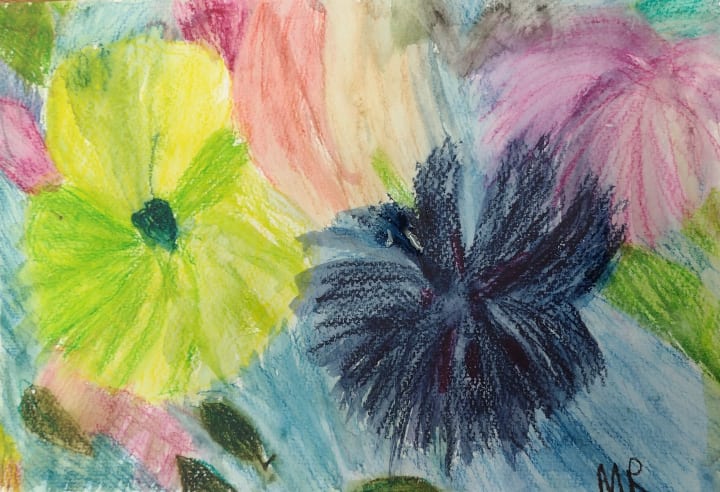
My cousin Kent is an up-and-coming artist who began his art as a full-time profession after many years of teaching in a school.
When I was born, in 1954 our American Indian people, who my Grandpa and others his age called "Indians" could buy liquor in liquor stores for just less than a year before my birth.
Most Indian people older than me in Minnesota and some younger than me in Canada had been sent to boarding school. There it was not okay to speak the Ojibwe language. Even my grandfather who spoke fluent Ojibwe only spoke to other fluent speakers.
It always sounded like such a fun language. I would hear them talking and laughing as the conversation went on. The English language was never that much fun.
He didn't share the Ojibwe language with his children, grandchildren or great-grandchildren. When I would ask him to pronounce a word for me he would not help me. He told me that it would be better if I didn't learn as I would be punished for speaking the Ojibwe language, as he was.
Treaties were made with tribal groups in the beginning as treaties were made with other Nations. There was an exchange of land, water, timber, oil, metals, minerals, and other things that were a part of the treaties with the Tribal Nations. The U.S. government agreed to provide annuities that included food, clothing, shelter, health care, and education.
In Minnesota, we have seven tribal reservations and four Dakota communities. Six of the reservations are connected to the Minnesota Chippewa Tribe. Red Lake didn't separate the land, it is held in common and the tribe has a relationship directly with the federal government due to that.
After the treaties ended, there were Acts, and in 1978, Religious Freedom and the Indian Child Welfare Act were passed. I was 24 years old and just beginning my recovery from an alcoholic family upbringing and a marriage into another addicted family.
It was a slow start with religious freedom for the same reason it was a slow start the first day American Indians were allowed to purchase alcohol. No trust.
A co-worker would talk about that day as he was there with his uncle and father to buy alcohol. They watched until one man went in and came out with alcohol. Religious freedom has been the same.

My first time smudging was with hippies when I was about 11 or 12 years old. The man holding the smudge bowl said, "It cleans your aura man!" At the time I didn't know what an aura was then was able to smudge on my own and with others beginning in 1978.
That was the beginning for me. In the 80s I started to go to ceremonies. I learned in the late 70s that our water was in danger. It was before bottled water for most. Women's full moon ceremonies started monthly then and spread around the state.
We were told that it is the women's job to care for the water. Water walks started to bring attention to the danger. Then water ceremonies started about 15 years ago for people new to this. All cultures of women. Men are supporters and don't carry the water but do carry the staff.
For this First Friday in a nearby community Annie Humphrey, a Native American singer is performing at a venue this First Friday, with many other artists exhibiting their art, and still others are demonstrating their art skills.
The local celebration of American Indian Heritage Month is scheduled for November 14, 2024.
About the Creator
Denise E Lindquist
I am married with 7 children, 28 grands, and 13 great-grandchildren. I am a culture consultant part-time. I write A Poem a Day in February for 8 years now. I wrote 4 - 50,000 word stories in NaNoWriMo. I write on Vocal/Medium daily.
Keep reading
More stories from Denise E Lindquist and writers in Art and other communities.
Jim Sloan
By Brian D’Ambrosio At 90, Jim Sloan has lived several lifetimes’ worth of work—carpenter, sign painter, excavator, sawmiller, road-builder and the go-to rattlesnake remover of Galisteo, New Mexico. Art may be the through-line, but it has never been the source of his income, nor the center of his universe. Sloan has always kept one foot in the studio and the other in the soil, without bothering to decide which world he truly belongs to. The truth is that he fits cleanly into neither, and he has long since stopped trying.
By Brian D'Ambrosio a day ago in Art
📢 Raise Your Voice Thread: 01/08/2026
Our “Raise Your Voice Threads” are hosted most alternating Thursdays at 12PM ET to offer creators more avenues to uncover exceptional stories on Vocal. As we are continuously searching for fresh creators and inspiring stories, this thread provides an opportunity to exchange and discuss the stories that have moved and motivated us on Vocal.
By Raise Your Voice by Vocal6 days ago in Resources


Comments (3)
Beautiful story and tribute for American Indian Heritage Month!!!❤️❤️💕
How interesting. One day if you could, could you write a story in the Ojibwe language with translation. If you go way back, I do have some Iroquois nation in me.
Fascinating article, thank you for sharing.