
Impressive Artwork by Arnold Bocklin
Symbolist artist
German Symbolist artist Arnold Bocklin earned a cult following in Germany in the 19th century. His artworks contain romantic landscapes, mythological beasts, 19th-century Darwinism, humor, and parts of the German soul.
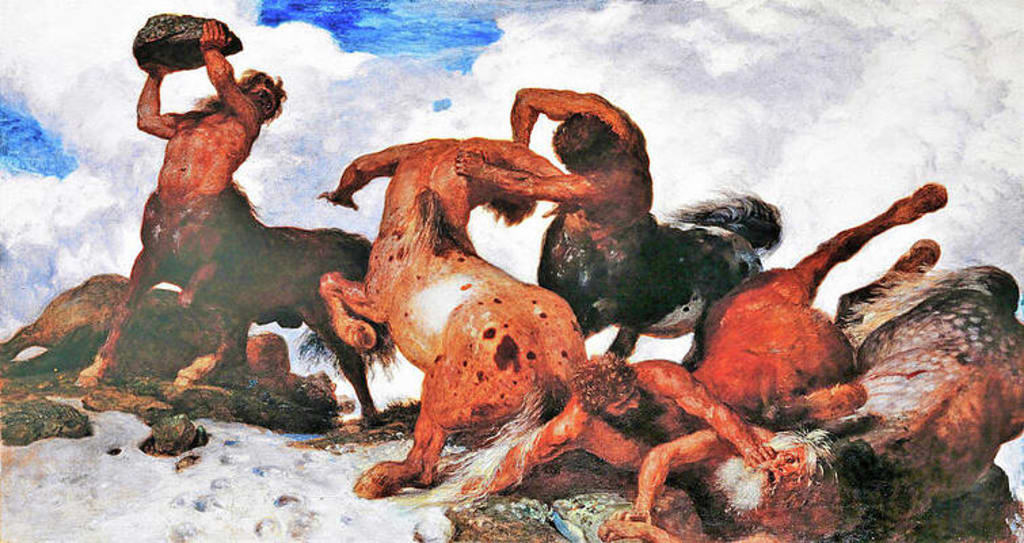
Battle of the Centaurs is an artwork completed in Munich. It is an homage to Michelangelo’s unfinished 1492 marble relief Battle of the Centaurs, reworking the classical mythical trope of Renaissance art. The centaurs in Bocklin’s painting are massive, angry, and engaged in battle. They spit with fury, and their eyes bulge with rage.
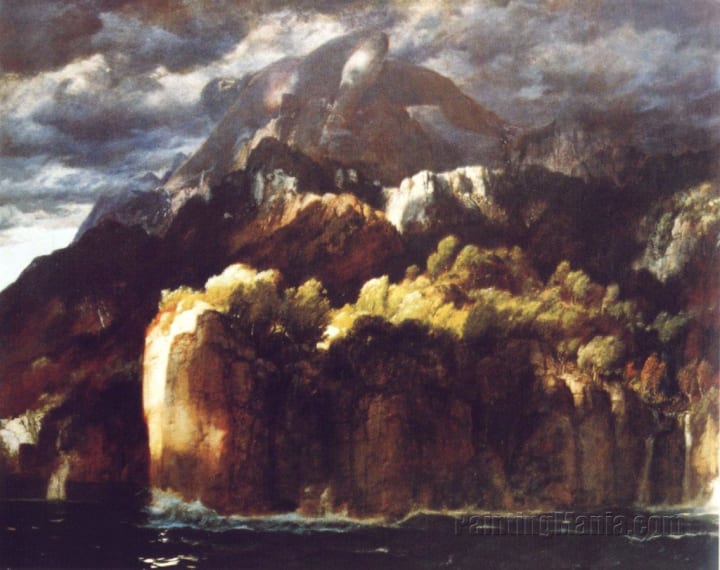
Chained Prometheus comes from Greek mythology. It tells the tale of the Titan Prometheus, who stole fire from the gods to give it to man. Zeus punished him, chaining him to a rock, where an eagle came daily to feed off his liver. Eventually released from imprisonment by Hercules. During the 19th century, Prometheus was seen as a symbol of freedom. Bocklin modeled his Prometheus on a classical wall painting of Tityus, a giant in Greek mythology.
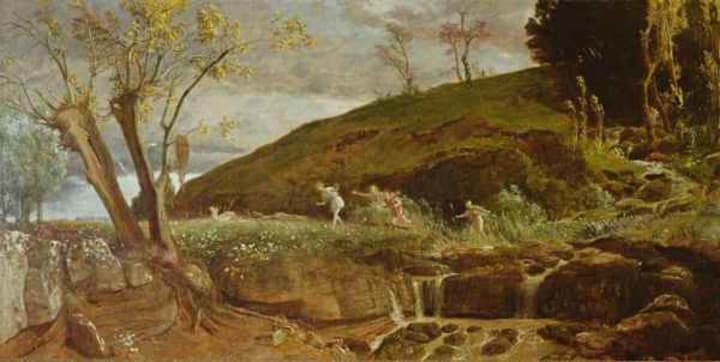
Diana’s Hunt was created in 1896. The inspiration for this artwork was a part of Ovid’s Metamorphoses. It recalls how the hero Actaeon gets lost during a hunt, meeting up with and surprising the goddess Diana while bathing nude in a pool of water. Outraged, the goddess transformed him into a stag. He is then hunted down and eaten by his dogs. The artist chose to paint Diana armed with a bow, accompanied by several hunters and dogs. They chase after a wounded stag.
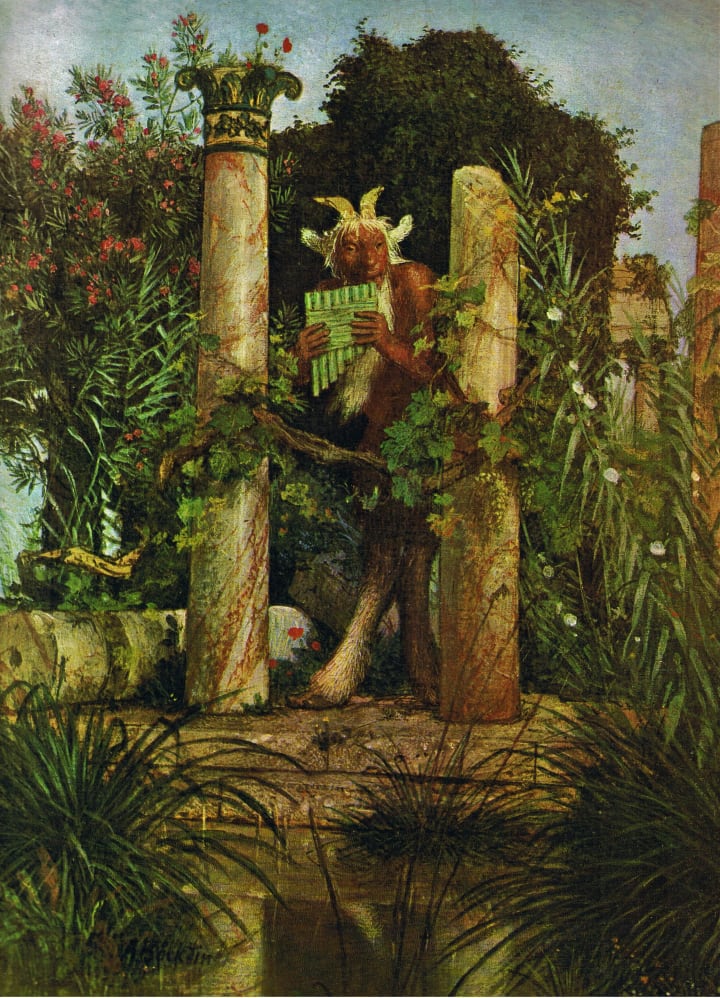
Idyll (Pan Among Columns): The subject in this artwork is the lascivious pagan Greek god Pan. The god appears among the overgrown and vine-covered wreathed columns of a ruined temple. Pan disturbs the idyllic calm of a country day during the summer with his melancholic music. He is seen playing on an eight-stem reed pipe, named after the Arcadian nymph Syrinx, who was saved in her flight from the lustful advances of Pan by transforming into a reed. To console himself for being disappointed in love, Pan made a reed pipe out of the plant.
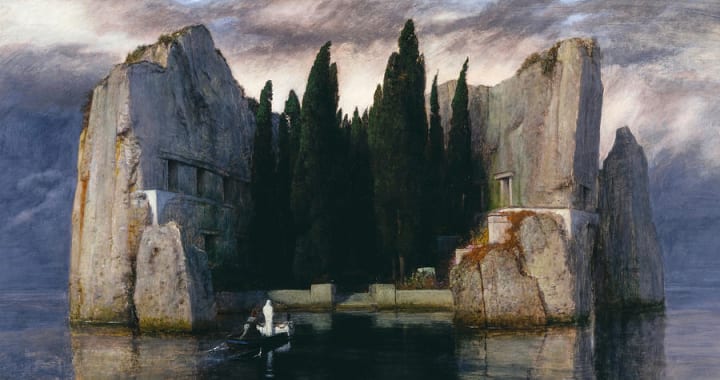
Among his most famous artworks is Isle of the Dead. The artist created five versions of this mystical painting between 1880 and 1886. The painting depicts an imaginary island of the southern hemisphere. The standing figure of the deceased in white and the boatmen are the main focus of the painting. Bocklin said of this artwork, “You’ll be able to dreamily dive into the dark world of shadows.”
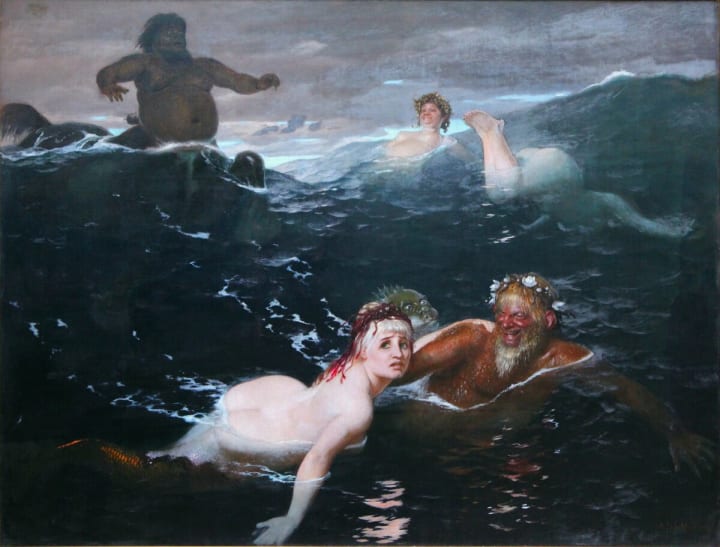
In the Play of the Waves was created in 1883. The painting recalls in detail an everyday incident witnessed by the artist during a holiday on the Italian coast. Bockin’s friend, the zoologist Anton Dohm, surprised some women bathers by approaching them underwater and suddenly resurfacing. It inspired the artist to do a comedic take on Greek mythology with dark and melancholic colors and showing fear on the woman’s face. The artist puts the viewer into the rising and falling waves. In this artwork, moral zealots, complete with fig leaves, are shown swimming into the frame of the painting in order to arrest the mermaids.
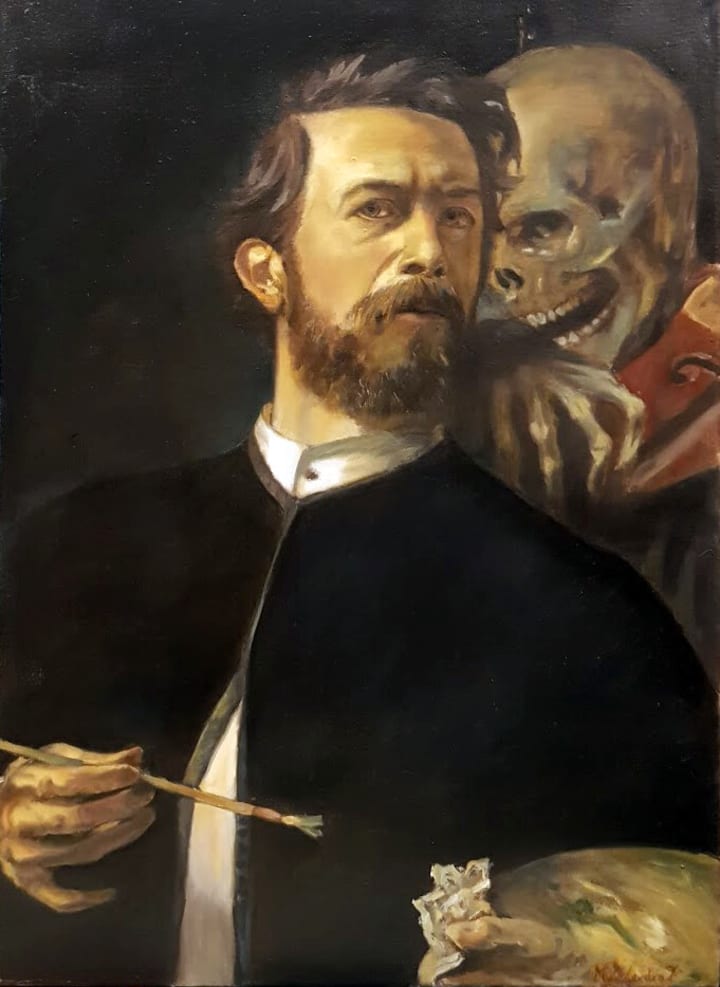
In 1872 Bocklin created his most famous self-portrait in Munich, Self-Portrait with Death Playing the Fiddle. In the painting, the artist is listening to Death’s tune, transforming this vision into a metaphor for artistic inspiration. The hand holding the brush and the palette are the base from which the composition rises in a pyramid, culminating in the artist’s head. The active death is simultaneously a painted attribute, the work of the artist.
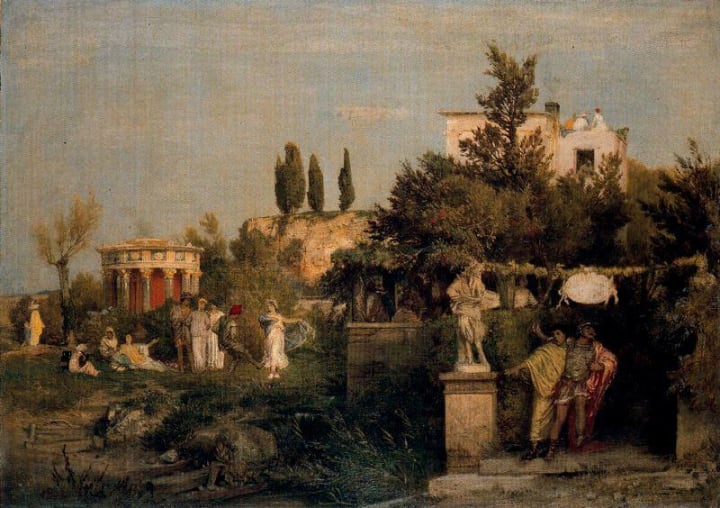
A Tavern in Ancient Rome was inspired by a dance festival Bocklin attended during his first stay in Rome. In the artwork, the tavern is located at the Porta del Popolo, an important meeting place for German artists in Rome in the 19th century. A small round structure reminiscent of Vignola’s Temple of Sant’ Andrea is seen with a young woman led by Cupid walking toward it. There is also a holy man in a long white robe and a naked youth. The dancing and singing figures symbolize unbridled lust.
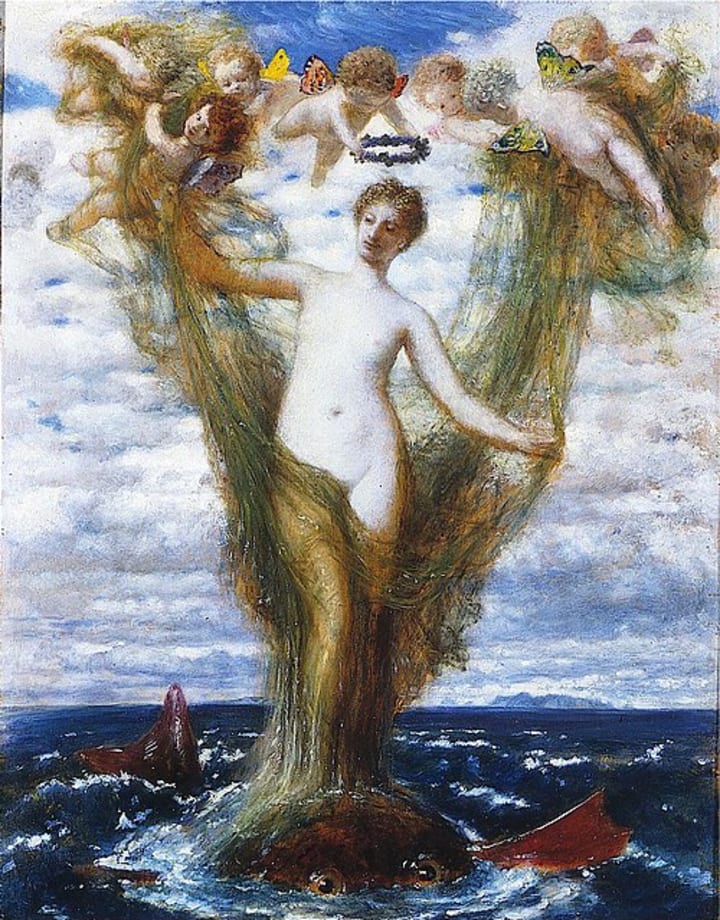
Venus Anadyomene saw Bocklin working on a new version of the artwork The Birth of Venus. His new version of the subject is from the myth of Venus emerging from the foam of the waves. A traditional part of the scene are Cupids clothing her in sea foam and crowning her with a wreath.
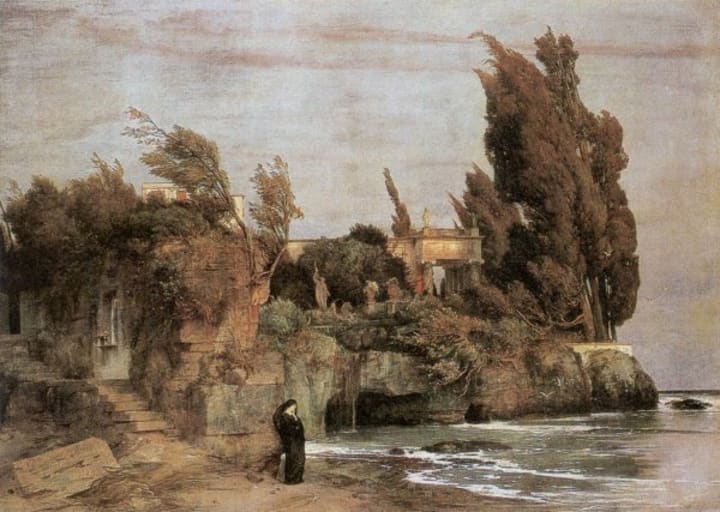
Villa by the Sea was originally commissioned by a supporter of Bocklin’s Count Schack. The painting depicts a classical romantic landscape. With a single woman figure looking out over the sea. The color palette of this artwork features a harmonious blend of blues and greens, evoking a sense of tranquility and serenity. The deep azure of the sea contrasts beautifully with the lush greenery surrounding the villa, creating a dreamlike atmosphere.
About the Creator
Rasma Raisters
My passions are writing and creating poetry. I write for several sites online and have four themed blogs on Wordpress. Please follow me on Twitter.
Keep reading
More stories from Rasma Raisters and writers in Art and other communities.
'Till Death We Do Art
There would be nothing divine in this world without art. Nature may surpass the divine to all intents and purposes, but like everything it absorbs and is absorbed by, it remains here, stuck on the surface of this world, ever-present, physically bound to the universe.
By Avocado Nunzella BSc (Psych) -- M.A.P 21 days ago in Art
Things to do in Casablanca:
Casablanca is one of lovely destinations around Morocco. Casablanca is considered the largest city in Morocco. It's famously known for its historic attractions, cultural sites and natural landscapes. Additionally, the city is well- known for its clean beaches offering visitors a lifetime experience. This blog cover the top things to do in Casablanca:
By Othmane Anaam6 days ago in Art




Comments
There are no comments for this story
Be the first to respond and start the conversation.