
Human Art In The Context Of AI, Empty Intelligence, and Empty Art
Art-Ideas Across Mediums As One Way Humans May Preserve And Protect Human-Made Theories In This New Time Of AI

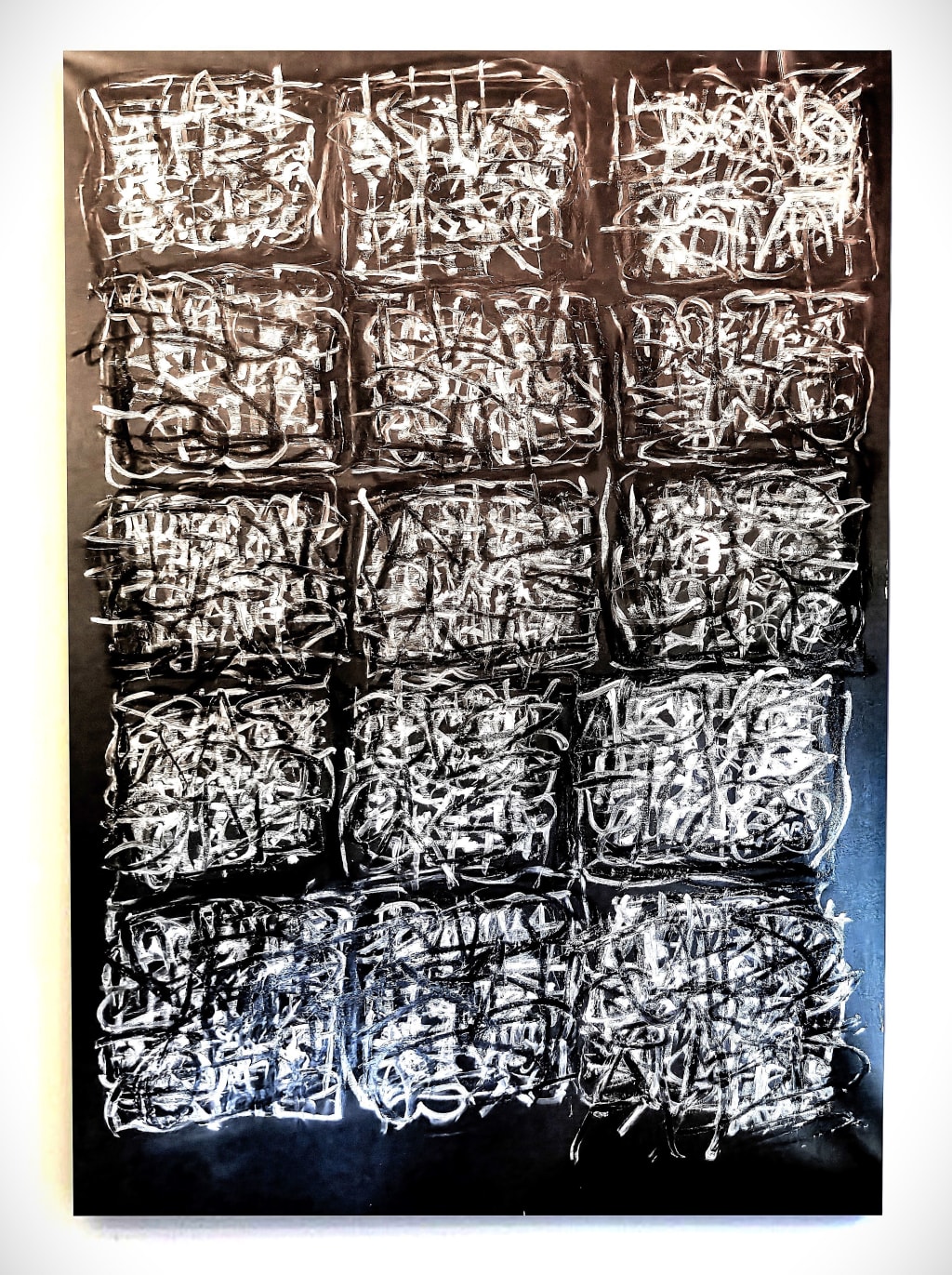
The Uniqueness of Human Theorizing: The Proposing, Preserving, and Protecting of Human Theories Now That Something Else-Artificial Intelligence-Can Now Make Theories Too.
Perhaps some forms of art may be seen as a further articulation by humans of our humanity’s enduring capacity for self-understanding and our increasing need to preserve it our capacity and the very nature of our theorizing.
In the theory-as-art context, proposes that humans alone can generate theories about ourselves, and that only we humans have standing to do so. Artificial intelligence, by distinction, cannot take this role, it is proposed, because truly human theories encompass more than the objective—more than what can be seen, measured, or logically connected.
Human theories are not just numbers and reasoning; they are also rooted in aspects of existence that cannot be quantified. Human theories come not just from our capacity to prove relationships and connections, with data and logic; they also come from our uniquely human capacity to feel emotions and to perceive connections and relationships that go beyond logic, mathematics, and data into the intuitive, the empathetic, and the irrational.
Machines and machine learning models--artificial intelligences--for all their increasing complexity, will remain without the authentic creativity, irrationality, and emotion that are inextricably within, and which thereby shape, every human-made theory. The theories of empty intelligence, like the art of empty art, based solely on logic and numbers and algorithms, are fundamentally different from those created by living human beings.
Art Across History as a Human Expression, Proposal, And Critique of Human Theories: Art Understood As Both Human Theory and Human Art At The Same Time.
Human theories, it is proposed, can be seen, heard, or read in many pieces of human art to date; some art--not all of it but much of it--can be understood to be "theory art." When a theory is placed into visual, musical, or written form, it becomes a uniquely human expression. An artist’s theories--or an artist's documentations or approvals or challenges of the theories of others, are not merely logical constructs dependent upon observable fact that can be replicate to prove the theory's worth. An artist's use of a theory in an artwork, no matter the theory, also invariably documents the artist's humanity, the artist's human emotions, thoughts, and feelings—both rational and irrational, both of hope and fear, the full range of human intangibles—about the theories that the artist creates, critiques, preserves, documents, expands, or otherwise. These human theories, when expressed in art, can be understood as being examples of "theory art," that is, theories of all sorts, across any and all subject matters expressed in human art through the human acts of painting, music, verse, literature, or film-all reflecting the human process of theorizing, and the human-ness that is also preserved by the act of the human making it--both making the theory (or commenting on it)--and also making the recording of the theory in the artwork itself.
The Role of Art in History From a Theory-Can-Be-Art Perspective of Understanding and Organizing Some of the Functions of Human Art
Across times, cultures, and continents, art in all its forms, from spoken word traditions to cave paintings to the latest ultraconceptual art, has long been a way for humans to explore and express their understanding of themselves and their place in the world. Across times, cultures, and continents, art has served as a record of human reflection--and human theories, from theories about ourselves, to our outward observable world, to our inner subsconcious worlds. From glyphs and symbols to complex belief system murals, music, and poetry, humans have used art to examine relationships between themselves, their surroundings, and what they consider "other"—whether the natural world, other species, the universe and the heavens, and the unknown. Human art quite often reflects human ideas about connections--how things relate, what causes what, what will happen if this or that happens first--human art quite often reflects human theories.
Theory-Within-Art and Theory-As-Art as One Lens for Understanding Some Parts of Art History.
As stated above, it is proposed that much of art--not all of it, but a lot of it--much of art through history may be seen collectively as “theory art,” works across the visual, musical, written, and more, that propose, document, critique, or advance human-made theories. For no one else could make theories until now. This broad understanding applies to many forms of art across time and cultures, though not all art fits within this framework for understanding and analysis. Stated differently, theory art offers one way to consider the role of art as a medium for exploring, proposing, documenting, critiquing, amending, challenging, and protecting human theories.
As stated below, some of this builds on this cross-cultural lineage of theory art. It continues the tradition of art as a method for theorizing and documenting human thought, while also taking on a new function: to preserve and protect human theories in the context of artificial intelligence: For now there is someone else, something else, not just us, that can make theories, including theories about humans themselves.
The Multiple Historical and Intellectual Lineages of Art, Theory, and Theory-As-Art: Squarely Within Conceptual Art and Post-Conceptual Art Traditions, as well as Performance Art Traditions.
The nexus between art and theory and theory-as-art does not arise only from the lineage of theory art. It also draws from other traditions. In many ways, it continues the work of conceptual art, which emphasized ideas as central to the work itself. Artists who challenged traditional notions of art--who challenged notions of what art is, and is not, and what art is for, and is not, laid the groundwork for seeing art as a form--a vehicle--a means--of communicating human thought and theory. This is also connected to abstract and expressionist movements that sought to convey inner human states and universal human theories through non-representational forms. These movements emphasized the emotional and intuitive elements of human thought and human expression seen in the making of human art that does not just illustrate but rather constitutes human theory-making.
Artificial Intelligence and the Role of Human Theory in Human Art.
As stated, now, for the first time, artificial intelligence machines can create what appear to be theories, even about humans. These theories will claim to describe who we are, what we do, and what we will become. The ideas in this article propose that only theories made by humans have standing to address the human condition. Human theories, when placed in our human art, by us, as humans, as human artists, are recorded in a unique and genuinely human way; no matter the theory, a human theory so recorded by an artist is now inexorably containing, by intention or not, human energies, human emotions and feelings, human imperfections, our fears and hopes, our intangibles, as manifested with and by and through the artist--all of which no machine can authentically replicate.
Said differently: Artists, through the act of their work, inevitably, and for the better, embed human theories with human emotions and thoughts. Whether painting, music, or writing, artist's creations go beyond logic and data and pure intellectual thought. Theories made, recorded, documented, critiqued, proposed, challenged by artists--all of these include within them the intangible elements of being human. It flows from the execution of the artist in making the work. In this capacity, human theory expressed through the form of human artistic mediums and human aesthetics may be seen as a uniquely human response to the need to preserve and protect this human capacity to make theories that are truly human, as distinguished from the empty theories of empty intelligence.
A Function of Human Art that has Human Theories in This New Time of Artificial, Or Empty, Intelligence.
For these reasons, a nexus between human theory-making and human art creation may be seen to have, as one of its elements and identifiers, a function that builds on the rich tradition of art across time, cultures, and continents. It continues the lineage of theory art while adapting to a world where machines can mimic heretofore exclusively human theory-processes. This serves as a way, one of the ways, to keep theories distinctly human. Artificial intelligence may generate imitations of human thinking, human theory, and even human theory art, but it cannot create works that carry authentic human depth.
More broadly, then, these ideas, building from and yet still within conceptual art history traditions, is seen as one way to preserve humanity’s ability to genuinely and authentically reflect on itself. It provides that a theory is not a human theory unless it carries within it, and within the expression and communication of it, the emotions, intuitions, and imperfections that make us human. The artist as the vessel that instills the humanity as the theory is being proposed by the artist, or recorded, or challenged or accepted, through and within the work of art, or piece of music, or collection of verse itself. Such art is not just the preservation of the human theories in substance, but also as the preservation of humanness through the very act of communicating and receiving art, from human to human, including by each act of making and receiving. Such art is also about human theories made by humans and passed to other humans through the artist and their art. This is fundamentally different from, and distinguishable from, empty intelligence and its empty art.
About the Creator
Adam Daley Wilson - Conceptual Artist + Appellate Lawyer
Adam Daley Wilson is an American conceptual artist and painter represented by Engage Projects Gallery Chicago. He is also an appellate lawyer from Stanford Law who briefs issues from artist's rights to the First Amendment. Portland, Maine.
Keep reading
More stories from Adam Daley Wilson - Conceptual Artist + Appellate Lawyer and writers in Art and other communities.
Journalism As Art and Theory As Art: Some Initial Similarities, Distinctions, And Comparisons To Text-Based Art
Introduction: An Art of Journalism and Theory Art If it is true that there exists an Art of Journalism—a discipline recognized for its blend of meticulous research, written expression, and impactful factual narratives—then it seems to follow that both Theory Art and Post-Theory Art may also be considered in a similar light—as art. Consider, for example, the practice of both—both forms require degrees of solitude, focus, and a deep engagement with the subject matter in order to produce works that are comprehensive within a framework and that resonate with audiences both objectively and as to additional subjective interpretation.
By Adam Daley Wilson - Conceptual Artist + Appellate Lawyerabout a year ago in Art
A Matter of Coincidence
Tuesday, 3 September 2024 Ayesha Fareed Ahmed, Mirpur Khas Sheeda was a simple and innocent man. One day, he was going to his wife’s village to bring her back. On the way, he saw some donkeys grazing on grass at a certain place. Eventually, he reached his in-laws’ house. His wife’s brother asked him to sit in the guest room.
By Sudais Zakwan2 days ago in Art
What Fine Line Tattoo Excellence Looks Like in Professional Practice
When you sit in the chair of one of the best fine line tattoo artists, you feel it straight away. The calm, the care, the way they handle your skin and your nerves at the same time. Fine line work looks light and effortless from the outside, but real excellence is anything but casual.
By Tools of Trade Studios7 days ago in Art


Comments