

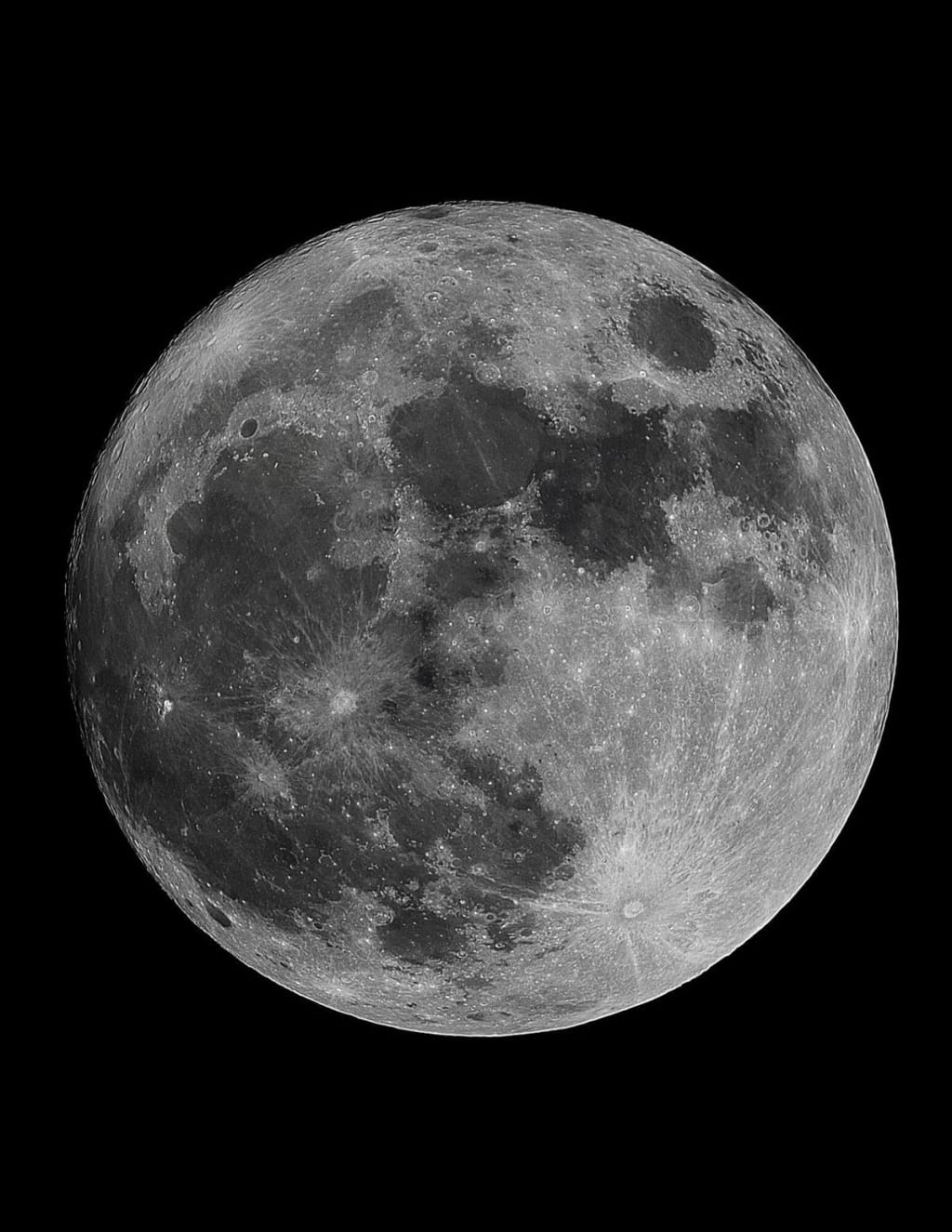
Understanding the Full Moon: A Simple Guide
The Full Moon is a fascinating and beautiful phase of the Moon that occurs when the Sun, Earth, and Moon are perfectly aligned. At this moment, the entire face of the Moon visible from Earth is bathed in sunlight, making it look like a big, glowing orb in the sky. But what exactly happens during a Full Moon, and why does it seem so special?
What is the Full Moon?
A Full Moon happens when the Moon is on the opposite side of Earth from the Sun. This alignment means we see the Moon fully illuminated, with no shadows cast. However, sometimes the Moon may appear to be only 99.9% full. This slight difference occurs because the Moon’s orbit is tilted about 5° relative to Earth’s orbit around the Sun. This tilt can make the Moon look a bit less than fully lit from our perspective.
The Moon is constantly moving, so the exact moment of the Full Moon is technically only for an instant. This moment can occur at any time of day or night depending on where you are on Earth. Because of this, the Moon might appear full the night before or after the exact Full Moon time, making it tricky to tell the difference between a Full Moon and a nearly full Moon.
Why Does the Moon Appear Upside-Down?
Depending on where you are on Earth, the Moon might look different. For example, people in the Southern Hemisphere see the Moon upside-down compared to people in the Northern Hemisphere. This is because of the way we view the Moon from different angles on our planet.
Lunar Eclipses and Full Moons
Lunar eclipses occur when the Moon passes through Earth’s shadow. This happens only during a Full Moon when the Moon aligns with the lunar nodes, the points where the Moon's orbit crosses Earth’s orbit around the Sun. If the Moon reaches one of these nodes during a Full Moon, Earth’s shadow can darken the Moon, creating a lunar eclipse.
Interestingly, solar eclipses, which happen when the Moon casts its shadow on Earth, occur when the Moon is close to these nodes around New Moon.
Supermoons and Micromoons
The Moon’s orbit around Earth is not a perfect circle; it's elliptical. This means the Moon has two key points in its orbit: perigee (closest to Earth) and apogee (farthest from Earth). When a Full Moon occurs near perigee, it’s called a Supermoon. A Supermoon looks larger and brighter than usual because the Moon is closer to us. Conversely, when a Full Moon happens near apogee, it’s known as a Micromoon and appears smaller and dimmer.
How Many Full Moons Are There in a Year?
Typically, there are 12 Full Moons in a year, one for each month. However, due to the differences between the calendar year and the Moon’s cycle, some years have 13 Full Moons. When this happens, the extra Full Moon is often referred to as a Blue Moon. This doesn’t mean the Moon turns blue; it’s just a term for an extra Full Moon in a year.
The Moon’s Rocking Motion
The Moon doesn’t stay perfectly still as it orbits Earth. It rocks slightly north and south and wobbles a bit east and west. This motion, known as lunar libration, allows us to see about 59% of the Moon’s surface over time, although we only see 50% at any one moment.
Tides and the Full Moon
The gravitational pull of the Moon affects Earth’s oceans, causing tides. During Full Moons and New Moons, the combined gravitational forces of the Moon and the Sun create the highest and lowest tides, known as spring tides or king tides. These are the most noticeable and dramatic tides.
Phases of the Moon
The Full Moon is the third of the four primary Moon phases. The cycle starts with the New Moon, followed by the First Quarter Moon, then the Full Moon, and finally the Third Quarter Moon. Between these primary phases are four intermediate phases: Waxing Crescent, Waxing Gibbous, Waning Gibbous, and Waning Crescent. The entire cycle takes about 29.5 days.
Cultural and Religious Significance
The Full Moon has been important in human culture for thousands of years. For example, the date for Easter is based on the Full Moon and the vernal equinox. The Moon has inspired various deities, such as the Roman goddess Luna and the Norse god Máni. Historically, people believed the Full Moon could influence mental health and even cause supernatural events, like transforming people into werewolves.
Even today, ancient names for Full Moons, such as the Harvest Moon and the Strawberry Moon, are still used and celebrated. These names often reflect the time of year and the seasonal changes.
In summary, the Full Moon is more than just a pretty sight in the sky. It’s a complex and intriguing event that ties into our planet’s tides, our calendar, and our cultural history. Whether you’re gazing at a Supermoon or just enjoying a clear night sky, the Full Moon is a reminder of the beautiful and mysterious ways our universe works.
About the Creator
SK
Sajawal is an 18-year-old student in Class 13, known for his curiosity and determination. With his fair complexion and thoughtful demeanor, Sajawal stands out among his peers. He is dedicated to his studies and has a passion for storytellin
Impressive Artwork by Odilon Redon
French symbolist artist Odilon Redon was famous for his drawings in the 1880s. The artist’s artworks were mentioned in the popular 1884 novel “A Rebours,” or “Against the Grain,” by Joris-Karl Hysmans. His later artworks were created in oils and pastels. He developed an interest in Hinduism and Buddhism, and this interest in mysticism is reflected in his works of art.
By Rasma Raisters4 days ago in Art
What Is A5 Service on Mercedes and When Do You Need It?
If you’re a Mercedes‑Benz owner, you’ve likely seen a maintenance message pop up on your dashboard — perhaps showing something like “Service A5 due”. But what exactly is a5 service on Mercedes, why it matters, what it includes, and how much it costs? This complete, easy‑to‑understand guide answers all those questions so you can keep your luxury vehicle running smoothly and avoid costly repairs down the road.
By Vincent Otiri5 days ago in Art




Comments
There are no comments for this story
Be the first to respond and start the conversation.