
Etihad Rail Tests UAE’s First Magnetic Levitation Rail in the Middle East: A New Era for Transport Innovation
“Etihad Rail pioneers magnetic levitation technology in the UAE, promising faster, quieter, and more energy-efficient rail travel across the Middle East.”

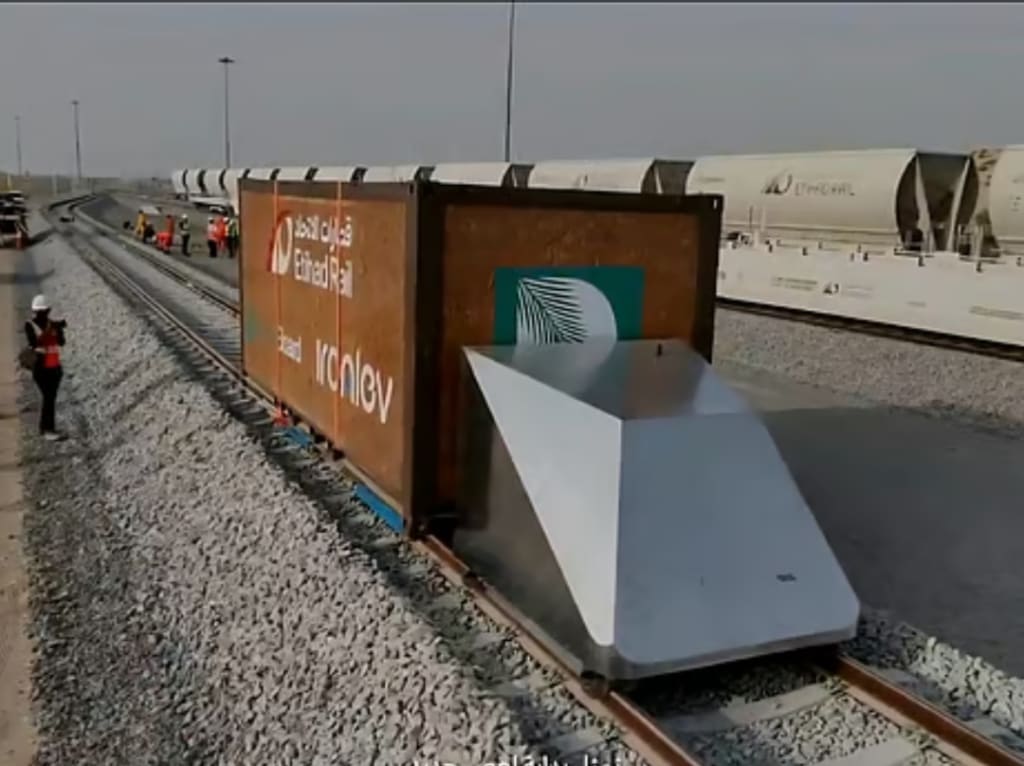
Dubai, UAE — January 28, 2026 — In a historic leap for transportation technology in the Middle East, Etihad Rail has successfully tested the UAE’s first magnetic levitation (maglev) rail system, marking a major milestone in the nation’s efforts to revolutionize rail travel and logistics. This groundbreaking initiative, developed in partnership with Italian engineering firm IronLev, blends cutting‑edge innovation with sustainability, promising quieter, faster, and more energy‑efficient rail operations.
---
From Wheels to Levitation: What Makes This Technology Special
At the heart of this breakthrough is passive ferromagnetic levitation — a novel maglev technique that uses permanent magnets to lift a rail carriage or platform slightly above the rails, eliminating direct physical contact and therefore friction. Unlike conventional maglev systems that demand specially built and energy‑intensive tracks, this version operates on existing rail infrastructure while still delivering many of the key performance benefits of maglev technology.
This approach represents a hybrid solution — merging the efficiency of magnetic levitation with the practicality of the UAE’s expanding rail network, currently extending across all seven emirates.
---
A Successful Trial at Al Faya Depot
The trial took place at Etihad Rail’s Al Faya Depot in Abu Dhabi, where engineers demonstrated the system’s capability by levitating and transporting a 7‑ton container over a 1.2‑kilometre stretch of track. With no wheel‑to‑rail contact, the system drastically reduced friction and noise, while showing promising performance results.
Early data from the test indicate that this technology can reduce energy consumption by up to 29 percent compared with traditional rail systems — a significant improvement that could also lower long‑term maintenance costs by reducing wear on infrastructure.
By removing mechanical contact, maglev systems can achieve smoother motion, greater reliability, and a quieter ride — factors that bring substantial advantages for both freight and future passenger services.
---
Why It Matters: Sustainability and Efficiency
The UAE has been aggressively pursuing sustainable infrastructure solutions as part of its broader Net Zero 2050 strategic initiative. By integrating maglev technology into its national rail network, Etihad Rail is not just enhancing performance — it’s aligning with national goals to reduce carbon emissions, conserve energy, and promote environmentally responsible transportation.
Reduced mechanical wear means longer infrastructure life and fewer replacements, cutting both resource use and operational disruptions. This is especially valuable for a network that aims to connect the entire country — from border‑to‑border freight lines to high‑speed passenger services targeted for full launch later in 2026.
---
A Look Ahead: What Comes Next?
While the current test focused on moving cargo, the implications extend far beyond freight. Etihad Rail is gearing up to launch its first passenger services this year, connecting major cities like Abu Dhabi, Dubai, Sharjah, and Fujairah. Plans include stations under construction and services that promise to dramatically shorten travel times and transform mobility across the Emirates.
With maglev technology showing potential for speeds up to 200 km/h and beyond, passengers could one day experience travel that feels more like gliding on air than riding on steel wheels. While additional trials and development work are expected before full operational integration, the success at Al Faya Depot marks a critical step toward that future.
---
Global Context: Why the UAE’s Maglev Test Matters Regionally
Maglev rail technology has been explored by countries such as Japan and China for decades, primarily in bespoke high‑speed corridors. However, few nations have attempted to adapt maglev to existing rail networks, due to the cost and complexity of traditional systems. The UAE’s approach — leveraging passive levitation on standard tracks — could offer an alternative model for other countries and transport operators seeking efficiency without exorbitant infrastructure upgrades.
This makes the UAE not just a regional leader, but a potential global innovator in practical, scalable maglev applications.
---
Conclusion: A Leap Toward the Future of Rail
Etihad Rail’s pioneering maglev test is more than a technological showcase — it’s a strategic milestone in the UAE’s transport evolution. By demonstrating that magnetic levitation can work on existing infrastructure with significant energy and maintenance benefits, this trial paves the way for cleaner, faster, and more efficient rail services.
As the country prepares to roll out its national passenger network later this year, and as sustainability continues to guide infrastructure development, this maglev initiative stands as a bold symbol of innovation. The future of travel in the UAE may soon be not just faster, but truly frictionless.
About the Creator
Keep reading
More stories from Salaar Jamali and writers in Art and other communities.
One Unchecked Box
"Republished" because it was the only way to add the embed for the newly recorded audio version of this story due to the Top Story badge. Plus it serves as a nice, informal announcement of the podcast's revival for another season (go subscribe!):
By Stephen A. Roddewig2 days ago in Fiction




Comments
There are no comments for this story
Be the first to respond and start the conversation.