
Discover the Secrets Behind the Kailasa Temple's Creation
Architectural Wonders of India: The Unveiling of the Kailasa Temple

Introduction
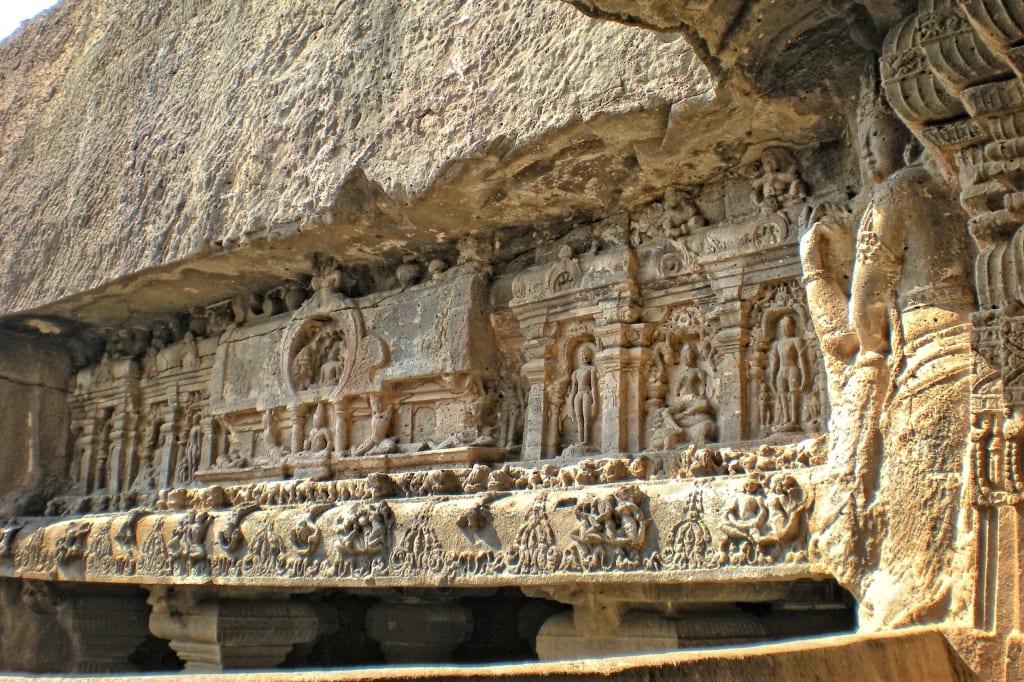
Join us on the first leg of our journey through India's architectural wonders, starting with the magnificent Kailasa Temple at Ellora. This series aims to educate readers about India's remarkable contributions to architectural innovation, exploring masterpieces that combine history, culture, and engineering. The Kailasa Temple, an awe-inspiring Architectural Wonder of India, stands as a testament to ancient artistry and devotion. Carved from a single basalt cliff, this 8th-century monolithic masterpiece (Cave 16) continues to captivate and mystify those who encounter it.
India’s vast heritage, from the Indus Valley Civilization to modern advancements, is a showcase of human achievement. The Kailasa Temple is a perfect example of India’s enduring legacy in art, science, and spirituality. Despite its monumental scale, this architectural marvel is not as widely known as other global landmarks, yet its quiet grandeur holds a powerful story waiting to be shared. As we uncover its history, we invite you to explore this extraordinary monument with us and discover its significance in both ancient and modern contexts.
A Mountain Reborn
Rising from the Charanandri Hills, the Kailasa Temple was sculpted by the Rashtrakuta dynasty around 757–783 CE. It stands 107 feet tall, 82 meters long, and 46 meters wide, and is carved directly into the basalt cliff. Over 200,000 to 400,000 tons of rock were removed during its creation, making it the world’s largest monolithic structure. Modeled after Mount Kailash, the sacred abode of Lord Shiva, the temple integrates divine inspiration with engineering genius, outshining other structures in Ellora’s UNESCO World Heritage Site.
The Heart of the Monolith
Inside the Kailasa Temple, visitors are welcomed by an imposing Nandi bull, facing a towering Shiva lingam in the sanctum. The temple’s 16-pillared mandapa leads to a Dravidian-style shikhara, each architectural detail serving both aesthetic and spiritual purposes. Carved from a single piece of rock, the temple’s unbroken form withstood destruction attempts, including a 1682 assault by Mughal Emperor Aurangzeb. Today, it remains an active spiritual center, with pilgrims praying in the same sacred space for over 1,200 years.
Faith and Power in Stone
The Kailasa Temple is more than just a religious monument. It symbolizes the Rashtrakutas’ political power and artistic ambition. Constructed in just 18 years, the temple is both a monument to Shiva and a display of the Rashtrakutas’ strength. The scale and intricacy of the Kailasa Temple surpass other similar temples across India, positioning it as one of the greatest architectural wonders of ancient India.
A Hidden Giant
Despite its monumental scale, the Kailasa Temple remains relatively unknown to many travelers. While global icons like the Taj Mahal dominate the spotlight, the Kailasa Temple’s active worship and lack of tourist crowds provide an opportunity for visitors to connect with this ancient wonder in a unique and meaningful way. It remains a hidden gem, waiting to reveal its secrets to those who venture off the beaten path.
Tourist Guide
Visitor's Guide to Kailasa Temple
What to Expect: Be prepared for varied temperatures; the region can reach up to 40°C during the summer months from March to June. Optimal visiting months are from October to February, when the climate is more temperate. Comfortable footwear is recommended, as exploring the caves typically takes between two to three hours. Note that food is not permitted inside, so it's advisable to pack light snacks for the day.
Useful Resources:
- Ellora Caves Official ASI Site – Info and updates.
- Maharashtra Tourism – Travel tips.
- Indian Railways – Train bookings.
- Chhatrapati Sambhajinagar Airport – Flight schedules.
This guide ensures you are well-prepared for a memorable visit to one of India's most remarkable archaeological sites, where history and spirituality meet the artistry of ancient craftsmanship.
Conclusion
This first blog in our series on the Kailasa Temple has provided an introduction to one of India’s most impressive architectural wonders. Stay tuned for our next post, where we will explore the engineering feats that made the temple’s construction possible. Join us as we continue our exploration of India’s architectural legacy.
Call-to-Action
Don’t miss the chance to visit the Kailasa Temple. Plan your trip today to experience one of India’s greatest architectural wonders!
Visit here to know more:
https://hinduinfopedia.com/architectural-wonder-of-india-the-kailasa-temple-ellora/
About the Creator
Jai Kishan
Retired from a career as a corporate executive, I am now dedicated to exploring the impact of Hinduism on everyday life, delving into topics of religion, history, and spirituality through comprehensive coverage on my website.
Keep reading
More stories from Jai Kishan and writers in Art and other communities.
Holi 2025: A Festival of Color Amidst Social Divisions
Introduction With Holi just around the corner on March 14, 2025, the excitement is palpable across India. Holi, a festival that signifies the triumph of good over evil and the arrival of spring, is celebrated with colors, sweets, and laughter. Yet, in recent years, growing communal tensions have begun to cast a shadow over the festival. In some areas, incidents of disruptions have raised concerns about whether Holi can continue to be a unifying force in Indian society.
By Jai Kishan10 months ago in Art
What Voice Cloning Technology Means for Creators and Digital Identity
The rise of artificial intelligence has reshaped the creative landscape in countless ways, from AI-generated visual art to automated music composition, and one of the most intriguing frontiers today is voice cloning. With tools that let users clone your voice using only a short sample of speech, creators and digital communicators are discovering new ways to produce audio content that feels natural and expressive.
By aliyashahzadi6 days ago in Art
Introduction to Organic Solutions
In the realm of fitness, the role of nutrition cannot be overstated, and organic supplements are increasingly recognised as essential components of a well-rounded training regime. Unlike their synthetic counterparts, organic supplements are derived from natural sources, ensuring that fitness trainers can provide their clients with products that are free from harmful additives and chemicals. This not only promotes better health but also supports the body’s natural processes, thereby enhancing overall performance and recovery.
By Organic Products 4 days ago in Art




Comments
There are no comments for this story
Be the first to respond and start the conversation.