

Italian artist Antonio Canova was known for his neoclassical sculpture. He was praised for his marble artworks blending grace with heroic themes. The artist had the ability to make stone-cold sculptures practically come to life. This brought him great acclaim across Europe during the late 18th and early 19th centuries.

Colossal Head of Napoleon Bonaparte was created in 1803. It was designed to showcase Napoleon’s powerful presence. The sculptor utilized a clay model during several sittings with Napoleon, capturing essential features and expressions. It was the artist’s vision to portray Napoleon as a heroic figure, communicating both the strength and complexity of the political leader and emphasizing his status.
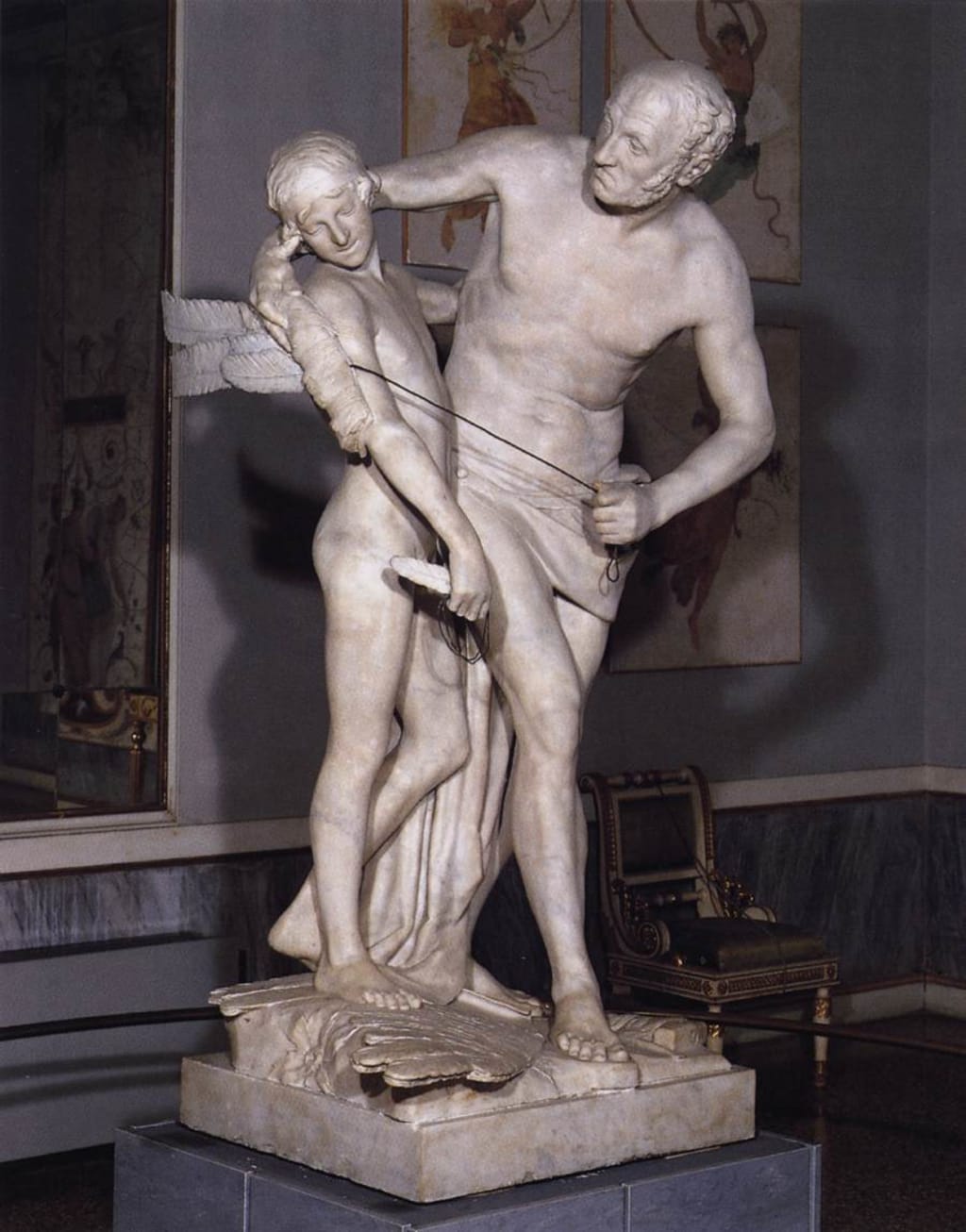
The statue of Daedalus and Icarus depicts a pivotal moment in Greek mythology when Daedalus affixes wings to his son, Icarus. This sculpture was done in true neoclassical style. The realistic-looking interplay between father and son emphasizes themes like ambition and hubris.
Hercules and Lichas is a sculpture completed in 1815. This realistic artwork in marble depicts the precise moment when Hercules, filled with rage, slaughters and then throws Lichas into the sea. It is a dramatic scene that illustrates the depth of human emotion and highlights the feelings of betrayal and fury. The sculptor had the ability to capture Hercules’ muscular form and shows Lichas’ terrified expression. The sculpture can be seen at the Louvre in Paris, France.
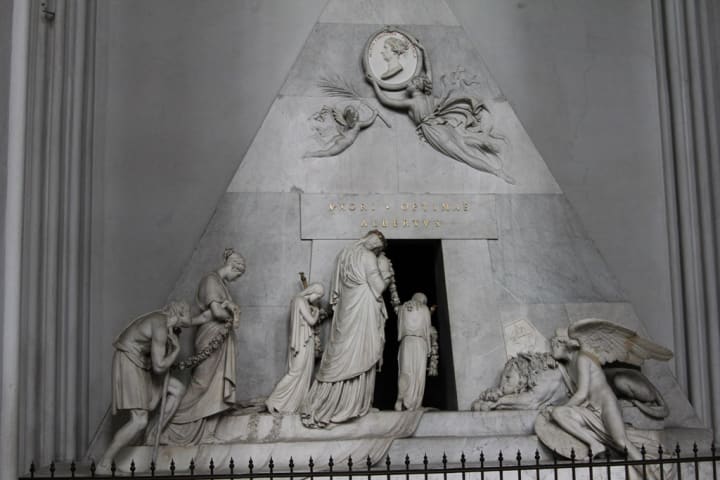
The Monument to Archduchess Maria Christina was commissioned by Duke Albert of Saxony-Teschen in 1798. The design features a large pyramid that was inspired by the ancient Roman Pyramid of Caius Cestius. Mourning figures enter through a dark doorway, and at the center a woman carries the urn of the archduchess, flanked by two children. To one side, another woman helps an elderly man up the steps, which symbolizes the passage of time through generations. It is located in the Augustinian Church in Vienna, Austria.

Pauline Bonaparte as Venus Victorious was created between 1804 and 1808. Pauline Bonaparte was an imperial French princess and the sister of Napoleon I. It showcases the sculptor’s brilliant skill at sculpting. It depicts Pauline reclining on a chaise lounge, embodying the classic imagery of Venus, the goddess of love and beauty. This is both a tribute to classical traditions and a nod to her seductive allure. Canova placed a golden apple in Pauline’s left hand, thereby linking the artwork to the myth of the Judgement of Paris. The sculpture gained admiration for its extraordinary balance between ideal beauty and naturalism. Today, it remains an iconic representation of the era and a testament to Canova’s mastery in neoclassical sculpture.
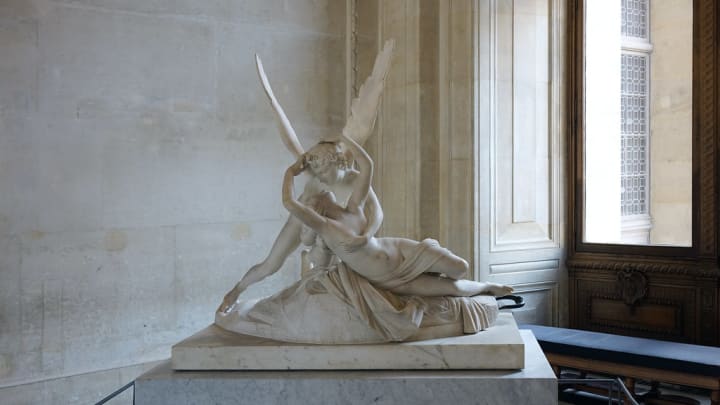
Psyche Revived by Cupid’s Kiss was created between 1787 and 1793. The sculpture captures the moment from the myth of Psyche and Cupid of the intense love between these two figures. It occurs at the time when Psyche succumbs to deadly fumes after opening a forbidden flask, and Cupid is there to revive her. It appears as if these figures come to life in marble and illustrate the power of love and the triumph over adversity.
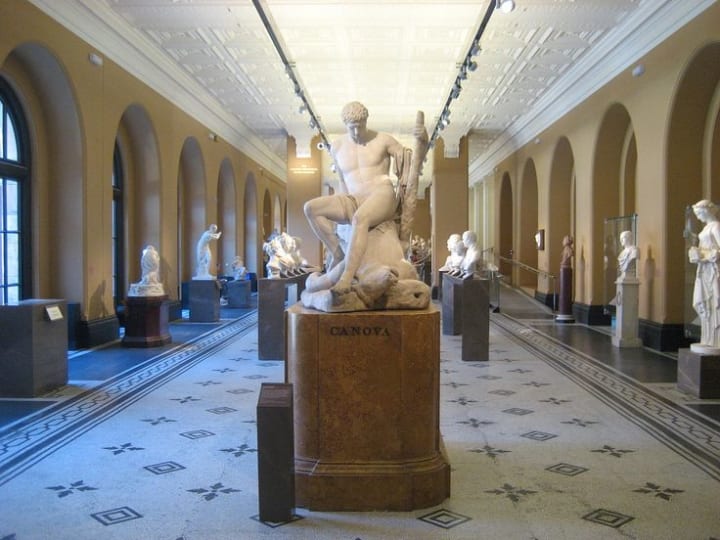
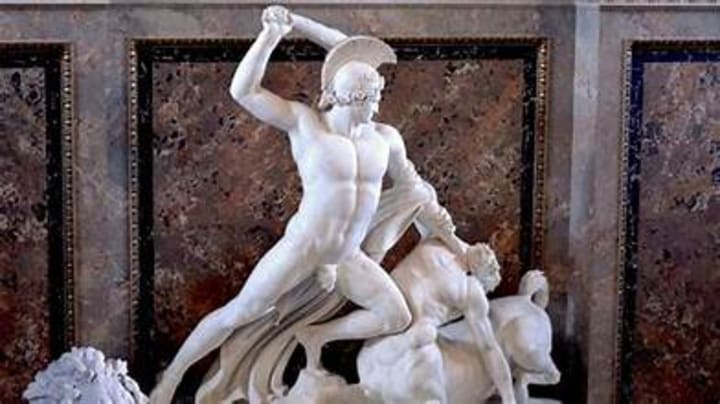
Theseus and the Minotaur was created by the sculptor between 1781 and 1782. It captures Theseus sitting triumphantly on the lifeless Minotaur. This moment is symbolic of the intelligence that prevails over brute force. This became Canova’s first major neoclassical sculpture and can be found at the Victoria and Albert Museum in London, England.
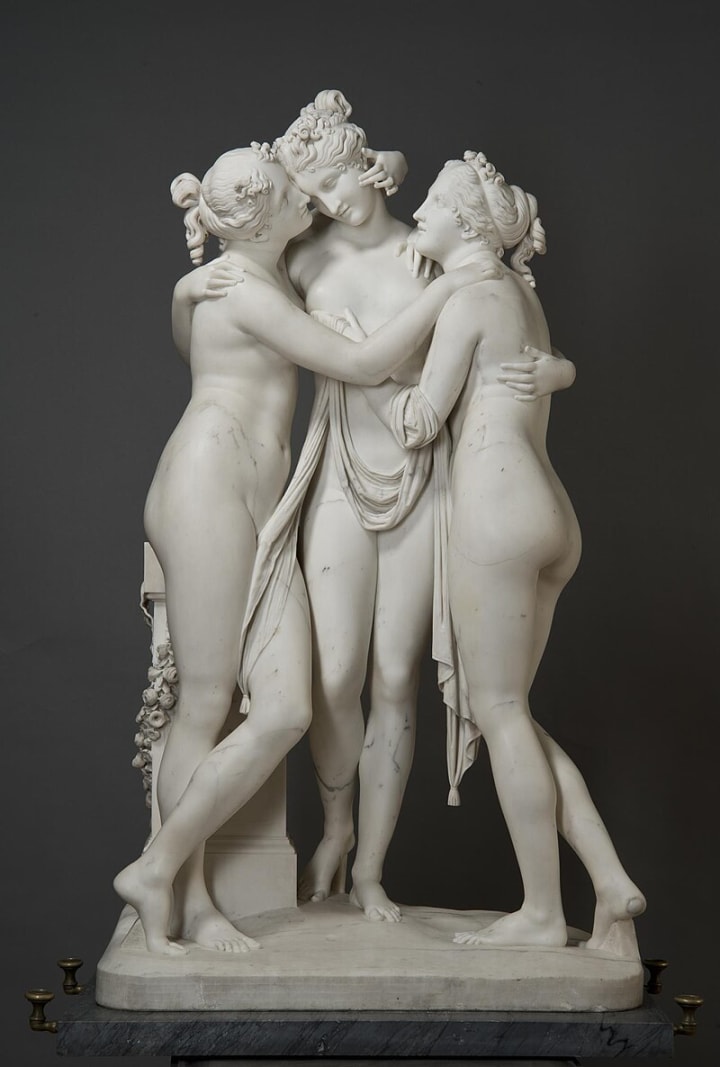
The Three Graces is a sculpture created between 1814 and 1817 that highlights the sculptor’s exceptional talent with marble sculpting. This artwork features three mythological figures, Euphrosyne, Aglaia, and Thalia, who embody mirth, elegance, and youth. Each figure embraces another, putting emphasis on friendship and affection. The sculpture can be viewed at the Hermitage Museum in St. Petersburg, Russia.
About the Creator
Rasma Raisters
My passions are writing and creating poetry. I write for several sites online and have four themed blogs on Wordpress. Please follow me on Twitter.
Keep reading
More stories from Rasma Raisters and writers in Art and other communities.
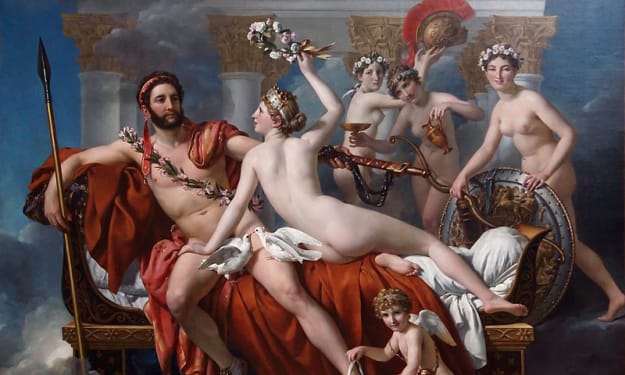
Impressive Artwork Jacques Louis David
Artist Jacques Louis David was among the leading neoclassical painters of his time. His initial mentor was Francois Boucher, who was the court painter of Louis XV and a leading Rococo artist. This French artist joined the revolutionaries and supported Napoleon Bonaparte, eventually becoming his painter.
By Rasma Raisters2 months ago in Art



Comments
There are no comments for this story
Be the first to respond and start the conversation.