Life
Why Smart Toothbrushes Might Be the Next Big Thing in Personal Health. AI-Generated.
Brushing your teeth is one of those small, automatic tasks you rarely think about. You do it every morning and night, just like everyone else. But what if this simple daily habit is about to change — not because of toothpaste flavors or bristle shapes, but because of artificial intelligence?
By OneDayNight2 months ago in Writers
Where Hearts Remember Humanity” - A Poem About the Gentle Power of Love. AI-Generated.
Where Hearts Remember Humanity” - A Poem About the Gentle Power of Love A moving and captivating 800-word poem about love's perpetual bond with humanity. Between love and who we truly are, when we live deeply and allow kindness, compassion, and courage to tame our fears. A faithful ode to the light that lives, even in a broken world and who restores our hope in our human connection and the spirit of our people.
By Hustle Nest2 months ago in Writers
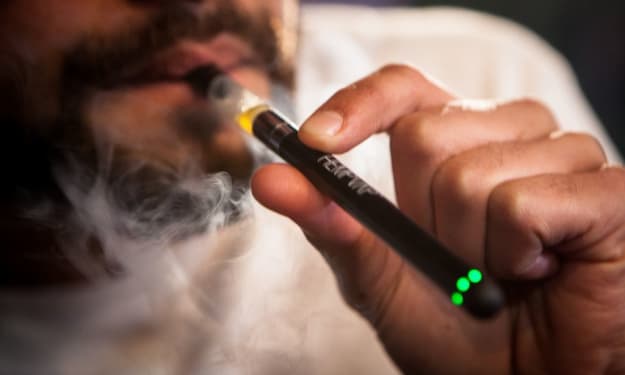
What Are the Health Concerns Behind Vape Bans?
Vaping has gained a lot of attention over the past few years. Vapes were initially made to help adults break the habit of smoking cigarettes. Vapes deliver nicotine more efficiently as compared to cigarettes and are available in multiple flavors, including fruity blends like the blueberry raspberry vape.
By Sofia Carson2 months ago in Writers
Good vs. Wicked: Why Morality Is No Longer Black and White
In today’s world, the line between good and wicked has become increasingly blurred. What once seemed like clear moral boundaries have now faded into shades of gray, where right and wrong are often judged by personal feelings, social trends, and convenience. We live in an age of constant change, where the internet and modern media shape our views faster than our conscience can keep up. People are no longer content with simple answers; they seek justifications for every action, and morality has become something flexible rather than firm. Once upon a time, good meant kindness, honesty, and sacrifice, while wickedness meant cruelty, greed, and lies. But now, those definitions depend on perspective. A person fighting for justice might be seen as a hero by some and as a troublemaker by others. A movie villain might be admired because he seems “real” or “relatable,” even if his choices are dark. The more we try to understand everyone’s motives, the more confused we become about what’s right. Society’s moral compass is spinning, and people often choose comfort over conscience. We applaud those who “do what they want” and celebrate independence so much that we forget the importance of responsibility. In this new era, morality has become more about emotions than ethics. People ask, “How does it make me feel?” instead of “Is it right?” This shift has led to a kind of moral fatigue, where people stop caring about what’s good and focus only on what works for them. It’s not that humanity has lost its heart—it’s that we’ve complicated it. Technology and global media constantly expose us to every shade of human behavior, from kindness to cruelty, from justice to chaos. We see so many versions of truth that it becomes hard to pick one. When everyone’s opinion is valid, no one’s moral ground feels stable. Movies, music, and social media now glorify rebellion and “breaking the rules,” while traditional values are often mocked as outdated. The idea of “wicked for good” or “evil with a purpose” has become popular, teaching us that bad actions can somehow lead to good results. This thinking might sound deep, but it’s also dangerous—it normalizes harm as long as it serves a goal. A society that accepts “necessary evil” too easily risks losing its sense of real goodness. True goodness, after all, is not about popularity or reward; it’s about integrity when no one is watching. The world today often confuses being confident with being kind, and being powerful with being right. But strength without empathy becomes domination, and intelligence without ethics turns into manipulation. The most worrying part is that younger generations are growing up surrounded by stories that mix good and bad until they look the same. In entertainment, villains are portrayed as victims, and heroes are criticized for having flaws. While this makes stories more human, it also creates confusion about what to admire or reject. Real life is messy, of course, but that doesn’t mean morality should disappear. We need balance—understanding people’s struggles while still holding on to clear principles of right and wrong. Morality isn’t about judging others harshly; it’s about guiding ourselves wisely. It’s about asking whether our actions bring more light or more darkness into the world. Goodness still exists—it lives in compassion, honesty, and courage—but it needs to be defended, not diluted. Being good doesn’t mean being perfect; it means choosing what’s right even when it’s hard. The world may no longer be black and white, but that doesn’t mean all colors are equal. There are still shades of truth, fairness, and love that shine brighter than deception and greed. The real challenge today is not to return to old moral rules blindly, but to rebuild a sense of conscience that fits our complex world without losing its clarity. Morality should evolve, yes, but it should never vanish. In the end, good and wicked may always coexist, but it’s our choices that decide which one grows stronger. The future will depend on whether we choose to justify wickedness—or rediscover the courage to be good in a world that no longer sees goodness as simple.
By Kashif Wazir2 months ago in Writers
The Voice Refined Through Another Medium
For centuries, words have been the vessels of human thought, the means by which understanding passes from one heart to another. From quills and typewriters to keyboards and screens, the tools have changed, but the mind behind the message has not. Now, in the age of artificial intelligence, some claim that words refined through its assistance cannot be fully human. They say that if an essay or reflection has been shaped, polished, or expanded by an AI tool, then its authenticity is somehow diminished. Yet that belief mistakes process for purpose. The truth of writing does not depend on how the words are arranged, but on who the words come from.
By Peter Thwing - Host of the FST Podcast2 months ago in Writers
The Enduring Allure of Romantic Poetry: The Character and Use of Love, Emotion, and the Language of the Heart. AI-Generated.
The Enduring Allure of Romantic Poetry: The Character and Use of Love, Emotion, and the Language of the Heart Learn about the beauty of Romantic poetry - how it depicts, reveals, and genuinely expresses the nature of love, passion, and connection to human beings. Discover what Romantic poetry has meant to so many throughout history; explore its evolution of emotional meaning and capacity for inspiration in 2025.
By Hustle Nest2 months ago in Writers