
How a Smart Toothbrush Made Me Slow Down and Pay Attention
A small gadget quietly changed the way I think about routine and self-care.
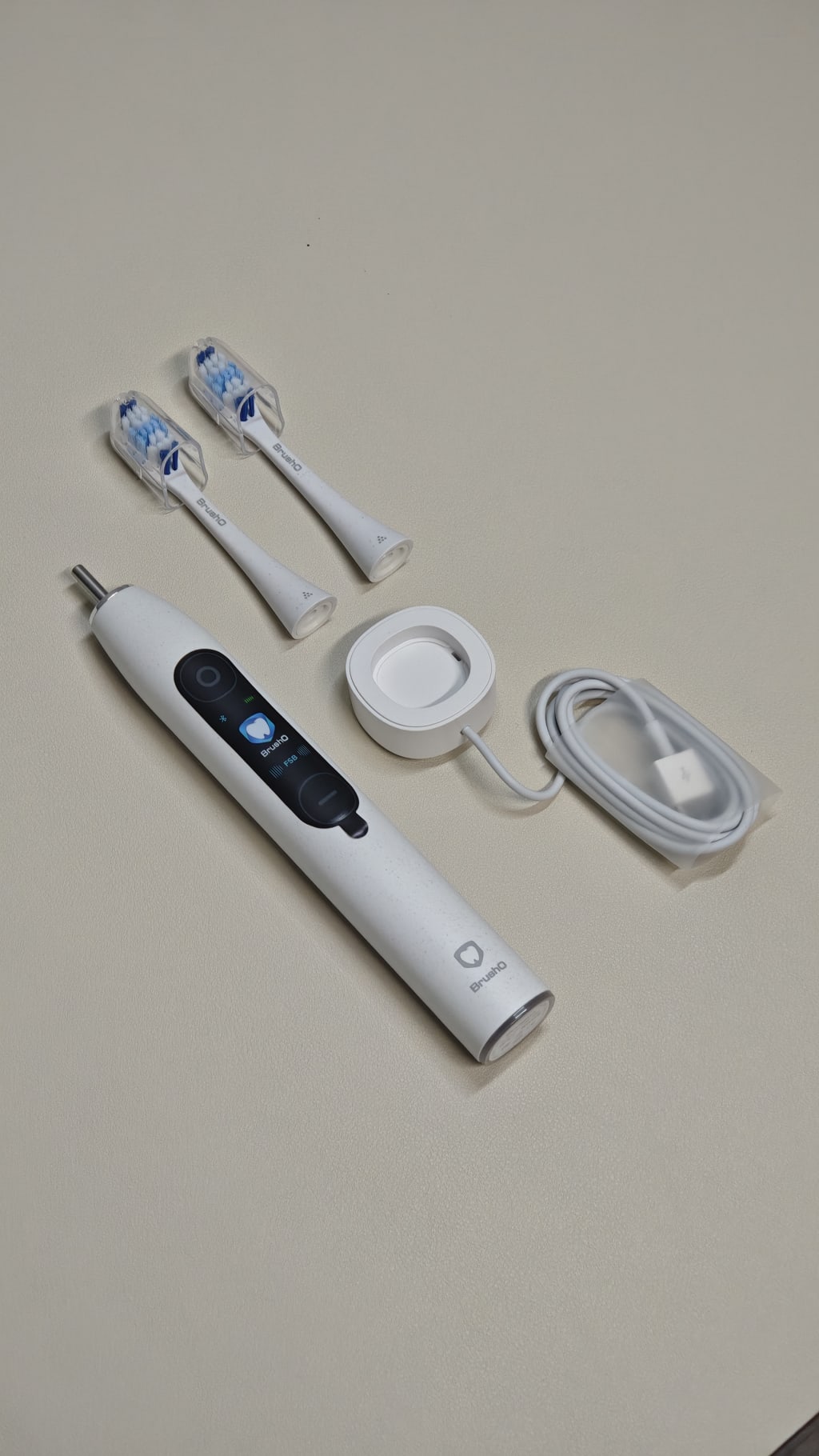
I used to think I was good at brushing my teeth.
Two minutes, twice a day — it’s automatic, something I do while scrolling through messages or half-awake in the morning.
It’s never something I thought about.
That changed when I started using a smart toothbrush that gives feedback on how you brush — not in a judgmental way, but through light signals and gentle data.
At first, I found the idea ridiculous. Why would anyone need technology for something as basic as brushing?
But a few weeks later, I realized the toothbrush hadn’t just cleaned my teeth; it had made me rethink how I approach small, repetitive habits in general.
The First Morning
The first morning I tried it, I was greeted by a quiet hum and a soft ring of light around the brush head.
As I brushed, the color shifted — blue, red, then finally green.
Later I learned what that meant: blue for too gentle, red for too much pressure, green for just right.
When I finished, my phone displayed a brushing score: 83 out of 100.
Apparently, my technique wasn’t perfect.
Instead of feeling silly, I felt oddly curious.
I tried again that night, slower this time, and the score went up to 89.
By the end of the week, I had reached 95.
Something about that quiet feedback loop — immediate, visual, and non-judgmental — had triggered a small shift in my brain.
Awareness in a Mundane Routine
Brushing had always been mechanical for me.
But with the light ring responding to every move, I suddenly paid attention — how hard I pressed, which side I always rushed through, how uneven my rhythm was.
It wasn’t about perfection; it was about awareness.
That awareness spilled over into other areas of my morning.
I started noticing how fast I drink coffee, how quickly I scroll through headlines, how often I rush through things that deserve a little care.
It’s strange how one tiny feedback system can make you present in such an ordinary act.
The Psychology of Gentle Feedback
We’re surrounded by technology that demands attention — constant pings, reminders, and comparisons.
This device felt different. It didn’t buzz when I made a mistake; it glowed.
It showed instead of scolding.
That quiet approach worked better than any app notification ever could.
It didn’t make me anxious about performance — it simply guided me.
And over time, I realized I was brushing better not because I had to, but because I wanted to.
Consistency, Not Perfection
A few weeks in, the app congratulated me for staying consistent.
There was even a note offering a free replacement brush head as a thank-you for keeping up the routine.
I laughed when I saw it — not because of the gift, but because it felt like a small acknowledgment.
We rarely get thanked for maintaining simple, invisible habits.
No one celebrates you for brushing your teeth, getting enough sleep, or drinking water.
But maybe we should.
That quiet recognition, however small, reminded me that consistency is worth something — even when no one else sees it.
The Design That Gets Out of the Way
Beyond the feedback, the toothbrush itself is thoughtfully built.
It charges wirelessly on the same pad I use for my phone and lasts about a month and a half on a single charge.
It’s waterproof, which means I can rinse it freely or pack it for travel without worry.
But what impressed me most wasn’t the engineering; it was how invisible the technology became once I got used to it.
It didn’t feel like I was “using a gadget.”
It simply faded into the background — quietly supporting a small but essential part of my day.
What It Really Taught Me
After a month, I stopped checking the scores.
Not because I lost interest, but because the purpose had changed.
The act of brushing had become calmer, more deliberate, even meditative.
The feedback wasn’t about numbers anymore; it was about paying attention.
It reminded me that good habits don’t need drama or external pressure — they just need quiet consistency and a bit of awareness.
We live in a world obsessed with optimization.
But sometimes, technology doesn’t have to push us harder.
It can simply slow us down and help us notice what we’re already doing — and do it just a little bit better.
Final Reflection
When people hear “AI toothbrush,” they imagine something futuristic or unnecessary.
But for me, it became something unexpectedly human.
It didn’t just track a task; it gave that task meaning.
Maybe that’s the real promise of “smart” devices — not making us faster, but helping us care a little more about the small, quiet rituals that make up our days.
About the Creator
Keep reading
More stories from OneDayNight and writers in Writers and other communities.
Why Smart Toothbrushes Might Be the Next Big Thing in Personal Health
Brushing your teeth is one of those small, automatic tasks you rarely think about. You do it every morning and night, just like everyone else. But what if this simple daily habit is about to change — not because of toothpaste flavors or bristle shapes, but because of artificial intelligence?
By OneDayNight2 months ago in Writers



Comments
There are no comments for this story
Be the first to respond and start the conversation.