
Party Pills: The Rise and Fall of Ecstasy in Club Culture
Party Pills: The Rise and Fall of Ecstasy in Club Culture.

Party Pills: The Rise and Fall of Ecstasy in Club Culture
Introduction
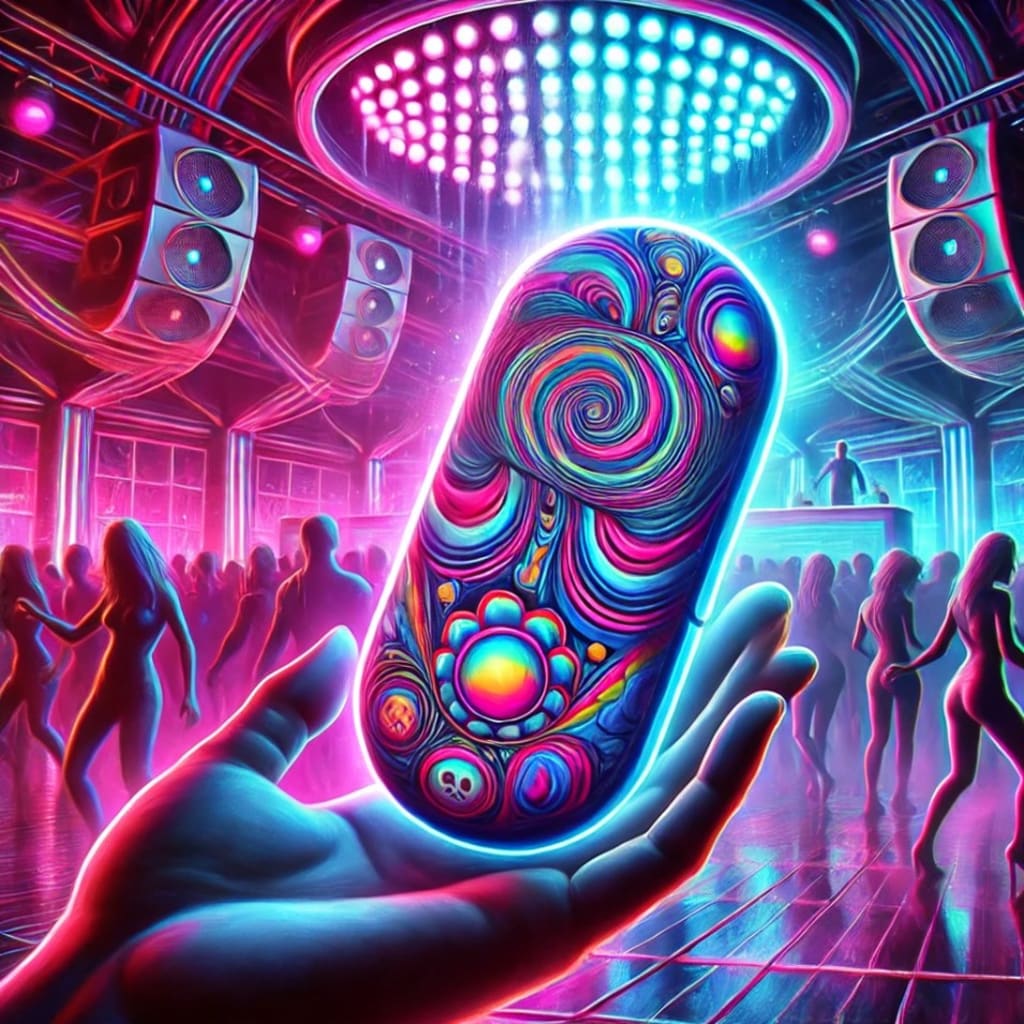
Picture this: the sweaty, pulsating heart of a nightclub, neon lights slicing through the air, bass pounding so hard you feel it in your chest. Now imagine a tiny pill, packed with promise, which could make you feel like you are the king of this sweaty, glowing universe. Welcome to the wild world of Ecstasy—a drug that defined a generation, set dance floors on fire, and turned ordinary people into rave royalty. For many of us who lived through the nineties, Ecstasy was not just a drug; it was the elixir of life, the magic ingredient that transformed nights out into transcendent experiences. It was more than just a high—it was a culture, a movement, and for some, a way of life.
But like all good things, the Ecstasy era was not destined to last forever. What started as a euphoric escape eventually morphed into a cautionary tale of health risks, legal crackdowns, and the inevitable comedown of a once-thriving subculture. This is the story of Ecstasy, from its chemical birth to its meteoric rise in the club scene, and the subsequent crash that left many wondering if the party was really worth it.
We will take a trip down memory lane, exploring how a drug synthesized in a German lab in the early 1900s became the heartbeat of the rave scene, how it shaped and was shaped by the music, fashion, and attitudes of the time, and how it eventually fell from grace. And, just when you think it is all over, we will delve into the surprising resurgence of MDMA (the scientific name for Ecstasy) in the world of psychotherapy—proving that much like the dance floor at 3 a.m., the story of Ecstasy is far from finished.
So, pop on your favourite trance anthem, grab a bottle of water, and let us dive into the highs and lows of one of the most iconic substances in club culture history.
The Birth of Ecstasy: Chemical and Cultural Origins
Discovery and Development of MDMA
Believe it or not, the story of Ecstasy starts not in the sweaty depths of a 90s rave but in the buttoned-up laboratories of early 20th-century Germany. Back in 1912, some clever boffins at the pharmaceutical company Merck were on the hunt for a drug that could stop abnormal bleeding. What they stumbled upon instead was MDMA (3,4-methylenedioxymethamphetamine), a compound that would remain largely ignored for decades. Little did they know, this little molecule would eventually swap its lab coat for glow sticks and head straight to the dance floor.
MDMA’s journey from dusty lab notes to the nightlife scene is a story of serendipity and scientific curiosity. Fast forward to the 1970s, when an American chemist named Alexander Shulgin rediscovered MDMA and recognised its unique potential. Unlike the trippy, mind-bending psychedelics like LSD, MDMA did not send you on a hallucinatory journey through the cosmos. Instead, it opened up a different kind of trip—one that made you feel connected, empathetic, and downright euphoric.
Shulgin was not content to keep this discovery to himself. He began sharing MDMA with friends, therapists, and researchers, setting the stage for its initial use in psychotherapy. Imagine lying on a therapist’s couch, feeling the walls of your emotional defences melt away as you confront your deepest fears and traumas. That is what MDMA promised—a breakthrough in therapeutic treatments, long before it became the go-to party drug for an entire generation.
Early Uses of MDMA
In the early days, MDMA was a tool for healing rather than hedonism. A select group of therapists used it to help patients work through everything from PTSD to marital problems. The drug’s ability to foster empathy and dissolve anxiety made it a powerful ally in the therapeutic arsenal. For a while, it seemed like MDMA might revolutionise the world of mental health—until, of course, it found its way out of the therapist’s office and into the hands of partygoers.
By the early 1980s, word of MDMA’s “magic” had spread beyond the confines of therapy. It was not long before the drug, now known as “Ecstasy,” became a favourite in the underground dance scenes of cities like New York, Los Angeles, and San Francisco. The transition from a therapeutic tool to a party drug was as inevitable as a bass drop at a rave. Once clubbers got a taste of Ecstasy’s euphoric effects, there was no turning back.
Ecstasy did not just alter moods; it transformed entire nights out. Suddenly, the music sounded better, the lights looked brighter, and everyone around you felt like your best mate. The early eighties saw the birth of a new kind of nightlife, one where the barriers between people dissolved in a haze of shared euphoria. And in the UK, this new culture was about to explode in a big way.
The Early Days of Ecstasy in Nightlife
The introduction of Ecstasy to the nightlife scene was nothing short of revolutionary. As the eighties progressed, Ecstasy found its spiritual home in the burgeoning rave culture—a movement that combined electronic music, wild fashion, and a communal ethos that resonated with the disillusioned youth of the time. The drug was the perfect complement to the thumping beats of acid house, which was rapidly taking over clubs and warehouses across the UK and beyond.
In 1988 and 1989, the UK experienced what is now known as the “Second Summer of Love.” During these heady months, Ecstasy and acid house music collided in a frenzy of outdoor raves, illegal parties, and underground gatherings. From the fields of rural England to the abandoned warehouses of Manchester and London, thousands of young people were drawn to these events, united by the hypnotic rhythms of the music and the collective high of Ecstasy.
It was a time of pure escapism—an antidote to the dreary realities of Thatcher’s Britain. For those few hours, under the influence of Ecstasy, everything seemed possible. Strangers became friends, the music became a universal language, and the night stretched on in an endless loop of euphoria and connection.
But like any good trip, the highs of Ecstasy would eventually give way to some pretty harsh realities. The rave scene was growing, and with it, so was the attention from law enforcement, the media, and the government. The days of carefree, blissed-out nights were numbered, and the party was about to face some serious scrutiny.
The Ecstasy Boom: The 1990s and the Golden Age of Club Culture
The Global Spread of Ecstasy
If the late eighties were the warm-up act, the nineties were the main event for Ecstasy and rave culture. What started as an underground movement in a few select cities soon exploded into a global phenomenon, with Ecstasy at the heart of it all. The nineties saw the drug spread like wildfire across Europe, North America, and beyond, becoming synonymous with the decade’s nightlife.
In the United States, cities like New York, Los Angeles, and Miami became epicentres of the burgeoning rave scene. Electronic dance music (EDM) was on the rise, and Ecstasy was the fuel that powered it. From the illegal warehouse parties in downtown LA to the glitzy nightclubs of South Beach, Ecstasy was everywhere. The drug’s ability to enhance the sensory overload of these events made it the perfect partner for the pulsing beats and dazzling lights of the rave scene.
Across the Atlantic, the UK was experiencing its own Ecstasy-fuelled revolution. The “Second Summer of Love” had set the stage, and by the early nineties, rave culture was firmly entrenched in the British psyche. Clubs like Manchester’s Hacienda became legendary, attracting ravers from all over the country. It was not long before the scene spread across Europe, with Berlin, Amsterdam, and Ibiza becoming key destinations for anyone looking to lose themselves in the music and the moment.
But it was not just the West that was getting in on the action. From Australia to South Africa, and even parts of Asia, the rave scene and its accompanying drug culture were taking root. Ecstasy became the common thread that connected ravers across the globe, creating a shared experience that transcended borders, languages, and backgrounds.
Ecstasy and the Rave Scene
The relationship between Ecstasy and the rave scene was nothing short of symbiotic. Raves were more than just parties—they were communal experiences that offered an escape from the mundane realities of everyday life. And Ecstasy was the key that unlocked the door to these euphoric, all-night dance marathons.
The drug’s effects—heightened empathy, tactile sensitivity, and a sense of euphoria—aligned perfectly with the values of the rave scene. The moment you popped a pill, the music took on new dimensions, the lights became more vivid, and the people around you felt like long-lost friends. This “group high” created a sense of unity and togetherness that was unparalleled in any other social setting. It did not matter who you were or where you came from—on Ecstasy, everyone was equal, and everyone was connected.
Rave culture was not just about the music, though. It was a full-blown subculture, complete with its own fashion, language, and ethos. Brightly coloured clothes, glow sticks, and elaborate costumes became the norm, with Ecstasy influencing not just how people felt, but how they expressed themselves. The rave scene was a celebration of individuality and freedom, where the only rule was to let go and be yourself.
But this carefree attitude came at a price. As the rave scene grew in popularity, it began to attract attention from law enforcement and the media. Reports of Ecstasy-related deaths and overdoses started to surface, casting a shadow over the scene. The rave culture that had once represented freedom and unity was now being painted as dangerous and reckless. And with that, the golden age of the rave was about to face some serious challenges.
Iconic Clubs and Events of the Ecstasy Era
The nineties were a golden age for clubs and events that became legendary within the Ecstasy-fuelled dance scene. These venues and gatherings did not just host parties—they defined an era.
Manchester’s Hacienda was one of the most iconic clubs of the time. Opened in 1982 by Factory Records, the Hacienda was at the heart of the “Madchester” scene, blending indie rock with the emerging acid house movement. With Ecstasy flowing freely on its dance floors, the club became a symbol of the city’s vibrant nightlife and a breeding ground for the rave culture that would soon sweep the UK.
In London, clubs like Ministry of Sound and Fabric set the standard for what a night out could be. Ministry of Sound, which opened in 1991, was one of the first clubs in the UK to focus exclusively on electronic dance music. Its state-of-the-art sound system and world-class DJs made it a mecca for dance music lovers. Fabric, which opened in 1999, continued this tradition, offering an immersive experience where music, art, and technology converged.
Ibiza, the Spanish island in the Mediterranean, became a global destination for those seeking the ultimate clubbing experience. Clubs like Space, Pacha, and Amnesia became legendary for their marathon parties, where the music did not stop until well into the next day. Ibiza’s reputation as a party paradise attracted people from all over the world, making it a key location in the global Ecstasy and dance music scene.
Massive raves and music festivals also became central to the Ecstasy experience. Events like the Love Parade in Berlin, which began in 1989, attracted millions of people to the streets of the city, transforming it into one giant dance floor. In the United States, the Electric Daisy Carnival (EDC) began in 1997 and quickly grew into one of the largest electronic music festivals in the world. These events not only showcased the music but also embodied the spirit of unity and freedom that defined the Ecstasy era.
Social and Cultural Impact
The impact of Ecstasy on society and culture in the 1990s was profound and far-reaching. As the drug became more popular, it began to influence various aspects of life beyond the dance floor.
One of the most significant areas of impact was in music. The rise of electronic dance music, particularly genres like house, techno, and trance, was intricately linked to the Ecstasy experience. DJs and producers began to create music specifically designed to enhance the effects of the drug, leading to the development of new sounds and subgenres.
Ecstasy also had a significant impact on fashion and art. The vibrant, colourful aesthetic of the rave scene was reflected in clothing, artwork, and design. The influence of Ecstasy could be seen in everything from the psychedelic visuals used in flyers and posters to the clothing worn by ravers. The drug’s impact on creativity and self-expression helped to fuel a wave of innovation and experimentation in art and design.
On a social level, Ecstasy played a role in breaking down traditional social barriers. The drug’s effects encouraged openness, empathy, and a sense of unity, creating an environment where people from diverse backgrounds could come together and connect. This sense of community and togetherness was a defining feature of the Ecstasy experience, and it contributed to the creation of a global network of like-minded individuals who shared a love of music, dance, and the sense of freedom that Ecstasy provided.
But as with any movement that gains traction, there were those who viewed it as a threat. The media, law enforcement, and governments began to turn their gaze toward the rave scene, and what they saw was not all peace, love, and unity. Reports of Ecstasy-related deaths, overdoses, and health risks started to surface, leading to calls for stricter regulation and enforcement. Despite these challenges, the cultural impact of Ecstasy in the 1990s was undeniable, and its influence can still be felt in the music, fashion, and social dynamics of today.
The Dark Side of Ecstasy: Risks and Controversies
Health Risks Associated with Ecstasy Use
As the saying goes, “What goes up, must come down,” and for many who dabbled in Ecstasy, the comedown was more than just a metaphor. The drug that had once been the key to unlocking euphoric nights out was also a Pandora’s box of potential health risks.
One of the most immediate dangers of Ecstasy was its effect on the body’s ability to regulate temperature. MDMA can cause hyperthermia, a condition where the body’s temperature skyrockets to dangerous levels. In the packed, sweaty environments of nightclubs and raves, this could be a deadly combination. Add to that the fact that Ecstasy also messes with your body’s thirst signals, and you had a recipe for disaster. Dehydration, hyperthermia, and even water intoxication (from drinking too much water in an attempt to stave off dehydration) were all very real risks for those who took Ecstasy.
Beyond the physical dangers, there were also psychological risks. While Ecstasy was known for producing feelings of euphoria and connection, the comedown could be brutal. Users often reported feeling anxious, depressed, and emotionally drained in the days following a night out. This crash, sometimes referred to as “Suicide Tuesday,” could leave people feeling worse than they did before they took the drug.
Long-term use of Ecstasy also raised concerns about neurotoxicity. Research suggested that repeated use of MDMA could damage serotonin-producing neurons in the brain, leading to long-term cognitive deficits, including memory problems, depression, and anxiety. While the extent of these effects was still a matter of debate, the potential for lasting damage was enough to make many users think twice.
Legal and Ethical Issues
As Ecstasy’s popularity grew, so did the scrutiny from law enforcement and governments around the world. What had started as a niche experience in the underground rave scene was now a global phenomenon, and authorities were not about to let it continue unchecked.
In 1985, the United States took a major step in the fight against Ecstasy by classifying MDMA as a Schedule I substance under the Controlled Substances Act. This meant that MDMA was now considered to have a high potential for abuse and no accepted medical use, putting it in the same category as heroin and LSD. Similar legal measures were adopted in the UK and other countries, effectively criminalizing the use, production, and distribution of Ecstasy.
The crackdown on Ecstasy had a significant impact on the rave scene. Law enforcement agencies began to target raves and clubs where Ecstasy use was suspected, often employing aggressive tactics such as raids, undercover operations, and mass arrests. The increased policing of the rave scene led to a significant decline in the number of events, as organizers faced the risk of legal repercussions and financial losses.
The legal crackdown on Ecstasy also raised ethical questions about drug policy and harm reduction. Critics argued that criminalizing MDMA did little to address the underlying issues of drug use and instead drove it further underground, where it became even harder to regulate and ensure the safety of users. The lack of access to pure MDMA led to the proliferation of adulterated or counterfeit pills, which posed even greater health risks to users. This period saw a rise in incidents where individuals unknowingly consumed dangerous substances, thinking they were taking Ecstasy.
In response to these issues, some advocates began to push for harm reduction strategies rather than strict prohibition. These strategies included drug testing services at clubs and festivals, which allowed users to test their pills for purity before consuming them, as well as educational campaigns aimed at reducing the risks associated with Ecstasy use. While these harm reduction efforts had some success, they were often met with resistance from authorities who viewed any approach other than zero-tolerance as condoning drug use.
The Impact on Clubs and Events
The increased legal scrutiny and the rising awareness of the health risks associated with Ecstasy had a significant impact on the clubs and events that had once been at the heart of the rave scene. As law enforcement cracked down on raves, many of the large, unlicensed events that had characterized the early days of the scene became increasingly rare. Promoters and club owners faced the difficult choice of either complying with stricter regulations or risking closure and legal action.
In the UK, the passing of the Criminal Justice and Public Order Act in 1994 marked a turning point for the rave scene. The law included provisions that allowed police to shut down events featuring “repetitive beats,” a clear reference to the electronic music that defined raves. This legislation effectively pushed the scene further underground, making it more difficult for organizers to hold events without attracting unwanted attention from the authorities.
The increased policing and regulation also had a chilling effect on the culture surrounding Ecstasy. As the risks became more apparent and the legal landscape more hostile, many people began to distance themselves from the drug and the scene. The sense of community and freedom that had once defined the rave movement began to erode, replaced by a more commercialized and regulated version of club culture.
Despite these challenges, some clubs and events managed to adapt and survive. In cities like London, Berlin, and New York, a new wave of clubs emerged that sought to maintain the spirit of the rave scene while operating within the bounds of the law. These venues often focused on providing a safer and more controlled environment for their patrons, with measures in place to address the risks associated with drug use. However, the golden age of the rave scene had passed, and the decline in Ecstasy use reflected the broader cultural shift away from the hedonistic excesses of the 1990s.
The Fall of Ecstasy: Decline in Popularity and Cultural Shift
The Decline in Ecstasy Use
As the nineties drew to a close and the new millennium dawned, Ecstasy began to lose its grip on the club scene. Several factors contributed to this decline, including increased awareness of the drug’s risks, evolving drug trends, and the changing landscape of electronic music.
One of the primary reasons for the decline in Ecstasy use was the growing recognition of its health risks. The numerous reports of Ecstasy-related deaths and hospitalizations during the 1990s led to a shift in public perception. No longer seen merely as a “fun” or “safe” drug, Ecstasy began to be associated with serious physical and psychological dangers. This change in perception was fuelled by media coverage, which often sensationalized the risks, creating a moral panic that further alienated potential users.
The increased availability of information about the long-term effects of Ecstasy also played a role in its decline. As studies emerged suggesting that repeated MDMA use could lead to neurotoxicity and cognitive impairments, many users began to reconsider their drug of choice. The allure of the euphoric highs offered by Ecstasy was increasingly outweighed by concerns about the potential for lasting damage.
The rise of other substances also contributed to the decline in Ecstasy use. Cocaine, for instance, became more prevalent in club culture during the early 2000s. Unlike Ecstasy, cocaine was seen as a “cleaner” drug with a shorter duration of effect, making it more appealing to clubbers who wanted a quick, intense high without the prolonged comedown. Additionally, the emergence of new synthetic drugs, often marketed as “legal highs,” provided alternatives that were easier to obtain and less stigmatized.
These shifts in drug preferences were mirrored by changes in the music and clubbing scene. As electronic dance music (EDM) evolved, so too did the environments in which it was consumed. The underground rave scene, with its emphasis on communal experiences and extended dance marathons, gave way to more commercialized and mainstream forms of club culture. Superclubs, music festivals, and branded events became the norm, attracting a broader audience that was less inclined toward drug use as a central aspect of the experience.
Evolution of Club Culture
The evolution of club culture in the 2000s and beyond marked a significant departure from the Ecstasy-fuelled rave scene of the previous decade. While electronic music continued to dominate, the context in which it was enjoyed changed dramatically.
One of the most notable shifts was the rise of EDM as a global phenomenon. While the term “EDM” has its roots in the 1980s and 1990s, it was not until the 2010s that it became a mainstream genre. Festivals like Ultra Music Festival, Tomorrowland, and Electric Daisy Carnival grew into massive events, attracting hundreds of thousands of attendees from around the world. These festivals offered a highly produced, polished experience, complete with elaborate stage designs, pyrotechnics, and top-tier DJs. The focus was on the spectacle and the music, rather than the communal, underground vibe that had characterized the rave scene.
As club culture became more commercialized, the role of drugs like Ecstasy changed as well. While drug use certainly did not disappear from the scene, it became less central to the experience. For many festivalgoers, the emphasis shifted toward the music, the visuals, and the overall atmosphere rather than the altered states of consciousness that Ecstasy had once provided.
This shift was also reflected in the way clubs operated. The superclubs that emerged in cities like Ibiza, Las Vegas, and Miami were more heavily regulated and controlled than the raves of the 1990s. Security measures, including drug searches and on-site medical teams, became standard practice, reflecting both the clubs’ desire to maintain a safe environment and the increasing pressure from authorities to curb drug-related incidents.
Moreover, the global reach of EDM meant that the scene was no longer confined to the subcultural spaces where Ecstasy had thrived. The music appealed to a wider, more diverse audience, many of whom were less interested in the drug-fuelled aspects of the culture. As a result, the role of Ecstasy in club culture diminished, replaced by a focus on other aspects of the experience.
Changing Perceptions of Ecstasy
As club culture evolved and Ecstasy use declined, so too did public perceptions of the drug. In the 1990s, Ecstasy was often glamorized as a symbol of youth rebellion and freedom. It was celebrated in music, films, and media as the ultimate party drug, associated with a carefree, hedonistic lifestyle. However, as the negative consequences of its use became more apparent, this image began to change.
The media played a significant role in reshaping the narrative around Ecstasy. High-profile cases of Ecstasy-related deaths, particularly among young people, were widely reported, often in sensational terms. These stories contributed to a growing fear of the drug and a shift in its cultural symbolism. What was once seen as a harmless enhancer of good times became associated with danger and irresponsibility.
Government campaigns and public health initiatives further reinforced this negative image. Anti-drug campaigns in the early 2000s targeted Ecstasy specifically, highlighting its potential for causing brain damage and death. These campaigns, combined with stricter law enforcement, contributed to a broader societal shift away from Ecstasy use.
At the same time, the rise of health and wellness movements in the late 2000s and 2010s also played a role in changing perceptions of Ecstasy. As more people began to prioritize their physical and mental well-being, the idea of taking a potentially harmful substance like Ecstasy became less appealing. The shift toward healthier lifestyles, including a focus on fitness, mindfulness, and sobriety, further distanced mainstream culture from the drug.
However, the decline in Ecstasy’s popularity did not mean it disappeared entirely. In fact, the drug maintained a presence in certain subcultures, particularly among those nostalgic for the rave scene of the 1990s. For some, Ecstasy remained a symbol of a bygone era, representing the freedom and communal spirit of the early rave movement. This nostalgia has led to periodic revivals of interest in the drug, particularly in the context of retro-themed parties and events that celebrate the culture of the 1990s.
The Legacy of Ecstasy in Modern Club Culture
Although Ecstasy’s role in club culture has diminished, its legacy remains deeply embedded in the history of electronic music and nightlife. The drug played a crucial part in shaping the rave scene of the 1990s, which in turn laid the foundation for the global EDM phenomenon that followed.
The sense of unity, freedom, and connection that Ecstasy fostered in the rave scene has left a lasting impact on club culture. While the commercialized EDM scene of today may be far removed from the underground raves of the past, the values of inclusivity and communal experience continue to resonate. Many of the festivals and events that dominate the scene today can trace their roots back to the rave movement, where Ecstasy played a significant role in creating a sense of shared euphoria and collective joy.
Moreover, the rise and fall of Ecstasy have also influenced the way society approaches drug use in the context of nightlife. The experiences of the 1990s and early 2000s led to a greater emphasis on harm reduction and safety in club culture. The lessons learned from the Ecstasy era have informed modern approaches to managing drug use in nightlife settings, with a focus on education, testing, and support rather than solely on prohibition and punishment.
In a broader sense, Ecstasy’s impact on popular culture cannot be overstated. The music, fashion, and social dynamics of the 1990s were all deeply influenced by the drug, and its legacy continues to be felt in the ongoing evolution of electronic music and nightlife. While the golden age of Ecstasy may have passed, its influence on the culture of the night will be remembered as a defining chapter in the history of clubbing.
The Therapeutic Renaissance of MDMA
Early Therapeutic Use and Subsequent Prohibition
Before MDMA became synonymous with the rave culture of the 1980s and 1990s, it had a history rooted in psychotherapy. In the 1970s, therapists like Leo Zeff and others utilized MDMA as an adjunct to psychotherapy, lauding its ability to lower psychological defences and facilitate profound emotional breakthroughs. The drug’s empathogenic properties made it particularly valuable for couples therapy, trauma treatment, and exploring deep-seated psychological issues.
However, the burgeoning recreational use of MDMA, particularly under the street name “Ecstasy,” led to increasing governmental scrutiny. By 1985, the United States Drug Enforcement Administration (DEA) classified MDMA as a Schedule I substance, citing concerns over potential neurotoxicity and lack of accepted medical use. This classification severely curtailed legitimate research into MDMA’s therapeutic potential for decades.
The Resurgence of Research
Despite the prohibitive legal status, a persistent community of researchers and advocates believed in MDMA’s therapeutic promise. The Multidisciplinary Association for Psychedelic Studies (MAPS), founded in 1986 by Rick Doblin, became a central figure in advocating for and facilitating research into the medical applications of psychedelics, including MDMA.
By the early 2000s, mounting anecdotal evidence and preliminary studies began to shift perceptions. Regulatory bodies started granting permissions for controlled studies, reigniting scientific interest in MDMA-assisted therapy. This resurgence was marked by rigorous clinical trials, aiming to evaluate the safety and efficacy of MDMA in treating various mental health conditions.
MDMA-Assisted Psychotherapy for PTSD
One of the most promising avenues for MDMA’s therapeutic application has been in the treatment of Post-Traumatic Stress Disorder (PTSD). PTSD is a debilitating condition affecting millions worldwide, often resistant to conventional treatments.
Clinical trials spearheaded by MAPS have demonstrated remarkable results. In these studies, participants undergo several preparatory psychotherapy sessions, followed by MDMA-assisted sessions where the drug is administered in a controlled, therapeutic setting. The MDMA sessions aim to facilitate the processing of traumatic memories by reducing fear and defensiveness, allowing individuals to confront and integrate traumatic experiences more effectively.
Results from Phase 2 and Phase 3 trials have been encouraging. A considerable proportion of participants experienced substantial reductions in PTSD symptoms, with some no longer meeting the diagnostic criteria for PTSD months after treatment. These findings have garnered attention not only within the scientific community but also from regulatory agencies.
In 2017, the U.S. Food and Drug Administration (FDA) granted MDMA-assisted psychotherapy for PTSD a “Breakthrough Therapy” designation, expediting its path toward potential approval. If Phase 3 trials continue to yield positive outcomes, MDMA could become a legally prescribable treatment for PTSD in the near future.
Exploring Other Therapeutic Applications
Beyond PTSD, researchers are investigating MDMA’s potential in treating other mental health conditions:
Social Anxiety in Autistic Adults: Preliminary studies suggest that MDMA-assisted therapy can alleviate social anxiety symptoms in autistic adults, enhancing social adaptability and reducing anxiety.
Anxiety Related to Life-Threatening Illnesses: MDMA may help patients facing terminal illnesses by reducing existential anxiety and improving quality of life.
Couples Therapy: Revisiting its early therapeutic roots, MDMA is being explored as a tool to facilitate communication and emotional bonding in couples’ therapy.
While these areas are still in the exploratory phases, the initial findings underscore MDMA’s versatile therapeutic potential.
Challenges and Ethical Considerations
The path toward integrating MDMA into mainstream psychotherapy is not without challenges:
Safety Concerns: Ensuring the safety of participants is paramount. While controlled settings mitigate many risks associated with recreational use, understanding long-term effects remains crucial.
Training of Therapists: Effective MDMA-assisted therapy requires therapists trained in both traditional psychotherapy and the specific nuances of psychedelic-assisted treatments.
Regulatory Hurdles: Despite progressive strides, navigating the complex regulatory landscape remains a significant obstacle.
Public Perception: Overcoming decades of stigmatization associated with MDMA is essential for widespread acceptance.
The Future of MDMA in Medicine
The re-emergence of MDMA in therapeutic contexts signals a broader “psychedelic renaissance.” As evidence accumulates supporting its efficacy, MDMA stands poised to redefine approaches to treating mental health disorders.
If approved, MDMA-assisted therapy could offer a paradigm shift, emphasizing deep, experiential healing over symptom management. This potential heralds a future where substances once relegated to the fringes of society could become integral tools in healing psychological wounds.
Conclusion
Reflection on the Journey of Ecstasy
The story of Ecstasy, or MDMA, is one of remarkable transformation. From its origins as a synthesized chemical in the early 20th century to its role as a therapeutic tool in the 1970s, and then as a symbol of the hedonistic rave culture of the 1990s, Ecstasy has undergone numerous redefinitions. The rise of Ecstasy in club culture marked a period of intense social and cultural experimentation, where music, community, and drug use intertwined to create an unforgettable era.
However, this journey was not without its challenges. The widespread use of Ecstasy brought about significant health risks and legal consequences, leading to a decline in its popularity by the early 2000s. The once-thriving rave scene, fuelled by the communal euphoria of Ecstasy, gradually gave way to a more commercialized and regulated club culture. Yet, even as its use in nightlife diminished, Ecstasy’s influence persisted, leaving an indelible mark on the evolution of electronic music and youth culture.
The Enduring Influence of Ecstasy
Despite the decline in its recreational use, the legacy of Ecstasy continues to shape contemporary culture. The values of unity, freedom, and connection that the drug fostered during the rave era are still evident in the global electronic dance music (EDM) scene, which has become a cultural phenomenon in its own right. The festivals, superclubs, and global events that dominate today’s nightlife owe much to the foundations laid by the Ecstasy-driven raves of the 1990s.
Moreover, Ecstasy’s journey is far from over. The recent resurgence of MDMA in therapeutic contexts offers a new chapter in its complex history. As research continues to reveal its potential in treating mental health conditions such as PTSD, anxiety, and more, MDMA may soon find a new role as a legitimate and valuable tool in modern medicine. This shift from a recreational drug to a therapeutic agent underscores the fluid nature of substances like MDMA, whose cultural and medical significance can evolve over time.
Final Thoughts
The rise and fall of Ecstasy in club culture serves as a powerful reminder of the dynamic interplay between society, drugs, and culture. It highlights how substances can both shape and be shaped by the cultural contexts in which they are used. Ecstasy’s story is one of both celebration and caution, illustrating the highs of collective joy and the lows of health risks and legal challenges.
As we move forward, the lessons learned from the Ecstasy era can inform our approach to future trends in drug use, public health, and cultural expression. The balance between embracing the positive aspects of substances like MDMA and mitigating their risks will continue to be a central challenge for society.
Ultimately, the tale of Ecstasy is a testament to the power of human connection—whether on the dance floor or in a therapeutic setting. Its ability to bring people together, to break down barriers, and to facilitate profound experiences speaks to the enduring appeal of substances that alter consciousness. As we look to the future, the legacy of Ecstasy will continue to inspire new generations, both in the world of music and beyond.
About the Creator
Mr BatShit
Mr. BatShit is the whimsical wizard of wellness, turning complex psychological concepts into engaging, humorous, and unforgettable content. Mr Batshit makes even the toughest mental health topics fun and relatable.
Keep reading
More stories from Mr BatShit and writers in Writers and other communities.
The Media and Government's Role in Dividing Society
The Media and Government's Role in Dividing Society Introduction The world we live in today is increasingly marked by division and discord. As we turn on the news or scroll through our social media feeds, we are bombarded with stories and images highlighting our differences rather than our commonalities. The media and government play pivotal roles in shaping our perceptions and, unfortunately, often exacerbate these divisions. This blog post delves into how these powerful entities push wedges between normal people, using our differences against us instead of embracing them. At the core of our humanity lies love, family, food, happiness, and gratitude—values that should unite us rather than divide us.
By Mr BatShitabout a year ago in Education
It's Winter
Anne Bernays and Pamela Painter — What If? Writing Exercise for Fiction Writers prompts The Exercise —Write a scene involving two characters. Have the point-of-view character presume something entirely different about the situation from what the other character's overt behavior seems to imply. For example, a landlord comes to visit, and the tenant suspects that it isn't a visit but an inspection. Make up several situations in which one character can fantasize or project or suspect or even fear what another character is thinking. The Objective - To show how your characters can use their imaginations to interpret the behavior and dialogue of other characters.
By Denise E Lindquist18 days ago in Writers
How I Overcame the Stranger Things Finale
Regardless of your thoughts on the finale of Stranger Things, there are many of us around the world reaching a collective close to a chapter in our lives. When our favorite stories or series end it’s a time where the word melancholy seems most useful. The kind of sadness that you can’t quite explain. It may be the weather, the season, or a mixture of a number of things, but it generally is a solemn feeling for things of minuscule consequence that are often out of our control.
By Henry Shaw2 days ago in Writers



Comments
There are no comments for this story
Be the first to respond and start the conversation.