
How to Write about Suicide
Best advice based in my experience

How to write about suicide? - With great care. Just like any other sensitive subject that requires deep ethical consideration.
In recent 50 years or so, humanity's understanding of suicide and its connection to pain, addiction, anxiety, and depression has changed and evolved, ushering in its de-stigmatization. Better understanding of any phenomenon changes how we talk and write about it, too. As someone who teaches ethics of communication, it's my job to pay attention and notice the trends.
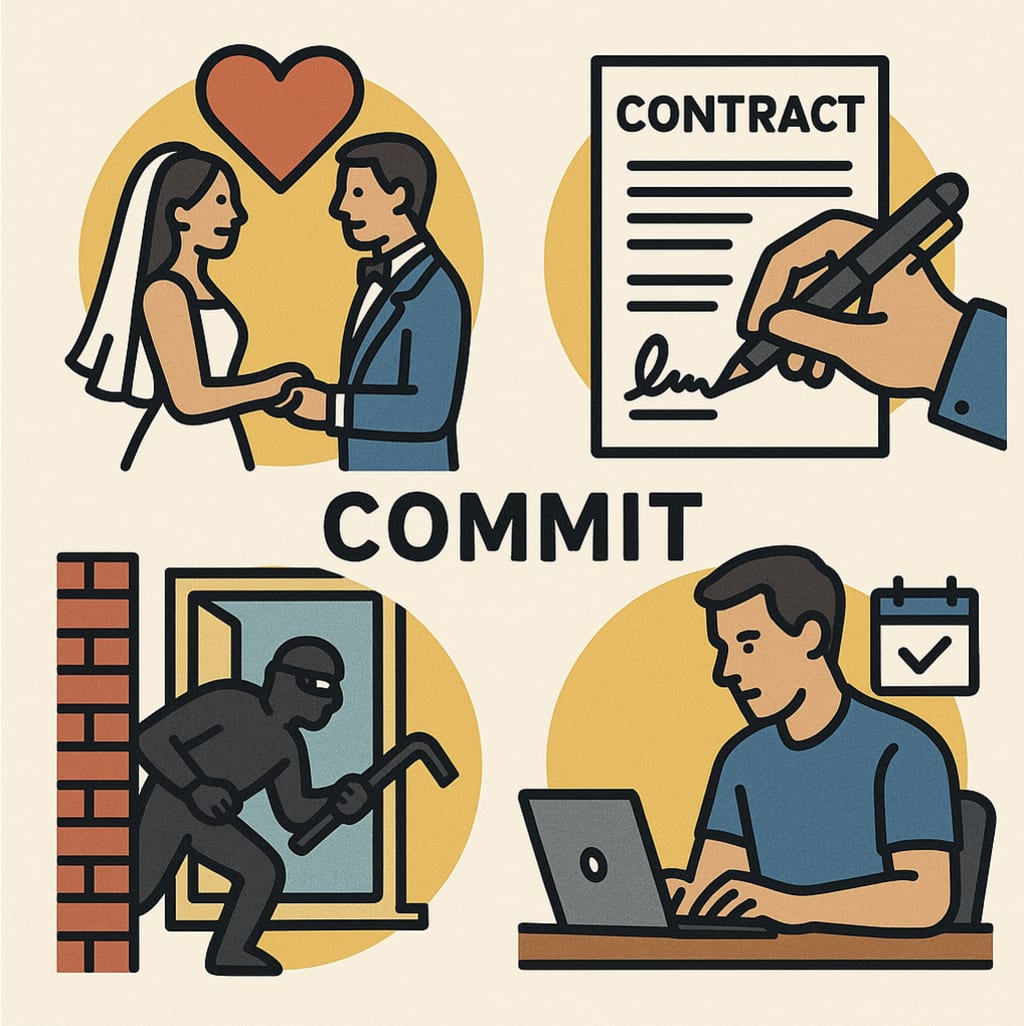
One of the most obvious changes I see is moving away from using the phrase "to commit suicide." And the pressure to avoid the word "commit" comes from two different directions that relate to its different meanings.
It's one of those strong words that can have both negative and positive connotations. If you look up the verb "commit" in the Oxford dictionary, it will give you three definitions:
- carry out or perpetrate (a mistake, crime, or immoral act).
- pledge or bind (a person or an organization) to a certain course or policy, as in "to be dedicated/committed to peace"; "pledge or set aside/commit (resources) for future use"; or "be in a long-term/committed emotional relationship with (someone)."
- transfer something to (a state or place), as in "to commit someone to trial, prison, or psychiatric facility."
In the context of suicide, "to commit" for a long time was associated with the first meaning, i.e. to commit an immoral/criminal act. Suicide had been condemned by some religions (particularly Catholic and Orthodox Christian) as a (mortal) sin, an act going against God's will and destroying the relationship with God. Here's is an excellent source from the NAASP on how different religions look at suicide. I have it linked to the Buddhist interpretation, but you can select other religions from the right-hand menu:
When we started to think of suicide as the ultimate result of untreated mental conditions, we also began to refrain from using the word "commit" in reporting and discussing suicide, thus disassociating it from criminal or immoral acts. You can see this clearly reflected in the way suicide is reported by the media today, especially in national and international news.
On the other side of the coin, some people say that when you use the phrase "to commit suicide," you in a way glorify it. This comes from the second meaning, the positive connotation of the word "to commit," as "to dedicate strength/resources, to be determined or courageous in doing something." While the debate on whether suicide is an act of courage (it takes guts to end one's own life) or an act of cowardice (a way out of the perceived unbearable hardships or the state of being cornered, desperate) will probably never be resolved, we do want as a society not to encourage suicide by framing it as a heroic act.
What we do want is to talk about it in neutral, non-judgemental terms. I see various mental health-associated experts and organizations now recommending neutral "take/end one's own life." If the word "suicide" is crucial for context and understanding of the situation, it is recommended to say "died by suicide." And in fiction, it is still quite acceptable to write "killed oneself."
What we want even more is to refer people who we suspect might be in danger of self-destructive thoughts to professional prevention services. There is a US national Suicide and Crisis Lifeline, 988, that is a part of the emergency services. Many countries have an equivalent as well. There are also religious and counseling services people can use when they need to communicate safely with someone who can provide help. If you suspect someone is in need of those services, recommend them gently.
I'm very passionate about this because when I was 15, my step-father hung himself in our bathtub. I wrote about it three years ago here on Vocal. Looking back at it, there were signs (chronic alcoholism, depression and outbursts of angst and despair) that I couldn't recognize at the time. Besides, in the Soviet Union both alcoholism and suicide were heavily stigmatized. I still carry the guilt of not having been able to prevent it because my step-father was a good, caring person when he was sober and just a very quiet one when he was drunk.
About the Creator
Lana V Lynx
Avid reader and occasional writer of satire and short fiction. For my own sanity and security, I write under a pen name. My books: Moscow Calling - 2017 and President & Psychiatrist
@lanalynx.bsky.social
Keep reading
More stories from Lana V Lynx and writers in Writers and other communities.
Ditched - Index
This index is just for my subscribers. I finished and published this long story or short novella of 6,000 words recently. I tried to link all previous parts of the story in the next one, so if you went along you shouldn't have been lost. This index is just put everything in one place.
By Lana V LynxExclusive • 4 months ago
How Students Can Check Scholarship Status Without Missing Updates
For millions of students worldwide, scholarships play a critical role in continuing education without financial strain. However, receiving a scholarship is only the first step. One of the most common challenges students face afterward is tracking their scholarship status accurately and on time. Missed updates, incomplete information, or misunderstanding the process can result in delayed payments or even disqualification.
By Abbasi Publisher2 days ago in Writers




Comments (5)
It's all too easy to accidently glamorise things. This is excellent.
Suicide isn't an easy subject for me to write about in my stories, and the only one I did I made sure to put a disclaimer with the Suicide Hotline Info. So sorry about your step dad <3 hugs. I know the suffering your family went through <3
I'm so sorry about your step father, Lana 🥺 I hope you know that in no way you should feel guilty. Sending you lots of love and hugs ❤️ Having done the deed myself, and failed, I often talk about it casually. I always say it as "killing myself" or "offing myself". This would be an unpopular opinion, but the only reason suicide is seen as going against God is because God wants us to stay alive and suffer, lol. I also feel that suicide is an act of courage. I'm not trying to glorify it or offend anyone. But this is just my dumb ass opinion hehehe
Excellent article Lana and I’m so sorry for the loss of your step father. I can’t imagine how devastating that must have been for your family. I did write a story about suicide last year actually. My friend killed himself over 20 years ago and it still feels unbelievable to me - let alone his family. Wishing you all the best.
Very insightful and thought provoking, Lana! I don’t think I’ve ever written a piece involving suicide but I will be mindful if I do!