
An ordinary Chinese friendship story

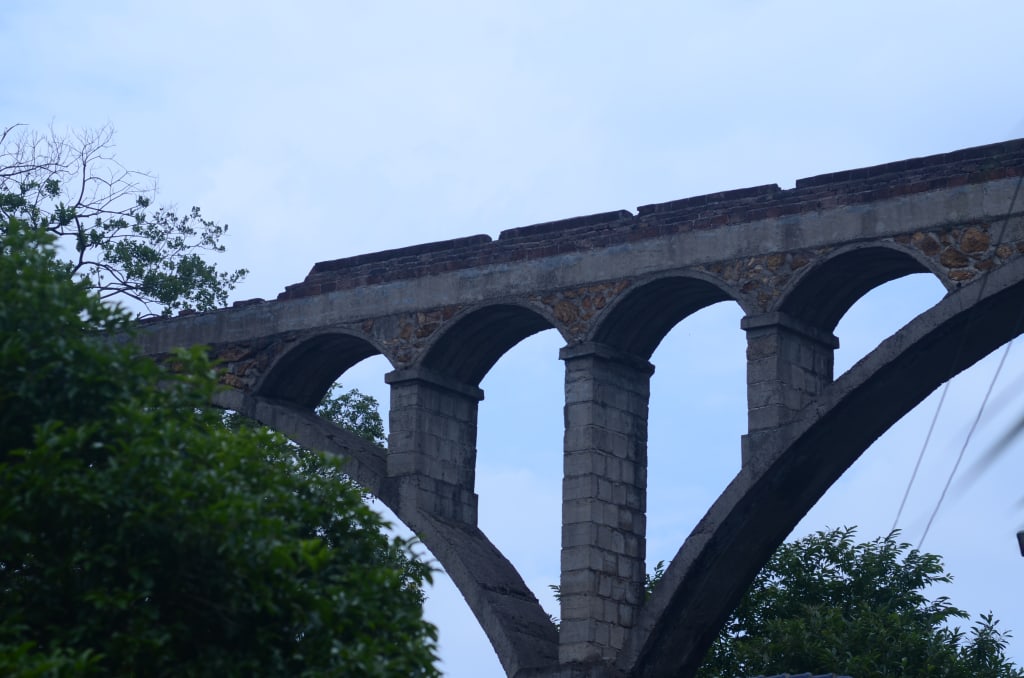
In December 2016, I had been away from home for a year and a half, working on the remote Cook Islands. One day, feeling intensely homesick, I opened my computer and searched for the map of my hometown. I discovered that the water flowing out from the main dam of Dongting Reservoir traveled past Huitang, down toward Ningxiang, gradually becoming a river called Wu River. At the edge of the county town, Wu River joined the Wei River. Near its end, it branched off again, looping around a place called Tiaomizhou before rejoining the main river, with a dam built at the point of convergence.
A place with an islet, a dam, and situated between urban and rural areas felt like an ideal setting for a story. I longed to visit it one day and write something like Fei Ming’s Lingdang.
Yet it was not until the eighth year after I returned to Ningxiang that I truly arrived at Tiaomizhou. There were many reasons I had not come earlier: lack of mood, lack of energy, other matters demanding attention. But the real reason, perhaps, was fear — fear of the gap between imagination and reality, fear that even if I arrived here, I still would not be able to write a story about it.
Now I was standing beneath a large tree beside a small bridge in Tiaomizhou, and my long-held worry was confirmed: there was nothing to write.
Still, in 2005, when I was in my second year of high school, our teacher had once brought the whole class to this area for a picnic. On my way here this time, I saw the familiar bamboo grove across the river from my memory, and the voices of classmates seemed once again to echo over the water. Yet I could not recall a single face. The only thing left was a fragment of conversation with one particular classmate along the way.
Two years ago, I had met that classmate again. He invited me to his office in a commercial building. His nameplate was engraved on a rosewood desk. My heart skipped — this was exactly the kind of scene I had seen on television as a child: the world of successful middle-aged men. He had become stable and accomplished. I, on the other hand, seemed not to have grown up, still often brought to tears by trivial emotions. I forced myself to compliment him in a mature tone. People like hearing that, and sure enough, his eyes curved into a smile. He asked me about my work, exploring the possibility of cooperation. I had no real ideas in business. He politely withdrew the topic and walked me downstairs, saying we should stay in touch.
Later, when I needed a place to teach, through a friend’s help I unexpectedly returned to that same office. Only then did I realize that the office might not actually have belonged to him. That evening, he had originally invited me to dinner, but changed his mind when he learned I lived nearby. Such behavior is normal in the adult world. I do not want to use literature to mock vulgarity and thereby elevate my own purity. But standing alone in that office, I still felt a distinct sense of loss.
Back then, on the way to that picnic, we had talked about his CD player and the music it played. I had liked his modest and sincere smile. Even when he said goodbye beside his car that day, I could still sense traces of the past in his politeness. Yet this only made things more painful, because those traces were no longer enough to change anything.
To prevent the sadness from spreading further, I sealed away this memory and never mentioned it anywhere. I did not want to become part of the industry that mass-produces sentimental youth literature. To me, the passion and freedom portrayed in popular stories and films about youth feel false and cheap. In my years of writing, I have returned to the past again and again, but rarely to high school — those years contained nothing but endless classes and exams. I did not want to devote any more attention to such a dull life.
Still, perhaps because I had not entirely given up on writing a story about Tiaomizhou, as I sat beneath the tree I thought of Heng-ge. He had been my deskmate in my second and third years of high school, and my roommate in the bunk below mine. We ate together, lived together, completed endless exam papers together, and quietly competed with each other. It is embarrassing to admit, but when I realized that friendship can contain ignoble elements, I felt a strange excitement — because such complexity might make this unwritten story more readable.
I know that presenting oneself as generous and tolerant helps cultivate a positive literary or social image. But the truth is that at that age, we tended not to befriend those whose academic performance was far better or far worse than our own. Heng-ge was slightly better than me in science, slightly worse in English. This delicate balance sustained our friendship. In the end, we differed by only two points in the college entrance exam and went to university in the same city. During our first year, we even took long bus rides across the city to visit each other. But soon I fell into new difficulties. The friendship lingered only in occasional messages and eventually thinned into nothing.
Perhaps we contacted each other once or twice in between. The only thing I clearly remember is that one day he asked me to help translate the abstract of his graduation thesis. He said, “Just translate it casually.” I don’t remember whether I agreed, but I remember my inner resentment: I can’t even understand the Chinese — how could I translate it? And even if I could, how could I bring myself to submit something done ‘casually’? That would make me unbearably anxious.
The next time I learned anything about Heng-ge was more than ten years later, in 2024, when I unexpectedly saw his name in the ledger of wedding gift contributions. I don’t know who helped him sign. He didn’t have to do that — I didn’t know when he had gotten married, and I hadn’t attended. Perhaps out of this sense of indebtedness, when I searched for motivation under the tree in Tiaomizhou, Heng-ge naturally came to mind. Xiaopang’s name was there too, but perhaps he was only returning a past courtesy (I had attended his wedding), so it did not stir me as much.
That day, overwhelmed with emotion, I immediately found Heng-ge’s contact through other classmates and thanked him. In high school, I had been weak and bullied; it was Heng-ge and Xiaopang who accompanied me through my darkest days.
Driven by this strong emotion, I sincerely told Heng-ge that we must meet whenever I went to Changsha. But sincere words are fragile. As the emotional intensity faded, I returned to rationality. Twice I found myself near Houjiatang and still didn’t dare tell him. I was afraid — afraid he might be doing too badly, and also afraid he might be doing too well. It seemed only if our lives were similar could we speak freely. But what were the odds of that? I didn’t dare risk it. Yet if I avoided him like this, then Heng-ge became like an NPC existing only to serve my literary needs — someone I dared not engage with in reality. That realization made me feel false and performative.
Even after acknowledging this falseness, I still stopped my exploration here. Remembering the past is exhausting. I did not want to go further.
Ironically, life soon struck me hard again. My plans collapsed, and I suddenly found myself with vast stretches of empty time. In panic, I returned once more to literature, trying to resist the void by picking up unfinished writing projects. “There is no story in Tiaomizhou” appeared again before me. I decided to use that vague picnic from twenty years ago to revisit the high school life I had deliberately hidden away — now, strangely, I was no longer afraid of the fatigue.
What follows is the last time I remembered my friendship with Xiaopang and Heng-ge with such intensity. The time was December 2015. I had just arrived on the Cook Islands, living alone in a huge, empty house, surviving on memories. Judging from the weight of recollection, Xiaopang was the true center of my memories. Perhaps that is why, when I later saw his name again in the gift ledger, my heart no longer stirred — because in literature, I had already said goodbye to him properly.
In my first year of high school, because I refused to lend instant noodles or money to classmates who had already spent all their allowance at the beginning of the month, whenever I walked into the classroom they would gather at the back and mimic the sound of a door opening — “creak, creak.” One student named Z* said, “That’s the sound of stinginess.” Everyone burst into laughter. Their mocking voices and cruel laughter remain vivid in my memory even more than twenty years later.
Later, I once lent money to another student named H**, who had also been among those who mocked me. When I handed over the money, I felt deeply uncomfortable, because I knew I was forcing myself to become the kind of person they considered “generous” and “socially acceptable.” He never paid me back, and I never dared to ask. I could not bear another humiliation: “It’s such a small amount, you’re worried I won’t repay? Stingy.”
After we were divided into arts and science streams in our second year, the ridicule in the dormitory became even worse. One student named Z** said with open disgust after I returned from showering, “Your breasts are so big, like a woman’s.” This left me with deep shame about my body for a long time afterward. Another student, L*, enjoyed imitating the way I spoke, exaggerating my gestures and tone to highlight what he considered my effeminacy. Whenever he did this, the others would laugh uproariously.
In fact, I had been mocked for being “girly” since middle school. But back then, my good grades had shielded me; that narrow evaluation system protected me. Now, however, these classmates all performed better academically than I did. The same system turned against me and intensified my sense of oppression and helplessness.
I decided to speak less, to avoid exposing my perceived flaws. At the beginning of the second year, seats were rearranged. Xiaopang sat behind me. He wore a T-shirt of poor quality, covered with little fabric pills, with a dragon printed on the front. Starting from our first year, the Chinese department had required every student to keep a journal. Xiaopang had one too. When I was bored, I would read his. He wrote about how his mother used to wash his clothes for him, and only after doing it himself did he realize how difficult it was; how he often waited until a whole bucket piled up before reluctantly washing them. He also wrote about eating and playing ball games. I found it interesting.
When I read his notebook, he would stretch both hands from behind my head and rest them on my desk. That gesture made me feel close and safe. Xiaopang and Heng-ge had already been classmates in the first year and were very close. Xiaopang was shorter. He would hook his long arm around Heng-ge’s tall neck, hanging off him like a sloth in a tree. They went to the cafeteria and to morning exercises like this. I wanted to belong to them.
The three of us had similar grades — average students seated at the back of the classroom. Xiaopang and Heng-ge were better at physics and chemistry than I was. When teachers chatted with the top students in class, they could sometimes join in. Once I scored 38 on a physics quiz — the first time in my entire schooling that I had failed. I was gloomy. Xiaopang patted my shoulder and pointed at the problems I got wrong, explaining them to me. After a while he scratched the back of his head and laughed awkwardly: “I can’t really explain it clearly. Let Heng-ge do it.”
Their English was weaker than mine, but Heng-ge always sat next to me. Every night we worked on the English newspaper exercises together. After months of this, his accuracy sometimes even surpassed mine.
Xiaopang truly disliked English. He often daydreamed in class. Once, the teacher was walking around while lecturing, getting closer and closer to him, and he still didn’t notice. The teacher tapped him on the back of the head with a book. He shrank his neck, turned around, and grinned widely — his thick lips like sausages. It was ridiculous and funny.
Sometimes after PE class, we played table tennis together. I don’t know why, but he could never beat me. I liked teasing him; his puffed-up, frustrated face was adorable. But when it came to basketball, I would sit in the pavilion by the court while he and Heng-ge played. Outside the wall was a large pond with a few ducks gliding across the water. Motorbikes passed on the road. Distant voices echoed. The crematorium’s tall chimney puffed out smoke. The wind rustled through pine trees, and a few yellowed needles drifted down. When they grew tired, Xiaopang and Heng-ge would call me to go to the small shop together. Other students were still in class. The campus was quiet. We drank water and talked as we walked.
Later, Xiaopang’s grandmother passed away. His father came to take him home for the funeral. After several days he returned. His tired face was still smiling. I asked whether kneeling during the rituals had been exhausting. He said yes. Suddenly, I wanted to care for him.
That day we were in his dormitory. Everything looked the same — standard-issued blankets, towels, thermos flasks. Yet as I sat on his bed listening to him talk with Heng-ge, I had the illusion that even such dull, enclosed days would be fine if they could just move a little more slowly.
The night the college entrance exam ended, we went to an internet café to check answers. Xiaopang said he might have done badly. I tried to comfort him. He forced a smile, then played games and watched Naruto. I had never stayed overnight in an internet café before. By midnight I was unbearably sleepy. The air-conditioning was freezing. I crawled under Xiaopang’s desk and curled up there for the night.
The days waiting for results were long. Heng-ge went to Lengshuitan in Yongzhou, where his parents worked. Xiaopang stayed at my house for a few days; then I stayed at his. His home was in Wulidui. We took the bus from Old Granary Street, passed Lanshan Gorge, transferred at Hengshi toward Huangcai. The bus was noisy at dusk — children crying, adults arguing. Outside the window, mountains grew higher. The road followed the river upward. The river was wide. A few geese flew in formation across the sky. Their cries echoed through the mountains.
I wanted to sing. I asked Xiaopang to lean closer and softly sang, “The dark dark sky hangs low, the bright bright stars accompany me, little insects fly, little insects fly…” Xiaopang had none of this sorrow. He just laughed loudly.
We got off the bus. Only a faint blue light remained in the sky. We crossed a cornfield to reach the riverbank. Xiaopang called to the opposite shore, “Grandpa, please come pick us up.” The “grandpa” was not his real grandfather, but the village ferryman. He rowed over and scolded us for arriving so late. I stayed silent while Xiaopang apologized. The oars struck the water rhythmically, stirring small whirlpools. On the opposite bank, a few scattered houses leaned against the mountains.
Xiaopang’s parents worked away from home on construction contracts. He lived with his grandmother. Her house was built against the mountain. There was no road behind it. The mountain blocked the eastern light; sunlight only reached the house around ten in the morning. The western slope was gentler, used as a vegetable garden. That night she steamed dried whitebait, a large one, saying it had been caught from the river, and stir-fried water spinach stems with garlic — typical summer countryside dishes.
Become a member
After dinner, we carried buckets and poured water over ourselves beside the large water jar in the courtyard. The water came from mountain springs, icy cold. The summer heat vanished instantly. The ground was damp with moonlight.
When the exam results came out, Heng-ge and I passed the cutoff line. Xiaopang did not. He had no choice but to go to Yunfan to repeat his final year.
In the second half of that summer, I started working in a factory. I worked on the assembly line for eleven and a half hours a day. Sometimes when the machines broke down late at night, there would be a brief pause. I would lean against the cargo boxes and write letters to Xiaopang. I used the kind of phrases adults often said to me: “Work is hard now, but if you study well, you’ll have an easier life in the future.”
When I got my first salary, I immediately bought a new phone and called Xiaopang’s father. Only then did I learn that Xiaopang had spent the entire summer on construction sites with him. I felt sad for him. We were happily preparing for university, while his future was still uncertain.
During my first winter at university, I wrote him several letters and once sent him a scarf I had knitted myself. In his reply, he said it was very warm. After that, I fell into chaotic relationships. He eventually got into university too. We slowly lost contact.
After I started working, I went to see him once. At that time, I was working as a tour guide — a job that exhausted me mentally. I felt lonely and helpless and thought talking to him might help. I took a long bus ride to his place. When I saw him, he looked much the same — untidy, perhaps even heavier. What surprised me was that he had a girlfriend. His home was neat and clean. His life seemed to be on track. I felt jealous. I also didn’t want my broken life to affect him, so after a few polite exchanges, I left.
Not long after, he invited me to his wedding. That day he wore a suit and leather shoes, handing out cigarettes and toasting guests with polite smiles. His shoes were covered in yellow mud. Rural Hunan winters are cold and damp, and the roads are difficult. After the banquet, everyone was leaving. His father held us back and said, “Xiaopang doesn’t have many close friends. You must stay the night.” But my state of mind was too fragile. His stable life only highlighted my own unhappiness. I couldn’t bear the contrast and chose to leave anyway.
I stopped my motorbike on Wulidui Street and looked back. It felt as though I could see that summer after the exam again — when Xiaopang and I had walked this road countless times between our two homes, leaves swirling on both sides, dust rising in the air.
I saw Xiaopang again only in a dream, three years after his wedding. He lived in a strange loft-like room. You had to climb in from above. The bed was high, with drawers underneath, socks rolled neatly inside. His wife smiled at me as she spoke, just like on their wedding day. In the dream, several of us classmates stood downstairs chatting, while she stood upstairs in a red dress, saying, “Everyone stay here tonight, you’ve had a long day.”
Then the room was empty except for me. Outside the window, it was autumn. Leaves fell slowly. The grass tips on the ground had begun to yellow. My memories of Xiaopang were already fading. What remained was the image of him running toward us from afar, smiling foolishly, his arm hooked around Heng-ge’s or my neck like a sloth hanging from a tree.
Everything above was the last time I felt such intense nostalgia for Xiaopang and Heng-ge. It was December 2015. I had just arrived in the Cook Islands and was living alone in a large, empty house, surviving on memories. Judging by how much I wrote, Xiaopang was clearly the emotional center of my recollections. Perhaps that is why, years later, when I saw his name again in my wedding gift ledger, my heart barely moved. I had already said goodbye to him through writing.
Now, however, I felt a deep sense of indebtedness toward Heng-ge. He didn’t have to attend my wedding. Although my original intention was to use these old friendships to resist emptiness, it felt right to include him in this story as well.
Heng-ge slept in the bunk below mine. He always looked serious. When others mocked me in the dormitory, he never joined their laughter. But he cared about pride. Whenever we argued — even if he was at fault — he would choose silence. It was always I who gave in.
Yet in front of him, I was often willful. I would insist on things going my way. After class, I would sometimes collapse onto him, or lie across him to take a short nap. When he tried to leave, I would argue with him. He rarely won these arguments. Sometimes he would storm off in frustration. Sometimes he would simply let me stay like that.
It felt as though I lived inside his mind. I could often guess exactly what he was thinking, which embarrassed him. I would then tell Xiaopang his little secrets. Once in physics class, I zoned out for a while. When I came back to myself, I asked Heng-ge what the teacher was talking about. His eyes were empty. I immediately asked, “You were zoning out too, weren’t you?” He denied it at first, but after I pressed him, he admitted: “I was playing CS in my head.” I laughed uncontrollably. A while later, I zoned out again — and when I looked over, he had drifted off again too. That woke me up completely with laughter.
Heng-ge’s English was poor at first. But after sitting next to me for a long time, apart from multiple-choice questions, his improvement in everything else was obvious. Sometimes his cloze tests and reading comprehension scores were even higher than mine. This made me uneasy.
I also noticed that he was drinking something called “Haojixing,” a so-called brain-boosting tonic. That made me even more anxious. One day I wrote in my diary that Heng-ge was drinking Haojixing, and that I would not share my snacks (“Farmer’s Hut”) with him anymore. I even deliberately showed him this entry to provoke him. He blushed deeply, angry and embarrassed, and wrote beneath it: “You’re such a jerk (just slang, not a real insult). I really didn’t mean to show off. Spit, spit, spit.”
I began saving money from my allowance. During a break, I went to a pharmacy on Old Granary Street and bought similar brain tonics. Their advertisements were printed in tiny boxes near the fold of the English newspaper. I doubted them, yet desperately hoped they might awaken some hidden ability in me and lead to a breakthrough in my grades.
In the end, Heng-ge scored only a little over ten points less than me in English on the college entrance exam. Although my science score was poor, during the time we sat together, I had truly felt my own progress. That eased much of my fear before the exam. We competed silently for two years. In the end, I beat him by two points. My diary still records my excitement: “I won!”
That summer, from July 11 until September 30 after university began, Heng-ge sent me around 130 text messages. He always began with “Minmin.” He asked about my job. I could sense his admiration for earning money through work. I invited him to join me, but he said his parents wouldn’t agree — perhaps they feared he would be cheated, or suffer hardship, or burden my family. My uncle rewarded me with an MP4 player for getting into university. Heng-ge checked whether I had bought it yet and asked how many songs it could hold. His feelings were probably as complicated as mine had been when I saw him drinking Haojixing — curiosity mixed with envy.
I didn’t keep the messages I sent him. But from his replies, I can see my old patterns in relationships.
Between August 15 and 20, we didn’t contact each other. Judging from his message on the 20th, I had been sulking. The 15th was my birthday. Although he had already sent two birthday messages, I was trapped in my “birthday trauma.” I habitually withdrew from others to amplify my belief that “no one truly cares about me,” hoping this would trigger guilt and greater care from them. This strategy failed. When I noticed his silence, I used a deliberately self-marginalizing tone to provoke him. He finally responded, apologizing: “Of course I didn’t forget my Minmin. I just only had 8 yuan left on my phone these past few days.”
We both went to university, accompanied by our fathers. Heng-ge admitted missing home only once, the day after helping his father buy the train ticket. After that, he adjusted quickly. He joined clubs, studied English, met fellow townspeople. They clearly influenced him. His tone in messages changed. He began adding a lively “lo” at the end of sentences.
I was not as fortunate. On September 10, when my father left my university to return to Guangdong, Heng-ge comforted me twice that afternoon. First at 2:19 pm: “Don’t panic.” Then again at 2:48 pm: “If you feel anxious, call me.” Yet for some reason, I felt he didn’t understand me enough — and once again, I pushed him away.
This happened too many times. Heng-ge grew tired. I began seeking substitutes. Friendship could not fill the vast emotional void inside me. I fell for one unavailable person after another, began gaming, skipping classes, drifting into emptiness, repeating the same destructive patterns again and again.
During winter break of my first year, someone I loved intensely blocked me because they could no longer tolerate my constant messages. In my diary I wrote: “Heng-ge and Xiaopang came to see me, and I was cold toward them.” That shows I was already aware of my problem — but the pain was too strong. I had no energy left for friendship.
By the next summer, I could no longer count how many people I had loved or how many times I had been rejected. I continued blindly repeating the same broken attachment pattern. Once, while traveling to see yet another person I liked, I passed through Yongzhou and met Heng-ge again. I felt hollow. In the years that followed, I lived in constant frustration — wanting connection but unable to achieve it. This continued into my thirties. In 2022, I repeated the pattern once more. The pain hit like a tsunami. Facing the abyss, I realized I was close to collapse. I decided to save myself and began seriously studying psychology.
That is the full story between Heng-ge, Xiaopang, and me.
Of course, I could dig deeper. After the exam, Xiaopang was watching Naruto. Years later, when I visited him at university, he was still watching Naruto with his roommates. I tried to watch it too, but it was simply too long. The endless episodes merged with my own suffering, and I eventually closed the page. This is not criticism of the show. It’s only that, through this experience, I felt clearly that our lives were moving in different directions. That was inevitable. If not this show, it would have been something else.
The competition between Heng-ge and me did not end with exam scores. Once I asked him to call the admissions office for information. He said, “I don’t dare use your ‘bad Mandarin’ to ask.” (It took me many years to understand how painful that remark must have been.) When I visited him in my first year, he said, “Students from the foreign languages department have a special kind of taste.” I denied this in a false modesty tone — ostensibly to comfort him, but in truth perhaps because I feared losing my sense of superiority if he acquired the same things I had.
This silent competition eventually poisoned us. For more than a decade, neither of us dared to reach out, perhaps because we were uncertain about each other’s current lives. Heng-ge earned a PhD. I only earned a Master’s. He must have a good job; I had nothing. But perhaps in his eyes, I had gone abroad and published books and thus seemed equally distant.
Thinking this way, I felt unexpectedly relieved. I am still that person who understands Heng-ge deeply. We are still those two friends — collaborating and competing — just as we were in high school.
I messaged Xiaopang. He replied after a while. During the wait, I kept repeating to myself: “Xiaopang, don’t be afraid. I’m just saying hello. I won’t borrow money. I won’t ask for help. I won’t pour endless sorrow onto you.” When he replied, he said: “I’m in Changsha. Programmer.” When he learned I teach English, he said: “666.” That response reassured me that something of his old self remained.
I also realized that I now had the courage to truly look at Xiaopang’s life. I opened his social media. His updates stopped in 2017, but before that, he already had two children. People commented, “Life winner.” He posted photos of plane and train tickets, joking, “Business trips are exhausting.” (Well, maybe he was just being honest.)
Yes. By the time I reached this point, I had gained full clarity. I was ready to see Xiaopang and Heng-ge again. Even if we had become completely different people. Even if our friendship would not deepen again. At the very least, we could meet properly, say goodbye properly, and raise a glass to everything we had gained and lost along the way.
Finally, let us return to the tree on Tiaomizhou.
The physical landscape and the map now overlapped. I understood the meaning of literature for me: it carries curiosity. When I trace a river to its source and see every place it has passed through, I begin to understand how I myself was shaped. I am also grateful for the new blow that reality dealt me — it gave me vast empty time, and allowed me to write the story that would otherwise never have been written.
About the Creator
Jicky Liu
Explore the universal joys, sorrows, and struggles of being human through nonfiction storytelling.
100 Top Stories and Other Accidents
On March 9th, an entry I published for the "Everyone Is Acting Normally" Challenge, Silken Chains, was awarded a Top Story. I was delighted. For various reasons. It is one of my best-written stories, and it helped me achieve another Vocal milestone.
By Paul Stewart3 days ago in Writers




Comments
There are no comments for this story
Be the first to respond and start the conversation.