
Get to Know about the Types and Benefits of Agroforestry in India
Types and Benefits of Agroforestry
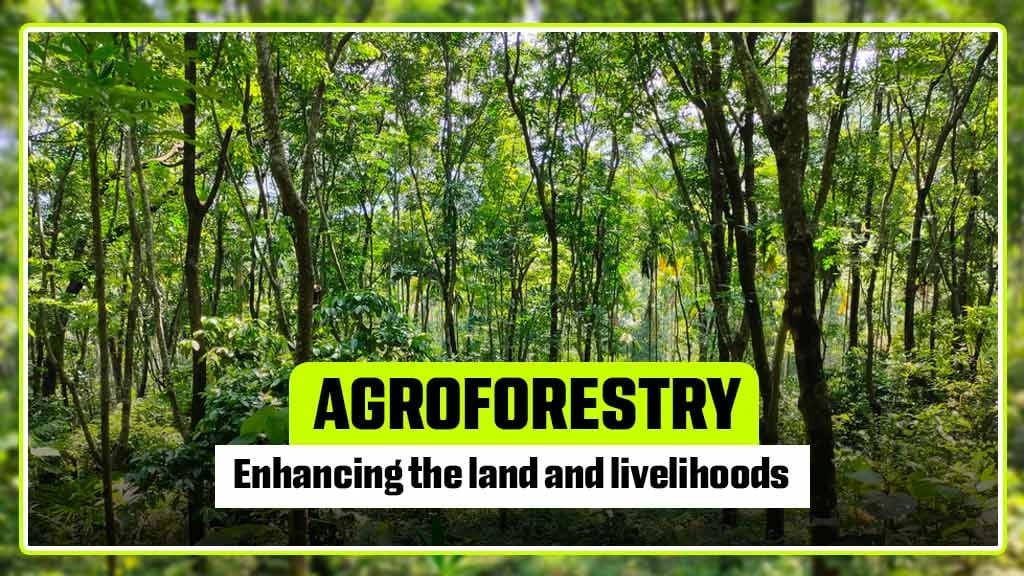
Agroforestry attracted the attention of international scientists in the late 1970s. Defines agroforestry as an intensive land management system that optimizes the benefits from the biological interactions created when trees and shrubs are deliberately combined with crops and livestock. In this blog, we'll talk about the Types and Benefits of Agroforestry in India. The agricultural system or related agricultural systems are being impacted by each of these issues, either directly or indirectly. These difficulties are leading to the emergence of certain problems, such as soil erosion, farm deterioration, surface and groundwater pollution, and a decline in biodiversity.
Agroforestry System Types:
Agrisilviculture System: Crop production is known as agriculture, while the planting of trees across a large amount of land is known as silviculture.
Silvopastoral System: The silvopastoral system is an agroforestry technique in which trees, pastures, livestock, and plants are all produced on the same plot of land.
Agrosilvopastoral System: Trees, crops, and animals are all purposefully integrated on the same plot of land in an agrosilvopastoral system.
India's Agroforestry Success Stories: India and Indian farmers have launched a number of programs to reveal the advantages of agroforestry after discovering its potential.
Agroforestry in Araku Valley: Established in the early 2000s, agroforestry in the Araku Valley Project now spans six districts in both Andhra Pradesh and Orissa.
BCKV’s Agroforestry Initiative: Agricultural issues, such as decreasing soil fertility, water scarcity, and land degradation, beset West Bengal. Bidhan Chandra Krishi Viswavidyalaya has taken an active part in agroforestry activities after realizing these difficulties.
About the Creator
Keep reading
More stories from writers in Writers and other communities.
How to Hire a Virtual Assistant for Personal Organisation and Scheduling
If your calendar feels like a battlefield back-to-back meetings, personal errands, rescheduling, missed reminders you’re not alone. In 2025–2026, more professionals and founders are hiring a virtual assistant (VA) not for “extra help,” but to build a system that keeps life and work running smoothly.
By Michael Coplin6 days ago in Writers



Comments
There are no comments for this story
Be the first to respond and start the conversation.