
From Panic to Precision: A Woman's Journey Through Heart Attack Misdiagnosis
HEALTH*


When Katherine Fitzgerald suddenly started vomiting, sweating profusely, and experiencing chest pain and tingling in her right elbow, paramedics told the 57-year-old that she was having a panic attack and did not need emergency treatment. While her 18-year-old son urged her to go to the hospital, the paramedics insisted that Fitzgerald needed to calm down, go home, and rest.
Two days later, her chest still ached. At her son's insistence, she went to the hospital. It turned out she wasn't having a panic attack after all; Fitzgerald had suffered a heart attack and required two stents to clear blocked arteries.
"Looking back, I wonder if, had I been a man, paramedics would have taken me to the hospital right away, and treatment would have started sooner," says Fitzgerald, who is now 60.
Even after receiving the stents, Fitzgerald still wasn't feeling well. She sought out a new doctor, someone who had a better understanding of the science behind women and heart attacks. She found cardiologist Harmony R. Reynolds, MD, the director of NYU Langone's Sarah Ross Soter Center for Women's Cardiovascular Research and an internationally renowned expert on heart disease syndromes primarily affecting women. Her research focuses on understanding the differences in heart attacks in women and the best methods for detection and treatment.
"I made a concerted effort to listen to Katherine because I knew she had a history of being ignored and misdiagnosed," says Dr. Reynolds. "Patients, especially women, benefit from receiving care from a cardiologist who considers all aspects of their condition."
Dr. Reynolds's research shows that Fitzgerald is not alone in her experience. She published a study in the Journal of the American Heart Association, revealing that women experiencing chest pain wait 11 minutes longer to receive care in the emergency department than men with the same symptoms.
This delay can lead to worse outcomes. "Time is heart muscle," emphasizes Dr. Reynolds.
A New Diagnosis: Coronary Artery Spasm
Dr. Reynolds conducted a thorough chest pain evaluation and discovered that Fitzgerald's chest discomfort was caused by muscle spasms in the coronary artery walls, in addition to plaque buildup.
"Cardiac pain is often attributed to plaque buildup in the arteries. However, in women, there are additional contributing factors, such as coronary artery spasm and disease of the small arteries, known as coronary microvascular disease," explains Dr. Reynolds. She prescribed medications, including calcium channel blockers and nitrates, which relax the blood vessels to alleviate Fitzgerald's chest discomfort. Fitzgerald also received another stent to open a blocked artery.
NYU Langone Heart offers comprehensive chest pain diagnostics, including tests dedicated to the small heart arteries and provocation testing. In the latter, real-time imaging reveals how blood vessels respond to medication injected into the bloodstream. This test is available at NYU Langone and only a few other medical centers in the country.
Dr. Reynolds also recommended steps to reduce stress, a key component of heart health. Fitzgerald adjusted her work by handling legal cases at her desk instead of going to court and adopted a less intense exercise routine. "I'm starting to enjoy my life again," she says. "If I take care of myself, I will have a nice, healthy life ahead of me."
Heart Attack Symptoms in Women
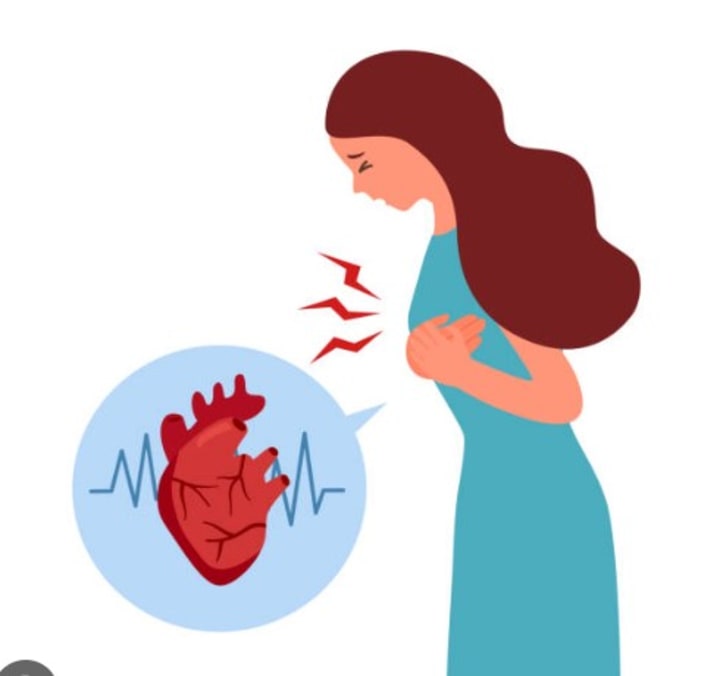
Fitzgerald's heart attack symptoms went beyond the typical crushing chest pain often depicted in popular culture, much like many women. Women are more likely to describe their pain as discomfort, pressure, burning, aching, or some other sensation. "Some women may say their bra is too tight or they feel like they have a belt around their chest," says Dr. Reynolds.
Other heart attack symptoms commonly experienced by women include the following:
Discomfort in the jawline, neck, upper stomach, either arm, or back.
Shortness of breath.
Nausea and vomiting.
Extreme fatigue.
An overall sense that something is wrong.
These symptoms can occur alongside chest discomfort or even without it.
"If you're experiencing these symptoms, don't hesitate to speak up. Go to the emergency department and tell healthcare providers that you believe you're having a heart attack for immediate diagnosis and treatment," advises Dr. Reynolds.
About the Creator
Gouri Murmu
Hii this is Gouri Murmu. I belong from a native village in India. I love to write stories, poem and article from my childhood. At my school time i wrote many poem and stories and i got prizes for that. Join me to enjoy my stories.
Keep reading
More stories from Gouri Murmu and writers in Writers and other communities.
"The Adivasi"
I'm always enthusiastic about learning about diverse communities, delving into their rich histories, cultures, and traditions. Today, I'd like to introduce you to a fascinating tribal community known as the "Adivasi." There are countless intriguing aspects to their way of life, and I'll share some of the most captivating details with you.
By Gouri Murmu2 years ago in Writers
Published in Portrait of New England
My quest to find many publications with prestige to submit to has worked out even better than I thought. I was searching for more publications with more prestige in order to bolster my resume. I truly thought I'd try this for a year and not get published anywhere... maybe if I was lucky... in one of them. And I was OK with that... I was just going to try again the following year, and the year after that, and so on.
By Stephen Kramer Avitabile27 days ago in Writers




Comments
There are no comments for this story
Be the first to respond and start the conversation.