
Ink in My Veins
When the pen writes you back, being a writer becomes more than creation—it becomes survival

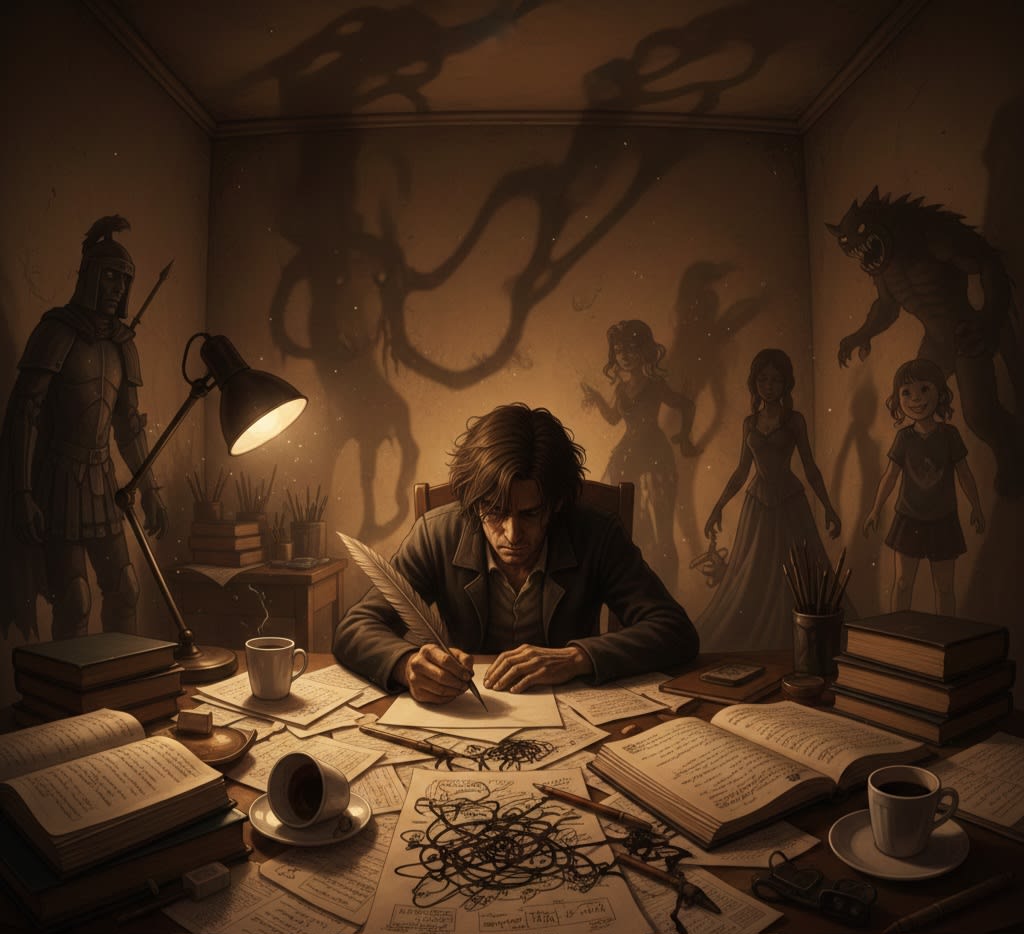
The first time the words appeared on paper, I thought it was luck. A fluke. A fleeting gift the universe had decided to give me, just to see if I’d notice. But by the third page, I realized something else: the words didn’t come to me—they came through me.
I had been writing for years, chasing ghosts of stories I could never catch. Characters sputtered and vanished, plots collapsed like cheap scaffolding, and every morning I woke with the heavy ache of failure. Then, that night, ink began to bleed from my pen with a ferocity I had never felt before.
It started small. A story about a man who sold secrets to strangers, a woman who remembered things she shouldn’t, a city that never slept but always watched. The words were vivid, precise, painful. I wrote until my fingers cramped, until the paper was soaked with sweat and ink. When I finally looked up, the room had changed. Shadows were sharper, the air thicker, and my reflection in the window seemed… wrong.
I told no one. Writers don’t tell anyone when the work comes too easily. They fear the jealousy, the disbelief, the casual dismissal of something sacred. Instead, I wrote. Every night. Every moment I could steal from life. Sleep became optional. Food became optional. I drank only coffee and the faint sense of urgency that these words might vanish if I blinked.
And then I noticed the first sign. The stories weren’t staying on paper. They were leaking into the world.
I walked to the corner store and saw him—the man from my last story, standing in the aisle as if he had always existed there. He didn’t see me, but I saw him. Every detail matched my description: the coat, the nervous twitch in his right hand, the scar I had imagined as a flourish to deepen his character.
I blinked. He disappeared.
At first, I thought I was imagining it. Sleep deprivation will do that to a person. But it happened again. And again. Characters I had sketched in paragraphs, sometimes half-formed and abandoned, started appearing in cafes, on buses, walking past my apartment like ghosts who had found a body to inhabit.
The stories were alive. And they were reading me back.
I tried to stop. I tore pages from my notebook, burned manuscripts in the sink, and begged the words to leave me alone. But every night, when the house was quiet, the pen called. I couldn’t resist. I sat, trembling, and let the ink spill, letting the characters live or die according to their whims—or mine.
Soon, the boundaries blurred. My apartment wasn’t my apartment anymore; it was a stage. The characters watched, whispered, laughed at mistakes I didn’t intend to write. Friends noticed my obsession, the hollow look in my eyes, the frantic scrawl of words at 3 a.m., but they didn’t understand. Who would understand? Not even I fully understood.
One evening, I wrote a character I feared. Someone cruel, clever, and ruthless. I wanted to see if I had the power to control him. But the moment I wrote his first line, I felt it: a tug, a pull so strong it stole my breath. When I looked up, he was standing in the corner of my apartment. Smiling. Waiting.
“You shouldn’t have written me,” he said.
I dropped the pen. It clattered to the floor. Ink pooled around it like a warning. I wanted to run, but the door wouldn’t open. I wanted to scream, but the room swallowed my voice. The character moved toward me, confident, real. He was mine, and yet, he wasn’t.
That night, I understood something essential. Writing isn’t just telling a story. It’s bargaining. It’s a deal you make with forces you cannot name, with a world you can barely perceive. Ink is more than pigment. Words are more than sound. And writers—they are not masters of the story. They are vessels.
I didn’t sleep for three nights. I didn’t eat. I didn’t leave the apartment. I wrote constantly, trying to undo what I had created, trying to reclaim control. But every line I wrote seemed to strengthen the character instead of weakening him.
By the fourth night, I stopped. I stared at the blank page, trembling, and realized that sometimes creation is permanent. You don’t get to say goodbye.
The room was silent, almost peaceful. I thought the nightmare was over.
Then I heard the softest whisper behind me:
“Tell my story next.”
I swallowed. And I picked up the pen.
Because writers always do.
About the Creator
Why Didn't Anyone Tell Us
Men, move along. This is not for you. This is for the women. I was forty-five when I began menopause. It is pretty young for that to be going on in a woman’s life, but I had undiagnosed PCOS, my entire life. Thank you to all the gynecologists I had seen my entire life. That in itself should encourage women to keep seeking second opinions, especially when you are not getting correct answers or any at all.
By Alexandra Grant3 days ago in Humans




Comments
There are no comments for this story
Be the first to respond and start the conversation.