
From Idea to App Store: A Startup’s Complete Roadmap
A Best road map for app development
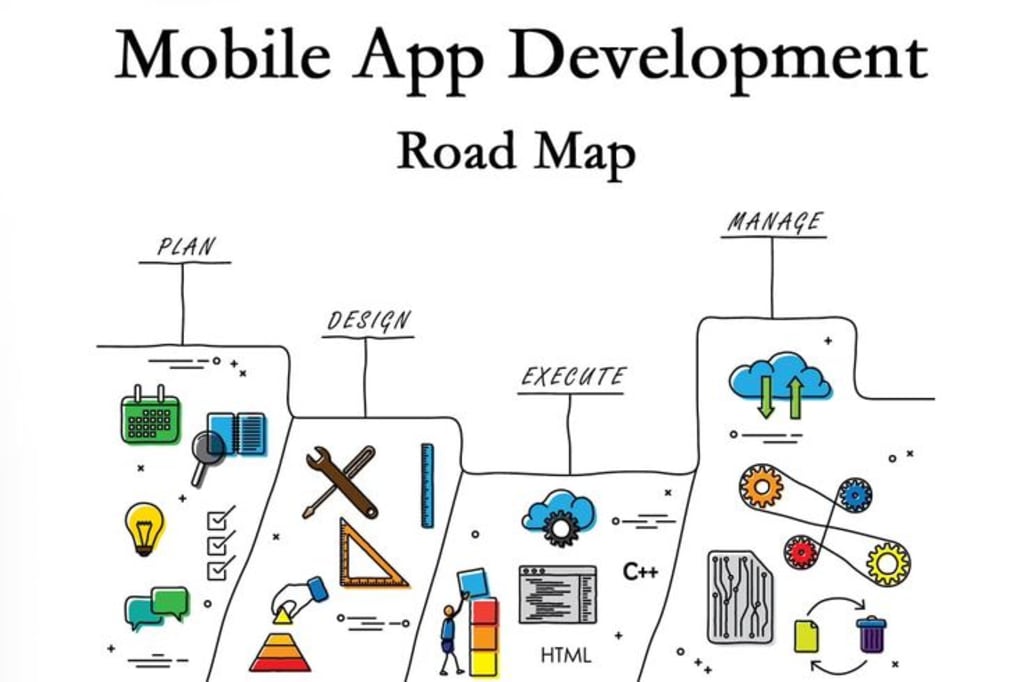
In 2025, the app economy is growing faster than ever.According to Statista, global app revenues are expected to reach $673 billion this year. With over 257 billion app downloads in 2026 alone, the competition is fierce — but so is the opportunity.
This blog will walk you through every stage of turning your app idea into a real product — and eventually, getting it live on the App Store and Google Play. Whether you’re a solo founder, a startup team, or just curious about the process, here’s the complete roadmap, 2025 style.
Step 1: Validate Your Idea
It’s easy to fall in love with your idea – but validation is your reality check.
Ask yourself:
What problem does this app solve?
Who is your target user?
Are people already looking for a solution like this?
Quick tips for validation in 2025:
Use AI tools like ChatGPT or Gemini to help you map competitors and brainstorm features.
Reddit, Product Hunt, and X (formerly Twitter) are great for testing interest or even running polls.
Set up a landing page with a waitlist using cards or Webflow to gauge initial interest.
Step 2: Market Research & Competitor Analysis
If you’re entering a popular niche (like fitness, finance, or AI productivity), you’ll need to stand out.
Look into:
Top competitors (check App Store rankings, reviews)
In 2025, tools like Sensor Tower and Appfigures give you accurate competitor data — downloads, revenue, keywords — in just a few clicks.
Step 3: Define the Core Features (MVP First)
You don’t need to launch with 100 features. In fact, you shouldn't.
Create with an MVP (Minimum Viable Product) — the simple version of your app that solves the user problem. Instagram Create a simple app like photo sharing app without DMS, Story and Reel.
Use the best tools like Figma to Create wireframes for your user journey .
Here’s a simple MVP checklist:
What is the core action users need to take?
Can your user do this within 30 seconds of opening the app?
What is the best thing that your app does better than others?
Step 4: Choose the Right Tech Stack
It's your decision: native app or cross-platform?
In 2025, most startups move for cross-platform frameworks like:
Flutter – Fast, beautiful UI, great for Android & iOS.
React : Supported by Meta, mature, and community-rich.
Swift and Kotlin - Best performance for native apps.
AI integration is almost standard now — whether it’s chat features, personalized content, or smart notifications. Tools like OpenAI’s APIs, Hugging Face, or Anthropic Claude can be easily plugged in.
Step 5: Find the Right App Development Partner
Unless you’ve got a rockstar dev team in-house, you’ll need a trusted development partner.
A good app development company will:
Help you with UI/UX design
provide end-to-end development
Ensure app store compliance
Test rigorously for bugs and performance
Guide you through launch and scaling
Get in touch with the experts App development Team — trusted by startups worldwide for building scalable, beautiful apps that users love.
Step 6: Design Matters More Than Ever
First impressions = retention.In 2025, users will expect the ease and polish of social media applications like Notion.
Hire a UI/UX designer or work with an agency that understands: Microinteractions
Accessibility (don’t overlook this!)
Dark mode (still hot)
AI-assisted onboarding flows
Use tools like Figma, Framer, and LottieFiles for modern, dynamic interfaces.
Step 7: Build, Test, Iterate
Now the real magic happens.
Your developer team will:
Set up architecture
Build out core features
Integrate analytics (Mixpanel, Firebase, etc.)
Test across device
Don’t skip QA testing — especially for crashes, bugs, and edge cases. With 2025’s device diversity (foldables, AR overlays, etc.), you need broad test coverage. Use TestFlight (iOS) and Google Play Console Internal Testing to gather beta feedback.
Step 8: App Store Optimization (ASO)
You’ve built the app — now make sure people can find it.
In 2025, App Store Optimization (ASO) is magic. Focus on:
Keywords in title & description
Engaging app screenshots + demo video
Reviews & Rating your application.
Use ASO tools like AppTweak, Keyword Tool, or SplitMetrics to fine-tune your listing.
Step 9: Launch & Promote Like a Pro
It’s launch day!
You’ve got one shot to make noise — treat it like a product launch, not just a quiet upload. Promote across:
Product Hunt
Hacker News
Your LinkedIn/Twitter following
Tech blogs or newsletters
Partner with influencers or micro-creators in your niche.
Step 10: Track, Learn, Improve
Once the app is live, your real job begins: listening to users and improving fast.
Track: Engagement (daily active users, session length)
Retention (Day 1, Day 7, Day 30)
Feature usage (what’s working, what’s ignored?)
Tools like Mixpanel, Amplitude, and Firebase Analytics give real-time insights.
Set up in-app surveys, ask for feedback, and ship updates regularly. Your first 3–6 months are critical for growth and iteration.
Conclusion :
Building apps in 2025 isn't just a game about code — it's about implementation, empathy, and understanding what real users want.
The journey from generating your idea to launching it on the App Store, Play Store is intense but incredibly rewarding.
The best founders stay agile, curious, and focused on value. So if you're serious about launching your app, surround yourself with the right people — and the right development partner.
About the Creator
Keep reading
More stories from writers in Writers and other communities.
Writing About Writing: The Rainbow Trap
The good thing about living in modern times is that LGBTQ representation in media is increasing. Not just in niche and Independant media, either, but also in mainstream media. Books, movies, TV shows, comics... they're finally catching on that LGBTQ+ people form a significant part of their audience, and deserve to see themselves on screen and in fiction, not just as victims in documentaries and true crime shows.
By Natasja Rosea day ago in Writers
I Couldn't Write for 3 Weeks. Here's The One Thing That Got Me Unstuck.
Three weeks. Twenty-one days of staring at a blank screen. Of opening my laptop with good intentions and closing it an hour later with nothing written. Of telling myself "tomorrow will be different" and having tomorrow be exactly the same.
By Ellen Francesabout 22 hours ago in Writers
~ Fired ~
— Ai Intrusion ~ Are you Next ~ Is Ai Evolution after your job? — Few workplaces haven't been affected. Ai is in supermarkets, at doctors' offices, and even monitoring farms. I just can't think of anything this machine is not getting into, can you? For instance: Education ~ Law and Tech jobs will one day have a major influence or be taken over by these inanimate machines, with accuracy and vigor. From mechanics' diagnoses to a wide variety of everyday jobs, including fast food workers, with this input having the ability to cut their unnecessary work hours. I'm certain all of us have been touched by this with our short stories and colorful headings, have you? Even comments are very questionable 'Non-Robot' insertions.
By Jay Kantor5 days ago in Journal



Comments
There are no comments for this story
Be the first to respond and start the conversation.