
I Couldn't Write for 3 Weeks. Here's The One Thing That Got Me Unstuck.
Call it wizardry, but I can credit my changed writing habits to this one thing.

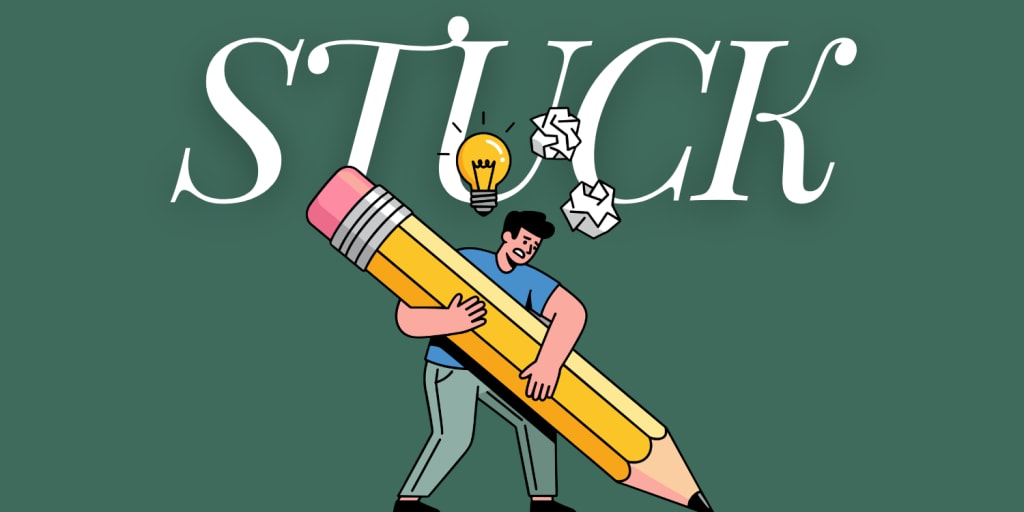
Three weeks.
Twenty-one days of staring at a blank screen. Of opening my laptop with good intentions and closing it an hour later with nothing written. Of telling myself "tomorrow will be different" and having tomorrow be exactly the same.
I wasn't blocked in the traditional sense. I had ideas. I knew what I wanted to write about. I could see the article in my head.
I just couldn't get the words out.
Every sentence I started felt wrong. Every paragraph I attempted felt forced. Nothing flowed. Nothing felt natural. It was like trying to write with my non-dominant hand, which is technically possible but painfully awkward.
I tried everything.
- Writing at different times of day.
- Scribbling in different locations.
- Playing wildly different music.
- Using different prompts.
I can confirm that absolutely nothing worked.
Then I changed one thing, making one small mindset shift that felt almost too simple to matter.
And like some sort of Harry Potter wizardry (the book is sitting in front of me as I write this, couldn't help myself), it broke the spell immediately.
What I Was Doing Wrong
For three weeks, I was trying to write well.
Every time I sat down, I was thinking: "This needs to be good. This needs to be insightful. This needs to be worth someone's time to read."
The pressure I was placing on myself was paralysing.
I'd write a sentence, read it back, decide it wasn't good enough, and delete it. I'd start a paragraph, realise it was clunky, and scrap the whole thing.
I was editing while creating, which is really judging your writing like it's the finished product while you're generating. Or trying to produce polished prose on the first try.
Of course, nothing was flowing. I was strangling every idea before it had a chance to breathe, and stopping myself from writing organically.
The Turning Point
On day 22, I was complaining to a friend about being stuck, a writing friend with whom I often share my woes.
She asked: "What would you write if nobody was ever going to read it?"
I started to answer, then stopped, because the answer was: I'd write exactly what was in my head without worrying about how it sounded.
That's when I realised the problem wasn't that I couldn't write. It was that I couldn't write badly.
I'd convinced myself that every word I put down had to be good and that if I wrote something mediocre, I was wasting my time.
So I was stuck in this loop: start writing, judge it as not good enough, delete it, repeat.
The thing that got me unstuck was giving myself permission to write badly.
What Changed
I opened a new document. I titled it "Garbage Draft - Do Not Publish."
Then I took to the keyboard and wrote.
I will say I didn't write well or carefully, nor did I have any concern for whether the sentences were good or the ideas were coherent.
I just dumped everything in my head onto the page. Some would call it a stream of consciousness. But regardless, there was no editing involved, I didn't hit the delete button once, and I didn't stop to read back what I'd written.
In 20 minutes, I had 800 words.
Were they good? No. They were rambling, repetitive, full of clichés, and unclear in their thinking.
But they existed, which was 800 more words than I'd written in three weeks.
The One Thing That Got Me Unstuck
To put what happened in a nutshell: I separated creating from editing.
That's it. That's the whole thing.
For three weeks, I'd been trying to do both at the same time: write a sentence, evaluate it, fix it, perfect it, and then move to the next sentence.
It doesn't work. You can't generate and judge simultaneously. They're different modes of thinking, and trying to do both at once freezes you.
Creating is messy. It's exploratory. It's following tangents and seeing where they lead. It's putting bad ideas on the page because sometimes they turn into good ideas halfway through.
Editing is critical, analytical, and involves cutting, refining, and making things better.
When you try to edit while creating, you kill the flow before it even starts.
How I Actually Write Now
I still write in two completely separate stages.
Stage 1: Vomit Draft
I open a document and write without stopping. Once again, I follow the simple rules of no editing, deleting or rereading.
If I write something terrible, I leave it there. If I contradict myself three paragraphs later, I keep both versions. If I use the same word five times in one paragraph, I don't stop to find a synonym.
I just write until I run out of things to say.
This draft is for nobody. It's not even for me, really. It's just a brain dump to get the raw material out so it's on paper and I can do something with it, rather than it living stuck in my head where it's no more than a 'good idea'.
Stage 2: Editing
Only after the vomit draft is done do I go back and read what I wrote.
This is when I cut repetition, fix clunky sentences, and reorganise the structure. I will happily delete entire paragraphs that don't work and grind through sentences to find better words.
This is when I turn the mess into something readable.
But I can't do this part until the mess exists.
Why This Works
When you separate creating from editing, you remove the pressure.
In the creating phase, you're not trying to write well. You're just trying to get words on a page. You can't fail because the only goal is to produce raw material ready for editing.
In the editing phase, you're not trying to generate new ideas. You're just working with what's already there and turning it into a piece that's ready for your reader to consume. The blank page isn't staring at you anymore. You have something to work with.
Each phase is easier when it's not tangled up with the other.
What I Learned About Writer's Block
I've learned the hard way that most of the time, writer's block isn't about not having ideas. It's about having standards that are too high for the creating phase.
You're trying to write something publication-ready on the first try. When it doesn't come out perfect, you think you're blocked, but you're not.
You're just trying to skip the messy part, cut straight to the end and complete the entire process in one step.
Every good piece of writing goes through an ugly phase. Every article I've published started as a rambling, incoherent mess.
The difference between published writers and stuck writers isn't that published writers produce clean first drafts. It's that they're willing to produce terrible first drafts and fix them later.
The Permission You Need
If you're stuck right now, here's what you need to hear:
- Your first draft is supposed to be bad.
- Not "rough but decent." Not "needs some polish." Actually bad.
- Incoherent, rambling, full of clichés and weak sentences.
That's normal. That's how writing works.
Give yourself permission to write the bad version first. Don't try to write well; just try to write.
Get the ideas out of your head and onto the page, in whatever form they take. And remember, you can fix them later.
But you can't fix what doesn't exist.
What Happened After I Got Unstuck
That first garbage draft I wrote? I edited it the next day. Cut it from 800 words to 500. Restructured the whole thing. Rewrote probably 60% of it.
It became a decent article, one I was proud enough to publish and put my name to.
More importantly, it broke the spell. Once I'd written one garbage draft and successfully turned it into something publishable, I knew I could do it again.
I've been writing consistently ever since. Not because every session flows perfectly, but because I'm not trying to make it flow perfectly.
I write the garbage draft, and then I edit it into something good.
Two stages. Two different mindsets. Both necessary.
The Real Block
The real block wasn't that I couldn't write. It was that I couldn't accept writing badly as part of the process.
I thought good writers just produced good writing, and that if it was hard, if it felt forced, if it came out messy, I was doing it wrong.
The opposite is true. If it's coming out perfect on the first try, you're probably not pushing yourself hard enough (and it's probably not perfect, either!).
The mess is where the good stuff comes from. You just have to be willing to create the mess first.
---
I write about the emotional and practical reality of being a writer - drafting, doubt, discipline, and publishing while still figuring it out.
Mostly for people who write because they have to, need to, want to | https://linktr.ee/ellenfranceswrites
About the Creator
Ellen Frances
Daily five-minute reads about writing — discipline, doubt, and the reality of taking the work seriously without burning out. https://linktr.ee/ellenfranceswrites
Keep reading
More stories from Ellen Frances and writers in Writers and other communities.
Why Writing in Public Feels Like You’re Faking It (And Why You Should Do It Anyway)
I published an article yesterday about building a writing habit. I wrote it like I have this all figured out, like I'm some authority on consistency, showing up, and doing the work.
By Ellen Frances2 days ago in Writers
Should We Not Try to Get Too Political?
Here's something you often hear people say, "I try not to get too political." I understand the sentiment and I sympathize with it... while at the same exact time, I completely disagree with the notion. Whether it's referring to social media or wherever, it's kind of unavoidable. You can attempt to sidestep it, not engage, leave the less important things for actual politicians to discuss... you can want it to not take over your life, your conversations, your relationships, and that makes perfect sense.
By Stephen Kramer Avitabileabout 19 hours ago in Writers
Common Mistakes in Healthcare Data Analytics
Healthcare organizations invest heavily in analytics, yet many fail to realize its full value. The issue is rarely the lack of data — it’s how data analytics is implemented, interpreted, and operationalized. Avoiding common mistakes is critical for turning insights into real clinical and business impact.
By Lilly Scotta day ago in Writers
Feelings Never Die
It is Valentine's Day again, and it bought back memories that were over fifty years old. It bought me back to 1971, and I woke up and I knew my baby was due today. I was big and pregnant, and I felt like I was about to burst wide open. Imagine my surprise when the doctor told my I had a due date of February 14. I couldn't believe it, and since my baby was due today, I felt I could indulge myself a bit. I had gained a lot of weight, and chocolate was on the no-no list, but I had came to the end of this pregnancy, and I hoped it would be okay, after all I would deliver this baby today. So I walked across the street to the grocery story, and bought myself, a peppermint patty, covered in chocolate, my favorite. Me and my Valentine's baby would enjoy it together.
By Susan Paytonabout 9 hours ago in Fiction



Comments
There are no comments for this story
Be the first to respond and start the conversation.