
F1 Speed vs. Commercial Viability: Why Don’t F1 Cars Dominate the Commercial Car Market Despite Their Speed?
Until now, we didnt have road-legal F1 car.


F1 cars are not road-legal; basically, it is not a car but an extra-fast go-kart; it has no lights/signals and other stuff that makes it legal; even someone can’t drive it comfortably for long distances so its appeal is reduced, but the main reason is that it is not legal.
I mean, F1 cars mostly use small chassis and no safety devices and installing them is not something practical. How do you install lights and signals on an F1 car? not to mention other stuff like the canopy and engineers have to take safety into account; it is not something easy to do.
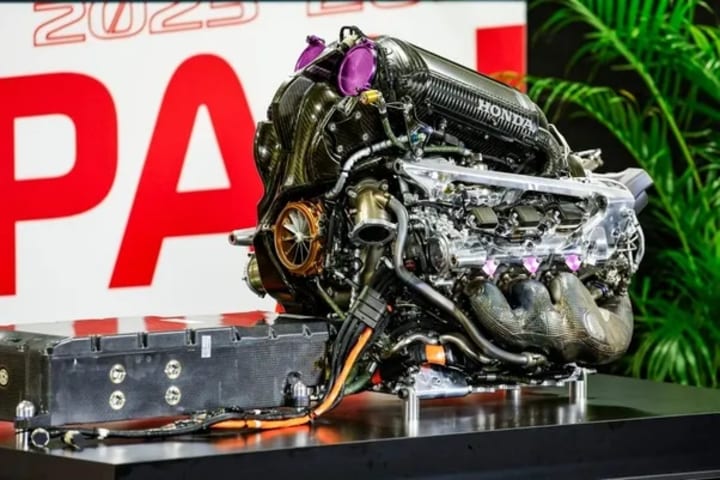
The engine is also not designed for road use; the tolerances are very tight and you even have to make sure the coolant and oil are at the right temperature when you start it. The lack of a starter in the system also makes it difficult; basically, you have to have a pit crew to be able to use it.
In addition, the engine is also not reliable and that makes sense because this is a racing engine, the service life is very low and you will likely damage the clutch when stalling in traffic. The car is also not designed for road use (as I stated above) because the idle is high; only trained people can drive it yet the top speed is not much different from most supercars. As far as I know, the top speed of an F1 car is 397 km/h with an average speed of 320 km/h; a Ferrari 488 also has a top speed of around 340 km/h.
And I don’t think anyone is rich enough to take it to the road. F1 cars accelerate very fast and not everyone can handle them. Lotus once sold an F1 car that was technically road legal and no one bought it. It happens because the car was designed for high speed; regular speed will not make the car usable, and even the brakes have to be warmed up to a certain temperature to work. Obviously, you don’t want to have an accident just because the brakes are not ready.
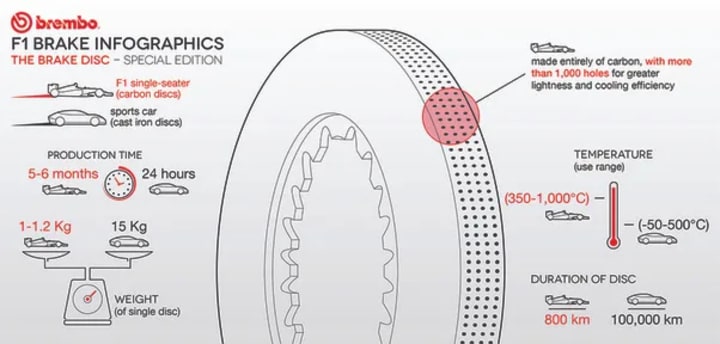
As far as I know, the F1 brake system can withstand up to 1,000 degrees Celsius with a range of 350–1000 degrees Celsius; that’s way higher than regular cars and because the material is carbon, it needs the right temperature to function properly and when the temperature is cold, the brakes basically don’t work. You have to make sure the temperature is right and I don’t think everyone can handle those carbon brakes; that’s just from the braking side and not other stuff.
F1 drivers will face very high G-force when driving it and if you are not trained, you can pass out in it. I forgot how many G-F1 drivers are impacted at high speeds but it’s way higher than regular cars; even supercars don’t give their drivers such forces so it’s not good if people who don’t know anything about F1 suddenly use it on the highway. It’s fast but the risk is too high.

But actually the idea is not new or unique; there are already many open-kart cars like the Ariel Atom on the market and basically it gives almost the same performance as F1 cars. It’s just that most people still think about safety and those fast cars are used for showing off rather than racing, so fast car manufacturers will make safe fast cars rather than forcing to make road legal F1 cars; consumers don’t want that and prefer fast cars that can be driven.
F1 cars are a different breed; therefore, they are not made as road-legal cars.
About the Creator
Pinesthi Mukti Rizky Wibowo
Hi, my name is Eky and here I will write about automotive and other things, most of the writing will be taken from my personal Quora or Medium account. Most of my writing is curated from my Quora account which I have more than 4,000 answers
Keep reading
More stories from Pinesthi Mukti Rizky Wibowo and writers in Wheel and other communities.
Let’s get familiarized with the cylinder-on-demand system from Audi.
In 2013, Audi introduced cylinder-on-demand technology, which was installed in several of their cars (in this case, the A8). For some people, this system was quite interesting and was considered revolutionary.
By Pinesthi Mukti Rizky Wibowoabout a year ago in Wheel
Top 10 Pickup Trucks Every Aussie Should Consider in 2026
Choosing the right pickup truck can make a huge difference in daily life, whether you’re hauling gear for work, towing a trailer, or exploring the Australian outback. With 2026 just around the corner, several models are standing out for their performance, reliability, and features. In this guide, we’ll cover the top 10 pickup trucks that every Aussie should consider this year, helping you to pick the right vehicle for your daily life and long-term plans.
By Alec Johnson6 days ago in Wheel


Comments
There are no comments for this story
Be the first to respond and start the conversation.