
The 2017 Solar Eclipse and My Zero-Photo Road Trip
Experiencing moments without trying to “capture” them


Some travelers carry high-quality camera gear and take “serious” photos. Others snap an endless stream of grinning iPhone selfies in front of every mildly interesting site they pass by. Either way, most of us consider some form of photography to be a vital part of travel.
High-quality phone cameras are ubiquitous today, but they’re a fairly recent development. The first phone with a built-in camera wasn’t released until the year 2000. For quite a few years after that, phone photography was low-quality and inconvenient.
For me, not too many years have passed since I bought my first smartphone, which also served as my first camera. I’ve always been intentionally slow to adopt new technologies.
The first time I embarked on a major solo travel adventure was in 2013, in Peru and Ecuador. Back then, I was still using a basic flip phone. It was worthless in a foreign country, so I didn’t bring it. Nor did I own a digital camera. Instead, I bought a disposable camera that could take around 30 low-resolution photos. No zooming, no editing.
Those photos looked like this:
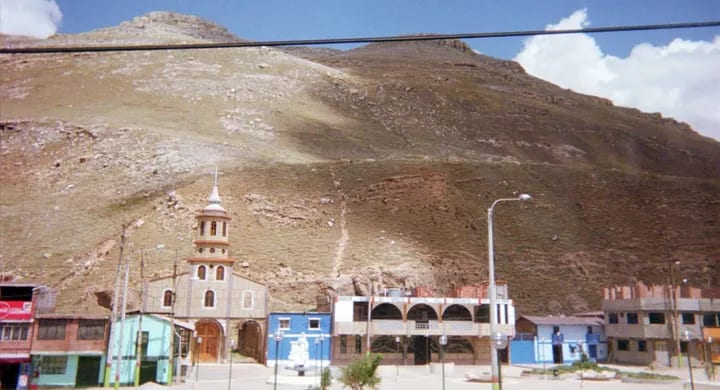
Just 30 blurry photos for a 70-day stay in Peru and Ecuador. That’s all I permitted myself. At the time, I didn’t think of it as an act of restriction. I simply didn’t own the expensive devices that would make it possible to more easily take photos.
Traveling without a phone or a camera was beautiful. I’ll probably never experience anything quite like that trip again.
For my next solo travel adventure, in Colombia, I finally had a smartphone. It resulted in an entirely different way of interacting with the world around me. I wanted Wi-Fi, I wanted to keep up with my email. And I wanted to photograph everything.
After I returned from Colombia, I did my first cross-country USA road trip in the summer of 2016, moving from New Jersey to California to start grad school. I spent a month on the road, camping and exploring — and continuing to snap countless photos.
A Return to Unplugged Travel
As I completed my first year of grad school, I knew that I’d have the chance to do another long road trip that summer. After experiencing a few trips with a photo-snapping smartphone, an idea developed: to complete a major trip while taking zero photos.
The idea was to rediscover some of what I had felt in South America back in 2013. The ability to experience a moment without trying to “capture” it. To do this, I knew I had to go all the way. The goal would not be to merely take fewer photos. It had to be all or nothing: zero photos.
The travel was a solo road trip up the California coast, then the Oregon coast, and into Washington state, where I visited an old friend. Then, I headed east into Glacier National Park in Montana, one of North America’s most magnificent places. From there, I went south through Idaho and Nevada and back into California.
A special event was central to the planning of my route: the total solar eclipse that occurred on August 21, 2017.
The trip was as incredible as it sounds. I did tent camping in each state and saw magnificent beauty. But no matter what was in front of me, I never reached for my phone.
With no photos, no one would ever see images of the moments I was experiencing. Those moments were mine and mine alone.
For my solar eclipse experience, I enjoyed an amazing stroke of luck. I connected with a friend who could host me where she was staying in Idaho in the exact location of what’s called the “path of totality.” That’s the thin strip of space in which the moon’s shadow entirely covers the sun. For this eclipse, the path of totality was 71 miles wide and ran from Oregon to South Carolina.
Outside of the totality path, an eclipse can be viewed with special glasses. You can see the moon sliding across the sun, but never entirely covering it. Thus, the sky doesn’t go dark, because the sun is never fully eclipsed.
Putting yourself in that thin sliver of totality makes all the difference. For a minute or two, while the moon is completely blocking the sun, the sky goes dark. It happens in an instant. Suddenly, in the middle of the afternoon, you see twinkling stars.
The friend I was with snapped these photos.

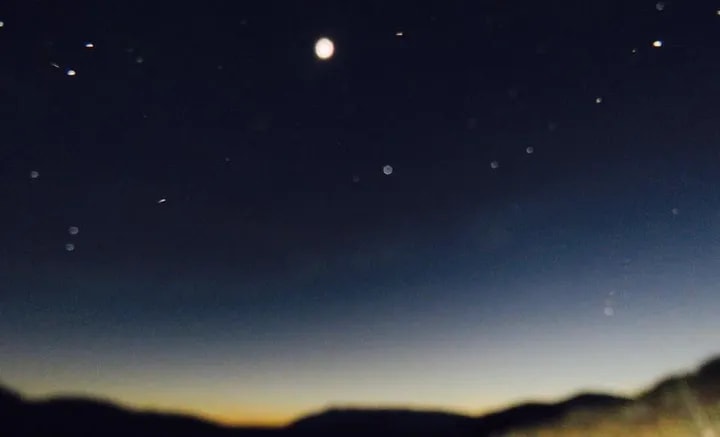

As I watched the sky in awe, my phone stayed in my pocket. I didn’t miss an instant of the incredible experience — yet, I’m grateful to have these images that my friend captured.
And that’s the catch, isn’t it? Photos are amazing keepsakes. I want to be “in the moment”, whatever that means, but I also want photos.
My goal during that road trip wasn’t to permanently quit photography. It was to remember what it feels like to not have the option. To explore that end of the spectrum, so that on future trips I could find a middle ground.
The trip served its purpose. These days, I take plenty of photos — but not so many that I feel like I’m missing out on the in-the-moment experience.
***
This story was originally published on Medium, here.
About the Creator
Keep reading
More stories from Kenny Minker and writers in Wander and other communities.
Oxapampa: German Heritage in the Peruvian Jungle
Peru’s travel industry is centered on the coast and Cusco. The coast includes the capital city of Lima, beach resorts like Mancora, and other major cities like Arequipa and Trujillo. Cusco is a beautiful city that provides access to Machu Picchu, the country’s top tourist attraction.
By Kenny Minker12 months ago in Wander
Away from the Crowds in Wisconsin
Located on Lake Superior, the Apostle Islands are great for outdoor adventures. They are known for pristine beaches and sea caves. Cliffs offer awesome views. Visitors enjoy hiking along scenic trails or getting out on the water and sailing.
By Rasma Raisters3 days ago in Wander
When the Shelter Closes
Across the street from my house, a man slept under a tree, his dog by his side. My first, naive thought: he must be traveling through. But he kept coming back, often sleeping there during the day. Then it hit me—that person might not have a home.
By Bride of Sound3 days ago in Humans


Comments
There are no comments for this story
Be the first to respond and start the conversation.