Latest Stories
Most recently published stories in Wander.
Yacht story/ Fair winds
One of the worst maritime disasters in European history took place a decade ago. It remains very much in the public eye. On a stormy night on the Baltic Sea, more than 850 people lost their lives when a luxurious ferry sank below the waves. From a mass of material, including official and unofficial reports and survivor testimony, our correspondent has distilled an account of the Estonia's last moments—part of his continuing coverage for the magazine of anarchy on the high seas. After midnight, in the first hours of September 28, 1994, the ferry Estonia foundered in the waves of a Baltic storm. The ship was the pride of the newly independent Estonian nation, recently arisen from the Soviet ruins. It was a massive steel vessel, 510 feet long and nine decks high, with accommodations for up to 2,000 people. It had labyrinths of cabins, a swimming pool and sauna, a duty-free shop, a cinema, a casino, a video arcade, a conference center, three restaurants, and three bars. It also had a car deck that stretched from bow to stern through the hull's insides. In port the car deck was accessed through a special openable bow that could be raised to allow vehicles to drive in and out. At sea that bow was supposed to remain closed and locked. In this case, however, it did not—and indeed it caused the ship to capsize and sink when it came open in the storm and then fell entirely off. On the night of its demise the Estonia had 989 people aboard. It departed from its home port, Tallinn, at around 7:15 P.M., and proceeded on its regular run, 258 miles and fifteen hours west across open waters to the Swedish archipelago and Stockholm. For the first several hours, as dusk turned to night, it moved through sheltered coastal waters. Passengers hardy enough to withstand the wind and cold on deck would have seen gray forested islands creeping by to the north, and to the south the long industrial shoreline of Estonia giving way to a low coast darkening until it faded into the night. Gentle swells rolled in from the west, indicating the sea's unease—with significance probably only to the crew, which had received storm warnings for the open water ahead but had not spread the news. There were various forecasts, and they tended to agree: an intense low-pressure system near Oslo was moving quickly to the east, and was expected to drag rain and strong winds across the route, stirring up waves occasionally as high as twenty feet. Such conditions were rare for the area, occurring only a few times every fall and winter, but for ferries of this size they were not considered to be severe. Surviving crew members later claimed that a special effort had been made on the car deck to lash the trucks down securely—exemplary behavior that, if it occurred, probably had more to do with concern about vehicle-damage claims than about the safety of the ship. No other preparations were made. The main worry was to arrive in Stockholm on time. After midnight, in the first hours of September 28, 1994, the ferry Estonia foundered in the waves of a Baltic storm. The ship was the pride of the newly independent Estonian nation, recently arisen from the Soviet ruins. It was a massive steel vessel, 510 feet long and nine decks high, with accommodations for up to 2,000 people. It had labyrinths of cabins, a swimming pool and sauna, a duty-free shop, a cinema, a casino, a video arcade, a conference center, three restaurants, and three bars. It also had a car deck that stretched from bow to stern through the hull's insides. In port the car deck was accessed through a special openable bow that could be raised to allow vehicles to drive in and out. At sea that bow was supposed to remain closed and locked. In this case, however, it did not—and indeed it caused the ship to capsize and sink when it came open in the storm and then fell entirely off.
By Jaramie Kinsey5 years ago in Wander
This was the trial.
There it was, the ship from my youth. Off in the distance sailing north towards what we thought was the right passage to Arcadia. The home of wits and brawn. They said Arcadia holds greater power than Kings Archipelago. I don’t believe them. You see Arcadia was the known myth around the chain of islands; you not from KA if you never heard the tale of Arcadia. Wait, you never heard the tale? Well, I guess we got some time before I tell y’all what it’s like.
By Bryce Cousins5 years ago in Wander
Natural Beauty In the Czech Republic
Krkonose National Park The Krkonose National Park is located in one of the most valuable of all-natural areas found in Central Europe. Here visitors will find the highest Czech mountain range the Krkonose which features many unusual ecosystems. There are wonderful things to explore like alpine meadows full of colorful wildflowers. Looking down upon the landscape is the highest Czech mountain called Snezka. For hikers there are many levels of climbing difficulty and all of the hiking trails are specifically marked.
By Rasma Raisters5 years ago in Wander
Honeymoon Horror
“You stupid bitch!” I hear the slap across my face even before I feel the horrid sting of his touch. He turned and stormed out of the penthouse as I ran up the stairs to the loft. Curling up in a small, tight ball on the bed I feel the hot tears trying to drown me. I gasp for breath between my cries so hard that my ab muscles begin to cramp. Breathing is even more difficult as I try to stifle the movements.
By Vicky DiMichele5 years ago in Wander
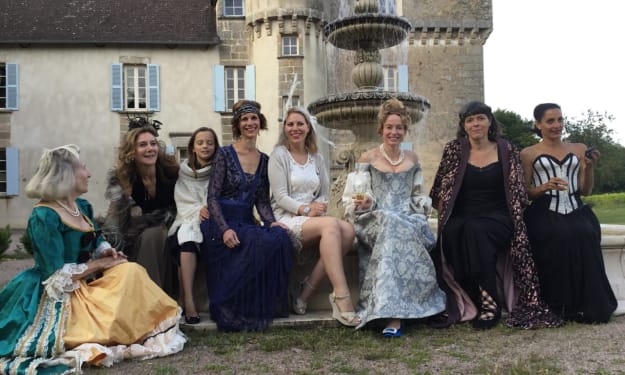
Beyond the Pool Pump A read that will take you behind the scenes, to meet the castle renovators from Channel 4’s Escape to the Château DIY (a spin-off from Dick and Angel Strawbridge’s Escape to the Château).
Are we a random and eclectic collection of Brits. Reckless investors? Lovers of old buildings? Plain bonkers? Follow me on a deeper journey into the trials and tribulations of renovating in France.
By Sophie Duncan5 years ago in Wander
The Boy Who Never
Day 44 out of Le Havre began hot and slow, with almost no wind and Victory picking up an uncomfortable sloshing that threatened to make Hannah and little Bertie sick again. Her son Willy, on the other hand, was by now an old hand in the rigging, and with his keen young eyesight, he was often ordered to the maintop to watch for islands and shallows. A low bank of far-off clouds came ever closer, and the wind began to build. Soon Victory was flying down the waves, in her element. Captain Anderson had the helm in hand, and he looked perfectly happy there, severe and alert, with smiling eyes.
By Rose Kleidon5 years ago in Wander
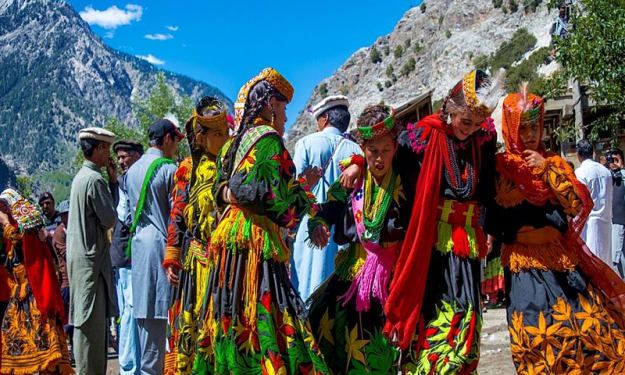
There is a community in the city of Chitral called the Kalash Community. The people of Chitral/Kalasha are a unique group of people.
Prior, individuals followed a straightforward life, generally subject to horticulture and cows raising. Buckwheat and different harvests were filled in the waterway valleys. Encompassing plantations gave products of different sorts. Milk from the steers was utilized to make ghee, margarine and cheddar. Wine was produced using grapes. Food was prepared over wood-terminated stoves. They followed a nature-situated confidence, which later a few analysts compared with animistic type of love while others discovered similitudes with antiquated Hindu ideas.
By Zizi sheikh 5 years ago in Wander
How to Learn to Make Sri Lankan Cuisines in Habarana
Often regarded as the best way to take your Sri Lankan holiday back home with you, learning to prepare local delicacies is a rewarding activity for those with a flair for the culinary arts. Home to one of Asia's most underrated cuisines, Sri Lanka prides itself on the many authentic and traditional dishes and curries in its cannon. Whether one is an interested novice or an avid Asian foodie, here are some tips on how to learn local cooking skills during a trip to Habarana.
By Amie Ginendra5 years ago in Wander